Introduction
PLC, as a core control device, is hailed as the brain of industrial control. However, in this seemingly transparent technological field, there are many unknown industry rules hidden beneath the surface. Just like the visible part of an iceberg is only one-tenth of its entirety, the PLC industry also has numerous unspoken potential rules..
The following six little-known “insider rules” often require practitioners to struggle and learn through years of practical experience.

Insider Secret 1: Communication Skills Are More Important Than Programming Skills
Many newcomers to the industry often fall into a misconception: they believe that mastering the programming of a specific brand of PLC is enough to become an industry expert. They spend a lot of time studying ladder logic programming for Siemens S7-1200 or the instruction set of Mitsubishi FX series, while neglecting the more critical communication skills.
In reality, modern automation projects are no longer about standalone devices operating independently. A typical automotive production line project may need to integrate Siemens PLCs, Mitsubishi servo systems, Omron vision sensors, ABB robots, and upper-level MES systems simultaneously. At this point, the importance of industrial communication protocols such as Profinet, EtherCAT, and OPC UA becomes evident.
For example, in a welding workshop of an automotive plant, if there is a packet loss in the EtherCAT communication between the PLC and the welding robot, the entire production line can come to a standstill. At this time, the ability to quickly diagnose communication faults and analyze network topology is far more valuable than writing a complex PID control program. Engineers who do not understand communication will always be limited to being “point” experts and cannot become “surface” masters who control the entire automation system.
Insider Secret 2: Electrical Knowledge Determines Career Ceiling
On automation forums, we often see cases where an engineer with a programming background writes PLC code that is logically clear and well-structured, but is at a loss during on-site debugging. This is because automation is a field where software and hardware are deeply integrated.
If one cannot understand electrical schematics, select appropriate contactors and thermal relays for motors, or distinguish between PNP and NPN sensor wiring differences, then even the most perfect program is just a castle in the air.
For instance, an accident occurred in a food packaging plant due to an engineer’s unfamiliarity with electrical knowledge: improper calculation of the braking resistor power for a servo motor led to overheating and fire during braking.
Statistics show that 90% of on-site problems originate from the electrical system, which could be due to contact oxidation in a relay causing poor contact, or sensor power being interfered with by a frequency converter, resulting in false signals. A true PLC expert must possess solid electrical knowledge and be proficient in using tools like multimeters and oscilloscopes for on-site diagnostics.
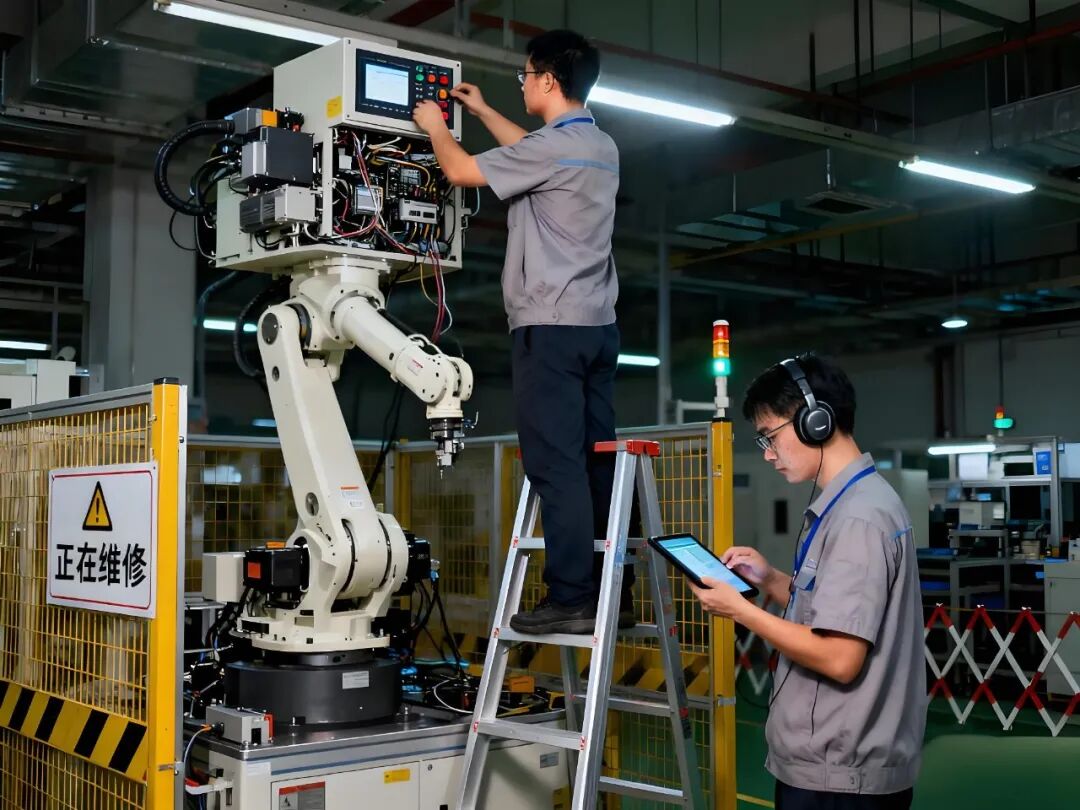
Insider Secret 3: The Most Time-Consuming Part Is Not Programming, But Debugging and “Passing the Buck”
New engineers often naively believe that the project cycle equals programming time. In reality, in a standard automation project, programming may only account for 20% of the workload, while the remaining 80% of the time is consumed in on-site debugging and coordination among various parties.
A typical case of buck-passing occurred in a lithium battery production line project: mechanical engineers blamed the electrical cabinet wiring for causing interference, electrical engineers complained about issues in the PLC program logic, while programmers insisted that the mechanical transmission accuracy was not up to standard.
In such cases, the engineer who can capture interference waveforms with an oscilloscope, analyze signal transitions with a data logger, and use solid evidence to pinpoint the root cause of the problem is the true expert. More challenging is communication with clients; when the production line halts for some reason, maintaining composure under pressure from all parties and using professional knowledge and communication skills to resolve conflicts is often more important than the technology itself.
Insider Secret 4: Technology Iterates Quickly, But “Old Antiques” Have a Longer Lifespan
In today’s rapidly changing technology landscape, many young engineers are eager to chase cutting-edge technologies like AI and digital twins, while neglecting a hard truth in the industrial field: stability outweighs everything.
Walk into any traditional manufacturing enterprise, and you will find “old antiques” still running reliably, whether it be an injection molding machine based on Siemens S5 series PLCs or stamping equipment using Mitsubishi A series PLCs.
A rolling mill control system in a steel company has even been running for 25 years, with only a few relays replaced during that time. These systems are long-lasting precisely because they employ time-tested technological solutions. For engineers, the ability to maintain and upgrade these outdated systems is a highly marketable skill.
For example, upgrading a traditional relay control system to PLC control while retaining the original operating habits and mechanical structure is often more welcomed by clients than starting from scratch.

Insider Secret 5: Standard Answers Are Luxuries; Solutions Are Hard Currency
Textbook PLC application cases are often straightforward, with clear standard answers. However, real projects are filled with various “non-standard” challenges.
For instance, a pump control system in a chemical plant needs to operate in an explosion-proof area while adapting to frequent process changes; a logistics sorting system must handle packages of various shapes, making traditional photoelectric detection solutions ineffective.
In these situations, engineers must choose among multiple imperfect solutions: should they use a more expensive safety PLC or implement functionality through external safety relays? Should they adopt a mature visual recognition solution or develop a customized mechanical alignment mechanism? Excellent engineers understand how to weigh the pros and cons and provide solutions that balance cost, reliability, and delivery timelines. Remember, what clients ultimately care about is not how cutting-edge your technology is, but whether your solution can run stably, save costs, and truly solve problems.
Insider Secret 6: Safety Is Not a Cost; It Is a Bottom Line
In some low-cost projects, safety measures are often seen as “extra costs” that can be cut. This mindset is extremely dangerous. Safety is designed in, not debugged in.
For example, an automotive parts factory once experienced an accident due to neglecting safety design: an operator entered a hazardous area while the equipment was running, and due to the safety door interlock signal being short-circuited, the robotic arm suddenly moved, causing serious injury.
The truth is: safety is designed in, not debugged in. The wiring method of an emergency stop button and the interlock logic of a safety door can both relate to the safety of operators.
Disregarding safety regulations is not only a sign of technical immaturity but also a lack of professional ethics. In this field, safety awareness is an instinct ingrained in one’s bones.
We welcome everyone to leave comments and engage in discussions!