Various Methods for Sending Strings via STM32 UART
Various Methods for Sending Strings via STM32 UART

Using USART to send strings with STM32: The meaning of the code is: When there is data on the receive pin, the status register USART_FLAG_RXNE will be set to 1. At this point, the return value of USART_GetFlagStatus(USART1, USART_FLAG_RXNE) will be 1 (SET), and if there is no data, it will be RESET. Common code … Read more

In-Depth Explanation of STM32 Serial Communication Principles

In-Depth Explanation of STM32 Serial Communication Principles

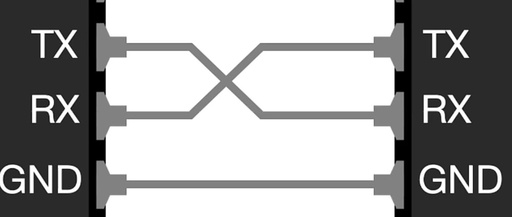
Ways of Communication Between Devices Generally, the communication methods between devices can be divided into parallel communication and serial communication. The differences between parallel and serial communication are shown in the table below. Classification of Serial Communication 1. According to the direction of data transmission, it can be divided into: Simplex: Data transmission only supports … Read more

Renesas RA0E1 Development Board Review: 12-Bit ADC and USART Usage

Renesas RA0E1 Development Board Review: 12-Bit ADC and USART Usage

Content from: Jialichuang Community Background I am glad that Jialichuang Mall organized the evaluation test for the Renesas RA0E1 Development Board. I signed up for this activity as soon as it was launched and was fortunate enough to be selected among the 20 participants. Soon, I received the development board sent by Jialichuang Mall. RA0E1 … Read more

Using printf Function in TrueStudio: A Step-by-Step Guide

Using printf Function in TrueStudio: A Step-by-Step Guide

When using the printf function in the TrueStudio development tool for the first time, you may find it challenging to get started. Here, I will explain the process of configuring STM32CubeMX to generate a TrueStudio project for serial output. Create a Basic Project in STM32CubeMX: Open the software and select the configuration for Serial Port … Read more

Understanding UART, USART, Serial Ports, RS232, and RS485

Understanding UART, USART, Serial Ports, RS232, and RS485

In the process of learning embedded systems, serial communication is undoubtedly a very important and fundamental method for communication and debugging. During this learning process, many different concepts related to serial communication have been encountered. This article will distinguish and analyze the concepts of serial ports, UART, USART, RS485, and RS232. 1. Basic Concepts of … Read more

Adding FINSH Console to FreeRTOS

Adding FINSH Console to FreeRTOS

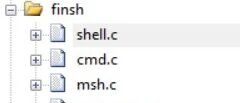
1 FINSH ConsoleWith the console, we can reduce trial and error costs when debugging hardware, change PID parameters in real-time without needing to reprogram, and customize commands to call serial API for testing communication protocols. This article summarizes the entire porting process.2 Preparation Before Porting2.1 Testing EnvironmentThis test is an extension based on the io_toggle … Read more

MCU Micro Classroom | CKS32F107xx USART (Part 1)

MCU Micro Classroom | CKS32F107xx USART (Part 1)

MCUMicro Classroom CKS32F107xx USART (Part 1) Issue 53 2025.04.22 Introduction to USART The Universal Synchronous Asynchronous Receiver Transmitter (USART) provides a flexible method for full-duplex data exchange with external devices using the industrial standard NRZ asynchronous serial data format. The USART utilizes a fractional baud rate generator to offer a wide range of baud rate … Read more

Principle of Automatic Baud Rate Recognition for STM32 Serial Ports

Principle of Automatic Baud Rate Recognition for STM32 Serial Ports

Your device connects to another device, and if it can automatically recognize the baud rate without knowing the baud rate of the other device, wouldn’t that be very convenient? 1 Overview Regarding the issue of automatically recognizing UART serial port baud rates, those with project experience or who have studied serial ports should know a … Read more

Eight Essential Steps to Learning Microcontrollers

Eight Essential Steps to Learning Microcontrollers

Learning to use microcontrollers involves understanding the hardware structure of the microcontroller and the application of its internal resources, as well as learning various initialization settings for functions in assembly or C language, and programming to implement various functionalities. Here are some of my experiences: Step 1: Using Digital I/O Using button inputs to signal, … Read more