Why Embedded C Language Experts Prefer void*?

Why Embedded C Language Experts Prefer void*?

As a C language developer, have you ever faced the problem of needing to implement a generic linked list, only to find that you must write the code separately for each data type? Or designing a callback function but not knowing how to handle various types of parameters? The root of these issues lies in … Read more

Understanding the Concept of Pointers in C Language in One Minute

Understanding the Concept of Pointers in C Language in One Minute

What is a pointer in C language? In C language, a pointer is a variable that stores the memory address of another variable. Each variable has a unique address in memory, and a pointer is used to store this address. Through pointers, we can directly access and manipulate data in memory. How to use pointers … Read more

Essential Knowledge Points for Embedded C Programming

Essential Knowledge Points for Embedded C Programming

① The Compilation Process of C Language.c files are transformed into executable files through four stages: preprocessing, compilation, assembly, and linking.(1) Preprocessing: Includes header file inclusion, macro replacement, conditional compilation, and comment removal.(2) Compilation: The C language is translated into assembly, outputting a .s assembly file;(3) Assembly: The assembly file is translated into binary, outputting … Read more

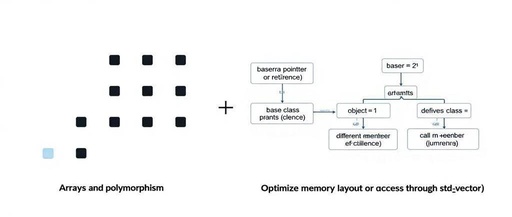
Decoding the Myths of Qt/C++ Arrays and Polymorphism: From Memory Layout to Container Optimization

Decoding the Myths of Qt/C++ Arrays and Polymorphism: From Memory Layout to Container Optimization

1. Basic Type Arrays and Caching Arrays are a contiguous block of memory, making them ideal for caching as they provide fast sequential access and allow O(1) time complexity random access when the index is known. Code Example:<span>int</span>, <span>char</span>, <span>byte</span> (i.e., <span>quint8</span>) arrays #include <QDebug> #include <QtGlobal> // For quint8 void basicArrayExamples() { // 1. … Read more

Beware! Don’t Let These C++ Pitfalls Bury Your Code

Beware! Don't Let These C++ Pitfalls Bury Your Code

The flexibility and complexity of C++ coexist, leading to numerous “hidden traps”—these issues are often syntactically valid but can cause hard-to-debug runtime errors, performance degradation, or logical flaws. Below are the most common pitfalls encountered in engineering practice, covering core areas such as memory management, syntax features, STL usage, and concurrent programming, along with specific … Read more

Advanced Usage of C++ Smart Pointers (Avoiding Pitfalls and Improving Efficiency)

Advanced Usage of C++ Smart Pointers (Avoiding Pitfalls and Improving Efficiency)

Enhance code safety and maintainability using smart pointers while avoiding common hidden pitfalls without changing semantic correctness. 🎯 Overview of Usage Scenarios (When It’s Worth Using) • Resource needs to be exclusive, ownership transfer: <span>std::unique_ptr</span> (file handles, sockets, ownership transfer of temporary objects) • Shared read, few writes, complex lifecycles: <span>std::shared_ptr</span> + necessary <span>std::weak_ptr</span> to … Read more

Handwritten Smart Pointer: Understanding the Underlying Logic of C++ Memory Management

Handwritten Smart Pointer: Understanding the Underlying Logic of C++ Memory Management

From the public account: Program Meow Master Memory management has always been a core and complex topic in C++. While raw pointers are straightforward to use, they are prone to issues such as memory leaks and double deletions. The emergence of smart pointers is a powerful tool in modern C++ to enhance code safety and … Read more

The Growth Diary of Mr. C++: A Legend in Programming

The Growth Diary of Mr. C++: A Legend in Programming

The Legend of C++: The Swiss Army Knife of the Programming World and the Hidden BOSS “ In the world of programming, there is a figure—Mr. C++—who comes from a prestigious background and possesses extraordinary talent, yet is often described as “complex, difficult to understand, and temperamental.” Regardless of external opinions, he has stood firm … Read more

Fundamentals of C++ Development: Overcoming Linked List Confusion with 4 Basic Implementations and Over 10 Application Scenarios (Complete Code Included)

Fundamentals of C++ Development: Overcoming Linked List Confusion with 4 Basic Implementations and Over 10 Application Scenarios (Complete Code Included)

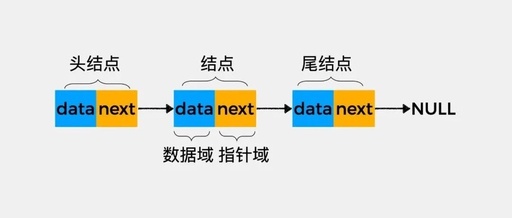
Introduction The linked list is one of the most fundamental and important data structures in computer science, with wide applications in C++ development. This article will delve into the classification, implementation methods, and various application scenarios of linked lists, helping us make more reasonable data structure choices in practical development. 1. Basic Concepts of Linked … Read more

C++ Learning Notes – 02

C++ Learning Notes - 02

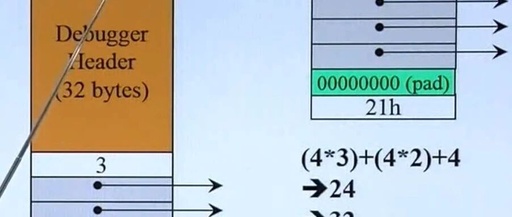
★ The Big Three Functions: Copy Constructor, Copy Assignment Operator, Destructor ◇ String Class #ifndef __MYSTRING__ #define __MYSTRING__ class String { } String::function(…) … Global-function(…) … #endif Copy s1 to s3 (where s3 appears for the first time), and copy s2 to s3 (where s3 has already appeared); ◇ The Big Three, Three Special Functions … Read more