Mastering C++ Map: From Basics to Advanced Techniques

Mastering C++ Map: From Basics to Advanced Techniques

In C++ programming, if you want to efficiently store data relationships like “Name – Score” or “ID – Information”, the map is definitely the preferred tool. It comes with a key-value pair structure, automatically sorts and deduplicates, and offers high efficiency for searching and modifying. Whether for daily practice or competitive programming, it is frequently … Read more
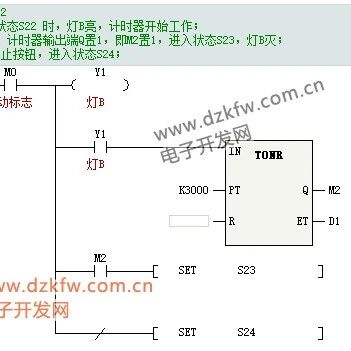
Introduction to Huichuan PLC: SFC Sequential Function Chart and STL Step Ladder Diagram

Introduction to Huichuan PLC: SFC Sequential Function Chart and STL Step Ladder Diagram

[Note: The following content is based on the simulation programming of Huichuan PLC (easy52x) using AutoShop. Other brands of PLCs may vary slightly. This article aims to help you quickly get started with STL and SFC programming.] Recommended Learning Sequence Ladder Diagram –> STL Step Ladder Diagram –> SFC Sequential Function Chart STL Step Ladder … Read more

Understanding Hash Tables in C++

1. Core Essence of Hash TablesHash Table is an efficient data structure based on “key-value mapping”, where the core idea is to “convert the key into an array index using a hash function”, allowing direct access to data via the index, achieving an average lookup/insertion/deletion efficiency of O(1). Core Logic: key → Hash Function → … Read more

Sharing Common Knowledge about C++ Queues

A queue is a commonly used data structure that follows the First In First Out (FIFO) principle.Practical tips for competitions:1. Use arrays to simulate queues (better performance)2. Prefer using the STL queue (clearer code)STL Library #include<queue>queue<int>Q;empty();// Returns true if the queue is emptypop();// Removes the front elementpush();// Adds an element to the backsize();// Returns the … Read more

Comprehensive Explanation of the C++ Standard Template Library (STL) – Everything You Need to Learn About STL

@[TOC](Comprehensive Explanation of the C++ Standard Template Library (STL) – Everything You Need to Learn About STL) 1. Concept of STL 1. STL (Standard Template Library) is a generic term for the “containers + algorithms + iterators” in the C++ standard library, implemented using templates for generic programming. It evolved from HP’s STL and was … Read more

Hello C++: Object-Oriented Programming

Although the principles of structured programming improve the clarity, reliability, and maintainability of programs, they still face challenges when writing large programs. To address these challenges, Object-Oriented Programming (OOP) offers a new approach. Unlike procedural programming, which emphasizes algorithms, OOP emphasizes data. OOP does not attempt to make problems fit the procedural approach of the … Read more

AI Apprentice Diary | GPT Teaches Me C++ (02): Linked List – A Mental Leap from Structs to STL

As a computer science student, I once learned about data structures, C language, linked lists, stacks, queues… But to be honest, over time, I almost forgot everything. This semester, I started learning C++, and I decided not to “grind through the textbooks” anymore, but to let GPT be my “companion AI tutor” to gradually rebuild … Read more

Why Use C++ in Informatics Competitions?

Absolutely right! In informatics competitions (such as IOI, NOI, ACM-ICPC), C++ is the dominant language, with C also holding a place, while other languages (like Java and Python) are relatively less common. This is determined by both the characteristics of the competitions and the features of the languages themselves. The main reasons can be summarized … Read more

New Features in C++11 Compared to C++98

C++11 is a milestone version in the development of the C++ language, also known as the beginning of modern C++. Compared to C++98, it introduces a large number of revolutionary features that fundamentally change the programming style of C++. 1. Core Basic Features of C++98 (1998) C++98 established the basic framework of C++, laying the … Read more

Analysis of libc++ STL Source Code – type_traits

In the previous section, we explained the concept of SFINAE. Although concepts were introduced in C++20, most of the experimental features in the standard library still utilize the SFINAE principle. Therefore, understanding this concept is key to comprehending the STL source code. Why start with type traits? Type traits are relatively simple, which can enhance … Read more