Understanding Multi-Task Learning in AI Applications

Understanding Multi-Task Learning in AI Applications

[Introduction to Large Model Industry Applications Series] NO.9 [Abstract] Single-task training often overlooks valuable information hidden in related tasks. The emergence of Multi-Task Learning (MTL) provides a new approach to this problem.Author Li Jie, focused on exploring and researching Java Virtual Machine technology and cloud-native technologies. *This article is the 9th in the [Introduction to … Read more

Understanding CPU, GPU, NPU, TPU and Their Computing Power Comparison

Understanding CPU, GPU, NPU, TPU and Their Computing Power Comparison

Source | Zhihu Introduction What are CPU, GPU, NPU, and TPU? This article introduces different types of chips and compares their computing power. 1. What is Computing PowerComputing power refers to a computer’s ability to perform certain operations, typically measured by the speed of floating-point operations (usually in FLOPS – floating-point operations per second). The … Read more

NeurlPS 2022 | Classification of NLP Related Papers

MLNLP community is a well-known machine learning and natural language processing community in China and abroad, covering NLP master’s and doctoral students, university teachers, and industry researchers. The vision of the community is to promote communication and progress between the academic and industrial fields of natural language processing and machine learning, especially for beginners. Reprinted … Read more

19 Loss Functions You Should Know

Click on the above “Beginner Learning Vision” to select and add to favorites or “pin” to receive high-quality content promptly.Added by zenRRanhttps://blog.csdn.net/shanglianlm/article/details/85019768Source: Deep Learning Natural Language Processing TensorFlow and PyTorch are quite similar, and here we take PyTorch as an example. 19 Loss Functions 1. L1 Loss L1Loss Calculates the absolute difference between output and … Read more

Comprehensive Summary of Loss Functions

Click on the "Little White Learning Vision" above, select to add "Starred" or "Top" Important content delivered promptly Author: mingo_敏Editor: Deep Learning Natural Language ProcessingLink:https://blog.csdn.net/shanglianlm/article/details/85019768TensorFlow and PyTorch are quite similar, here we take PyTorch as an example. 19 Types of Loss Functions 1. L1 Loss L1Loss Calculates the absolute difference between output and target. torch.nn.L1Loss(reduction='mean') … Read more

Understanding Dilated Convolutions

Understanding Dilated Convolutions

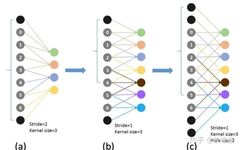
Click on the above “Visual Learning for Beginners”, select to add Star or “Top” Essential information delivered promptly. Introduction of Dilated Convolutions Dilated convolutions, also known as dilated convolutions or atrous convolutions, were initially proposed to address the problem of image segmentation. Common image segmentation algorithms typically use pooling layers and convolutional layers to increase … Read more

Comprehensive Guide to 19 Loss Functions in PyTorch

Click on the top “MLNLP” to select “star” public account Important content delivered at the first time Author: mingo_敏 Editor: Deep Learning Natural Language Processing Editor zenRRan Link: https://blog.csdn.net/shanglianlm/article/details/85019768 TensorFlow and PyTorch have many similarities, here we take PyTorch as an example. 19 Loss Functions 1. L1 Loss L1Loss Calculates the absolute difference between output … Read more

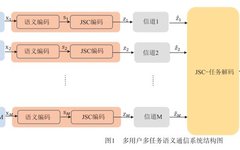
Multi-Task Semantic Communication Coding Framework Based on Multiple Access

Multi-Task Semantic Communication Coding Framework Based on Multiple Access

Table of Contents | 2024 Issue 2 Special Topic: Semantic Communication Semantic Communication Based on Large Language Models: Current Status, Challenges, and Prospects Image Semantic Communication System Based on Federated Learning Semantic Communication System Integrating Knowledge Graphs Semantic Communication Based on Internal Entity Information Enhancement Knowledge Communication Aimed at Collaborative Evolution of Knowledge Bases Research … Read more

Comprehensive Summary of Loss Functions

Source: Deep Learning Enthusiast Editor: Deep Learning Natural Language Processing Link: https://blog.csdn.net/shanglianlm/article/details/85019768 This article is about 1500 words, recommended reading time is 5 minutes tensorflow and pytorch are very similar, here we take pytorch as an example. 19 Types of Loss Functions 1. L1 Loss L1Loss Calculates the absolute difference between output and target. torch.nn.L1Loss(reduction='mean') … Read more

Summary of Multi-task Learning Methods

Summary of Multi-task Learning Methods

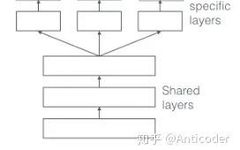
Click on the above “Beginner Learning Vision”, select to add “Star” or “Pin“ Heavyweight content delivered first-hand Reprinted from: Zhihu Anticoderhttps://zhuanlan.zhihu.com/p/59413549 Background: Focusing only on a single model may overlook potential information that could enhance the target task from related tasks. By sharing parameters between different tasks to a certain extent, the original task may … Read more