The Role of the Clock Tree in Embedded Systems
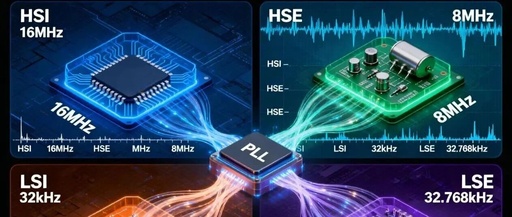
The Role of the Clock Tree in Embedded Systems

In embedded systems, the clock is the “pulse” of the microcontroller (MCU) — every data transfer, instruction execution, and peripheral operation relies on the precise synchronization of clock signals. The “clock tree” is an intelligent system that manages these “pulses”; it resembles a large tree with distinct branches, starting from the root of the original … Read more

Fundamentals of Low-Power Design: A Comprehensive Analysis of Multi-Bit Cells

Fundamentals of Low-Power Design: A Comprehensive Analysis of Multi-Bit Cells

This article was originally published in the Zhihu column [The Path of Digital IC Backend Engineers]. Multi-bit cells have been widely used in numerous chip designs as a means to control power consumption, and various EDA tools provide extensive and comprehensive support for them. Today, we will start with the basic structure and principles of … Read more

Multi-Bit Cell Design for Low Power Consumption

Multi-Bit Cell Design for Low Power Consumption

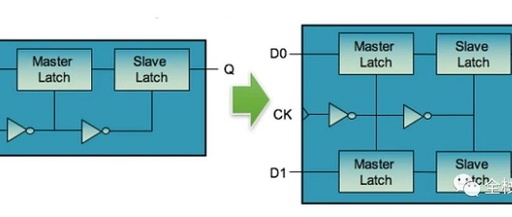
According to the Cadence user guide, the Multi-bit flip-flop (MBFF) flow provides power optimization benefits with minimal impact on timing. This flow is utilized as part of the pre-CTS optimization stage. The term multi-bit cell can be understood as merging multiple identical cells into a single cell. As shown in the figure below, the clock … Read more