Arduino Sensor: Infrared Transmission Module

Arduino Sensor: Infrared Transmission Module

01Basic UnderstandingModel:HS-S29PName:Infrared Transmission ModuleSeries:Communication ModuleDescription:This module is specifically designed to transmit 38KHz carrier infrared signals, featuring a built-in infrared emitter and modulation circuit. By receiving encoded signals from a microcontroller (such as remote control button commands), it modulates them onto a 38KHz carrier and transmits them in the form of infrared light. It works in … Read more


Arduino Sensors: Touch Sensor

Arduino Sensors: Touch Sensor

01Basic UnderstandingModel:HS-S31PName:Touch SensorSeries:SensorDescription:This module is designed specifically for detecting mechanical collisions or vibrations. It features a built-in elastic triggering mechanism and signal processing circuit, which can convert physical collision forces into recognizable digital signals (high/low level). It accurately responds to instantaneous impacts or continuous vibrations, making it a core detection component for obstacle avoidance and … Read more

Arduino Sensors: Clock Module

Arduino Sensors: Clock Module

01Basic UnderstandingModel:HS-S30PName:Clock ModuleSeries:Communication ModuleDescription:This is a module that integrates a real-time clock (RTC) function, with a built-in high-precision crystal oscillator and backup battery interface, capable of continuously providing year, month, day, hour, minute, and second information. It supports time calibration and power-off endurance, and can interact with microcontrollers such as Arduino through communication protocols, making … Read more

Using Arduino to Develop on Milk-V DuoS

Using Arduino to Develop on Milk-V DuoS

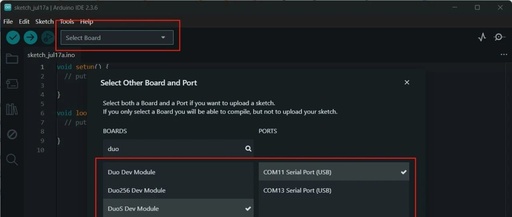
Using Arduino to Develop on Milk-V DuoS Arduino is a very popular open-source hardware platform known for its simplicity, ease of use, and openness. It provides a rich set of libraries and example codes, allowing even those without programming experience to get started quickly. Additionally, the Arduino community is very active, making it easy to … Read more

Comprehensive Guide to Creating and Analyzing ESP32 Project Structures

Comprehensive Guide to Creating and Analyzing ESP32 Project Structures

Comprehensive Guide to Creating and Analyzing ESP32 Project Structures 1. Methods for Creating ESP32 Projects 1. Creating an ESP-IDF Project # Create a new project idf.py create-project my_esp32_project # Project directory structure my_esp32_project/ ├── CMakeLists.txt ├── main/ │ ├── CMakeLists.txt │ └── main.c └── sdkconfig 2. Creating an Arduino IDE Project File > New Save … Read more

How to Work with FPGA Development Boards? (Part 1) – Playing FPGA Like Arduino

How to Work with FPGA Development Boards? (Part 1) - Playing FPGA Like Arduino

This is also a series of articles, stemming from previous discussions with fans in the comments about the efforts made abroad regarding FPGA development or entry-level approaches. Each article will introduce a specific FPGA development board, focusing on the development methods prepared for the board (which are quite different from those in China). Today’s main … Read more

Driving a 1602 LCD with Arduino

Driving a 1602 LCD with Arduino

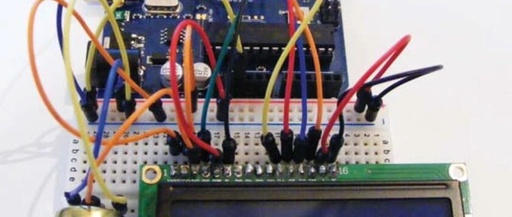
Writing information to the LCD screen. Making the LCD display your own information not only brings satisfaction but is also very useful. Required Components – Arduino circuit board – breadboard – jumper wires – 1602 LCD screen (compatible with Hitachi HD44780) – 50k ohm potentiometer Required Arduino Libraries • LiquidCrystal Working Principle We will use … Read more

Controlling the LCD1602 Liquid Crystal Display with Wa Language

Controlling the LCD1602 Liquid Crystal Display with Wa Language

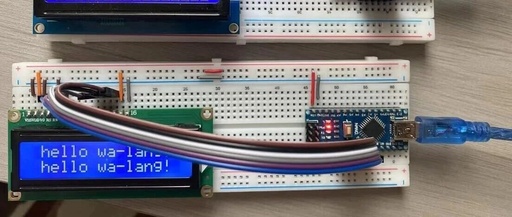
This is an example program for the LCD displayed at the 3rd Software Innovation Development Conference using Wa Language, as shown below: 1. LCD1602 Display The LCD1602 (Liquid Crystal Display 1602) is a common character-type liquid crystal display module, where 1602 indicates that it can display 16 columns and 2 rows, totaling 32 characters. The … Read more

Highly Recommended: Arduino 80-Class Teaching Plan and Objectives for Primary and Secondary School Students!

Highly Recommended: Arduino 80-Class Teaching Plan and Objectives for Primary and Secondary School Students!

1. Overall Course Introduction Knowledge Framework Applicable Age:Suitable for children in the fourth grade and above; for third graders, learning should be adjusted based on the child’s ability. Course Design Philosophy: 1. The entire course is centered around programming design concepts, emphasizing hardware fundamentals and programming thinking. 2. Periodic practical projects can enhance children’s sense … Read more