RTOS Benchmark: A Test Suite for Measuring Core Operation Performance of Real-Time Operating Systems

RTOS Benchmark: A Test Suite for Measuring Core Operation Performance of Real-Time Operating Systems

RTOS Benchmark is a test suite specifically designed to measure the core operation performance of Real-Time Operating Systems (RTOS). It quantifies the time and overhead of basic operations such as thread creation/switching, mutex/semaphore, timers, and message queues through a series of benchmark tests. Currently, it mainly supports Zephyr (qemu_x86, frdm_k64f) and FreeRTOS (frdm_k64f), with plans … Read more
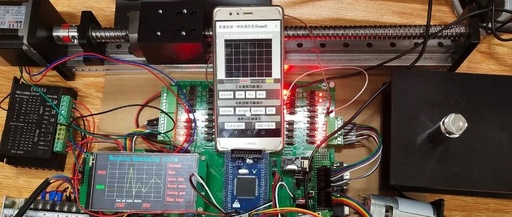
Choosing the Right Real-Time Operating System for Your Embedded System

Choosing the Right Real-Time Operating System for Your Embedded System

Selecting the correct Real-Time Operating System (RTOS) is crucial for the performance, reliability, and efficiency of embedded system development. This article will guide you through understanding RTOS, its components, advantages and disadvantages, and types, as well as how to choose the best real-time operating system for your application. This article serves as a guide, providing … Read more

Comprehensive Learning Path for Embedded Systems: From Beginner to Expert, with a Pitfall Avoidance Guide

Comprehensive Learning Path for Embedded Systems: From Beginner to Expert, with a Pitfall Avoidance Guide

Introduction Embedded technology has permeated every aspect of life—from smartwatches to industrial control, from smart homes to new energy vehicles. Mastering this technology not only unlocks more career possibilities but also allows you to create products with real value. However, many beginners often find themselves confused: where should they start? What basics are needed? What … Read more

What to Consider When Using RTOS?

What to Consider When Using RTOS?

Follow “Embedded Miscellany” and select “Star the Official Account” to progress together! Source | CSDN For many embedded projects, system designers tend to choose a Real-Time Operating System (RTOS). But is an RTOS always necessary? The answer depends on the specific application, so understanding what goals we aim to achieve is key to determining whether … Read more

What Advanced Applications Are There for MCUs?

What Advanced Applications Are There for MCUs?

On Zhihu, there is a very popular question – “What advanced applications are there for MCUs?”“ Zhihu:https://www.zhihu.com/question/623077193 It is often said that MCUs themselves are not particularly advanced. During the MCU development process, it is necessary to follow certain standards, such as defining variables and functions, determining their lifecycle, calling scope, access conditions, etc. Common … Read more

Why Use RTOS with Limited Resources in Microcontrollers?

Why Use RTOS with Limited Resources in Microcontrollers?

For engineers working with microcontrollers, especially those using the 8051 series, the question often arises when discussing RTOS: “Why use RTOS? With such limited resources in microcontrollers, can RTOS ensure efficiency?” In response to this question, I would counter: “What is your purpose in using a microcontroller? Is it to program in C, assembly, or … Read more

Detailed Explanation of Thread Programming: From Basics to Embedded Practice

Detailed Explanation of Thread Programming: From Basics to Embedded Practice

1. Introduction: Why Do We Need Threads? In the previous two documents, we explored the concept of processes, address space, and inter-process communication mechanisms. While processes provide the foundation for multitasking programming, in certain scenarios, the process model can be too heavyweight. Imagine if an application needs to handle multiple concurrent tasks simultaneously; creating a … Read more

Essential for Embedded Systems! Slimming Down the C Standard Library to Just a Few KB: Practical Notes on picolibc

Essential for Embedded Systems! Slimming Down the C Standard Library to Just a Few KB: Practical Notes on picolibc

In simple terms, picolibc is a C standard library (libc) tailored for small embedded devices. It combines the essence of newlib and AVR Libc, targeting systems with extremely limited memory—capable of running on a variety of architectures such as MSP430, RISC-V, ARM, ESP32, and MIPS. The focus is on being small, fast, and testable. Why … Read more

A Must-Read for Embedded Engineers! Guide to Choosing RTOS in Different Fields

A Must-Read for Embedded Engineers! Guide to Choosing RTOS in Different Fields

1. Internet of Things: Low Power + Security is Key Recommended RTOS: FreeRTOS (open-source preferred), Zephyr (new security contender), ThreadX (AIoT tool) Key Points: IoT nodes require extreme minimalism → FreeRTOS kernel <10KB 5G/WiFi devices need security certification → Zephyr supports PSA security standards AIoT complex tasks → ThreadX microsecond-level thread switching 2. Automotive Electronics: … Read more

Technical Communication | Discussion on Embedded Real-Time Operating Systems

Technical Communication | Discussion on Embedded Real-Time Operating Systems

01 Overview An Embedded Real-Time Operating System (RTOS) refers to a type of lightweight operating system that operates in resource-constrained environments (space and time) and can respond to external events within a defined time frame while executing functions. Since the release of the first embedded real-time kernel VRTX32 by Ready System in 1981, the RTOS … Read more