Surface Functionalized Sensors for Humidity-Independent Gas Detection
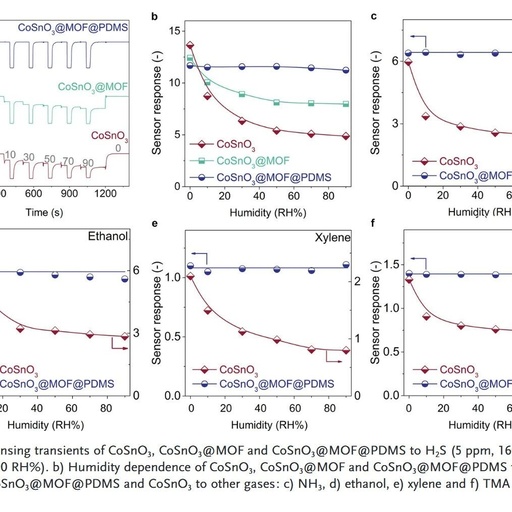
Surface Functionalized Sensors for Humidity-Independent Gas Detection

Reference Information Document Title: Surface Functionalized Sensors for Humidity-Independent Gas Detection Publication Date: March 15, 2021 Journal: Angewandte Chemie International Edition DOI: 10.1002/anie.202015856 Title: Breakthrough in Humidity Interference! New Gas Sensors Achieve Humidity-Independent Detection Introduction In the field of gas detection, humidity interference has always been a challenging issue. Traditional semiconductor metal oxide (SMOX) gas … Read more
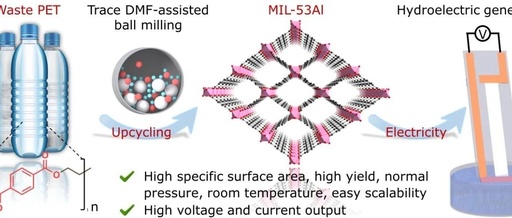

Research Progress of the Research Group in Chem. Eng. J.: Upgrading Chemical Recycling of Waste PET to Prepare MIL-53Al Using Trace Solvent-Assisted Two-Step Ball Milling Method and Its Application in Water Evaporation Power Generation

Research Progress of the Research Group in Chem. Eng. J.: Upgrading Chemical Recycling of Waste PET to Prepare MIL-53Al Using Trace Solvent-Assisted Two-Step Ball Milling Method and Its Application in Water Evaporation Power Generation

Research Background Polyethylene terephthalate (PET) is a common plastic known for its high wear resistance/impact resistance, excellent chemical stability, and good transparency, widely used in food containers, packaging, clothing, carpets, ropes, and other fields. In 2022, the global production of PET reached 25.5 million tons, and it is expected to increase to 35.7 million tons … Read more

Direct Air Carbon Capture Technology

Direct Air Carbon Capture Technology

The technology for removing CO2 from the air, known as Direct Air Carbon Capture (DAC)[22], differs from CCUS technology, which targets carbon capture from industrial fixed source emissions. DAC can capture CO2 emissions from distributed sources such as small fossil fuel combustion devices and vehicles. This technology generally employs physical and chemical adsorption methods, but … Read more

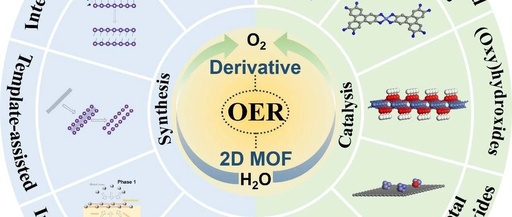
Latest Advances in 2D Metal-Organic Frameworks: From Synthesis to OER

Latest Advances in 2D Metal-Organic Frameworks: From Synthesis to OER

Efficient oxygen evolution reaction (OER) electrocatalysts are crucial for water splitting and metal-air batteries. Two-dimensional (2D) metal-organic frameworks (MOFs) have become a new class of efficient OER electrocatalysts due to their abundant coordinatively unsaturated metal nodes, large specific surface area, and tunable structures. Moreover, due to inheriting the original microstructure of MOFs and possessing stronger … Read more