Achieve Intranet Penetration with Raspberry Pi and Nginx Without Public IP

Achieve Intranet Penetration with Raspberry Pi and Nginx Without Public IP

Linux | Red Hat Certified | IT Technology | Operations Engineer 👇 Join the technical exchange QQ group of 1000 people Note: [Public Account] to pass faster 1. Install Nginx Installing Nginx on Raspberry Pi is also very simple, it can be installed directly using the apt command, first update the repository sudo apt update … Read more


Track Your Family Schedule with Raspberry Pi and Low-Power Display

Track Your Family Schedule with Raspberry Pi and Low-Power Display

Introduction: By utilizing open-source tools and e-ink screens, everyone can be aware of the family schedule. Word count: 1360, Reading time: 2 minutes https://linux.cn/article-13222-1.htmlAuthor: Javier PenaTranslator: wyxplus Some families have complicated schedules: children have school activities and after-school activities, important things you want to remember, and everyone has multiple appointments, etc. While you can use … Read more

Controlling a Small Fan Module with .NET and Raspberry Pi

Controlling a Small Fan Module with .NET and Raspberry Pi

(Give DotNet a star to enhance your .Net skills) Source: Dongxia Dugu cnblogs.com/tcjiaan/p/14547950.html Introduction A small fan is essentially a motor with blades attached to its shaft. There are two-blade and three-blade designs. We played with these as kids; solar-powered hats had small fans, and when riding bikes to school, they would spin in sunlight. … Read more

Getting Started with Physical Programming on Raspberry Pi Pico

Getting Started with Physical Programming on Raspberry Pi Pico

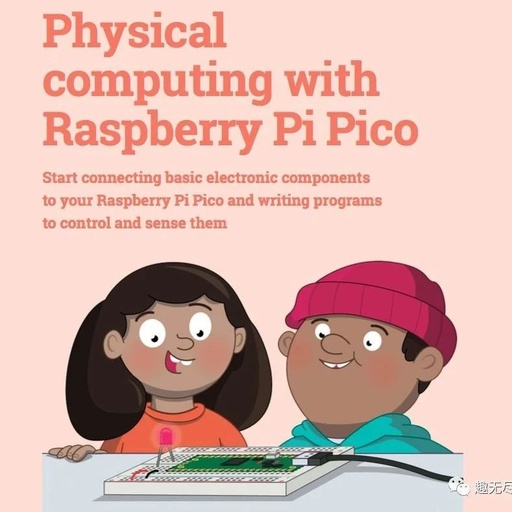
The RP2040 microcontroller on the Raspberry Pi Pico was designed with physical computing in mind. Its numerous General Purpose Input/Output (GPIO) pins allow it to interact with a variety of components, enabling you to build projects ranging from lighting LEDs to recording data about your surroundings. Physical computing is not any harder to learn than … Read more

Raspberry Pi Laboratory: Course 3 OK03

Raspberry Pi Laboratory: Course 3 OK03

Although our operating system cannot do anything other than what we did in Course 2: OK02, we have learned knowledge related to functions and formats, and we can now write new features better and faster. — Robert Mullins Course OK03 is built upon Course OK02, teaching you how to use functions in assembly to make … Read more

Building an IoT Image Transmission Control Crawler with Raspberry Pi and Node.js

Building an IoT Image Transmission Control Crawler with Raspberry Pi and Node.js

This article is contributed by float, introducing a remote-controlled car robot project based on the Raspberry Pi platform, supporting image transmission and remote control. The software part of the project is open source, and I recommend it to enthusiasts and Raspberry Pi lovers. The inspiration for the project comes from the main character Wall-E in … Read more

Understanding SDF 3.0 in Chip Post-Simulation (Part 1)

Understanding SDF 3.0 in Chip Post-Simulation (Part 1)

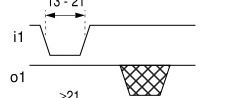
SDF files replace the delay information specified in STD/IO/Macro gate-level Verilog with the actual physical delay information extracted from QRC/Star-RC during VCS/NC-Verilog post-simulation runtime. Therefore, if the condition information in the SDF file is not present in the Verilog specify, it will raise a warning of SDFCOM_INF, meaning IO PATH not found. This article analyzes … Read more

Breakthrough! Space-Level NOR Flash Technology

Breakthrough! Space-Level NOR Flash Technology

On November 27, Infineon announced the launch of the industry’s first 512 Mbit radiation-hardened QSPI NOR Flash designed for space and extreme environment applications. This NOR Flash features a fast Quad Serial Peripheral Interface (133 MHz) and offers extremely high density, radiation, and single event effects (SEE) performance. It is a completely QML-certified non-volatile memory … Read more

Understanding USB/UART Bridge Connectors

Understanding USB/UART Bridge Connectors

When debugging or programming an MCU, data is first encapsulated into USB data packets. Then, the PC sends these data packets to the bridge via the USB interface. The bridge decomposes the USB data packets into UART data, and the UART data arrives asynchronously to the MCU, and is processed according to the application. However, … Read more