
Members of Yingzhan Studio
achieved outstanding results in the National College Student Embedded Chip and System Design Competition



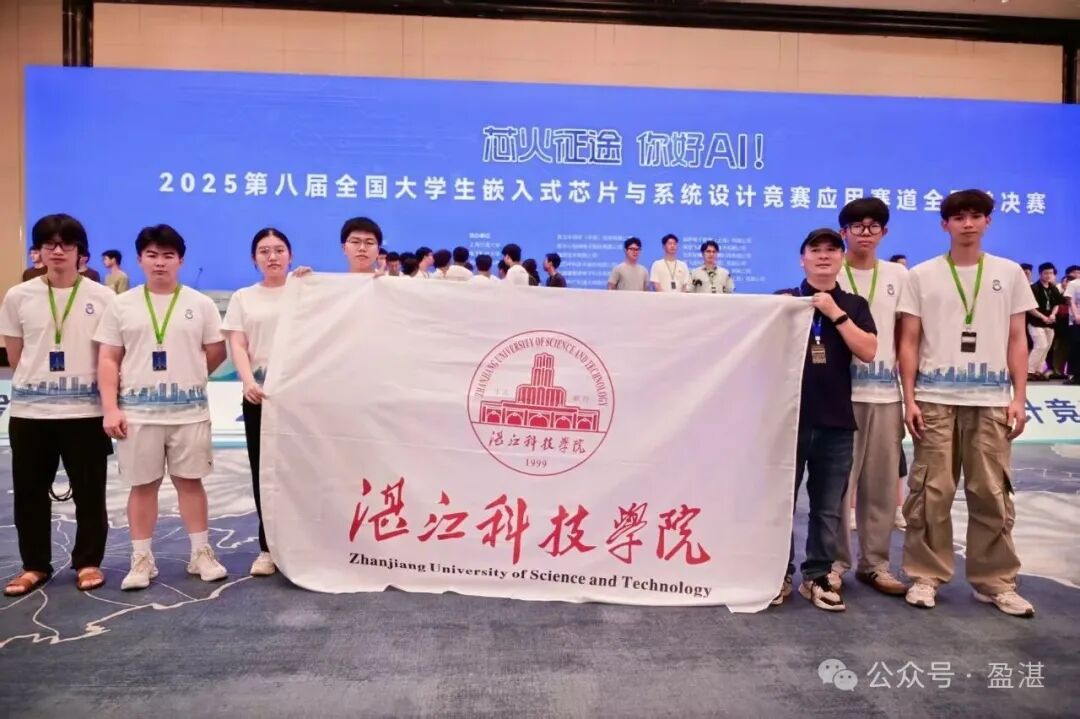
Recently, a team composed of Yu Haotian, Zeng Xiqing, and Huang Xiaoli, guided by teachers Wang Jiangquan and Yu Jihua, stood out in the National College Student Embedded Chip and System Design Competition with their project “Integrated Dehumidification Drying Box for Medicinal Materials Based on STM” (also known as Drycube), winning the National Third Prize!
01
Competition Overview
The National College Student Embedded Chip and System Design Competition is one of the important subject competitions organized by the China Electronics Society, aimed at enhancing college students’ capabilities in embedded chip and system design and promoting cooperation and communication between academia and industry in the field of electronic information. The competition emphasizes innovation and practicality, encouraging students to solve real-world problems based on cutting-edge chip platforms, making it one of the most influential events in the domestic embedded field.

02
Project Introduction
01
Drycube
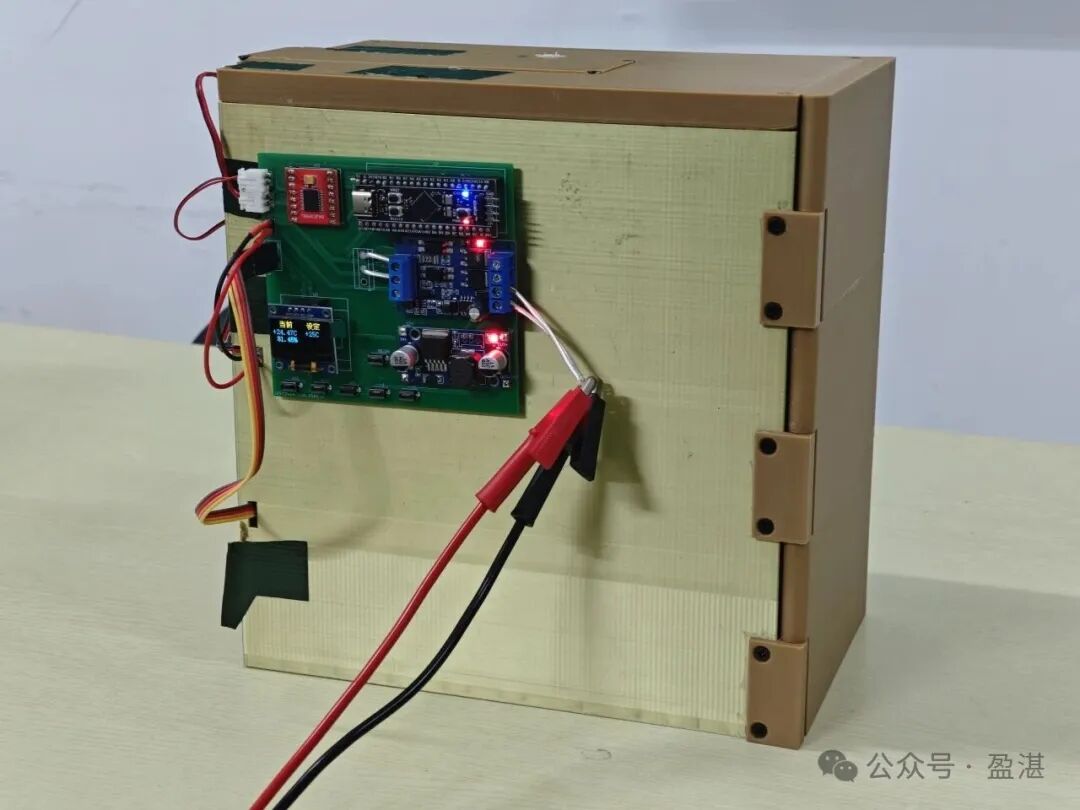
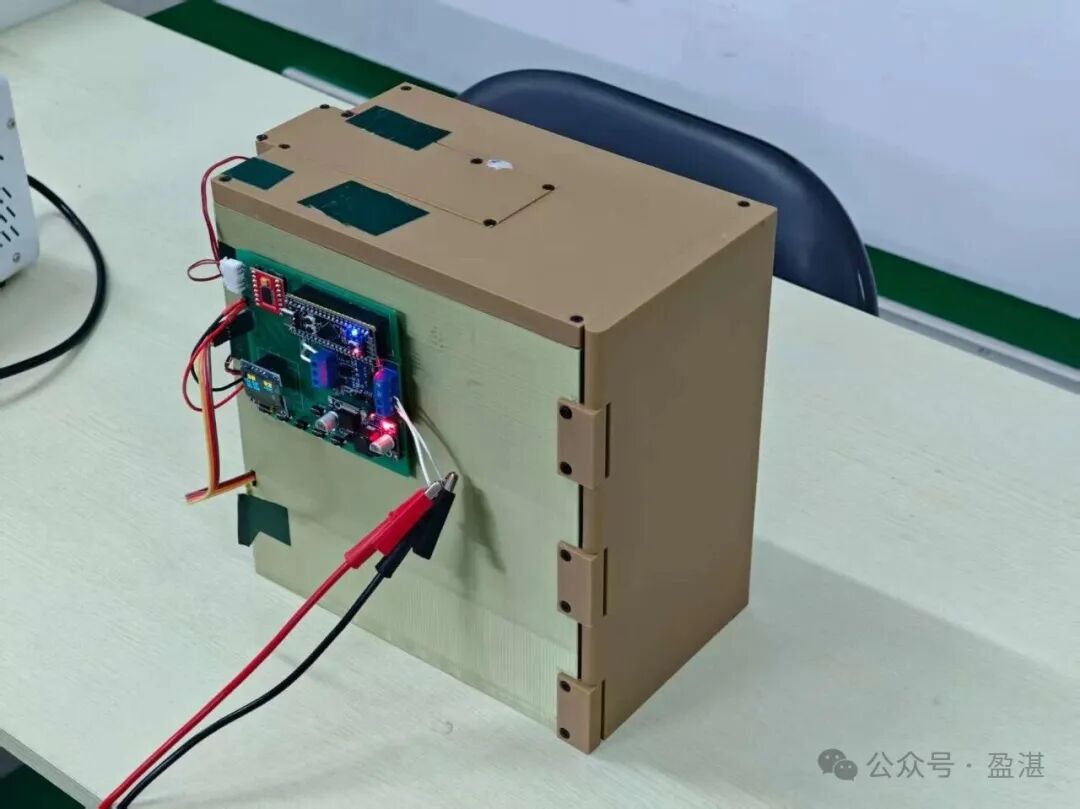
This project focuses on the pain points of low precision in temperature and humidity control and single functionality in the storage scenarios of household and traditional Chinese medicinal materials. It designs and implements a high-precision, low-cost, and intelligent drying storage system for medicinal materials based on the STM32F411CEU6 microcontroller.
Project Product Display
02
Core Functions and Innovations
High-Precision Control
Utilizes the SHT30 sensor to achieve precise monitoring and control with a temperature accuracy of ±0.3℃ and humidity accuracy of ±1.8%RH.
Bidirectional Temperature Control
Employs the TEC1-12706 semiconductor cooling chip, supporting both heating and cooling modes, saving 30% energy compared to traditional heating wire solutions.
Intelligent Interaction
Equipped with a 0.96-inch OLED display and a 6-key operation interface, supporting temperature setting, real-time status display, and one-key reset.
Low-Power Design
Automatically enters a low-power maintenance mode after reaching the temperature standard, reducing overall power consumption by 20%.
Low-Cost Implementation
Total hardware cost is controlled at around 108 yuan, showing great market potential.

03
Project Journey Review
From the preliminary round to the national finals, the team underwent several months of hard work, completing the full process of development from requirement analysis, solution design, hardware production, software programming to system debugging.
Requirement Research
Conducted in-depth analysis of the actual needs for household and medicinal material storage, clarifying the design goals of “high precision, low cost, and ease of operation”.
System Design
Completed the circuit and structural design of modules including STM32 main control, sensor acquisition, semiconductor drive, and human-computer interaction.
Hardware Implementation
Independently designed the PCB, soldered and debugged, completing key parts such as power management, signal driving, and heat dissipation channels.
Software Development
Utilized a layered architecture to write driver programs and control logic, achieving functions such as temperature and humidity acquisition, PID control, OLED display, and key response.
System Testing
After multiple temperature and humidity calibrations, algorithm optimizations, and overall stability tests, the expected performance indicators were finally met.

04
Award Acceptance Speech
This award not only recognizes our technical capabilities but also affirms our teamwork, innovative thinking, and engineering practice abilities. We thank our guiding teachers for their careful instruction and our teammates for their joint efforts and persistence. We will continue to delve into embedded technology and explore more possibilities for intelligent hardware innovation!
We welcome you to follow our project’s subsequent progress and look forward to collaborating with more students!

◀
END
▶
Images | Yingzhan Studio, Zhanjiang University of Science and Technology
Text | Yu Haotian
Layout | Wu Guangqi
Initial Review | Pan Junye, Yu Haotian
Final Review | Wang Jiangquan