Wi-Fi, as the most commonly used internet access technology, is closely related to everyone’s life.
Especially in the past two years, due to the pandemic, more and more social activities have shifted online, and Wi-Fi has played a huge role in significantly reducing the impact of the pandemic on society and the economy.
According to data provided by Cisco (see Figure 1), in 2021, 50% of global internet traffic came from Wi-Fi.
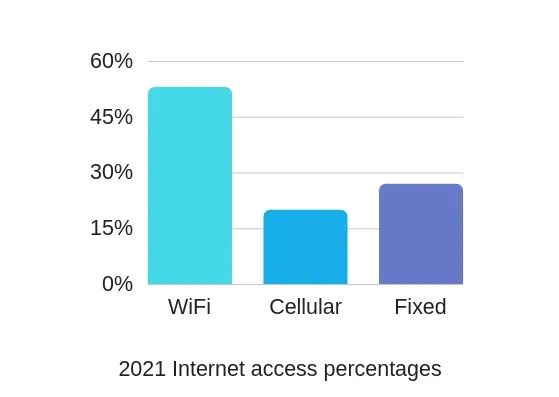 Figure 1: Proportion of Internet Traffic Access Technologies in 2021 (Data Source: Cisco)In the past 20 years, Wi-Fi has relied on the only two frequency bands of 2.4GHz and 5GHz (more than 600MHz frequency spectrum), carrying the ever-growing network demand.In the previous article (link), we discussed some new technologies in Wi-Fi 6. These technologies can help alleviate network congestion.However, even if wireless engineers can use numerous cutting-edge technologies to expand network capacity, the rapid increase in the number of wireless devices and the ever-growing speed requirements brought by applications have ultimately led to spectrum becoming the bottleneck of network capacity.Currently, the two frequency bands used by Wi-Fi, 2.4GHz and 5GHz, are already very crowded. This is reflected in user experience as increased network latency, decreased user speeds, and more frequent interference between Wi-Fi routers.To address this challenge, shortly after the launch of Wi-Fi 6, the Wi-Fi industry actively promoted the development of Wi-Fi 6E.Wi-Fi 6E adopts the core technologies of Wi-Fi 6 and extends the operating frequency band of Wi-Fi 6 to 6GHz (5925-7125MHz) to expand network capacity.As shown in Figure 2, the newly added 1200MHz doubles the spectrum resources available for Wi-Fi compared to the past.
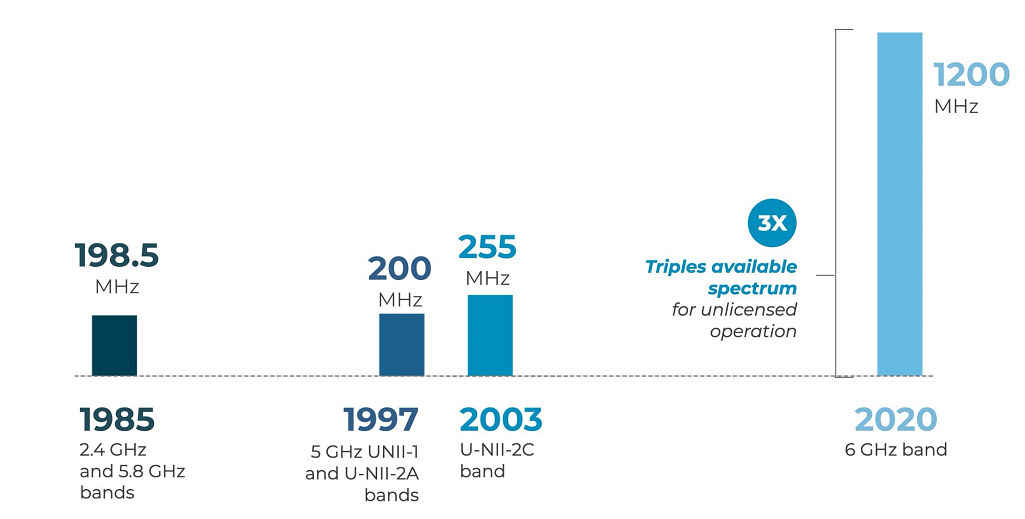 Figure 2: Historical Development of Wi-Fi Frequency BandsThe 6GHz spectrum can qualitatively enhance Wi-Fi performance. From Figure 3, we can see that 6GHz doubles the number of Wi-Fi channels.
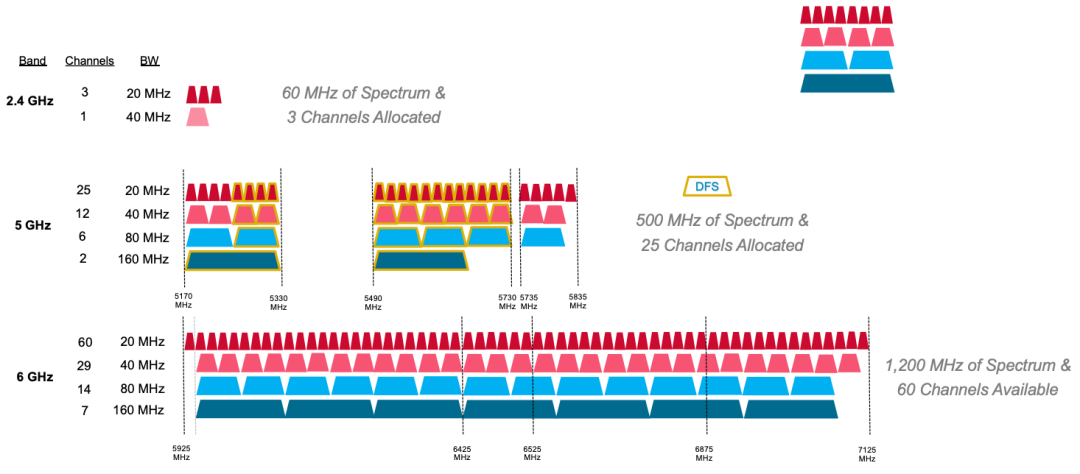 Figure 3: Number of Channels for 2.4, 5, and 6GHz Wi-FiFor the currently most commonly used 40MHz channel, 5GHz can provide 4 regular channels and 8 DFS channels.(Note: The purpose of DFS channels is to protect radar frequency from interference; when Wi-Fi devices detect radar operating in that band, Wi-Fi will automatically avoid that channel.)In 6GHz, there are up to 29 40MHz channels available for Wi-Fi devices to choose from.█ Why Do We Need So Many Channels?To answer this question, we need to view the various nodes of the network as a whole.From mobile phones, computers, to wireless routers and subsequent fiber networks, any bottleneck at any node can hinder network performance. In the past, during the era of 10 to 100 megabit fiber, the bottleneck in network speed often lay within the fiber network itself. Simply increasing Wi-Fi speed does not significantly impact the overall performance of the network.Now, with the national dual-gigabit infrastructure project advancing, more and more households can access gigabit-speed optical networks, while enterprise fiber networks can reach speeds of up to 10Gb.Fiber technology is also continually evolving, with fiber technology above 50Gbps having appeared in the International Telecommunication Union (ITU) development blueprint as early as 2018, and commercial products are expected to emerge soon.
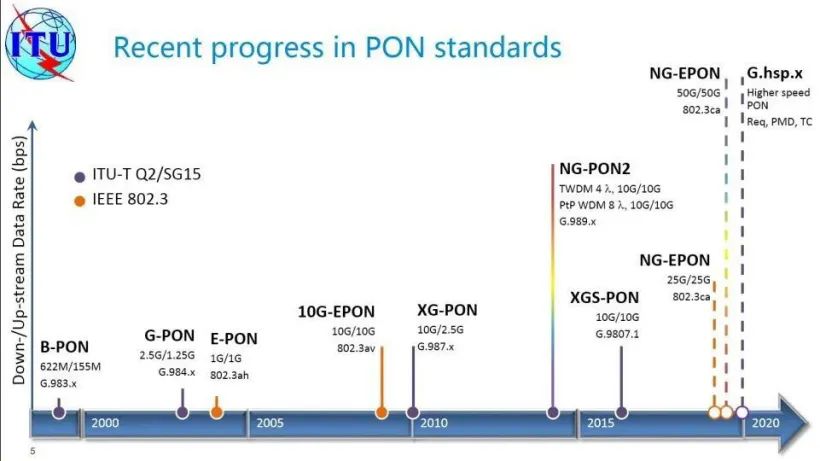 Figure 4: ITU Fiber Technology Development BlueprintIn the past, Wi-Fi devices mainly used two bandwidths: 20MHz and 40MHz. Our mobile phones and tablets typically come with two Wi-Fi antennas to support MIMO.According to the data rate calculation table provided by Aruba Networks in Figure 5, a Wi-Fi device using 2x MIMO and 64QAM modulation can theoretically achieve a maximum rate of only around 344Mbps under a 40MHz bandwidth.(Note: Higher-order modulation requires an excellent wireless channel signal-to-noise ratio, which is difficult to meet in everyday use.)
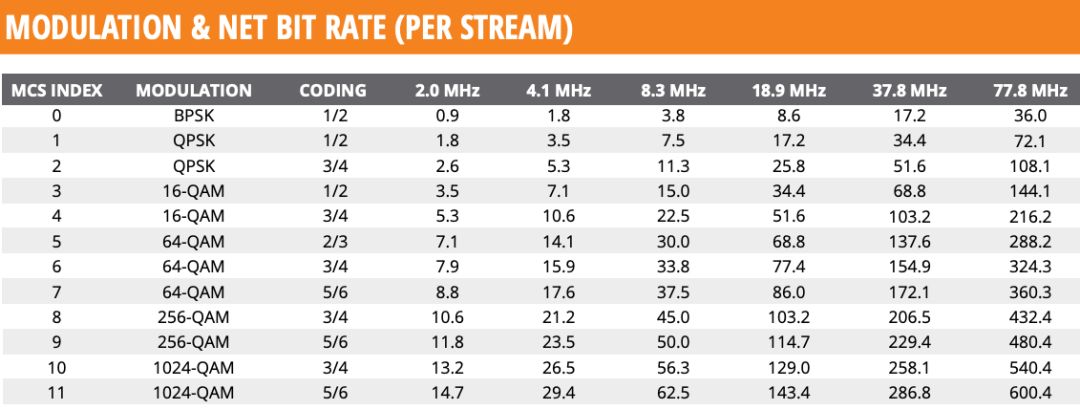 Figure 5: Theoretical Maximum Data Rate of a Single Channel under Wi-Fi 6With users already having gigabit fiber, such Wi-Fi performance has become a bottleneck in the network. At this point, increasing Wi-Fi speed becomes meaningful.By increasing the bandwidth to 80MHz, the maximum rate can exceed 700Mbps, and a 160MHz bandwidth can fully meet the needs of gigabit fiber.Analysis of router usage by users also validates this trend of increasing bandwidth. According to analyses by Cisco and Aruba of their users, 80MHz bandwidth is gradually becoming the default option for households and enterprises when configuring Wi-Fi networks.At this point, you may wonder, didn’t the previous article mention that technologies like OFDMA, higher-order modulation, and more MIMO could improve speed and network capacity? Why is there still a need to increase channel resources?The reason is quite simple: there is no free lunch.While MIMO can provide multiple channels to increase data rates, the cost is that the additional channels require corresponding transceiver channels, which increases the power consumption of Wi-Fi devices.Secondly, introducing higher-order modulation and more channel MIMO means that the RF receiver has higher signal-to-noise ratio requirements for wireless channels, which reduces the coverage area and interference resistance of the devices.Moreover, the essence of OFDMA lies in how to distribute the cake more effectively to users, not in making the cake bigger. Therefore, the most direct and effective way to increase capacity is to widen the bandwidth and increase spectrum resources.You may also wonder, isn’t Wi-Fi 6 on 5GHz also capable of supporting 80 and 160MHz bandwidths? Why do we need Wi-Fi 6E?To answer this question, we need to discuss it from the perspective of network multi-router deployment.Currently, the industry’s golden rule for dense Wi-Fi network deployment is the 7-channel reuse scheme.This scheme is an optimal balance point for spectrum usage efficiency and inter-cell interference.The so-called 7-channel reuse scheme refers to the use of different Wi-Fi channels by the 6 adjacent routers surrounding a wireless router.As shown in Figure 6, an example of Wi-Fi deployment in an office space.
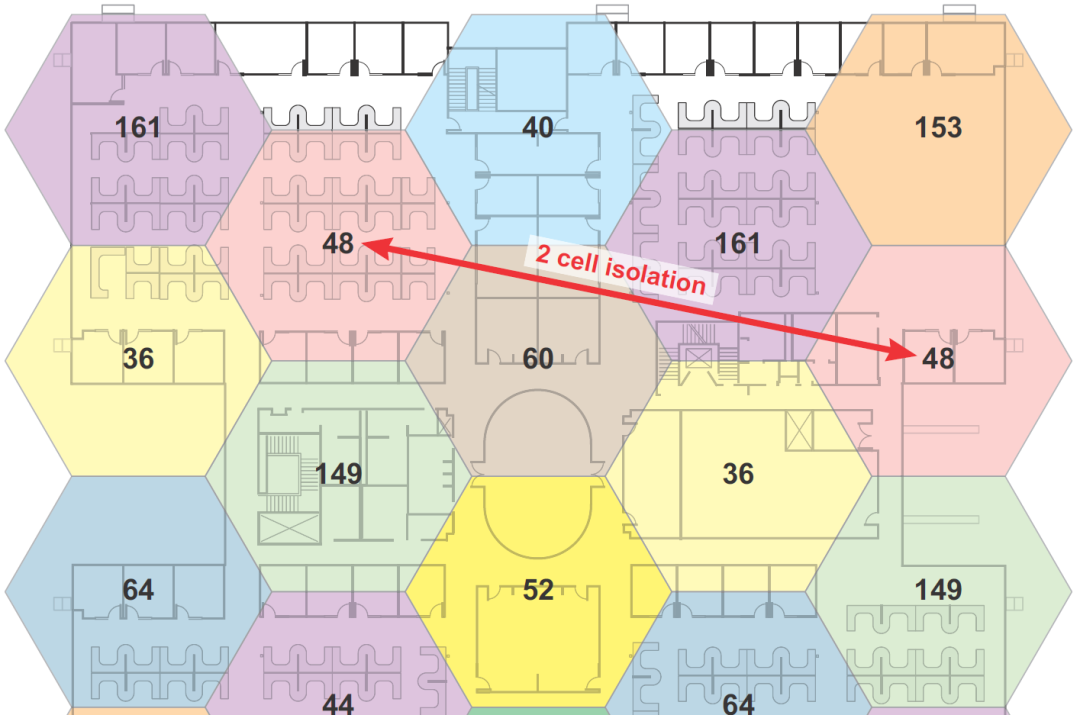 Figure 6: 7-Channel Wi-Fi Cell Deployment SchemeIn a network using the 7-channel reuse scheme, Wi-Fi cells on the same frequency can be spaced apart by two different channels. Due to the distance, the risk of same-frequency interference between cells is minimal.In the past, based on the use of 40MHz channels, this deployment posed no pressure on the spectrum.However, when users upgrade their channels to 80MHz bandwidth, the current 5GHz spectrum is no longer sufficient.This is where Wi-Fi 6E comes into play.From the channel diagram above, we can see that 6GHz has up to 14 channels of 80MHz, which can fully meet the requirements. Even in the future, if users upgrade to 160MHz bandwidth, 6GHz can still provide 7 channels for network deployment.█ The Current Global Development of Wi-Fi 6EDevices supporting Wi-Fi 6E generally support the entire 6GHz band, but manufacturers need to meet the frequency band requirements of various countries for specific usable frequency ranges.Internationally, the spectrum allocation for 6GHz Wi-Fi mainly has two directions: the first is a one-step approach led by ITU Region 2 (Americas), which opens the entire 1.2GHz spectrum (5925-7125MHz) for Wi-Fi use.The second adopts a gradual approach, first opening 500MHz of the low 6GHz band (5925-6425MHz) for Wi-Fi use, while maintaining a wait-and-see attitude towards the high 6GHz (6425-7125MHz) planning.Regions following this strategy mainly include the European Union, Australia, Japan, and others.One of the main reasons is that an important topic in WRC-23 Agenda 1.2 affects the spectrum allocation in these countries and regions.In this topic, the 6425-7125MHz band may be identified as mobile communication bands for future 5G or even 6G use, and China is also one of the active supporters of this topic.
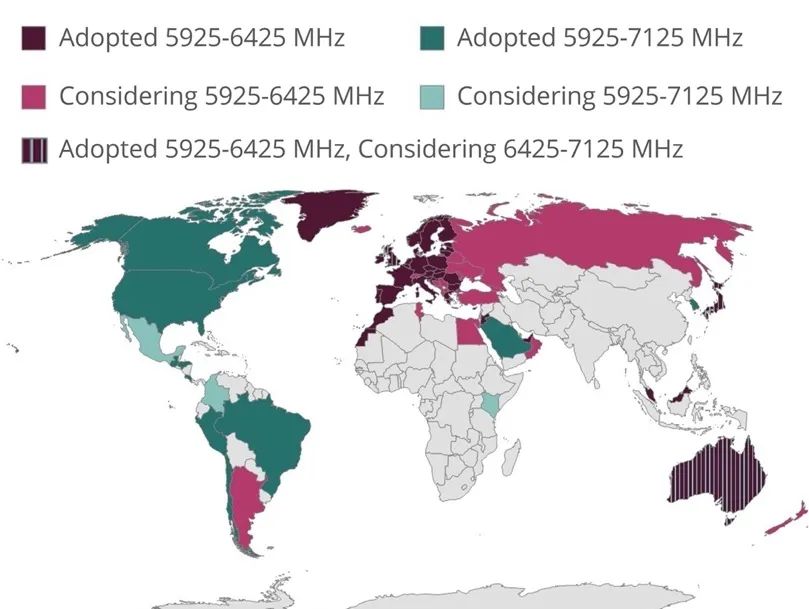 Figure 7: Global Development Status of Wi-Fi 6E (Data Source: Wi-Fi Alliance)Since 2021, there have been numerous terminals and network devices supporting Wi-Fi 6E, and the entire Wi-Fi 6E ecosystem is developing well, with more mainstream devices expected to support Wi-Fi 6E this year.
 Figure 8: Wi-Fi 6E Ecosystem█ Will China Approve the Use of Wi-Fi 6E?On the issue of 6GHz, our country’s Ministry of Industry and Information Technology has consistently supported the allocation of the entire 6GHz band for 5G and future 6G mobile communication use, and Wi-Fi 6E has not received much attention in China.This is closely related to our country’s 5G industrial policy and the current availability of mid-band spectrum for 5G.According to data released by Qualcomm, China has only 100MHz at 2.6GHz and 300MHz at 3.5GHz in mid-band 5G spectrum, including 3.3-3.4GHz specifically allocated for indoor 5G use.Overall, the total mid-band spectrum is less than that of the European Union, North America, and Japan and South Korea.
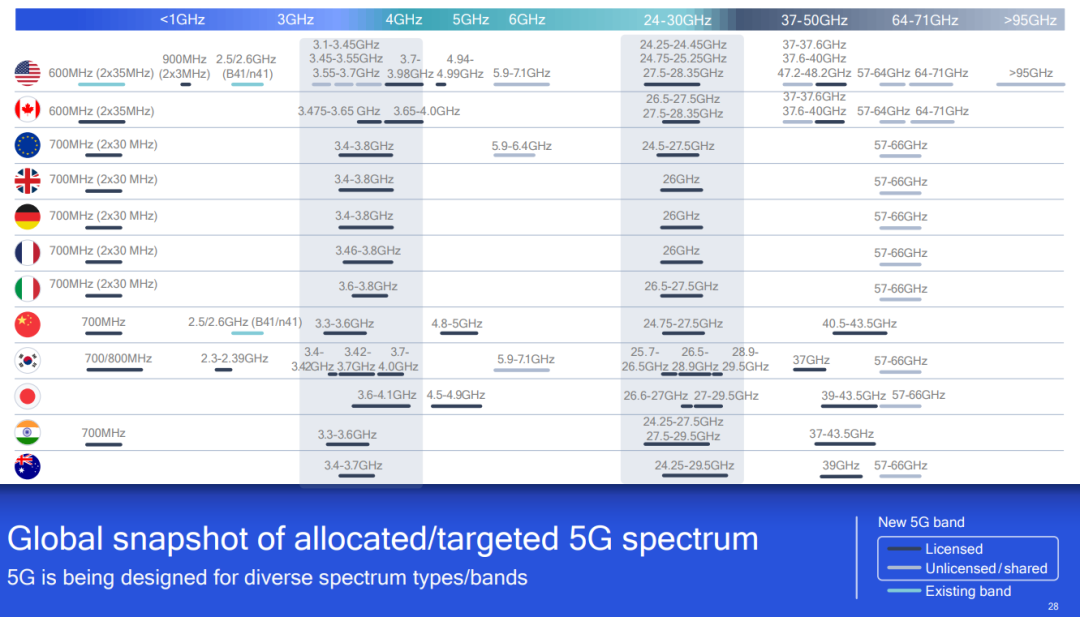 Figure 9: Global 5G Spectrum Allocation (Data Source: Qualcomm)However, starting last year, the Hong Kong SAR government took the lead in planning the use of Wi-Fi 6E in Hong Kong. In the public opinion solicitation document released by the SAR government last year, the impact of the current crowded Wi-Fi network on enterprises and individuals was mentioned.After several months of opinion solicitation and discussion, in the final decision document released by the Hong Kong Communications Authority in April this year, Hong Kong adopted a gradual model, opening the low 500MHz of 6GHz for Wi-Fi use, similar to the European Union. For the high 700MHz, Hong Kong will focus on discussions related to WRC-23 Agenda 1.2.I have attached the policy document from the Communications Authority in the references; interested students can study it themselves.
 Figure 10: Hong Kong Communications Authority Wi-Fi 6E Public Opinion Solicitation DocumentThis spectrum policy in Hong Kong gives a glimmer of hope for Wi-Fi 6E in mainland China.Historically, Hong Kong and mainland China have generally maintained consistency in the planning of C-band and millimeter-wave 5G, with Hong Kong often taking the lead in the timing of policy announcements. If this pattern holds, the Ministry of Industry and Information Technology may consider Wi-Fi needs in the planning of the 6GHz spectrum in the future.In fact, the problem of Wi-Fi network congestion is not only present in Hong Kong; medium and large cities in mainland China are facing the same issue. In the future, to enhance the performance of enterprise and household networks, relying solely on 5G is far from sufficient, considering enterprise costs, device ecosystems, and the load capacity of the three major telecom operators.Moreover, even if it cannot compare with influential companies like ZTE, Huawei, and China Mobile in the international mobile communication industry, China has large companies in the Wi-Fi industry, such as H3C, Fiberhome, and TP-link, and even the enterprise network divisions of ZTE and Huawei are important partners in the Wi-Fi ecosystem.If the 6GHz band is entirely allocated to mobile communications, it would be a significant blow to enterprises whose main business is Wi-Fi products and services. Especially, whether Wi-Fi 7 can develop in China will largely depend on the availability of sufficient spectrum resources.From the historical development of technology both domestically and internationally, the pace of technological updates is often unpredictable. When government policies lead the way and take a gamble on a particular technology, there is often a risk of misjudgment.Industrial policies tend to be less effective than market policies in ensuring the long-term vitality and international competitiveness of products. Allowing enterprises to determine the future direction of technological development through fair market competition will lead to more rational capital allocation, more effective resource distribution, and stronger vitality for enterprises.█ The Future of Wi-FiWi-Fi technology continues to evolve.Shortly after the introduction of Wi-Fi 6 in 2019, the 802.11 working group began research on the next generation of Wi-Fi technology—Wi-Fi 7. Wi-Fi 7, academically known as 802.11be, uses the same spectrum resources as the current Wi-Fi 6E.The standard work for Wi-Fi 7 is currently underway, with the first release confirmed earlier this year. The complete standard work is expected to be finalized after 2024, and certified Wi-Fi 7 devices are not expected to be widely available until 2025.
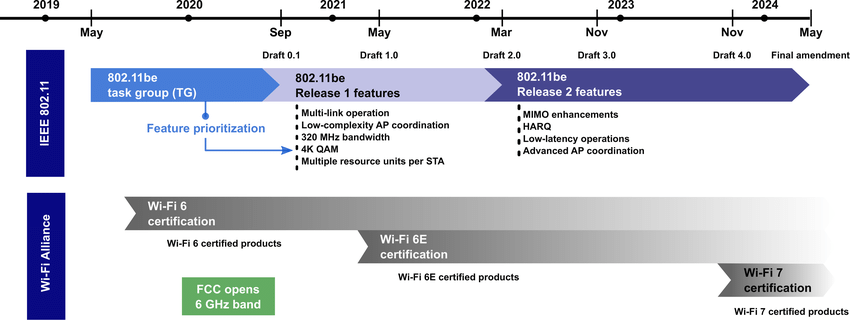 Figure 11: Timeline for Wi-Fi 7(End of Article)The author of this article, Dr. Tang Xin, currently serves as the Technical Director of Spectrum Lab.References[1] Aruba Networks white paper — Technical Guide to Wi-Fi 6e and the 6 GHz band.[2] Wi-Fi Alliance – Countries Enabling Wi-Fi 6E.[3] Qualcomm, 5G spectrum innovation and global update.[4] Hong Kong Communications Authority — Establishing a category license to regulate the use and business activities of 6GHz devices for wireless local area networks and changes to the provision of public wireless local area network services.[5] Khorov, E., Levitsky, I., & Akyildiz, I. F. (2020). Current status and directions of IEEE 802.11be, the future Wi-Fi 7. This article is from Xianzao Classroom, and is intended for sharing. If there is any infringement, please contact us for removal.
Disclaimer:All content provided by the self-media is sourced from self-media, and the copyright belongs to the original author. Please contact the original author for permission to reprint.The views expressed in the article are solely those of the author and do not represent the position of Global Physics.
Global Physics
ID: huanqiuwuli
Global Physics focuses on physics learning and is committed to spreading physics culture. Specialized in physics, dedicated to physics! Aiming to inspire learners’ interest in physics, we share the wisdom of physics, learn to think about problems with a physics mindset, and present an interesting, rich, colorful, and magical physics.
For submissions, please contact [email protected]