1. Definition of Programmatic Advertising:Programmatic advertising uses software and algorithms to automate the processes of buying, delivering, and optimizing ad placements. It sources ads from web pages, mobile apps, voice, and video. Programmatic advertising employs automation and machine learning algorithms to show the most effective ads to audiences based on a series of signals, such as shopping patterns. Bidding in DSP is based on bidding strategies, budgets, audience preferences, and relevant materials. Impressions are automatically provided to the highest bidder.The advantages of programmatic advertising include:
- More efficient: Through technologies like Real-Time Bidding (RTB), it helps advertisers accurately display ads to target audiences.
- Data-driven: Real-time analysis of whether the advertiser’s ads are reaching the right audience.
- CPM billing: The vast majority of programmatic ads use a cost-per-thousand-impressions (CPM) model, which is cheaper compared to direct purchases or CPC methods.
2. Billing Methods:DSP charges based on cost per thousand impressions (CPM), meaning advertisers pay for 1,000 impressions.Programmatic ad purchasing can be done through fixed or dynamic CPM. Fixed CPM refers to paying a fixed amount for every 1,000 impressions, which can be used to purchase in Private Marketplaces (PMP) or direct transactions. Using dynamic CPM, advertisers can set a price range they are willing to pay for each impression, with the price of each impression varying based on its value and the optimization of the ad campaign.3. The Value of Amazon DSP:The demand-side platform (DSP) refers to the backend of Amazon DSP, which is also a software. This backend supports advertisers in purchasing impressions from multiple media sites and managing ad delivery from a unified platform.Strategic media purchases affect the success of ad campaigns. Ads need to be shown to the right buyers at the right time and frequency. DSP uses data from ad interactions and the SSP media supply side to decide the optimal audience segments and materials.The following core factors determine the important position of DSP in programmatic buying:1) Real-time: The systems used by DSP help advertisers display ads based on algorithms in real-time. With DSP, advertisers can reach audiences in a one-to-one manner and purchase various media inventory through the DSP platform.2) Bidding requests: When ad placements are available, the SSP media supply side sends bidding requests to advertisers. Millions of bidding requests are sent daily, and DSP must decide how to handle each bid request.3) AI-based optimization: DSP analyzes audience and material data obtained from ad interactions and the SSP media supply side to decide whether to bid on a particular impression.4) Budget allocation: If the delivery aligns with the advertiser’s goals, DSP uses real-time data to decide on the best bid. The control of bidding limits is set by the seller’s budget cap.Amazon DSP can help advertisers reach audiences on Amazon sites and apps, APD Amazon media direct investment, and third-party exchanges.4. Features of Amazon DSP:1) Full funnel2) Advanced: Amazon DSP is used by advertisers, agencies, and integrated marketing service providers who wish to plan, purchase, evaluate, and optimize all programmatic advertising campaigns. Advertisers can obtain audience reports, campaign strategies, media provision, and data measurement methods to help them achieve their campaign goals.3) Audience: Advertisers can reach audiences aggregated by Amazon, including audiences from their own AMC feedback and third-party audiences. Advertisers can also import their own audiences. Advertiser audiences can be completed through tracking points, customer relationship management, and encrypted email uploads.4) Media supply: Advertisers’ campaigns can cover Amazon’s owned or operated entities, such as Amazon platform, Freevee, Twitch, FireTV, third-party websites and apps managed through Amazon APD, and third-party advertisers.5) Data analysis: Advertisers can use multiple metrics to measure campaign performance, including Amazon retail metrics, off-site metrics, full-funnel analysis, and comparisons with similar seller data obtained from Amazon and third-party data service providers.5. How Bidding is Formed?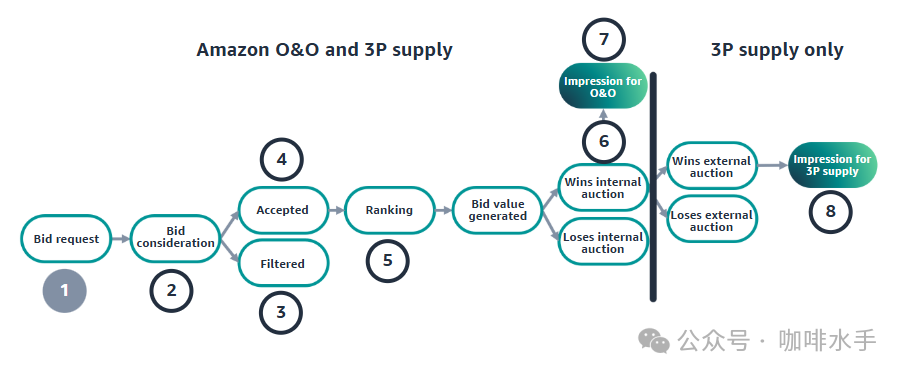 1) Bidding request: When a website page loads with available ad space, event information is transmitted to Amazon DSP.2) Bidding considerations: All eligible ads/material pairs will be considered. Eligibility refers to: passing filtering steps (pre-matching and filtering), including material size/type, format, target audience, media supply, and maximum bid.3) Filtered4) Ad qualified5) Ranking: Amazon DSP ranks qualified ads based on bidding, model prediction behavior, and delivery rhythm scores.Generate bidding value6) Win internal bidding7) Obtain exposure within the Amazon ecosystem8) Obtain exposure on third-party platformsPart 1 ends, next article follows.