Recently, the smartphone industry has been quite lively. On one hand, Qualcomm and MediaTek have successively launched their new generation flagship mobile platforms, and a large number of new flagship models have either been released or are on the way.
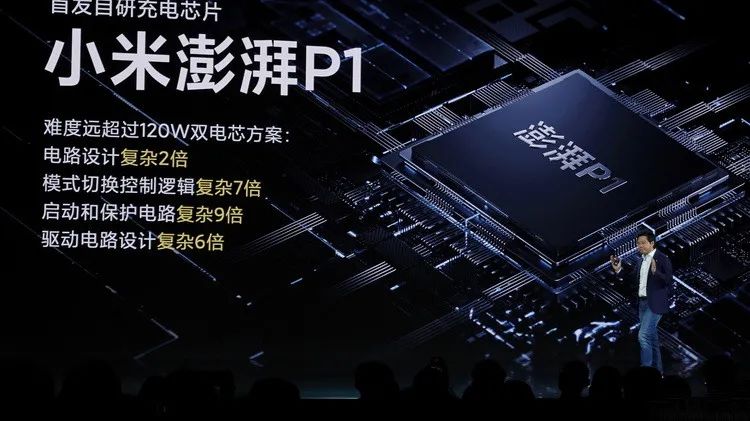
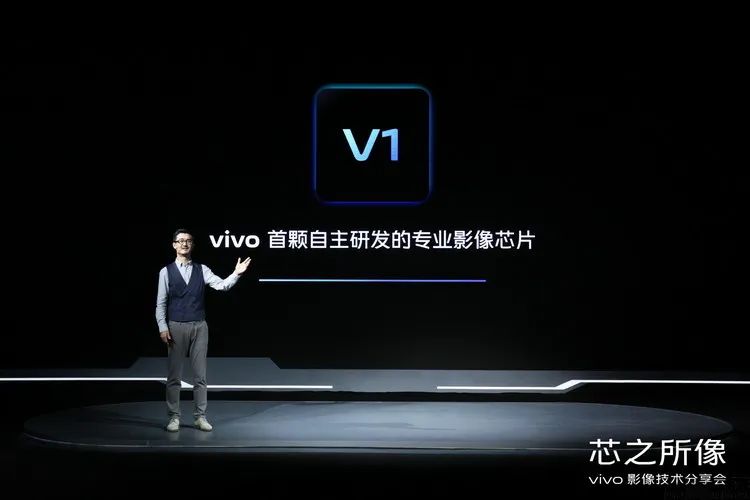
On the other hand, “self-developed chips” have undoubtedly become a hot topic pursued by several major brands in 2021. From Xiaomi’s announcement of its self-developed ISP, the Surge C1, at the beginning of the year, to Vivo’s self-developed ISP, the V1, in the middle of the year, and then to OPPO’s recent release of its self-developed imaging NPU, the Mariana X, and Xiaomi’s self-developed 120W charging chip, the Surge P1, we have seen three brands and four self-developed smartphone chips emerge in just one year.
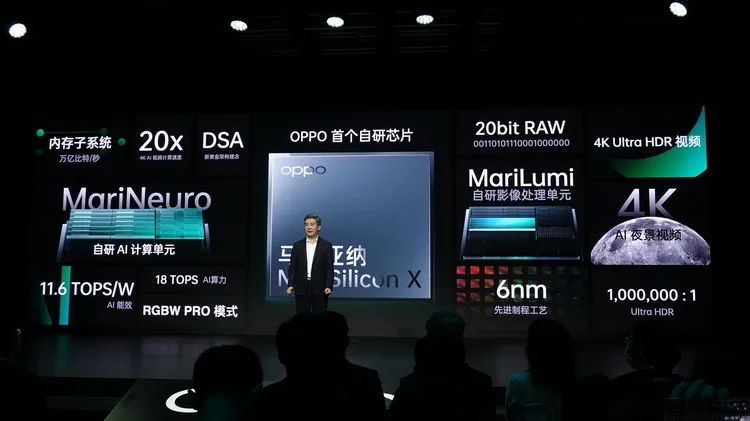
To be fair, these “smartphone chips” are not part of what everyone recognizes as SoC or AP (application processors, which are SoCs without the baseband part). However, it is undeniable that the launch of self-developed chips by these brands has objectively brought unique functional experiences to the corresponding models. At the same time, during their R&D and manufacturing processes, who can say for sure whether they have accumulated experience in advanced processes and complex large chip designs.
However, what we want to discuss today is not when smartphone manufacturers can produce self-developed SoCs. Instead, we will continue to focus on these “functional small chips.” Combining the current hardware architecture of smartphones and market demand, let’s explore the question: for smartphone manufacturers, before they can ultimately produce self-developed SoCs or other “large chips,” what components can they practice self-development on?
-
First, you should know that the “internal structure” of a smartphone is not actually that complex
Although we often say that smartphones are high-tech products, it is precisely because of this that under the current semiconductor technology system, the area of the smartphone’s motherboard is actually getting smaller, while the internal chip integration is getting higher.
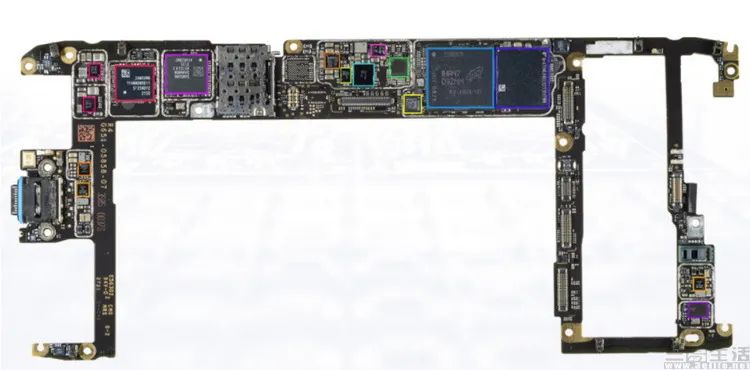
What does this mean? Taking TechInsights’ teardown results of Google’s Pixel 6 Pro as an example, in the large body, the motherboard that actually has chips installed is just a very small frame. On this frame, besides tiny capacitors, resistors, and various data line interfaces, there are only about 31 chips that actually perform functions.
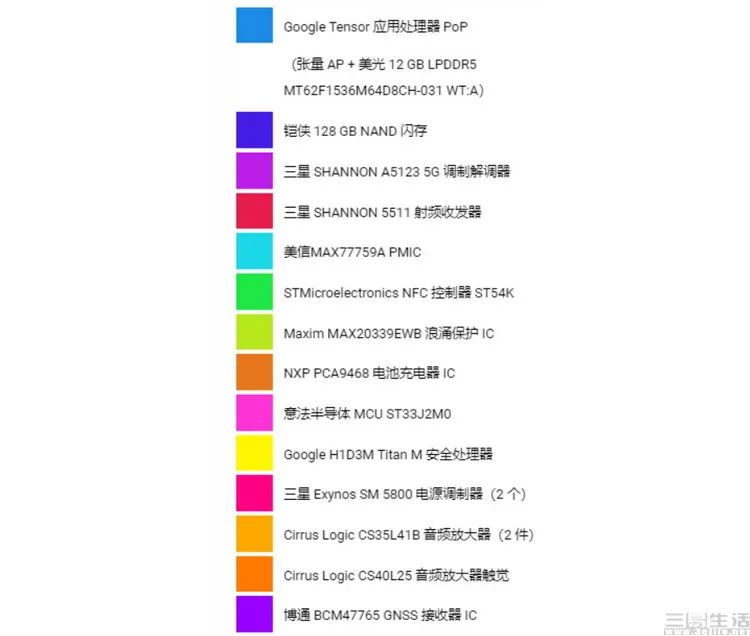
Further exploring the models and uses of these chips, they can basically be divided into eight categories: application processor: 1 (Google’s custom Tensor chip from Samsung), memory and flash: 2 (flash and memory produced by Samsung), power management chips: 11 (from Samsung, NXP, and Maxim, including wired charging management, wireless charging management, power protection, and power management categories), baseband and RF chips: 9 (from Samsung and Skyworks), connection-related chips: 3 (from STMicroelectronics and Broadcom, responsible for NFC, Bluetooth, WiFi, and GPS functions), audio chips: 3 (from Cirrus Logic, including speaker amplifiers and audio decoding functions), screen touch chips: 1, and security encryption chip: 1 (Google’s self-developed Titan M).
Did you notice? In fact, the number of internal chips in today’s smartphones is neither as many as many friends imagine, nor is there much room left for terminal manufacturers to “play freely.”
-
Self-developed chips must consider practicality and feasibility
Why do we say this? First, everyone should know that after so many years of development in the smartphone industry, many fields have actually formed very high technological and patent barriers. Smartphone manufacturers not only find it extremely difficult to achieve “self-development” technically in these fields, but even if they do produce chips, they may face patent issues or have almost no practical value.
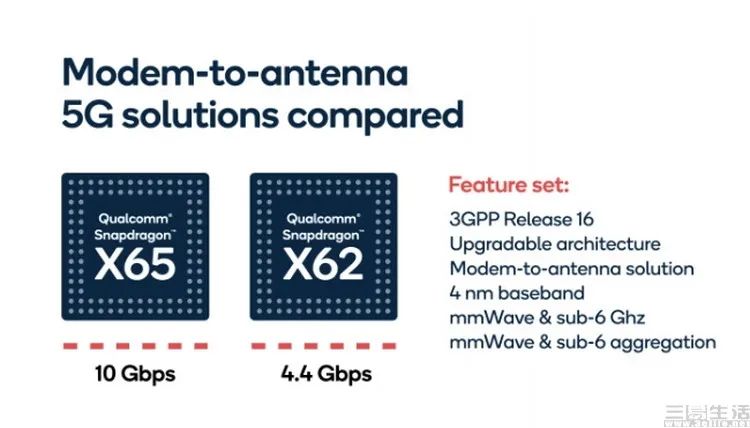
For example, a typical case is the baseband and RF chips related to connection functions such as Bluetooth and WiFi. On one hand, there are only a handful of manufacturers in the entire industry that hold the core patents related to various basebands and wireless standards. On the other hand, don’t forget that the wireless connection capabilities of smartphones need to work in conjunction with the operator’s base stations and home WiFi routers, so even if smartphone manufacturers develop wireless chips independently, they may encounter compatibility issues with base station solutions and router solutions from other brands, making it difficult to demonstrate performance.
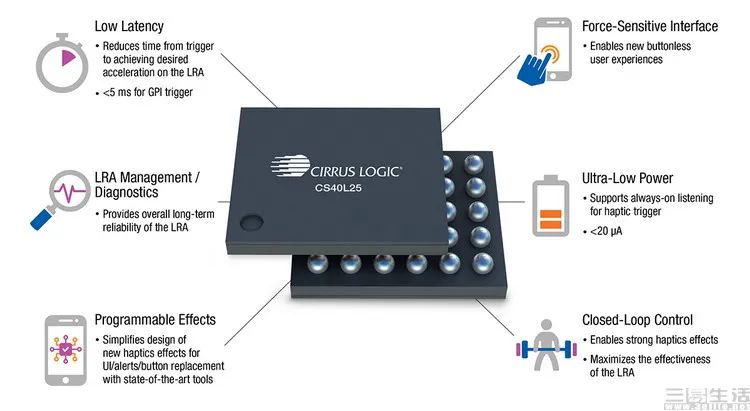 The performance of audio ICs from major manufacturers such as AKM, ESS, and Cirrus Logic is already outstanding, with no need for additional improvement.
Secondly, there are some chips for which the technological barriers are not particularly high, but the related technologies are already extremely mature, with almost no demand for self-development improvements, such as audio chips and touch chips. For today’s smartphones, the audio solutions and touch technologies they use have not yet reached the “potential limits” of the related chip suppliers. For smartphone manufacturers, the result of self-developing such chips may lead to user experiences that are not as good as the public version solutions that suppliers can easily produce, thus making it almost unnecessary.
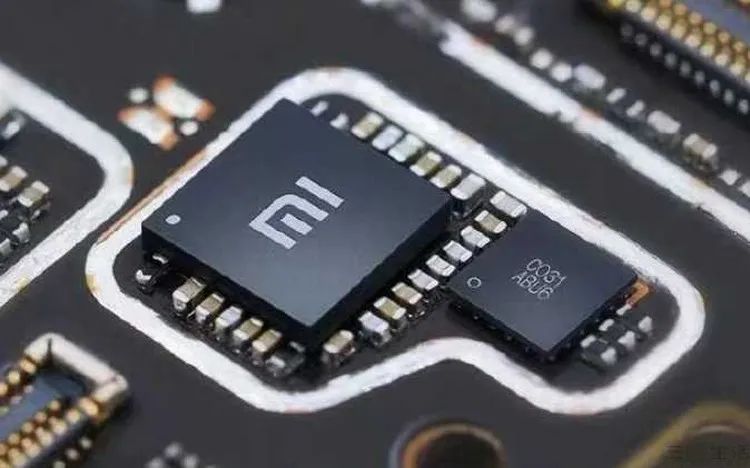
Consequently, we see that the few self-developed chips announced by smartphone manufacturers throughout 2021 have almost all focused on enhancing the camera processing capabilities of smartphones through ISPs and NPUs, as well as power management chips (PMUs) to speed up charging and improve battery capacity. It is evident that smartphone manufacturers choose to self-develop chips in these areas because consumers have a strong demand for smartphone photography and fast charging, and self-developed chips can significantly improve the experience; secondly, the technological barriers in these fields are relatively not so high, and the products provided by suppliers may indeed be insufficient, making “self-development” both necessary and particularly effective.
-
Display Assist and Security Chips May Be the Next “Self-Development” Goals
Understanding this principle, we can look back at the configurations and functions of various flagship models on the market today, making it easier to identify potential directions for “self-developed chips.” First, we believe that an independent display enhancement chip is a more likely “manufacturer self-development solution” that may appear in future smartphones. The reason for this is that, functionally, independent display assist chips can primarily solve three problems. First, they can help correct screen colors while making automatic brightness adjustments more natural and soft, enhancing the screen experience; second, they can enhance the resolution, insert frames, and improve color processing for videos being played on the phone, consuming much less power than using the CPU; finally, in gaming scenarios, independent display assist chips can reduce the actual load on the GPU by inserting frames, thus achieving energy savings and extended battery life.
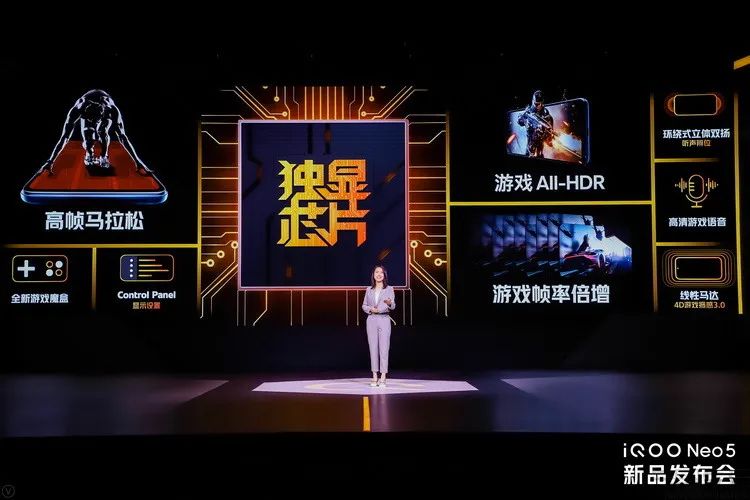
On the other hand, independent display enhancement chips are not a new concept in the smartphone industry. Especially as consumers have become increasingly concerned about display quality, gaming smoothness, and battery life in recent years, independent display enhancement chips have started to be equipped in more and more models, achieving good user feedback. Most importantly, since related suppliers do not focus on promoting their products in the terminal market, although there is a demand for “independent display enhancement chips,” consumers have almost no “brand faith” in them. In this case, manufacturers can create more differentiated functions through self-development and are easily accepted by the market.
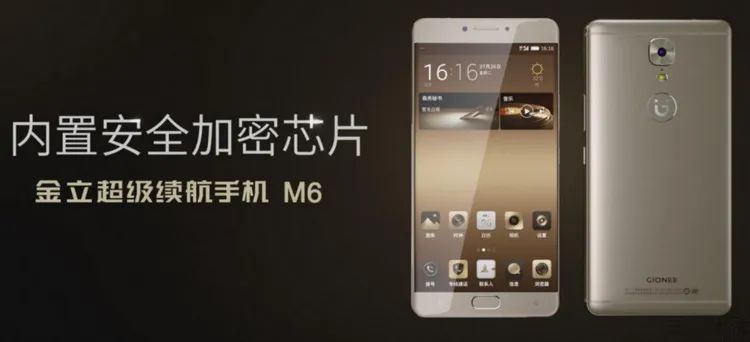
In addition to display enhancement chips, independent security encryption chips are also likely to be one of the projects that smartphone manufacturers will prioritize for self-development in the next phase. In fact, looking back at the history of smartphone development, there have been some models equipped with independent encryption chips, which can achieve a higher level of privacy protection compared to other models, even for certain financial scenarios.
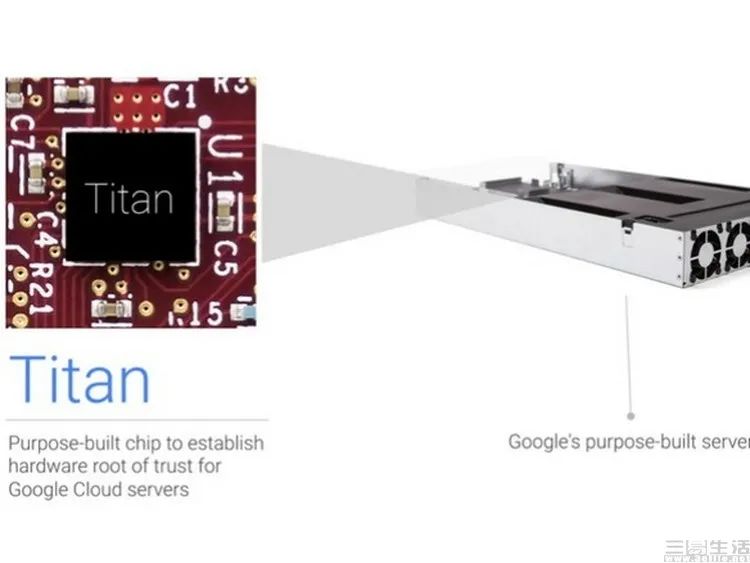 Google’s Pixel phones have been equipped with self-developed independent Titan M security chips for several generations.
Not to mention, consumers are increasingly valuing “privacy” and “security,” and with digital currencies becoming more popular, under this background, smartphone manufacturers developing independent security chips with domestic standards can not only gain a good reputation but also potentially bring some practical functional advantages that are difficult to surpass in a short time or help open up the enterprise market. Of course, after all this, we ultimately hope that after repeatedly practicing with small chips, we can eventually welcome more terminal manufacturers’ self-developed SoCs. After all, this is not just a “face issue,” but is more likely to bring practical benefits to consumers. However, chip development is always something that cannot be rushed, and for us, we can only patiently wait for further good news from relevant manufacturers with an inclusive mindset.
[Images in this article are from the internet]
What Others Are Watching:
Cloud storage speed limit, no X number
MIUI 13 released: new fonts/functions, first batch of push times announced
Xiaomi 12 Pro officially released: fully equipped, starting at 4699 yuan
iOS 16 upgrade list exposed: a classic model is abandoned