What are the mainstream structures of battery pack liquid cooling plates? Understanding their mainstream structures and their impact on battery cells facilitates subsequent maintenance and damage assessment.
1. Mainstream Design Structures and Their Advantages and Disadvantages
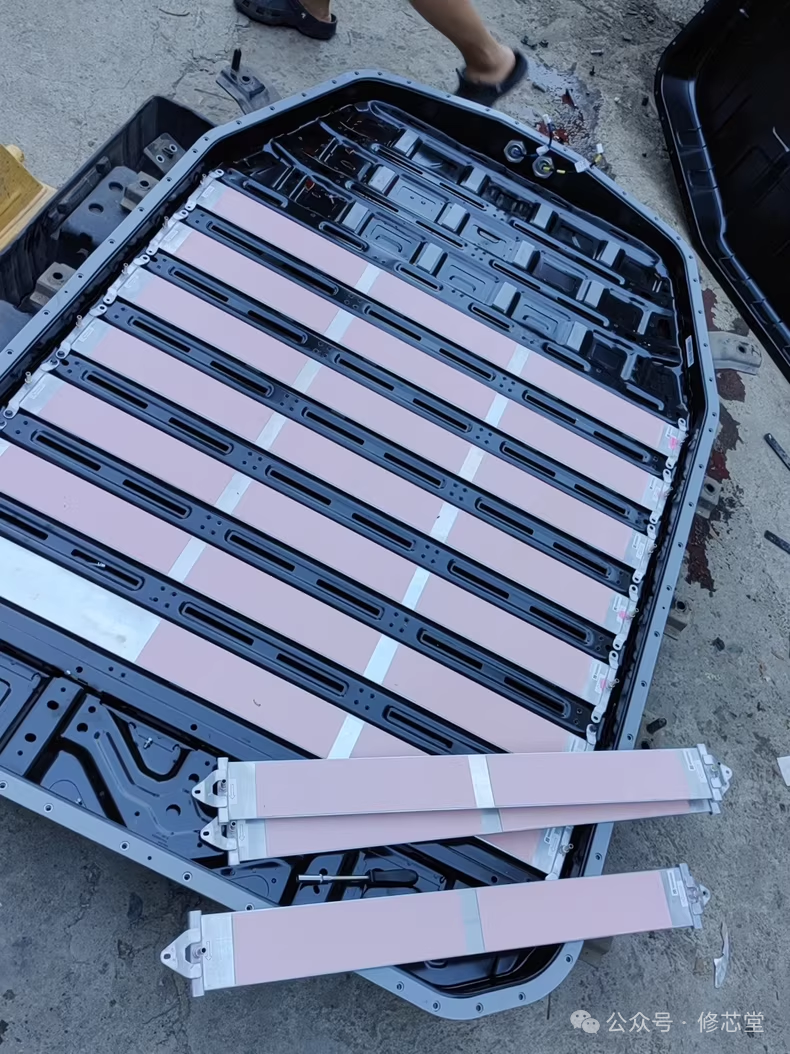
- Harmonica Tube Liquid Cooling Plate– Structure: Multiple parallel flat tubes welded to the collector plate, with coolant flowing inside the tubes.– Advantages: Low cost, simple process, lightweight.– Disadvantages: Poor uniformity (large local temperature differences), low pressure resistance.– Applicable: Early electric vehicles or cost-sensitive models (e.g., early versions of WM Motor, Wuling Hongguang).
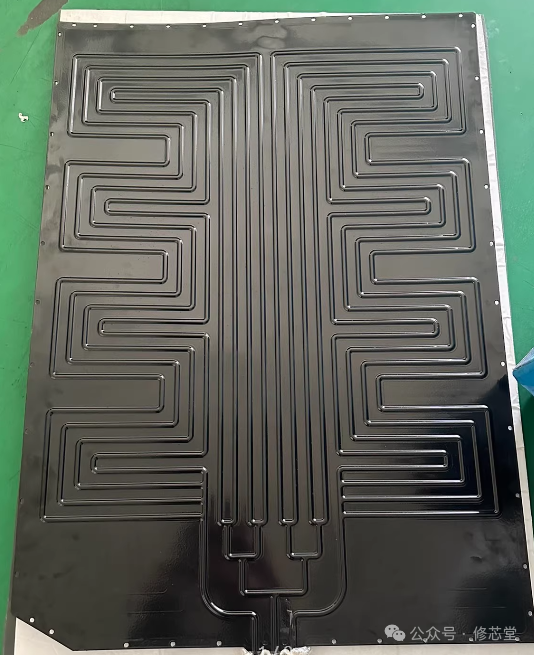
- Stamped Plate Liquid Cooling Plate– Structure: Flow channels formed on aluminum plates through stamping processes, sealed by welding on both sides (“convex hull + flow channel”).– Advantages: Good uniformity, high heat dissipation efficiency, compact structure.– Disadvantages: High mold costs, limited flow channel design.– Applicable: Mainstream electric vehicle models (e.g., mid-to-high-end cars like BYD).
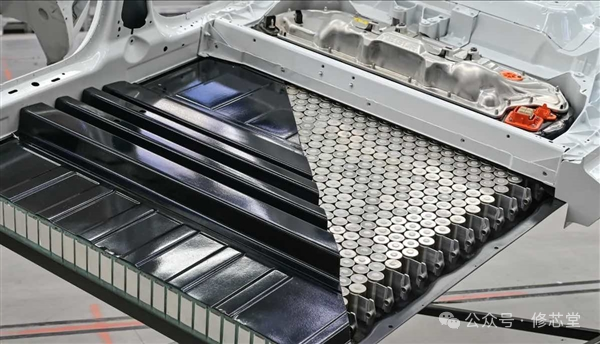
- Snake-Shaped Flow Channel Liquid Cooling Plate
- Structure: Cooling pipes bent into a snake shape or integrated into a strip structure, allowing flexible layout.
- Advantages: Strong adaptability (can bypass other components), easy maintenance.
- Disadvantages: High flow resistance, average uniformity.
- Applicable: Customized battery packs (e.g., Tesla 4680 battery cylindrical cells).
2. Maintenance and Damage Assessment Recommendations
- Common Failures:
- Leaks (cracked weld points, corrosion).
- Visual Inspection: Check for signs of coolant leakage (usually green/pink liquid).
- Pressure Testing: Detect leakage points.
- Minor leaks can be repaired with local welding; severe damage is recommended for complete replacement.
- Liquid cooling plates are rarely damaged alone and are often accompanied by battery pack damage.