 Abstract:TROP2 (Trophoblast Cell Surface Antigen 2) is a tumor-associated antigen that is highly expressed in various solid tumors and has become a popular target for antibody-drug conjugates (ADCs). This article systematically introduces the biological characteristics of TROP2 and its expression profile in tumors, focusing on the molecular design, mechanism of action, and clinical efficacy of representative TROP2 ADCs such as Sacituzumab Govitecan, Datopotamab Deruxtecan, and SKB-264. It details the clinical trial results of these drugs in triple-negative breast cancer, non-small cell lung cancer, and urothelial carcinoma, among other solid tumors. Additionally, it discusses the research progress of TROP2 ADCs in combination therapies with immunotherapy and PARP inhibitors, analyzes the current status of predictive biomarkers for efficacy, and looks ahead to the challenges and future directions in this field, providing readers with a comprehensive view of the application value and prospects of TROP2 ADCs in solid tumor treatment.
1. Introduction: TROP2 – A New Target for Solid Tumor Treatment
In the wave of precision cancer treatment, antibody-drug conjugates (ADCs) have become an important breakthrough direction for the treatment of solid tumors and hematological malignancies due to their unique advantages of “targeted delivery + potent killing”. Following the success of HER2-targeted ADCs, TROP2 (Trophoblast Cell Surface Antigen 2) has gradually become the “new favorite” in ADC development as an antigen widely expressed in various epithelial-derived tumors.TROP2 is a type I transmembrane glycoprotein, initially discovered in human trophoblast cells, with its encoding gene TACSTD2 located on chromosome 1p32.1. Although its specific biological function has not been fully elucidated, studies have confirmed that it plays a key role in cancer development by participating in cell cycle regulation and promoting tumor cell proliferation. More importantly, TROP2 is abnormally highly expressed in various solid tumors while having limited expression in normal tissues, making it an ideal therapeutic target.In recent years, TROP2-targeted ADC drugs such as Sacituzumab Govitecan and Datopotamab Deruxtecan have entered clinical trials and received approval, providing new treatment options for patients with advanced solid tumors. This article will delve into the research and development progress, clinical applications, and future potential of TROP2 ADCs, revealing how this emerging therapy is changing the landscape of solid tumor treatment.
2. Biological Characteristics and Tumor Expression Profile of TROP2
2.1 Molecular Characteristics and Functions of TROP2
TROP2, also known as M1S1 and GA7331, is a transmembrane protein composed of 323 amino acids, containing an extracellular domain, a transmembrane region, and an intracellular domain. Its intracellular domain interacts with intracellular signaling molecules to participate in regulating processes such as cell proliferation, differentiation, and apoptosis. Studies have found that TROP2 can promote tumor cell growth and invasion by activating signaling pathways such as PI3K/Akt and MAPK, thus being regarded as a “tumor-promoting protein”.In normal tissues, TROP2 is mainly expressed in epithelial tissues such as the placenta, breast, and prostate, with relatively low expression levels; however, its expression is significantly upregulated in tumor tissues, providing a basis for targeted therapy.
2.2 Expression Distribution of TROP2 in Solid Tumors
TROP2 is highly expressed in various solid tumors, especially in triple-negative breast cancer (TNBC), non-small cell lung cancer (NSCLC), and urothelial carcinoma (UC). As shown in Figure 1, the expression rate of TROP2 in cervical squamous carcinoma is as high as 89%, 78% in triple-negative breast cancer, 64% in the adenocarcinoma subtype of non-small cell lung cancer, 75% in the squamous carcinoma subtype, and 72% in endometrial cancer. These data provide a basis for the widespread application of TROP2-targeted therapy.It is noteworthy that high expression of TROP2 is often associated with poor prognosis in patients. A meta-analysis involving 16 studies and over 200 patients showed that high TROP2 expression is significantly correlated with shortened overall survival (OS) and disease-free survival (DFS) in patients with solid tumors, further supporting the therapeutic value of targeting TROP2.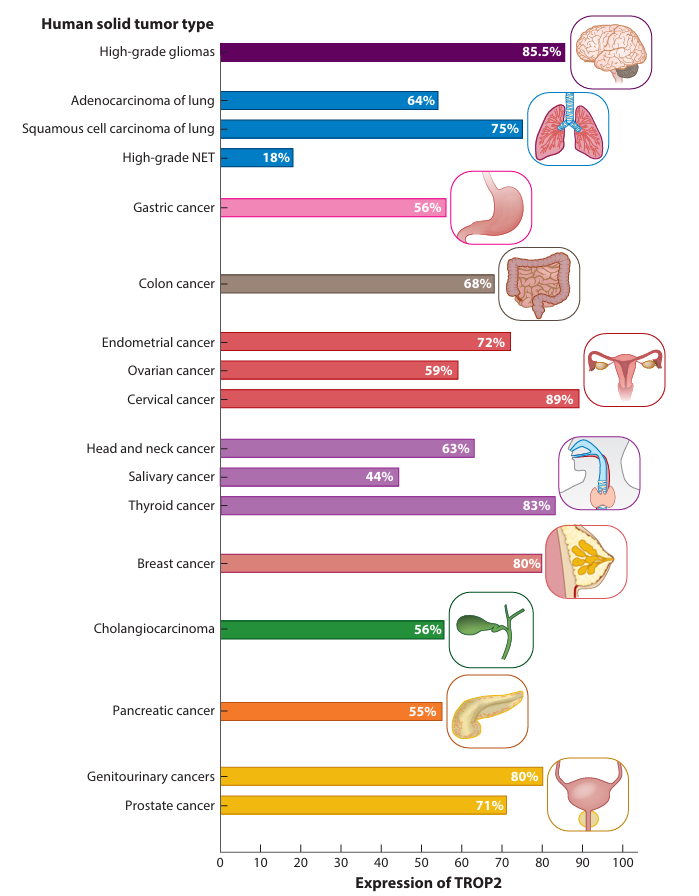 Figure 1: Expression distribution of TROP2 in different human solid tumors
3. Development and Clinical Application of Representative TROP2 ADC Drugs
3.1 Sacituzumab Govitecan: The First Approved TROP2 ADC
Sacituzumab Govitecan (SG, trade name Trodelvy) is an ADC formed by linking a humanized monoclonal antibody hRS7 targeting TROP2 with a topoisomerase I inhibitor SN-38 through a cleavable linker, with a drug-antibody ratio (DAR) of 7.6:1. SN-38 is the active metabolite of irinotecan, with cytotoxicity three times that of irinotecan, and is released through a hydrolyzable linker, producing a bystander effect that can also kill TROP2 low-expressing or heterogeneous tumor cells.
3.1.1 Clinical Efficacy Data
The clinical breakthrough of SG began with a phase I/II basket trial named IMMU-132-01, which validated its efficacy in various solid tumors:
-
Triple-negative breast cancer (TNBC): In 108 patients with metastatic TNBC who had previously received ≥2 lines of treatment, the objective response rate (ORR) was 33.3%, with a median progression-free survival (mPFS) of 5.5 months and a median overall survival (mOS) of 13.0 months. Based on this, SG was approved by the FDA in April 2021 for third-line treatment of metastatic TNBC.
-
Urothelial carcinoma (UC): In the TROPHY-U-01 trial, 113 patients with metastatic UC who had previously received platinum-based chemotherapy and immunotherapy were treated with SG, resulting in an ORR of 27%, mPFS of 5.4 months, and mOS of 10.9 months, leading to accelerated FDA approval for this population in April 2021.
-
Hormone receptor-positive / HER2-negative breast cancer (HR+/HER2- BC): The phase III TROPiCS-02 trial showed that in 543 patients with refractory HR+/HER2- BC, the SG group had an mPFS of 5.5 months and an mOS of 14.4 months, significantly better than the chemotherapy group, leading to FDA approval for this indication in February 2023.
3.1.2 Safety Profile
The main adverse reactions of SG include neutropenia (51%, ≥ grade 3), diarrhea (10%, ≥ grade 3), and febrile neutropenia (6%), but most patients can tolerate these with preventive use of growth factors and symptomatic management, as the toxicity discontinuation rate is only 5%.
3.2 Datopotamab Deruxtecan: A New Generation TROP2 ADC
Datopotamab Deruxtecan (Dato-DXd, DS-1062) is an ADC formed by linking a humanized IgG1 antibody targeting TROP2 with a topoisomerase I inhibitor DXd through a four-peptide cleavable linker, with a DAR of 4. Compared to SG, its linker is more stable and is only cleaved by proteases in the tumor microenvironment, reducing off-target toxicity; at the same time, DXd is released slowly (only 5% in circulation after 3 weeks), prolonging the antitumor effect duration.
3.2.1 Clinical Efficacy Data
In the phase I TROPION-PanTumor01 trial, Dato-DXd showed good activity in various solid tumors:
-
Triple-negative breast cancer (TNBC): In 44 patients who had previously received a median of 3 lines of treatment, the ORR was 32%, with a disease control rate (DCR) of 80%, mPFS of 4.3 months, and mOS of 12.9 months; notably, the ORR reached 44% in patients who had not received topoisomerase I inhibitor treatment.
-
Non-small cell lung cancer (NSCLC): In 180 patients, the 6mg/kg dose group had an ORR of 26%, mPFS of 6.9 months, and mOS of 11.4 months; particularly, in patients with actionable genomic alterations, the ORR reached 35%, with a median duration of response (mDOR) exceeding 9 months.
-
HR+/HER2- breast cancer: In 41 patients, the ORR was 27%, DCR was 85%, and mPFS was 8.3 months, demonstrating durable disease control effects.
3.2.2 Safety Profile
The most common adverse reactions of Dato-DXd include oral mucositis (73%), nausea (66%), and fatigue (34%), with grade ≥3 adverse reactions mainly being anemia and pneumonia. It is important to note that there is a risk of interstitial lung disease (ILD) (6 cases, 3 of which were grade 5), primarily occurring in the 8mg/kg dose group, thus the recommended clinical dose is 6mg/kg, administered every 3 weeks.
3.3 SKB-264: A Potential Domestic TROP2 ADC
SKB-264 is a TROP2 ADC developed by China’s Klus Pharma, formed by linking a humanized antibody hRS7 with a camptothecin-based topoisomerase I inhibitor through a cleavable linker containing PEG8, with a DAR of 7.4. Its unique linker design enhances drug stability and solubility, reducing the risk of aggregation.In a phase I/II trial (NCT04152499), SKB-264 demonstrated excellent activity in various solid tumors:
-
The ORR in 17 evaluable patients was 41.2%, with a DCR of 70.6%, particularly notable in TNBC (ORR 40%) and ovarian cancer (ORR 60%).
-
In the TNBC dose expansion cohort, the confirmed ORR in the 4mg/kg and 5mg/kg groups was 46.1% and 62.5%, respectively, with grade ≥3 adverse reactions mainly being neutropenia (23.7%) and anemia (20.3%), and no reports of ILD, indicating good safety.
Currently, a phase III trial (NCT05347134) is comparing the efficacy of SKB-264 with standard chemotherapy in advanced TNBC, which is expected to become a milestone for domestic TROP2 ADCs.
3.4 Other Investigational TROP2 ADCs
In addition to the aforementioned drugs, several TROP2 ADCs are in clinical development:
-
BAT8008: Developed by Bio-Thera, containing a topoisomerase I inhibitor payload, with a DAR of 6. Preclinical studies have shown its potent antitumor activity and bystander effect, and a phase I trial (NCT05620017) is currently underway.
-
JS-108: Utilizing a non-cleavable linker to connect a microtubule-targeting payload, a phase I trial (NCT04601285) is exploring its safety and dosing in advanced solid tumors.
-
DB-1305: Featuring a novel topoisomerase I inhibitor P1021, preclinical studies have shown its antitumor activity superior to Dato-DXd, and a phase I/IIa trial (NCT05438329) has been initiated.
4. Overview of Clinical Trials for TROP2 ADCs (Tables 1-3)
4.1 Results of Monotherapy Clinical Trials
Table 1 summarizes key clinical data of TROP2 ADCs in different solid tumors, covering core indicators such as ORR, mDOR, mPFS, and mOS. The data show that SG and Dato-DXd exhibit superior efficacy compared to traditional chemotherapy in TNBC, NSCLC, UC, and other tumors, especially in patients who have failed multiple lines of treatment, validating the clinical value of TROP2 ADCs.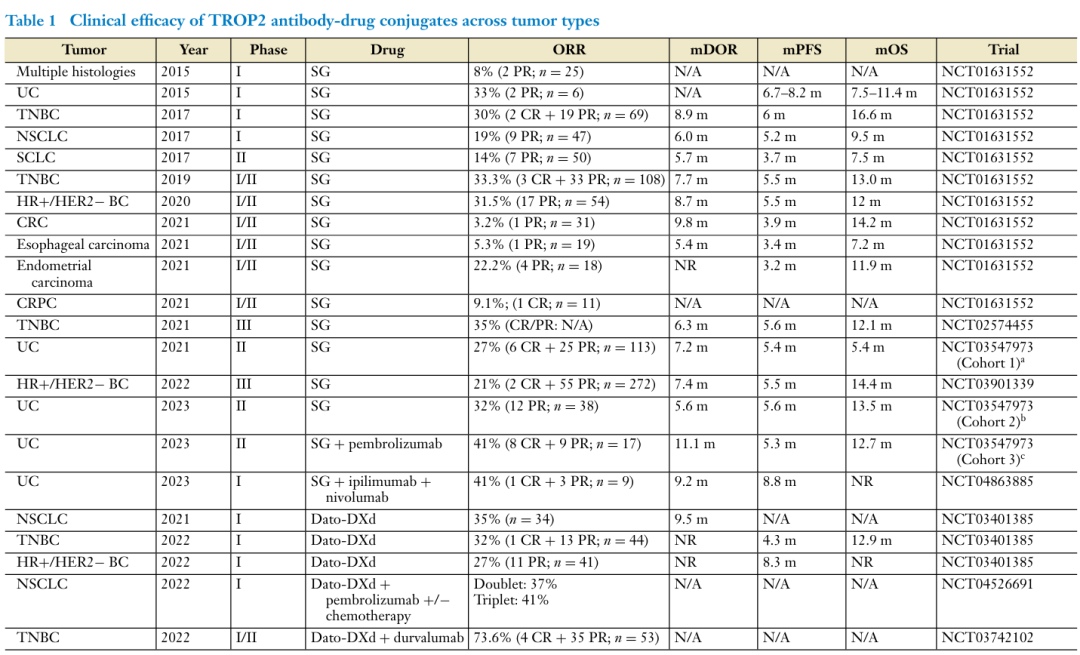
4.2 Ongoing Monotherapy Clinical Trials
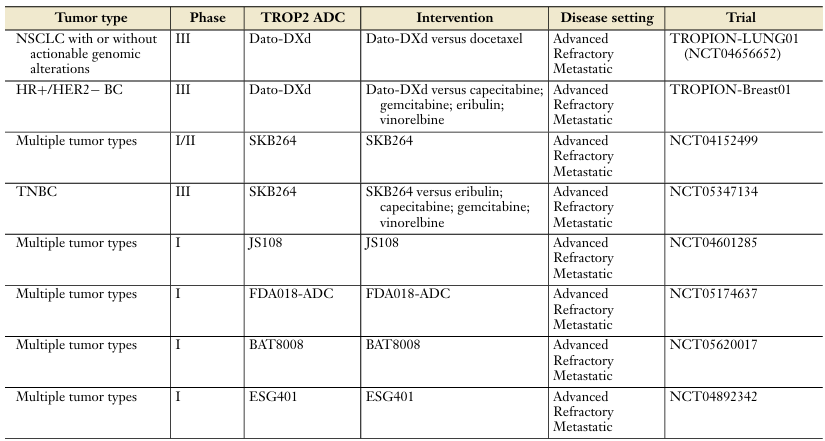
Table 2 lists the ongoing monotherapy clinical trials of TROP2 ADCs globally, involving various tumor types such as brain tumors, esophageal cancer, cervical cancer, and prostate cancer, including explorations of treatment for advanced refractory diseases as well as neoadjuvant/adjuvant treatment scenarios, such as the NeoSTAR trial (NCT04230109) exploring the role of SG in neoadjuvant treatment of locally advanced TNBC, and the SASCIA trial (NCT04595565) assessing the value of SG in adjuvant treatment of HR+ BC. These studies will further expand the application boundaries of TROP2 ADCs.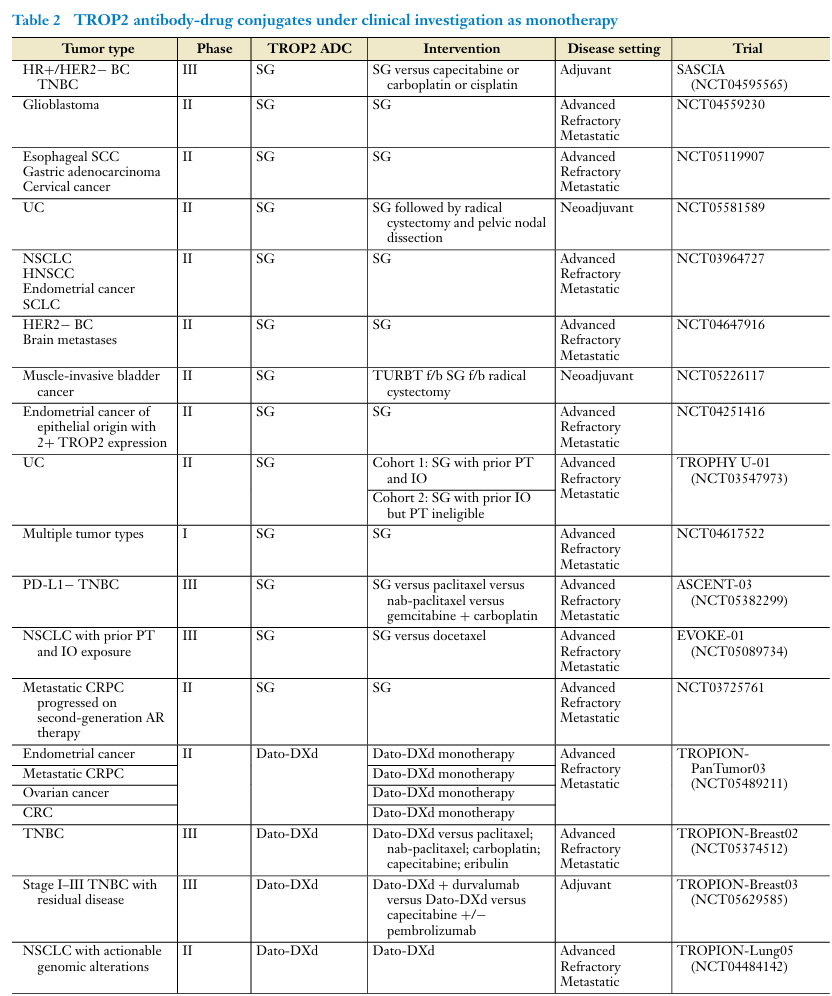
4.3 Progress of Combination Therapy Clinical Trials
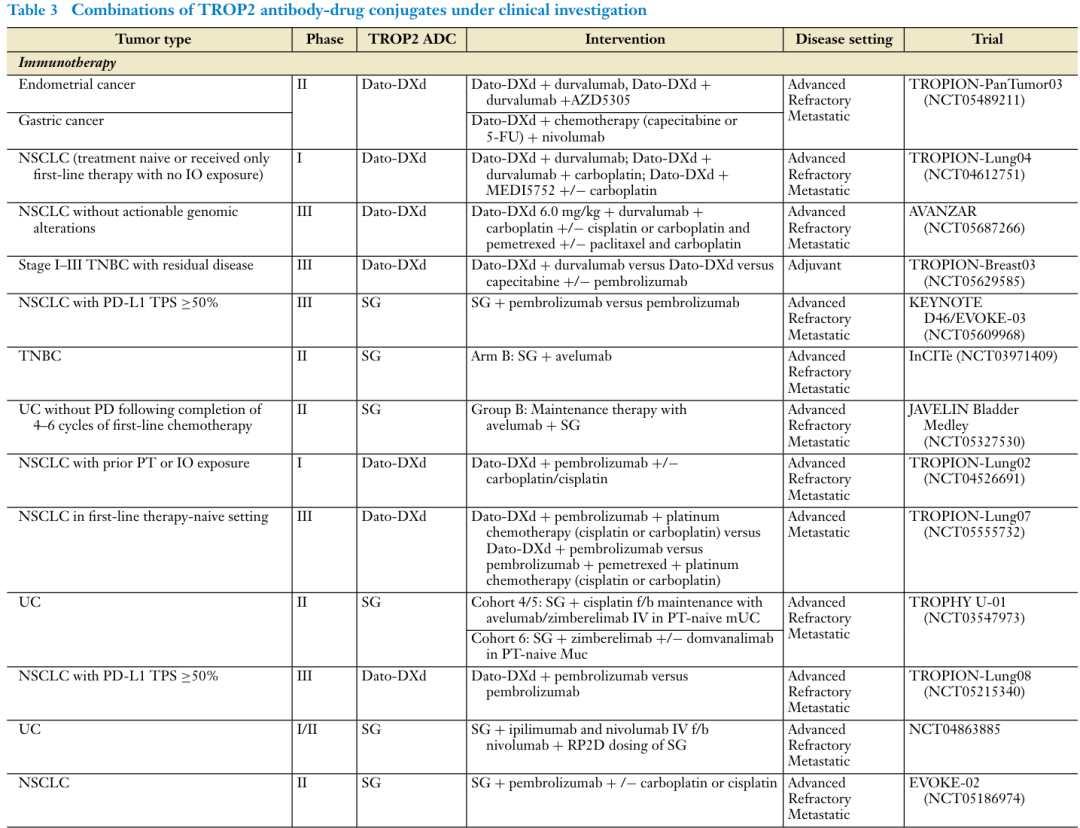
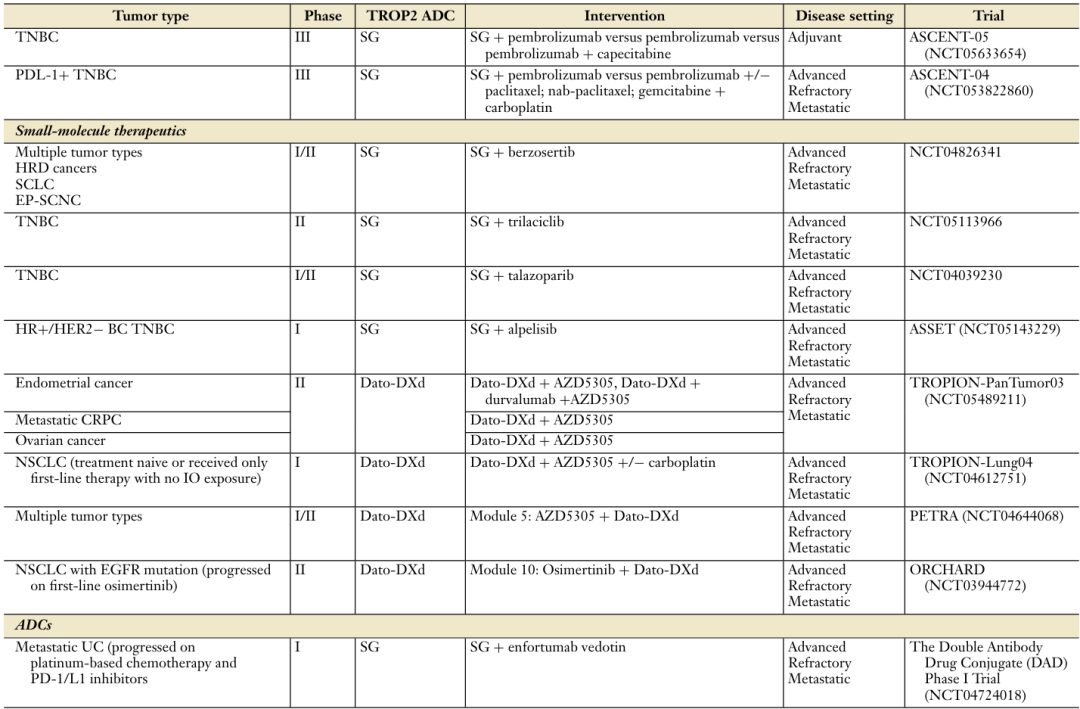
To further enhance efficacy, the combination strategies of TROP2 ADCs with other therapies have become a research hotspot, and Table 3 presents the layout of related clinical trials:
-
Combination with Immunotherapy: For example, in cohort 3 of the TROPHY-U-01 trial, SG combined with pembrolizumab achieved an ORR of 41% in UC, with an mDOR of 11.1 months; in the BEGONIA trial, Dato-DXd combined with durvalumab in TNBC reached an ORR of 73.6%, significantly better than monotherapy, confirming the synergistic potential of “ADC + Immunotherapy”.
-
Combination with PARP Inhibitors: Based on preclinical studies showing the synergistic effect of SG with olaparib, multiple trials (e.g., NCT04039230) are exploring its efficacy in TNBC, ovarian cancer, etc., particularly targeting HRD (homologous recombination deficiency) patients.
-
Combination with Other ADCs: For instance, the NCT04724018 trial explores the synergistic effect of SG with enfortumumab vedotin (an ADC targeting Nectin-4) in UC, providing ideas for “dual ADC” combinations.
5. Predictive Biomarkers for Efficacy and Mechanisms of Resistance
5.1 Potential Predictive Biomarkers for Efficacy
Although TROP2 ADCs have been widely applied clinically, there are currently no clear predictive biomarkers for efficacy. Exploration directions include:
-
TROP2 Expression Levels: Subgroup analysis of the ASCENT trial showed that TNBC patients with high TROP2 expression (H-score>300) had an ORR of 44% with SG treatment, higher than the medium-low expression group (22%), although the difference was not statistically significant; in the TROPiCS-02 trial, the efficacy of SG was not significantly associated with TROP2 expression levels, suggesting that TROP2 expression is not the only predictive factor.
-
SLFN11 Expression: Preclinical studies have shown that high expression of SLFN11 (an interferon-inducible protein) is associated with sensitivity to TOP1 inhibitors, which may become a predictive biomarker for the efficacy of TROP2 ADCs, but clinical validation is needed.
-
DNA Damage Repair (DDR) Deficiencies: BRCA1/2 mutations, RB1 deletions, and other DDR deficiencies are associated with sensitivity to TOP1 inhibitors. In the ASCENT trial, patients with BRCA mutations receiving SG treatment had longer OS, suggesting that DDR status may have predictive value.
5.2 Mechanisms of Resistance
The mechanisms of resistance to TROP2 ADCs have not been fully elucidated, with case studies revealing:
-
Downregulation or Mutation of TROP2 Expression: Mutations in TACSTD2 (encoding TROP2) can lead to abnormal TROP2 function, affecting ADC internalization.
-
MUTATIONS IN TOP1: Mutations in TOP1 can reduce the binding affinity of SN-38/DXd, leading to payload resistance.
-
Enhanced Drug Efflux: Overexpression of the ABC transporter family may increase payload efflux, reducing intracellular drug concentration.
These findings provide potential targets for reversing resistance, such as developing novel conjugates of TROP2 antibodies with TOP1 inhibitors or combining DDR inhibitors to enhance payload sensitivity.
6. Challenges and Future Prospects
6.1 Current Challenges
-
Toxicity Management: ILD, bone marrow suppression, oral mucositis, and other adverse reactions remain major obstacles to clinical application, necessitating optimization of dosing regimens and early monitoring strategies.
-
Lack of Predictive Biomarkers: The absence of unified predictive biomarkers for efficacy may lead to ineffective treatment for some patients, requiring accelerated discovery and validation of biomarkers.
-
Resistance Issues: Primary and acquired resistance limit long-term efficacy, necessitating in-depth research into resistance mechanisms and the development of reversal strategies.
-
Overlap and Selection of Indications: Multiple TROP2 ADCs compete in the same tumors, necessitating clarification of the advantages of different drugs and applicable scenarios.
6.2 Future Development Directions
-
Optimizing Molecular Design: Developing more stable linkers and more efficient, less toxic payloads (such as novel TOP1 inhibitors and DNA damaging agents) to improve the therapeutic window.
-
Expanding Combination Strategies: Exploring the best combinations with immune checkpoint inhibitors, targeted drugs (such as EGFR inhibitors), and chemotherapy to achieve synergistic effects of “1+1>2”.
-
Precision Stratified Treatment: Achieving personalized treatment based on TROP2 expression, SLFN11, DDR status, and other biomarkers.
-
Exploring New Indications: Conducting clinical trials in difficult-to-treat tumors such as pancreatic cancer and cholangiocarcinoma to expand the beneficiary population.
7. Conclusion
The emergence of TROP2 ADCs has brought revolutionary breakthroughs in solid tumor treatment, from the approval of the first drug SG to the rapid development of Dato-DXd and SKB-264, demonstrating significant efficacy in various tumors within just a few years. With the deepening of clinical trials and technological advancements, TROP2 ADCs are expected to gradually move from late-line treatment to first-line and neoadjuvant/adjuvant therapy, becoming cornerstone therapies for solid tumors.However, we must also be aware of the current challenges. Through multidisciplinary collaboration to optimize treatment plans, explore resistance mechanisms, and develop predictive biomarkers, we can better leverage this “precision-guided weapon” to benefit cancer patients. In the future, the combination of TROP2 ADCs with other therapies will open a new chapter in cancer treatment, pushing solid tumor therapy into a new era of “precision + combination”.Scan the WeChat QR code to add the Antibody Circle editor; eligible individuals can join the Antibody Circle WeChat group!Please indicate: Name + Research Direction!

All articles reprinted by this public account are for the purpose of conveying more information, and the sources and authors are clearly indicated. If any media or individual does not wish to be reprinted, please contact us ([email protected]), and we will immediately delete it. All articles represent the author’s views and do not represent the position of this site.