 Youth YanglingAn Energetic Public Account
Recently, the “Loess Intelligent Construction” 3D printing ecological construction research team from the College of Soil and Water Conservation at Northwest A&F University concluded their summer social practice in Wuhan and entered the Rainfall Hall of the National Key Laboratory for Soil Erosion and Dryland Agriculture on the Loess Plateau to initiate key technology research and development.
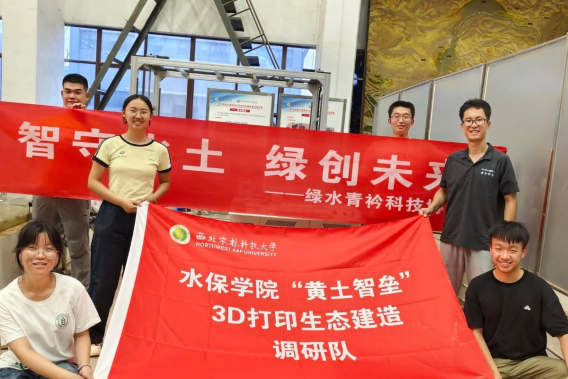
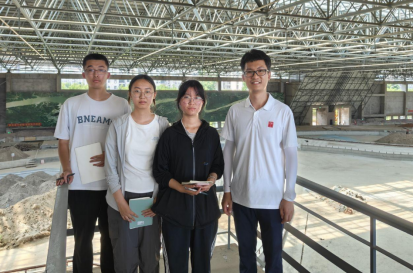
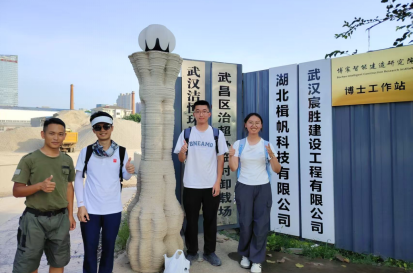
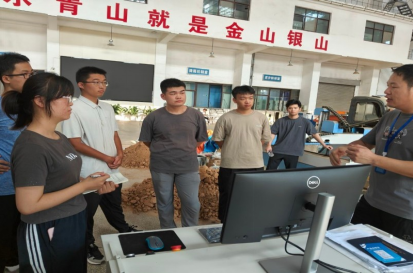
Previously, the research team visited Wuhan to conduct practical training, visiting institutions such as the Yangtze River Academy’s Duncou Research Base and Hubei Jifan Technology Co., Ltd. At the Yangtze River Academy, the team conducted an on-site investigation of the world’s largest Yangtze River flood control model; at the company site, members engaged in in-depth discussions with technical personnel regarding the “applicability of 3D printing technology in the construction of sediment dams on the Loess Plateau,” accumulating practical experience and technical references for subsequent research and development.
Entering the laboratory research and development phase, the team relies on the advanced artificial rainfall system in the Rainfall Hall (which can accurately simulate different rainfall conditions on the Loess Plateau) to focus on three core tasks: first, optimizing the formulation of 3D printing materials based on loess through precise mixing and ratio adjustments to improve performance; second, designing 3D printing structures to refine plans based on the construction needs of sediment dams; third, conducting performance validation through erosion resistance testing of materials and compatibility debugging of equipment and materials. All experiments strictly adhere to research norms to ensure data accuracy and reliability.
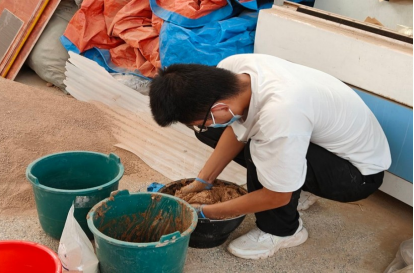
Team members preparing materials
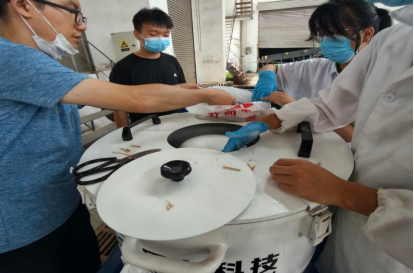
Team members using a mixer for material blending
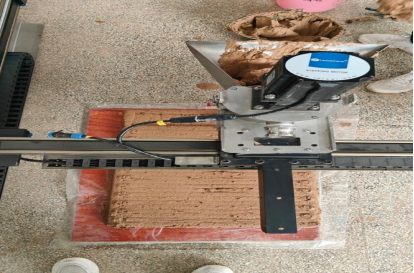
Testing material compatibility with the printer and showcasing the printing process
According to the team’s supervising teacher, the laboratory research and development phase is a critical period for the project, expected to last 2-3 months. During this time, the team will establish a 3D printing material performance database through extensive material experiments, structural testing, and numerical simulations, providing technical support for subsequent applications on the Loess Plateau. Team members expressed their commitment to integrating production, education, research, and application to leverage their professional expertise to overcome technical challenges, providing innovative solutions for ecological governance on the Loess Plateau and contributing to the construction of a technologically strong nation.

Source:“Loess Intelligent Construction” 3D Printing Ecological Construction Research Team, College of Soil and Water Conservation, Northwest A&F University