 Clickthe blue textto follow us
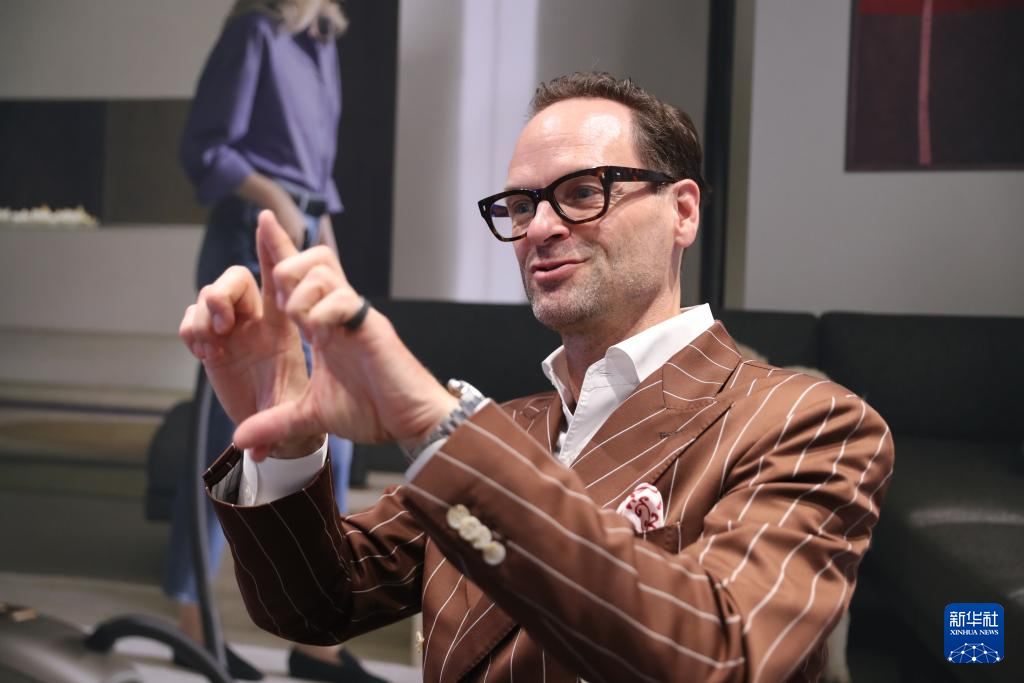
On September 4, in Berlin, Germany, Axel Kniel, Managing Director of Global Sales and Marketing at Miele, a German home appliance manufacturer, was interviewed by Xinhua News Agency during the 2025 Berlin International Consumer Electronics Show. Xinhua News Agency reporter Du Zheyu took the photo.
During the interview, Axel Kniel stated that the deep integration of AI (artificial intelligence) and robotics is expected to lead the future development of smart homes. Robots cannot operate without artificial intelligence, and without robots as carriers, artificial intelligence cannot achieve its full functionality.
“In the home appliance sector, we must consider how to connect the scenarios of future living,” Kniel said. “In the future, humanoid robots may appear in homes, living alongside humans and operating our ovens, stoves, and dishwashers to assist with household chores.”
The 2025 Berlin International Consumer Electronics Show opened on the 5th, attracting around 1,900 exhibitors from around the world. Themes such as artificial intelligence and sustainability are receiving significant attention.
Kniel mentioned that regarding artificial intelligence, what truly matters is whether it genuinely improves users’ lives, making home appliance products simpler and easier to use, and life more convenient. “For example, we have an oven product equipped with a camera that can recognize the ingredients placed inside and provide cooking suggestions. Once you confirm, the oven will automatically complete the cooking process,” Kniel said. “All of this is based on training with millions of photos of ingredients. The oven will continuously learn, and its recognition and cooking capabilities will become stronger over time.”
He also emphasized that artificial intelligence can enhance the experience not only at the product level but also has immense value and potential at the service level. If a product encounters an issue, remote diagnostics can identify the problem and provide solutions without the need for a technician to visit, saving time and effort. “Another benefit of artificial intelligence is sustainability; it can help users use home appliances in a more environmentally friendly way and develop more energy-efficient habits.”
When discussing the development in the Chinese market and the changes he has observed, Kniel stated that every time he visits China, he notices significant changes, with new brands and experiences emerging continuously, and the speed of digital development is particularly impressive. Chinese consumers have a high acceptance of new technologies, which presents both challenges and opportunities for Miele, driving continuous innovation.
“For a long time, China was seen as a learner, with European companies defining how things operate,” Kniel said. “Now, this situation has changed. China has an increasing number of high-quality products and market wisdom that we can learn from and bring back to Europe.”