Hello everyone, I am Yan Xiaobei, a science and engineering guy who understands a bit about economics.~
I am starting a new series to discuss some interesting stories in the chip field.
In the first article, I talked about the origin of photolithography technology,the very first photolithography machine was actually modified from a microscope!
The History of Chips – Photolithography and Its OriginsIn the second article, I will discuss the origins of integrated circuits,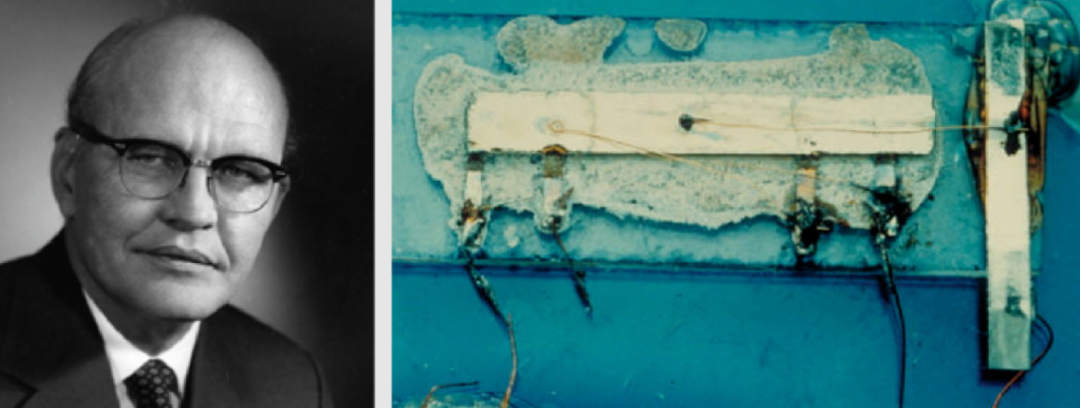
At the age of 34, Kilby decided to start a new chapter in his career,moving from an obscure small company to the world-renowned Texas Instruments(Texas Instruments,TI),
This wasin the spring of 1958,and Kilby had already worked at his old company for10 years, during which he applied for12 U.S. patents.
After gaining fame, he recalled this period, stating thatfor those10 years, he went through the following process repeatedly,
first identifying a problem, then trying hundreds of possible solutions, and to break the limitations of natural forces, one must refine the only feasible solution to perfection.
This experience gave Kilby a unique ability –to find joy in the process of solving problems.
More than a decade later, another American studied Kilby-like figures across various industries and proposed the concept offlow(the state of flow), which became quite famous.
It was this obsession with solving problems that led the 34-year-old Kilby to take the risk of accepting a new job in Dallas.
Fast forward to11 years ago,
in 1947, during Christmas, the most groundbreaking invention in post-war scientific history –the transistor was introduced.
Before the invention of the transistor, from the simplest AM radios to the most complex large computers,all electronic devices were built around vacuum tubes,
People a hundred years ago were familiar with vacuum tubes,
when you turned on the radio, you could see a row of orange lights glowing from the holes in the back of the casing –those were the filaments inside the vacuum tubes –the vacuum tube and the light bulb are essentially the same,
the glass bulb seals the vacuum, and the current flows through the tungsten filament, making it glow white hot.
Why create a vacuum layer?
Because without air, the filament won’t burn out instantly,
but the advantages of the vacuum layer go far beyond that,
in the early 20th century, it was discovered in experiments that if several wires were added in the vacuum layer, two functions could be achieved,
first, it could amplify theweak signals received by the antenna to a level sufficient to drive a speaker, which is crucial for radios and televisions,
second, a correctly wired light bulb (vacuum tube) couldswitch on and off about10,000 times per second, making computers possible (through different combinations of“on” and “off”).
Amplification&switching are the core competencies of vacuum tubes.
In 1946, the first electronic digital computer (ENIAC) was born, occupying170 square meters,with 18,000 vacuum tubes forming its core, and its calculation speed of5,000 times per second was still satisfactory.
But what was the cost of using vacuum tubes?
Fragile, expensive, bulky, power-hungry, and generating significant heat,
the luxurious floor-standing radios popular in the 1930s often had warnings on the back:Do not place paper behind the casing, as the heat from the tubes may ignite the paper!!
Even worse, vacuum tubes often burned out at critical moments,and ENIAC never reached its expected potential, and this was the reason.
At that time, the U.S. Army usedENIAC to calculate artillery trajectories, and had to deploy a line of soldiers around the machine, each carrying a basket of vacuum tubes, ready at all times,
But the effect was minimal, as engineers struggled to find the faulty tube among18,000 tubes.
The heat and light from vacuum tubes also attracted moths, which sacrificed themselves, causing short circuits inside the computer,
and the term for troubleshooting computer faults became“debugging”, which originated from this.
Just a year after ENIAC was released, the transistor was born at Bell Labs,this little device seemed to overcome all the shortcomings of vacuum tubes.
In semiconductor materials, moving charges along controlled paths can achieve the two major functions of vacuum tubes –amplification and fast switching,without the need for a vacuum, smaller in size, generating less heat, and switching faster.
For the electronics industry, this was like a divine weapon,
by the mid-1950s, solid-state components had become the standard technology for electronic devices such as radios and hearing aids,with infinite applications from computers to ballistic missiles, from consumer goods to military products.
While scientific news like nuclear fission and rockets was certainly shocking, it was too far removed from daily life for the public to intuitively feel its magic,
the transistor, however, could directly change the lives of ordinary people.
On the eve of Christmas in 1954, the portable transistor radio was launched, and almost overnight, it became one of the hottest new products in retail history,
the emerging rock music needed a portable device that allowed people to enjoy it anytime, anywhere, and the first transistor radio was smaller, more energy-efficient, more reliable, and cheaper than all previous radios.
When the time comes, the world works together.
After initial skepticism, the academic community began to excitedly embrace this little device,
in 1953,the Engineering Index includedover 500 papers on the topic of transistors, with the number doubling each year,
and here are some of the titles from that time:
“p-n junction transistorα value explanation”,
“Transistors in trigger circuits,”
“Resonance coefficient multipliers using transistors,”
“Tensor analysis in transistor feedback circuits,”
“Success Story – Reliability of Transistors,”
“Transistors: The Key to Electronic Simplification.”
……
However, just a few years later, looking back at the titles in the Engineering Index, the tone had changed dramatically,
“Switching losses in transistor circuits,”
“Electronic devices –limitations of weight and size in aircraft,”
“Solutions to transistor manufacturing problems,”
“Design limitations of semiconductor devices,”
Why is that?
Starting with the last title,
“Design limitations of semiconductor devices,” this title is not accurate,
the real design limitations do not lie in the transistors or other components themselves,but in the overall circuit design.
Designing a circuit is like constructing a sentence,,
nouns, verbs, adjectives, and adverbs are the basic elements, while resistors, capacitors, diodes, and transistors are the basic components,
resistors are like nozzles, used to limit current, tightening them reduces flow, loosening them increases flow. The volume knob on a television is actually a variable resistor.
Capacitors are like sponges, absorbing electrical energy and releasing it all at once or gradually when needed.The capacitor in a camera flash stores energy from a small battery and releases it instantly to light up the bulb.
Diodes are like dams,blocking current under certain conditions and allowing it to pass under others,
transistors are like faucets,which can both switch current on and off and amplify the sound of a radio.
Almost all circuits are formed by connecting these nozzles, sponges, dams, and faucets in various ways, just like using nouns, verbs, adjectives, and adverbs to compose countless poems.
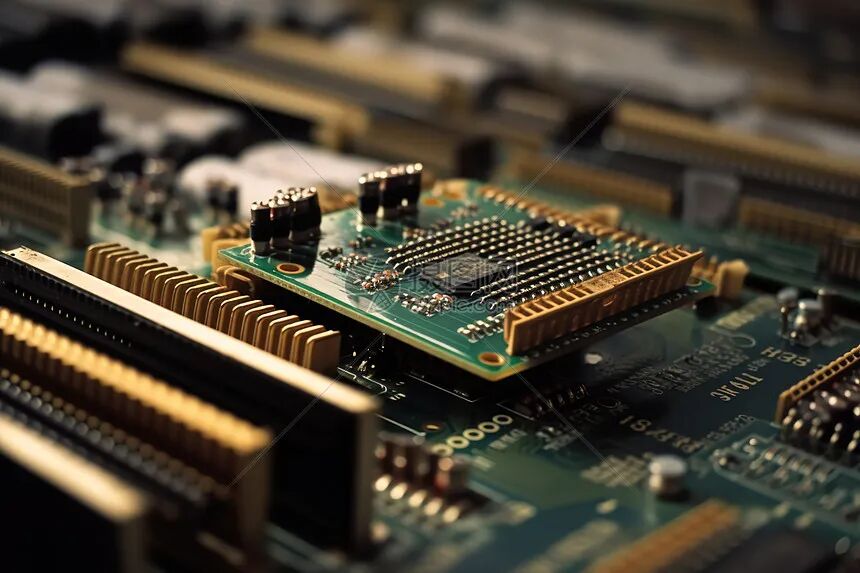
The difference is thatwriting requires brevity, while circuits can be incredibly complex,
In the era of vacuum tubes, this was not a problem,
because under the limitations of the large size and significant heat generation of vacuum tubes, people would not even dream of expanding the scale of circuits,
but with the advent of transistors, these limitations disappeared,
people could draw extremely complex circuits on paper, including hundreds of thousands of transistors, as well as a similar number of nozzles, sponges, and dams,
theoretically, the performance of these circuits would far exceed anything before,and all people needed to do was buy all the parts and solder them together,and they would be done.
The problem lies here,
the circuit must be a continuous path for current to flow, which meansall components must be connected end to end,
resistor → diode → transistor → resistor… each component may have dozens of connections,
and connecting these parts relies almost entirely on manual labor, which is both expensive and time-consuming, and most importantly –unreliable,
a circuit worth 100,000 yuan may require1,000,000 manual solder joints, and even if someone is willing to pay for it, one cannot expect operators to avoid mistakes while making1,000,000 solder joints.
By the end of the 1950s, the industry was blocked by this high wall,
the latest electronic systems on aircraft carriers, costing350,000 yuan, required millions of manual solder joints, and the cost of just manual soldering and testing exceeded the cost of the components themselves.
The first fully transistorized computerCDC1604, containing25,000 transistors,100,000 diodes, and hundreds of thousands of resistors and capacitors, faced severe delays due to connection difficulties.
And the new computer being designed had a complexity increased by an order of magnitude – the computer prepared for the lunar rocket required10,000,000 components.
Such a complex circuit was almost impossible to manufacture,because no one could solder that many parts.
In an article commemorating the tenth anniversary of the transistor, Morton, vice president of Bell Labs, wrote:
In principle, we already know how to transmit and process information digitally,but these functions are limited by “the tyranny of numbers,”making it difficult to implement.
If we still rely on discrete components to build complex circuit systems, each component must be manufactured, tested, packaged, transported, unwrapped, retested, and then interconnected…
This is almost an impossible task.
Engineers at the forefront of the industry in the 1950s were like sailors at the forefront of the maritime industry in the Age of Exploration,
at the westernmost point of the Atlantic, on the coast of Central America, sailors gazed from the top of the mast,
that strange ocean, that unknown world, was a paradise for adventurers.
But apart from the long and dangerous route around the tip of South America, there was no shortcut,
the future was close at hand, yet also out of reach.
Shockley, Kilby, Noyce,
400 years later, sailors waved transistors, opening the first door to the new world of electronics, only to find that the inner room was still tightly locked,
the key to opening the inner room is the integrated circuit (Integrated circuit).
To be continued,
Follow Yan Xiaobei to understand chips and economics~
References: “A Brief History of Chips,” “The Chip”