1. Introduction
In traditional music education, teachers often guide students with vague verbal prompts like “play slower” or “play harder,” while students explore playing techniques through trial and error. This teaching model, which relies on experiential transmission, is being completely reshaped by the technological revolution brought about by AI Agents (Artificial Intelligence Agents). From the MusicFocus system launched by the Capital Normal University School of Music, which can accurately identify practice data and predict learning bottlenecks, to the multidimensional perception AI piano teaching assistant system developed by Xinghai Conservatory of Music that converts key press intensity into visual curves, AI Agents are constructing a new paradigm for music education.
This article will analyze how AI Agents empower music education software through a perception-planning-action closed loop from three dimensions: technical architecture, core scenarios, and practical cases, revealing the evolutionary logic from “passive response” to “active teaching.”
2. The Technical Core of AI Agents: Building the “Digital Brain” of Music Education
2.1 Perception Layer: The Technical Code that Enables Machines to “Understand” Music
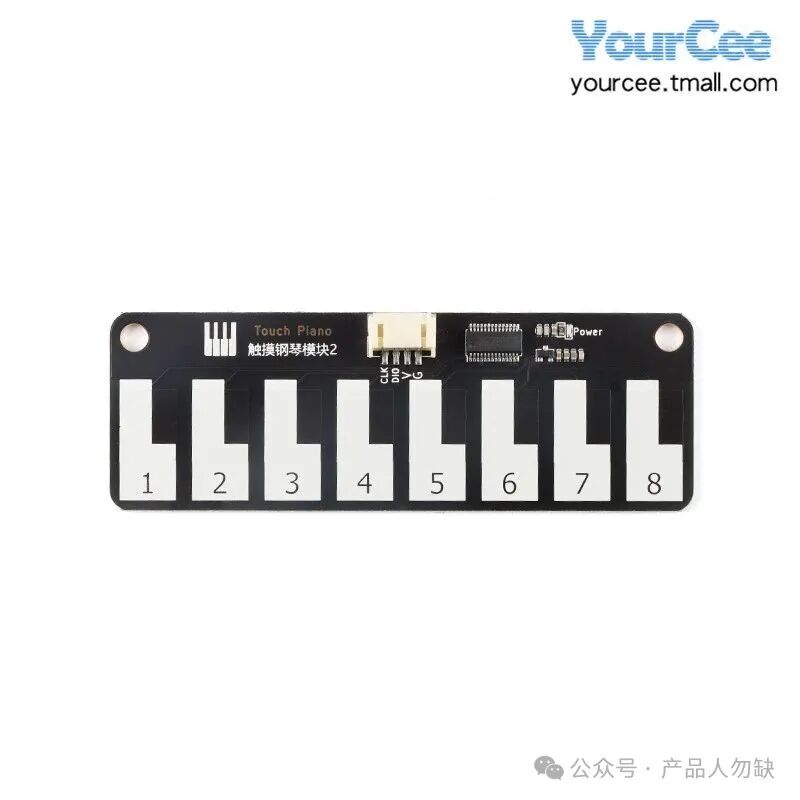
The music perception capability of AI Agents is built on multimodal data fusion technology. Taking the system from Xinghai Conservatory of Music as an example, it embeds thin sensor components in the piano keys, capable of capturing key press depth, angle, and hammer rebound and other microscopic data. The high-precision audio analysis algorithm with a sampling rate of 44.1kHz can real-time analyze 13 performance parameters such as pitch, rhythm, and intensity. This fusion perception of “touch + hearing” breaks through the limitations of traditional MIDI devices that can only record pitch and duration, achieving a leap from “recording events” to “restoring scenes.”
Technical Breakthroughs:
- Sound Recognition Accuracy using the MusicARLtrans Net system’s ALBEF model achieved a recognition accuracy of 96.77% on the LibriSpeech dataset.
- Real-time Optimization reduced model inference latency to under 10ms through federated learning technology, meeting the immediate feedback requirements of performance.
- Interference Resistance maintained a pitch recognition accuracy of 92% in a 60dB noisy environment by combining the noise suppression algorithm of XRHT digital intelligent teaching equipment.
2.2 Planning Layer: The Algorithmic Art of Personalized Teaching Paths
The “teaching decision” of AI Agents relies on the collaboration of reinforcement learning and knowledge graphs. For example, the MusicFocus system analyzes student practice data through the DeepSeek large model, constructing an AI knowledge base containing 255 course resource packages, dynamically generating a three-tier learning path of “problem identification – practice plan – goal prediction.” The core lies in the PPA (Perception-Planning-Action) decision model:
| Module | Function | Technical Implementation |
|---|---|---|
| Perception Module | Collect performance data and learning behaviors | Audio analysis + sensor array |
| Planning Module | Decompose complex tasks into sub-goals | Reinforcement learning + knowledge graph |
| Action Module | Generate personalized practice plans | Large language model + rule engine |
Typical Application: When the system detects that a student has repeatedly played a triplet incorrectly while performing a piece, it will automatically trigger: ① Extract the rhythmic pattern of that measure to generate targeted practice;
② Push a speed comparison analysis of the performance version;
③ Adjust the subsequent learning plan, setting “triplet stability” as the focus training goal for the next day.
2.3 Memory Layer: Constructing the “Digital Twin” of Music Learning
AI Agents achieve continuously evolving teaching capabilities through short-term memory and long-term memory hierarchical storage. Short-term memory caches the current session’s performance data (such as error frequency, practice duration), while long-term memory stores the student’s “music digital profile”—containing over 200 dimensional features such as performance style, technical weaknesses, and emotional expression preferences—through a vector database.
Case Study: A “practice hot zone map” accumulated by a certain system shows that a student has a 37% error rate in the B-flat major arpeggio section, which occurs mostly after the 12th minute of practice. Based on this, the system adjusts the training plan: breaking that section into four 8-bar phrases, using the “spaced repetition method” distributed throughout the practice period, and inserting a 5-minute finger exercise at the 10th minute, reducing the error rate to 9%.
3. Five Core Scenarios: How AI Agents Restructure Teaching Processes
3.1 Intelligent Error Correction: From “Experience Judgment” to “Data Diagnosis”
In traditional teaching, teachers rely on auditory recognition to identify performance issues, while AI Agents achieve precise error correction through multidimensional data comparison. For instance, the LLaQo model uses an Audio MAE encoder to convert performance audio into feature vectors, comparing them with a database of professional performers, not only indicating “pitch is 23 cents flat” but also analyzing technical details such as “key press intensity fluctuations exceed the standard deviation by 1.8 times.” Its evaluation accuracy reaches 97.55%, surpassing the average level of experienced teachers (91.3%).
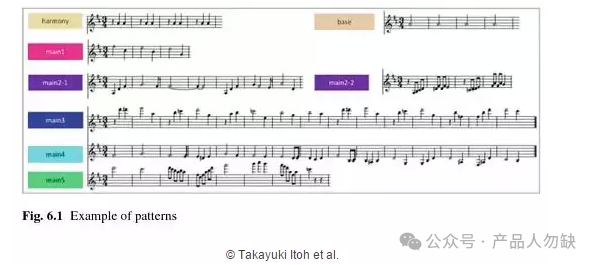
Technical Details: The system decomposes audio into 32 frequency bands through Fourier transform, combined with mel-spectrogram analysis to identify tonal features, capable of recognizing subtle issues such as “violin vibrato frequency too slow” (below 5Hz) and “piano pedal sustain excessive” (exceeding 1.2 seconds duration).
3.2 Personalized Path Planning: Breaking the “One-Size-Fits-All” Dilemma
Based on the knowledge graph, AI Agents construct a music knowledge network that can truly implement personalized teaching. For example, the MusicFocus system at Capital Normal University breaks down music theory into over 2500 knowledge points, automatically identifying knowledge blind spots through students’ error patterns. Data shows that students using this system have an average learning efficiency improvement of 300%, reducing the practice time required to reach the same level from 120 hours to 40 hours.
Comparison Case:
- Traditional Teaching: All students practice the C major scale uniformly.
- AI Teaching: Students sensitive to pitch are recommended a progressive training of “scale-arpeggio-chord”; students weak in rhythm are generated personalized plans of “metronome speed variation practice + rhythmic pattern replacement”.
3.3 Virtual Ensemble: Collaborative Experience Beyond Time and Space Constraints
AI Agents create an immersive ensemble environment through a real-time accompaniment engine. For instance, a certain AI music education platform’s “virtual band” feature allows students to upload solo audio, after which the system can generate symphonic accompaniment that matches the style, supporting dynamic adjustments of speed ±20% and individual control of instrument parts.
Technical Challenge: To solve the latency issue, the system employs ring buffer technology to control audio processing delay to under 8ms, below the human ear’s perception threshold (20ms), ensuring ensemble synchronization.
3.4 Emotional Expression Guidance: From “Technical Training” to “Artistic Interpretation”
Going beyond technical aspects, AI Agents are beginning to delve into the emotional dimension of musical expression. The MusicARLtrans Net system analyzes parameters such as intensity curves, speed fluctuations, and timbre changes to generate emotional expression heat maps. When students perform the theme from “Butterfly Lovers,” the system can point out that “the crescendo in measure 16 is not obvious enough, with a dynamic difference of 4.2dB compared to the master version,” and provide waveform comparisons of reference performances.
Innovative Application: Combining Synthesia’s Expressive-1 technology, AI virtual teachers can mimic different performers’ styles (such as Horowitz’s passionate style and Rubinstein’s lyrical style), allowing students to intuitively feel the differences in interpretation.
3.5 Intelligent Lesson Preparation Assistant: The “Digital Assistant” that Liberates Teachers
Addressing teachers’ pain points, AI Agents have developed a teaching content generation function. For example, the “intelligent teaching companion” of the online learning platform can automatically generate lesson materials containing 25 knowledge segments by inputting keywords like “Baroque period of Western music history,” including climate sound effect simulations of Vivaldi’s “Four Seasons” and visual analysis of Bach’s fugues. Practice at Xi’an University of Electronic Science and Technology shows that this tool reduces teachers’ preparation time by 60%.
Feature Highlights: Supports interdisciplinary integration, such as automatically linking the analysis of “Yellow River Cantata” with historical images from the War of Resistance, generating a “music-history” integrated lesson plan.
4. Conclusion: The Concerto of Technology and Art
AI Agents do not replace teachers but liberate them from repetitive tasks, allowing them to focus on conveying inspiration and emotional communication. As MusicFocus developer Jiang Bolong said: “AI brings not cold data, but the warmth of having a ‘personal assistant’ for every student.” In this fusion of technology and art, AI Agents are composing a new chapter in music education.
Feel free to follow, share, like, and bookmark!
I am Wu Que, an internet product person, currently starting my own business….
I mainly produce content related to AI products, and I welcome everyone to communicate with me.