High-resolution MEMS accelerometers are crucial core components in high-precision geological exploration, accurate identification of key geological features, and automated monitoring of deep foundation pits, and there is an urgent need for domestic replacement. Existing international manufacturers, such as Japan’s Murata, offer the SCA3300 series MEMS accelerometers, which achieve a high tilt resolution of 0.005°, making them the primary devices used in engineering projects in China. However, these products are subject to strict controls and face risks of embargo.
According to MEMS Consulting, the team led by Chen Fang at the Shanghai Institute of Microsystem and Information Technology (SIMT) has developed a small-range, high-resolution MEMS accelerometer chip with support from the Shanghai Municipal Key Project “Research and Industrialization of High-Resolution, High-Precision Micro-Vibration Intelligent Sensors.” After years of continuous technological iteration, they have achieved full domestic production of MEMS accelerometer chips, application-specific integrated circuit (ASIC) chips, edge artificial intelligence (AI) algorithms, and measurement and control technologies.
Currently, the intelligent MEMS accelerometers independently developed by SIMT are applied in several automated monitoring projects for deep foundation pits at Shanghai Investigation, Design & Research Institute (Group) Co., Ltd. In field tests of the fixed inclinometer system, the performance indicators of these MEMS accelerometers have met and even exceeded those of the Murata SCA3300 series MEMS accelerometers, achieving a tilt resolution of ≤0.005°, thus realizing a complete domestic industrial chain replacement. According to MEMS Consulting, by the first half of 2025, SIMT has completed the batch engineering delivery of over 100 MEMS accelerometers.
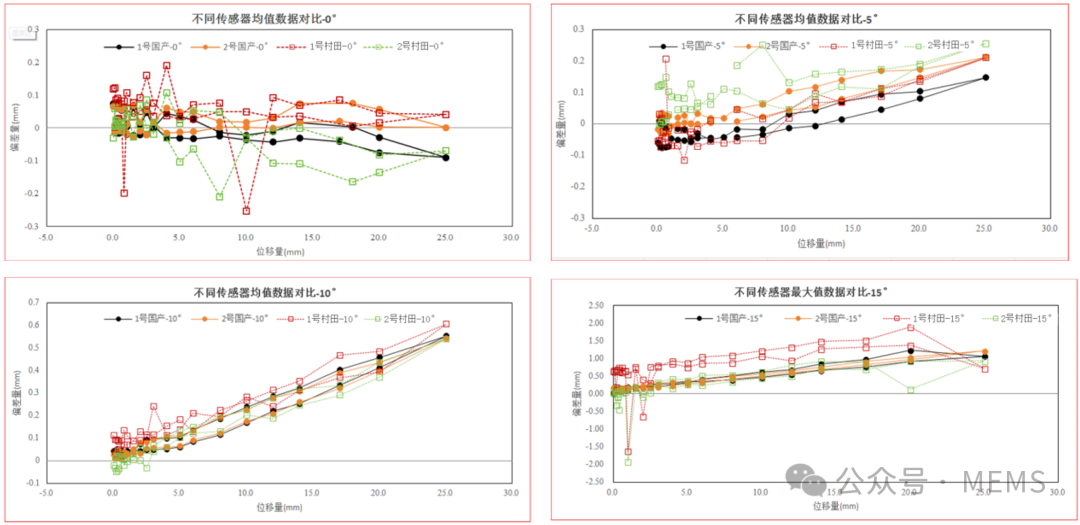
Figure 1 Comparison test results of SIMT MEMS accelerometers and Murata MEMS accelerometers
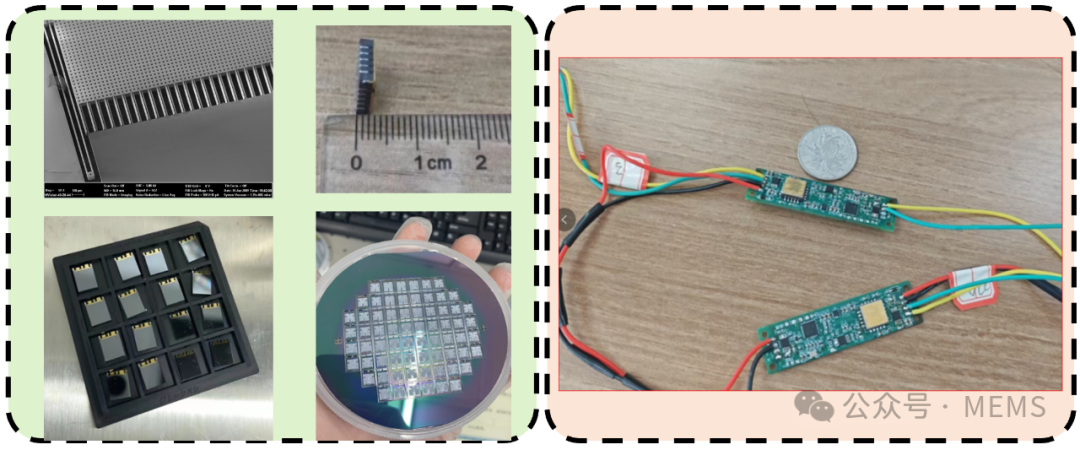
Figure 2 SIMT MEMS accelerometer: MEMS chip, ASIC chip, and inclinometer module series unit
According to researchers at SIMT, this MEMS accelerometer integrates edge AI processing capabilities, featuring an automatic configuration function that allows the MEMS chip to be set in either open-loop or closed-loop operation modes, adaptively optimizing power consumption. With the integration of edge AI processing capabilities, this MEMS accelerometer is suitable for the next generation of emerging intelligent monitoring fields and can better adapt to various application scenarios.
Further Reading:
“Next Generation MEMS Technology and Market – 2025 Edition”
“TDK InvenSense Inertial Measurement Unit (IMU) IAM-20685 Product Analysis”“Bosch MEMS Inertial Measurement Unit (IMU) SMI240 Product Analysis”“Murata MEMS Inertial Measurement Unit (IMU) SCHA634 Product Analysis”“Comparison Analysis of Consumer MEMS Inertial Measurement Units (IMU) – 2022 Edition”