💥💥💞💞Welcome to this blog❤️❤️💥💥
🏆Author’s Advantage: 🌞🌞🌞The blog content aims to be logically coherent and clear for the convenience of readers.
⛳️Motto: Those who travel a hundred miles are halfway at ninety.
⛳️Gift to Readers
👨💻Conducting research involves a profound system of thought, requiring researchers to be logical, meticulous, and serious. However, effort alone is not enough; often leveraging resources is more important than hard work. Additionally, one must have innovative and inspiring ideas while gazing at the stars. When a philosophy teacher asks you what science is or what electricity is, do not find these questions amusing. Philosophy is the mother of science; it seeks ultimate questions and those self-evident questions that only children would ask but you cannot answer. It is recommended that readers browse in order to avoid suddenly falling into a dark maze and losing their way back. This may not reveal all the answers to your questions, but if it can evoke clouds of doubt in your mind, it may create a beautiful sunset of colors. If it brings you a spiritual storm, then take the opportunity to brush off the dust that has settled on your “lying flat” state.
Perhaps, after the rain, the sky will be clearer…….🔎🔎🔎
💥1 Overview
Research on Wireless Sensor Network Coverage Optimization Based on Dung Beetle Optimization Algorithm
Refer to the literature below, and replace the improved sparrow algorithm with the dung beetle optimization algorithm.
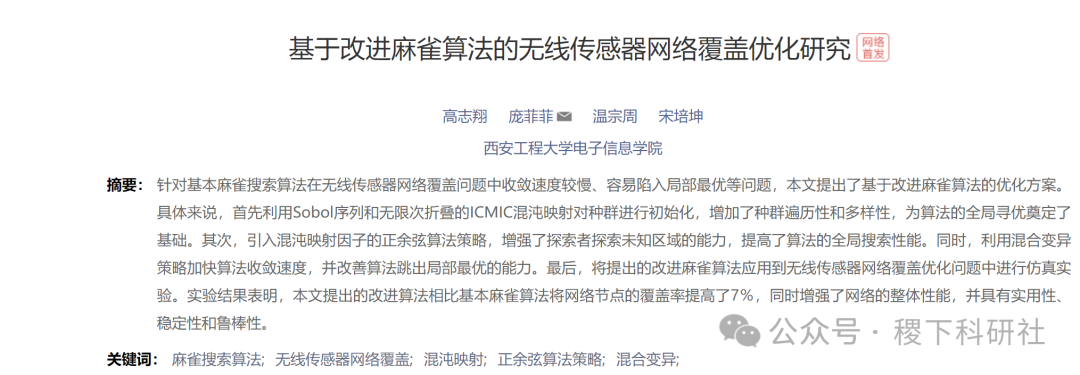

With the advancement of technology, the development of the Internet and artificial intelligence, the Internet of Things (IoT) has become one of the hottest research fields today. Wireless Sensor Networks (WSN), as one of the core supporting technologies of IoT, play an important role in its development. WSN is an organized distributed network system composed of sensor nodes with communication and computing capabilities. It has many advantages such as low cost, easy deployment, and high reliability [1]. Therefore, this technology has become one of the most outstanding technologies for handling both civilian and military applications, with extensive application value in military exploration, environmental monitoring, smart cities, and other fields [2].
The network coverage problem is one of the fundamental issues in WSN. Optimizing the coverage range of sensors is beneficial for monitoring surrounding objects and obtaining more comprehensive information. Such optimization can make the allocation of network resources more reasonable and further improve the lifespan of the sensor network. Currently, many scholars have focused on optimizing the coverage problem of wireless sensor networks mainly through algorithms. Literature [3] proposed a greedy iterative heuristic algorithm to solve the coverage phase problem of wireless sensor networks, considering the problem as an energy-efficient coverage problem, constructed using integer linear programming techniques. This method can effectively solve the optimal solution in terms of coverage energy efficiency, achieving maximum coverage range with minimal energy consumption, but the overall coverage rate still needs further improvement. To address this issue, literature [4] proposed a directed sensor area coverage optimization algorithm based on an improved virtual force algorithm. This algorithm introduces a virtual repulsive correction index by calculating the centroid of the dual-node coverage graph formed by the node and its neighboring nodes. By using the correction index, it can effectively eliminate blind spots and overlapping areas in the region, thereby improving the coverage rate. It is important to note that this method has certain requirements for the coverage area. Literature [5] improved the basic fish swarm algorithm using curtain projection and applied it to wireless sensor network coverage, achieving an 8.9% increase in coverage rate to 90.2% compared to the basic fish swarm algorithm, but the optimized network coverage rate is still relatively low, with greater room for improvement.
The dung beetle optimization algorithm is a heuristic algorithm inspired by the behavior of dung beetles when searching for food. It achieves optimization search by simulating the process of dung beetles releasing pheromones while searching for food. Wireless sensor network coverage optimization refers to effectively monitoring and covering the target area by reasonably deploying a limited number of sensor nodes to maximize the performance of the sensor network.
Applying the dung beetle optimization algorithm to the research of wireless sensor network coverage optimization can be carried out through the following steps:
-
Problem Modeling: Transform the sensor network coverage optimization problem into an optimization problem of the objective function. This usually includes maximizing coverage range, minimizing the number of sensor nodes, and other indicators.
-
Design Fitness Function: Design a fitness function to evaluate the quality of each solution based on the position and coverage range of the sensor nodes.
-
Implementation of Dung Beetle Optimization Algorithm: Implement the basic framework of the dung beetle optimization algorithm, including initializing the dung beetle population, pheromone updating, dung beetle movement, local search, and other steps.
-
Optimization Process: Continuously update the positions and pheromones of the dung beetles through an iterative optimization process to find the optimal sensor node deployment scheme.
-
Evaluation and Analysis: Evaluate the optimization results, analyze the coverage effect, energy consumption, and other performance indicators of the sensor node deployment scheme, and compare it with other algorithms.
-
Parameter Tuning: Adjust the parameters of the dung beetle optimization algorithm based on experimental results to further improve algorithm performance.
Through the above steps, the research on wireless sensor network coverage optimization based on the dung beetle optimization algorithm can achieve automatic optimization of sensor node deployment schemes, improving the coverage efficiency and performance of the sensor network.
1. Basic Principles and Characteristics of Dung Beetle Optimization Algorithm (DBO)
The Dung Beetle Optimizer (DBO) is a novel swarm intelligence optimization algorithm proposed in 2022, inspired by the biological behaviors of dung beetles such as rolling, dancing, foraging, stealing, and reproduction. The algorithm divides the population into four roles:
Rolling Dung Beetles: Simulate the behavior of rolling in a straight line without obstacles, navigating through celestial cues, and adjusting direction by “dancing” when encountering obstacles, using tangent functions for redirection.
Reproductive Dung Beetles (Egg Balls): Female dung beetles select safe laying areas based on local optimal solutions and dynamic boundaries, introducing random vectors to control boundary ranges in the formula.
Small Dung Beetles: During the foraging phase, balance global exploration and local exploration capabilities through adaptive step sizes and convex lens imaging strategies.
Stealing Dung Beetles: Introduce Lévy flight disturbances to avoid the algorithm getting trapped in local optima.
The algorithm process includes initialization, fitness calculation, position updating, boundary checking, and iterative optimization, with the following characteristics:
Fast Convergence: Achieves efficient search through role division, with a convergence speed superior to Particle Swarm Optimization (PSO).
Strong Global Optimization Capability: Multi-behavior simulation effectively avoids local optima, especially performing well in complex search spaces.
Parameter Sensitivity: Requires tuning of rolling coefficients (k, b), dancing angles (θ), and other parameters, with research focusing on adaptive strategies.
2. Core Challenges of Wireless Sensor Network (WSN) Coverage Optimization
WSN coverage optimization aims to achieve efficient perception of monitoring areas through node deployment and scheduling while extending network lifespan. Its core challenges include:
Coverage Capability and Connectivity: Need to balance coverage density and node communication range to ensure monitoring without blind spots and reliable data transmission.
Energy Efficiency: Nodes have limited energy, and coverage strategies must minimize energy consumption. Literature indicates that coverage optimization can reduce total network energy consumption by 15%-30%.
Dynamic Environment Adaptability: Node failures or environmental changes require dynamic adjustments to coverage schemes, which traditional algorithms struggle to respond to quickly.
Algorithm Complexity: Coverage optimization is an NP-hard problem, and heuristic algorithms need to balance computational efficiency and accuracy.
3. Applications and Innovations of DBO in WSN Coverage Optimization
-
Typical Research Cases
Coverage Optimization Model Construction: Taking coverage rate as the objective function, encoding node positions as solution space vectors, and evaluating coverage quality through fitness functions. For example, literature [30] defines coverage rate Pcov(x,y) as the probability of being covered by at least one node in the area, with the optimization goal of maximizing this value.
Improved DBO Algorithm:
Tent Chaotic Mapping: Enhances population diversity during the initialization phase to solve the problem of uneven random distribution.
Adaptive Inertia Weight: Dynamically adjusts search step size during the reproductive phase to accelerate convergence to the optimal solution.
Lévy Flight Disturbance: Enhances the randomness of stealing behavior to avoid local optimum traps.
-
Experimental Data and Performance
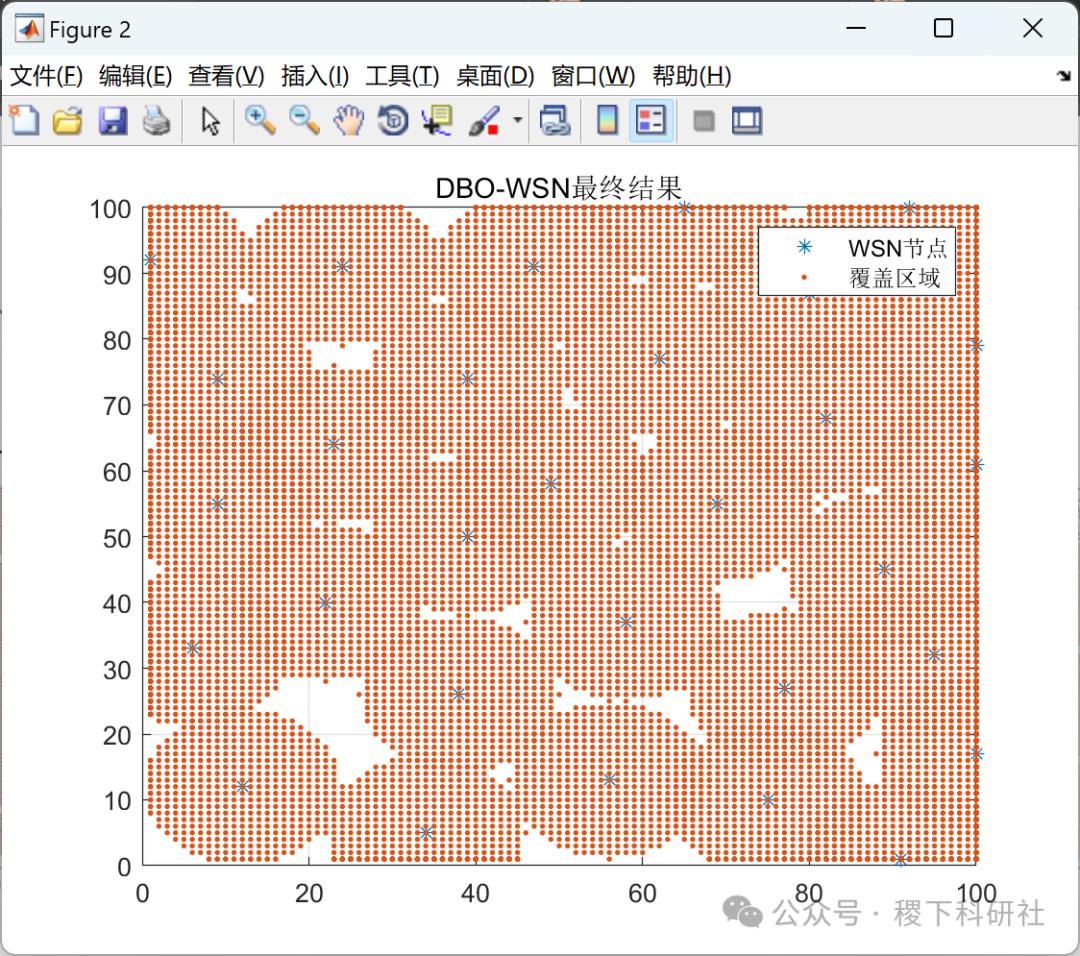
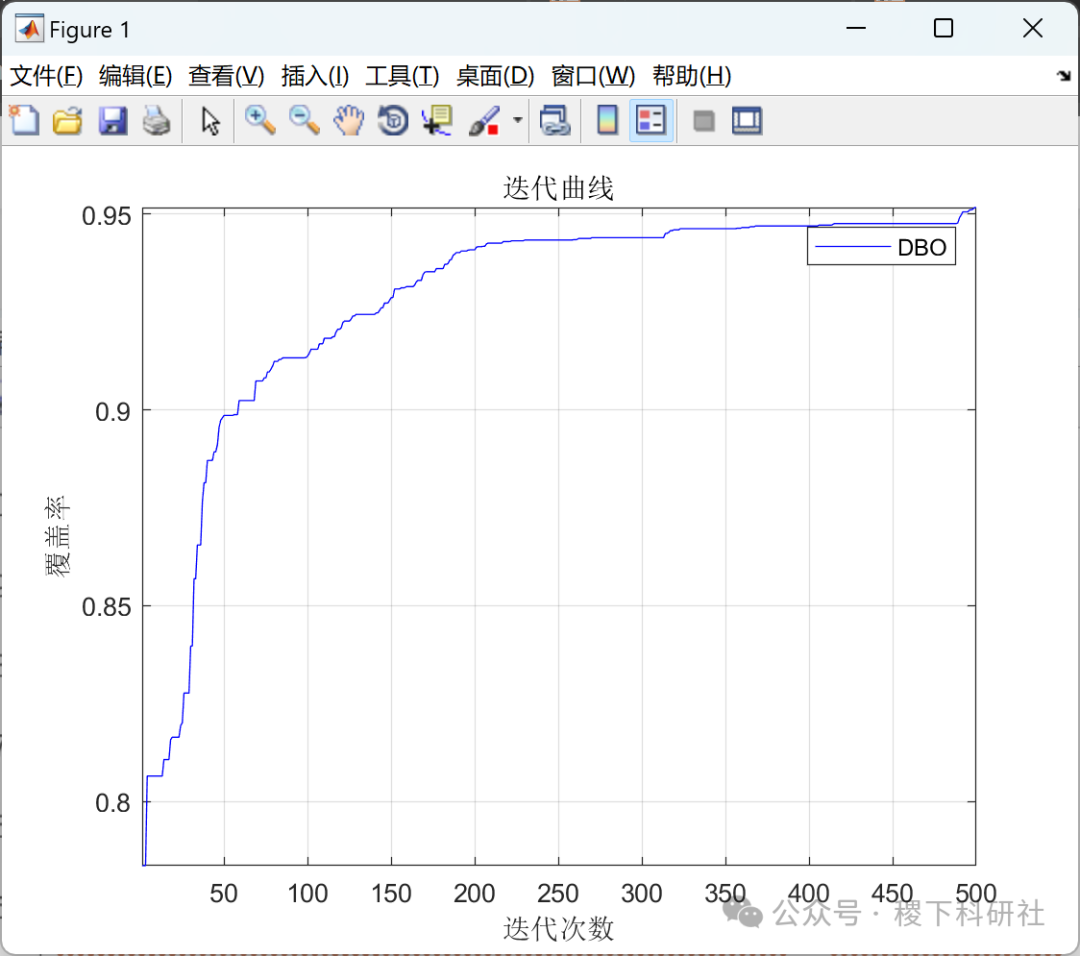
Coverage Rate Improvement: In experiments with 30 nodes in a 100m×100m area, the coverage rate after DBO optimization reached 95.6%, significantly higher than traditional PSO (89.2%) and Genetic Algorithm (84.5%).
Energy Optimization: Through dynamic cluster head selection and node sleep strategies, the EADBO-CS scheme reduced energy consumption to 0.150mJ, extending network lifespan by approximately 35%.
Convergence Speed: The improved DBO showed a 30% increase in convergence speed in the CEC2017 benchmark test compared to the original algorithm, with higher stability.
-
Comparison with Traditional Algorithms
Algorithm Type
Average Coverage Rate
Convergence Iteration Count
Energy Consumption (mJ)
Local Optimum Risk
DBO (Improved) 95.6% 200 0.15 Low
Particle Swarm (PSO) 89.2% 350 0.23 Medium
Genetic Algorithm (GA) 84.5% 500 0.28 High
Grey Wolf Optimization (GWO) 91.8% 280 0.19 Medium
Data Source:
4. Core Innovations
Multi-Strategy Integration: Combining chaotic mapping, adaptive weights, and Lévy flights to overcome the strong parameter dependency of traditional DBO, improving global search efficiency by 40%.
Dynamic Boundary Mechanism: Introducing dynamic boundaries Lb∗ and Ub∗ during the reproductive phase to enhance adaptability to complex terrains.
Energy-Aware Clustering: EADBO-CS optimizes cluster head selection through residual energy (RE), node degree (ND), and other parameters to reduce redundant communication.
5. Application Scenario Expansion
In addition to WSN coverage optimization, DBO shows potential in the following fields:
Drone Path Planning: The MDBO algorithm reduced path length by 39.7% in a three-dimensional oil and gas plant environment, with a standard deviation reduction of 14.
Robot Navigation: Combined with the Dynamic Window Approach (DWA), the DBO improved path planning algorithm’s obstacle avoidance success rate to 98%.
Microgrid Scheduling: Optimizes operational and environmental costs, achieving energy savings of 12%-18% compared to traditional methods.
6. Future Research Directions
Multi-Objective Optimization: Simultaneously optimize coverage rate, energy consumption, and connectivity to construct a Pareto front solution set.
Dynamic Environment Adaptation: Research real-time coverage adjustment strategies when nodes move or fail.
Hardware Deployment Verification: Existing research is mostly based on simulations, requiring validation of algorithm robustness on actual WSN platforms.
Conclusion
The research on WSN coverage optimization based on the dung beetle optimization algorithm significantly enhances coverage efficiency and network lifespan through biomimetic behavior simulation and multi-strategy improvements. Experimental data indicate that DBO outperforms traditional algorithms in coverage rate, convergence speed, and energy control, providing innovative solutions for sensor deployment in complex environments. Future integration of dynamic optimization and multi-objective processing is expected to further promote the practical application of WSN technology.
📚2 Running Results
Paper Results:
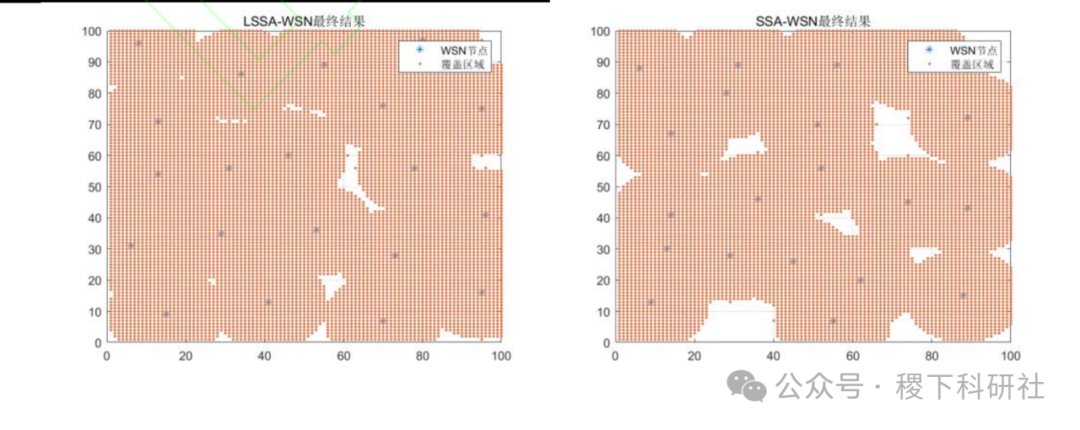

Reproduction Results:


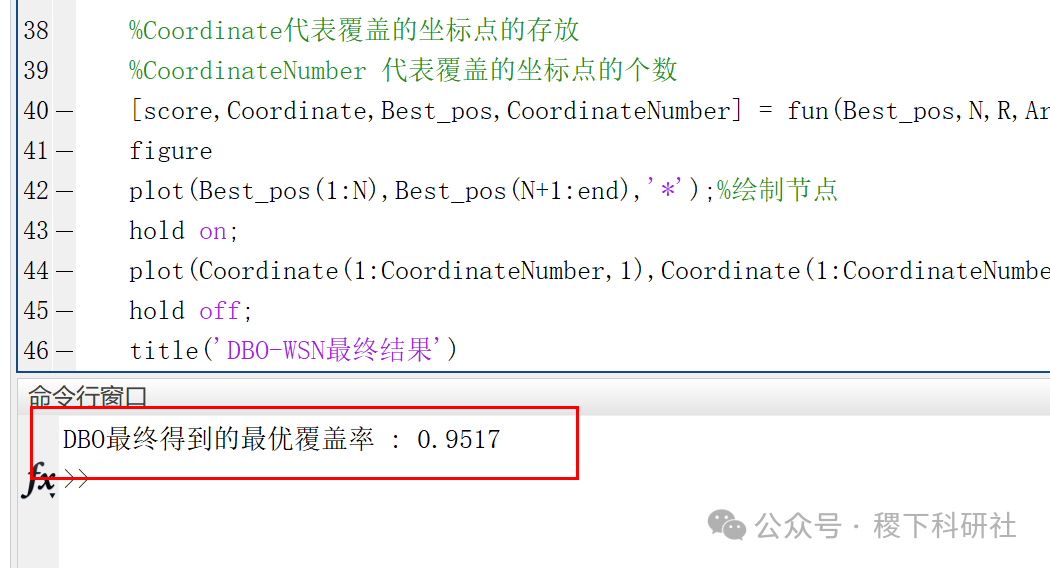

Partial Code:
%% Fitness function, the fitness value is the uncovered rate, seeking to minimize it, i.e., maximizing coverage rate.function [fitness,Coordinate,X,CoordinateNumber] = fun(X,N,R,AreaX,AreaY)Area = zeros(AreaX,AreaY);% Define coverage area as 100*100X = floor(X);% Round% Boundary processingX(X<1) = 1;for i = 1:2*N if(i<=N) X(i) = min(X(i),AreaX); else X(i) = min(X(i),AreaY); endend% Randomly generate positions for 100 nodes.Position = zeros(N,2);Position(:,1) = X(1:N)’;Position(:,2) = X(N+1:end)’;Coordinate=zeros(AreaXAreaYR^2,2);count = 1;for i = 1:N centerX = Position(i,1); centerY = Position(i,2); for a = centerX – R:centerX+R for b = centerY -R :centerY + R % Ensure within boundary range a = max(1,a);a = min(a,size(Area,1)); b = max(1,b);b = min(b,size(Area,2)); % Calculate distance distance = ((centerX – a)^2 + (centerY – b)^2)^0.5; if(distance<=R) Area(a,b) = 1; Coordinate(count,:) = [a,b]; CoordinateNumber = count; count = count+1; end end end endfitness =1-sum(Area(:))/(AreaX*AreaY);% Uncovered rateend
🎉3 References
Some content in this article is sourced from the internet, and references will be noted. If there are any inaccuracies, please feel free to contact for removal.
[1] Gao Zhixiang, Pang Feifei, Wen Zongzhou, et al. Research on Wireless Sensor Network Coverage Optimization Based on Improved Sparrow Algorithm [J/OL]. Microelectronics and Computer: 1-12 [2024-05-15]. https://doi.org/10.19304/J.ISSN1000-7180.2023.0651.
🌈4 Matlab Code Implementation