✦
Newly Published Paper
✦
https://doi.org/10.1016/j.engstruct.2025.121116
The research group recently published a paper titled “Research on the Shear Performance of Damaged Concrete T-beams Strengthened with Diagonal Embedded Fe-SMA Bars.” This study aims to systematically explore the application effects of Fe-SMA bars in the shear strengthening of T-shaped concrete beams, focusing on the influence of parameters such as the spacing, arrangement, and activation conditions of Fe-SMA bars on the strengthening effect. The study employs a diagonal embedding method to use Fe-SMA bars for shear strengthening of concrete T-beams, and the results indicate that the stiffness, load-bearing capacity, and crack control ability of the test beams are significantly improved. Notably, the failure mode of the specimens strengthened with diagonal Fe-SMA bars shifted from brittle failure to ductile failure. Compared to vertically reinforced specimens, the diagonal arrangement of Fe-SMA bars has a loading direction and prestressing direction that are nearly perpendicular to the crack propagation direction, aligning more closely with the force mechanism of the truss-arch model. This arrangement effectively suppresses the development of diagonal cracks, increasing the load at which critical shear cracks appear by 77%. By comparing the failure modes, load-displacement curves, load characteristic values, and crack widths of the specimens, the advantages of diagonal Fe-SMA bars in shear strengthening are further validated. Additionally, the study proposes a calculation method for the shear carrying capacity of T-beams considering the self-prestress effect of Fe-SMA bars. Compared to traditional methods, this approach can more accurately and reliably predict the shear carrying capacity of structures, with calculated results highly consistent with measured data. Based on this model, the shear performance of strengthened beams under different parameter conditions was also predicted, providing theoretical references for subsequent related research.
1
Article Information
Title: Shear Performance of Damaged Concrete T-beams Strengthened with Diagonal NSM Fe-SMA bars
Authors: Yu Sun; Jiahang Li; Hong Zhu*; Zhiqiang Dong; Yijie Pan; Ligang Zhao; Elyas Ghafoori
Journal: Engineering Structures
2
Research Background
As the service life of concrete structures continues to increase, many structures are experiencing varying degrees of cumulative damage and degradation of durability, necessitating strengthening and repair [1]. Concrete T-beams, one of the most commonly used structural forms, often exhibit diagonal cracks at the beam ends, which weaken the shear capacity of the component. If these diagonal cracks are allowed to propagate unchecked, they can ultimately lead to brittle failure of the concrete structure, severely impacting the service life of the structure and posing risks to safety.
Although numerous studies have investigated the application of Fe-SMA in flexural or vertical shear strengthening of reinforced concrete elements, limited research has explored the use of diagonally NSM Fe-SMA bars for shear strengthening of T-beams. This configuration aligns the direction of self-induced prestress and mechanical resistance with the principal tensile stress and typical crack trajectories, offering a more efficient strengthening mechanism. This study introduces Fe-SMA bars into NSM shear strengthening, specifically by arranging U-shaped Fe-SMA bars diagonally, with the aim of fully utilizing the self-prestressing effect of Fe-SMA, mitigating crack propagation, and restoring the stiffness and shear strength of damaged concrete T-beams. Nine concrete T-beams were designed for shear loading experiments, with variables including strengthening spacing, Fe-SMA arrangement, and activation conditions. To the authors’ knowledge, this is the first experimental study to systematically evaluate the effects of diagonal NSM Fe-SMA strengthening on the shear performance of T-beams. This novel approach addresses a critical gap in current research and offers a practical solution for enhancing the shear resistance of structural elements using advanced smart materials.
3
Materials
3.1 Fe-SMA Bars
The Fe-SMA bars used in this study were provided by Fusteel Co., Ltd., with a nominal diameter of 10 mm. Table 1 shows the recovery stress of Fe-SMA bars under different pre-strains and activation temperatures. Considering the potential damage to the Fe-SMA and mortar interface caused by thermal activation and the adverse effect of higher pre-strain on the ductility of Fe-SMA, a 6% pre-strain with activation at 200°C was selected for this study.
3.2 Ordinary Steel Bars
Two types of ordinary steel rebars were used in the components of this study, with nominal diameters of 10 mm and 32 mm. The 10 mm bars were used as stirrups and compressive longitudinal reinforcement, while the 32 mm bars were used as tensile longitudinal rebar. The elastic moduli of the 10 mm and 32 mm bars were 201 GPa and 205 GPa, respectively, with yield strengths of 575 MPa and 578 MPa, and ultimate strengths of 755 MPa and 739 MPa, respectively.
3.3 Concrete, Adhesives, and Mortar
The components were cast using commercial concrete, with an average compressive strength of 66.0 MPa at 28 days (measured from 150 × 150 × 150 mm cubes). Additionally, the gap between the Fe-SMA bars and the groove was filled with Sika-ES grout, which is recommended by re-fer AG for use with Fe-SMA applications. On the day of testing, the compressive strength of the 100 mm × 100 mm × 100 mm cubes was 72.8 MPa. Prior to electrical activation, the Fe-SMA bars were anchored at both ends using epoxy resin bonding adhesive, specifically the Hilti two-component epoxy adhesive HIT-RE 100.
4
Experimental Scheme
4.1 Experimental Design and Fabrication
A total of nine reinforced concrete T-beams were designed in this study. The dimensions, reinforcement details, and parameter variables are shown in Figure 1. One reference beam (RB) was included as shown in Fig. 1(a). Figure 1(b) and (c) show the vertically (V) strengthened beams with Fe-SMA bars of 200 mm spacing (S200) and 100 mm spacing (S100), respectively. There are two types of activation: no activation (N) and activation to 200 °C (T200). Figure 1 (d) and (e) show the diagonally strengthened beams (D-N-S200, D-T200-S200, D-N-S100, and D-T200-S100), which have the same variables of Fe-SMA spacing and activation temperature as the vertically reinforced specimens.
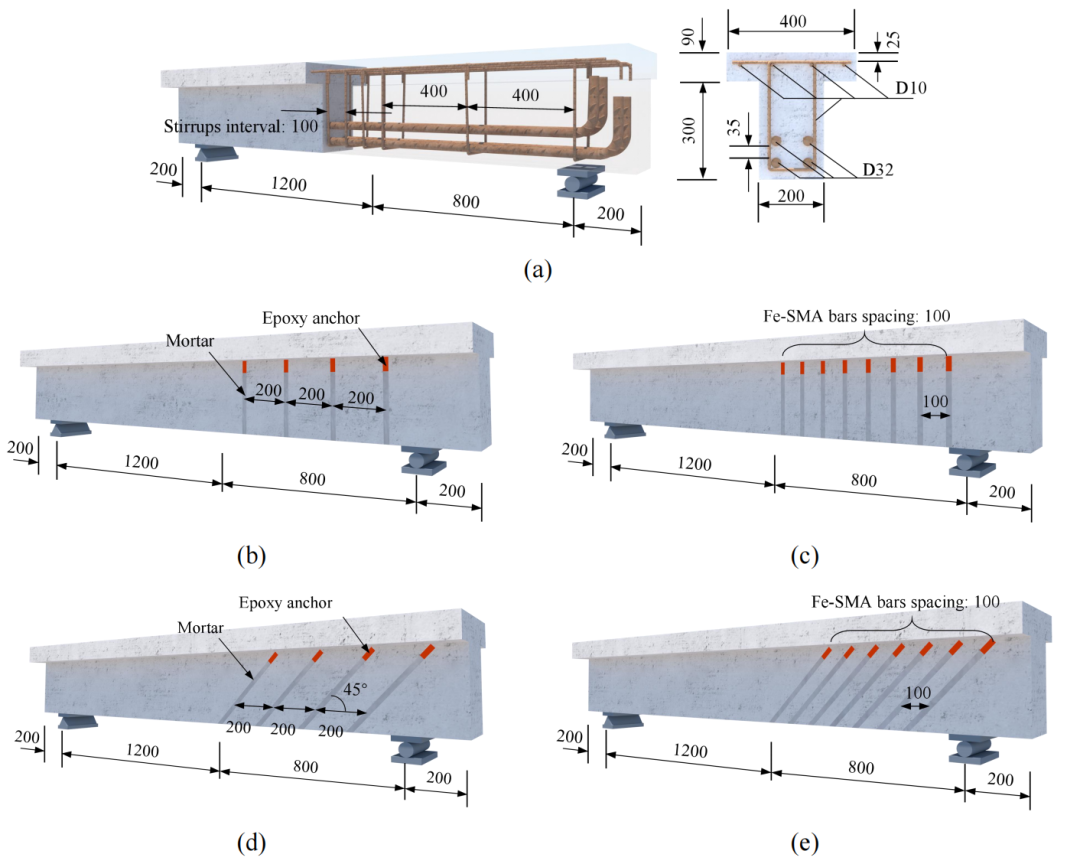
Figure 1 Dimensions and reinforcement details of specimens (unit: mm): (a) RB; (b) V-N-S200 & V-T200-S200; (c) V-N-S100 & V-T200-S100; (d) D-N-S200 & D-T200-S200; (e) D-N-S100 & D-T200-S100
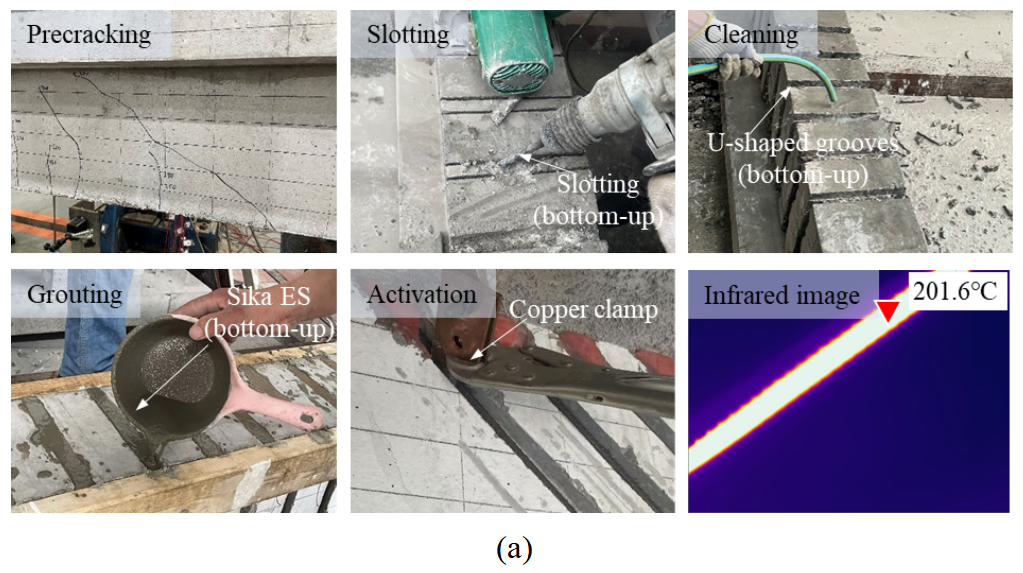
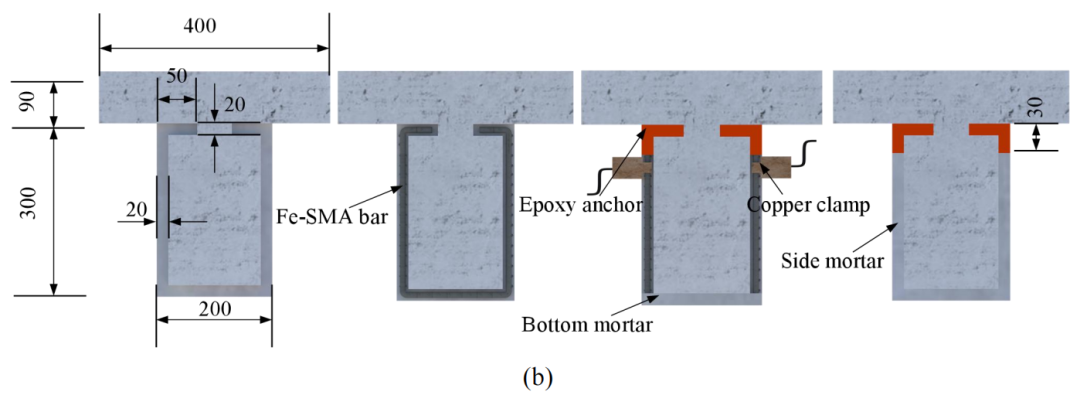
Figure 2 Strengthening process of specimens (unit: mm): (a) Physical image; (b) Schematic diagram
4.2 Loading Method and Instruments
The shear span-to-depth ratio of the specimens was 2.62, and the load was applied at a rate of 0.5 mm/min in displacement control mode. Linear variable differential transducers (LVDTs) were set up to measure the deformations at the loading and supporting points. Strain gauges (SGs) were arranged on the ordinary steel stirrups and Fe-SMA bars along the line connecting the supports to the loading point, starting from SG0 and sequentially numbered. The TDS 540 data acquisition system recorded all measurements, including load, displacement, and strain. Additionally, a non-contact 3D digital image correlation (DIC) technique was used to monitor the full-field strain of the beam in real-time.
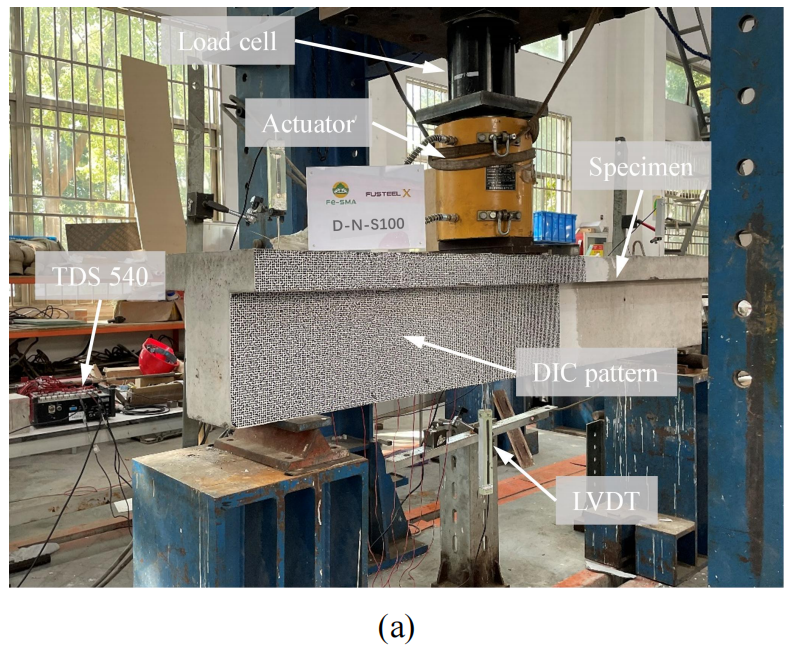
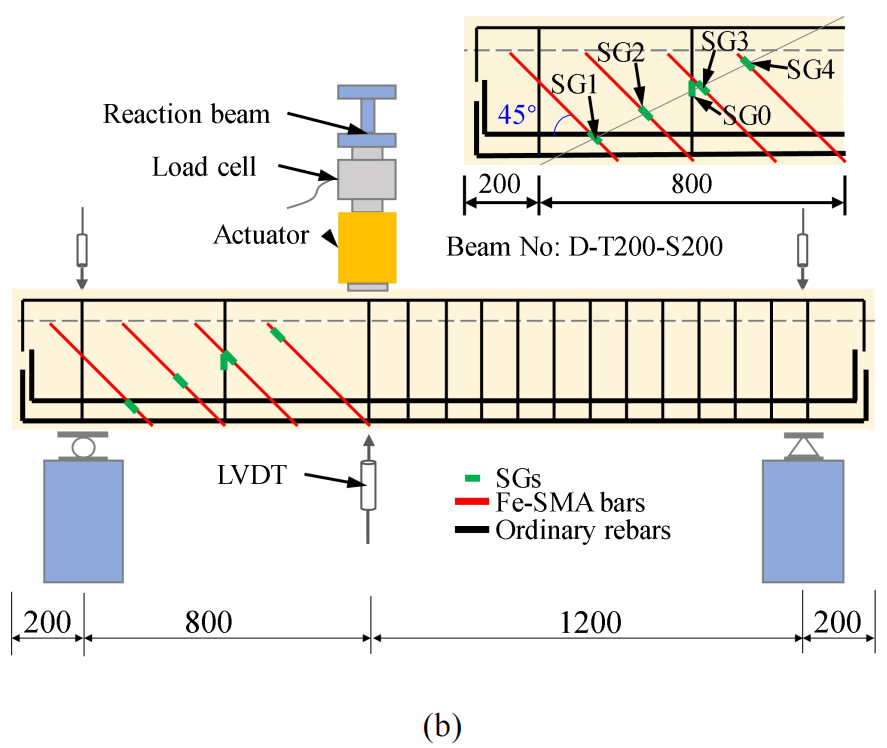
Figure 3 Loading method and instruments (unit: mm): (a) Physical image; (b) Schematic diagram
5
Experimental Results and Discussion
5.1 Strain Cloud Maps and Crack Distribution
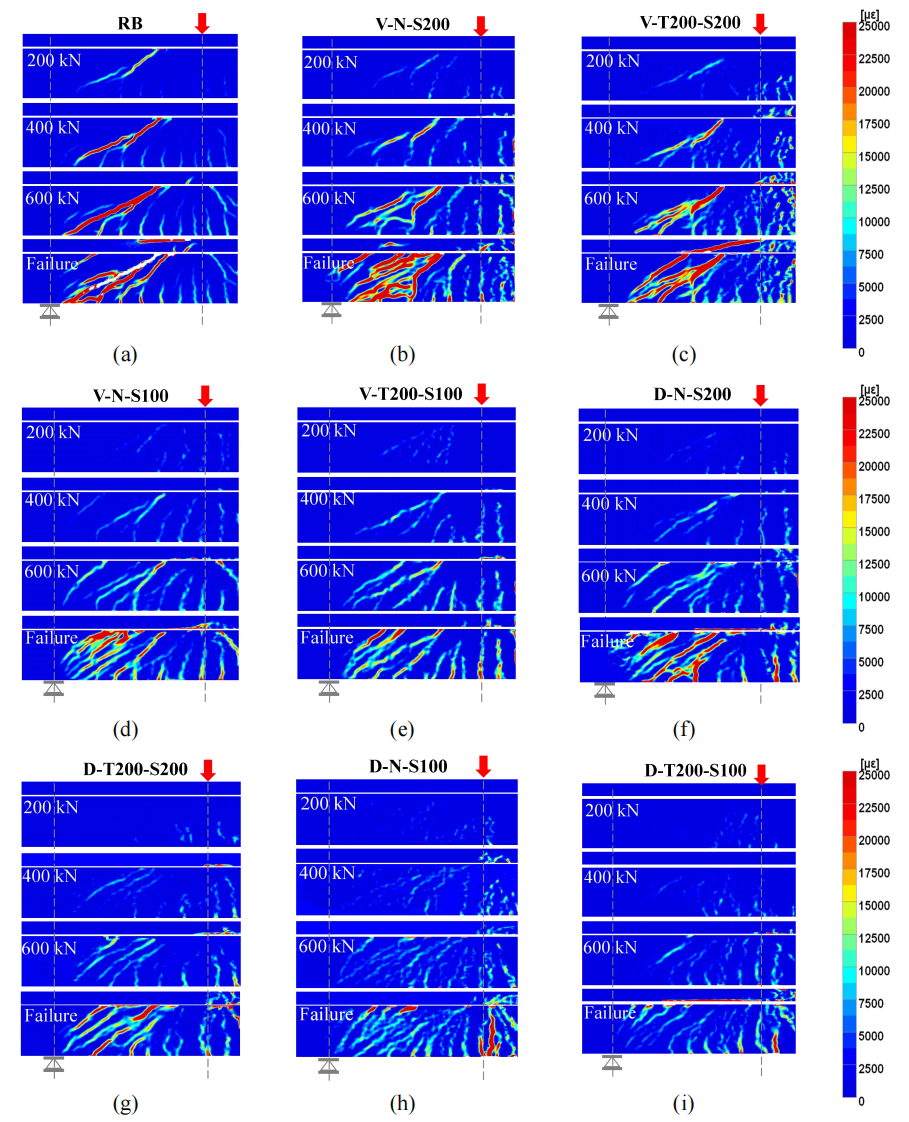
Figure 4 Strain cloud maps and failure modes: (a) RB; (b) V-N-S200; (c) V-T200-S200; (d) V-N-S100; (e) V-T200-S100; (f) D-N-S200; (g) D-T200-S200; (h) D-N-S100; (i) D-T200-S100
Figure 4 illustrates the crack development process and final failure modes of the nine specimens. Due to the denser arrangement and diagonal configuration of the Fe-SMA bars, the shear bearing capacity of specimen D-N-S100 was enhanced, with shear failure occurring after yielding of the longitudinal reinforcement. When the diagonal Fe-SMA bars were activated, the concrete in the shear span benefited from prestress, improving its strength under the complex compressive-shear stress condition. For specimen D-T200-S200, with a Fe-SMA spacing of 200 mm, similar results were achieved, with shear failure occurring after the steel reinforcement yields. In contrast, specimen D-T200-S100, due to the combined effects of Fe-SMA bar activation and densification, underwent a change in failure mode to a ductile flexural failure. During failure, the concrete in the compression zone was crushed, and the ultimate displacement far exceeded that of the other specimens.
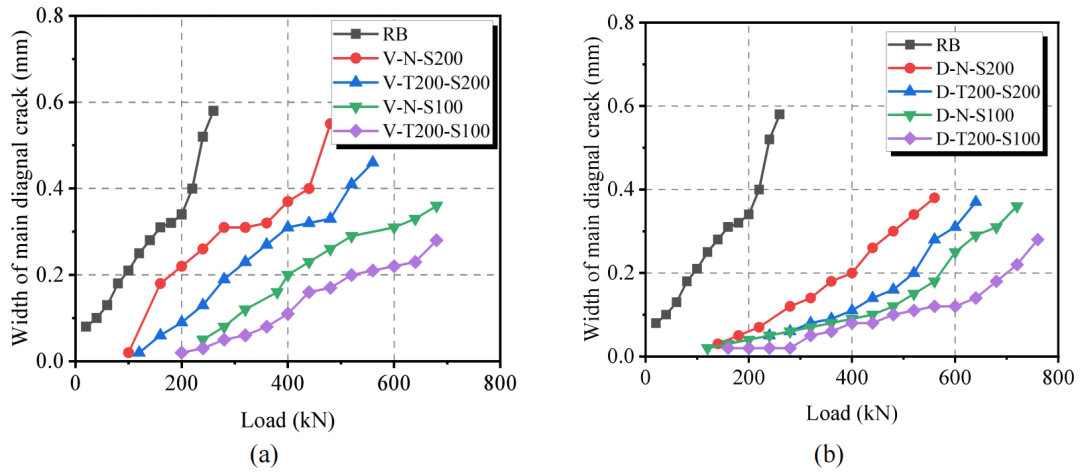
Figure 5 Load-critical shear crack width curve: (a) Vertically reinforced specimens; (b) Diagonally reinforced specimens
Figure 5 shows the load-crack width curve for the critical shear crack, where the crack width represents the maximum width of the critical shear crack. A comparison reveals that as the Fe-SMA bars were activated, the width of the critical shear crack was effectively suppressed. For instance, when the load reached 400 kN, the critical shear crack width of V-T200-S100 was reduced by 55% compared to V-N-S100. Additionally, diagonal reinforcement made more effective use of the self-prestress generated by the shape memory effect. When the load reaches 400 kN, the critical shear crack widths of V-T200-S200 and V-T200-S100 are 0.31 mm and 0.11 mm, respectively, while the critical shear crack widths of D-T200-S200 and D-T200-S100 are 0.11 mm and 0.08 mm, representing a reduction of 65% and 27%, respectively.
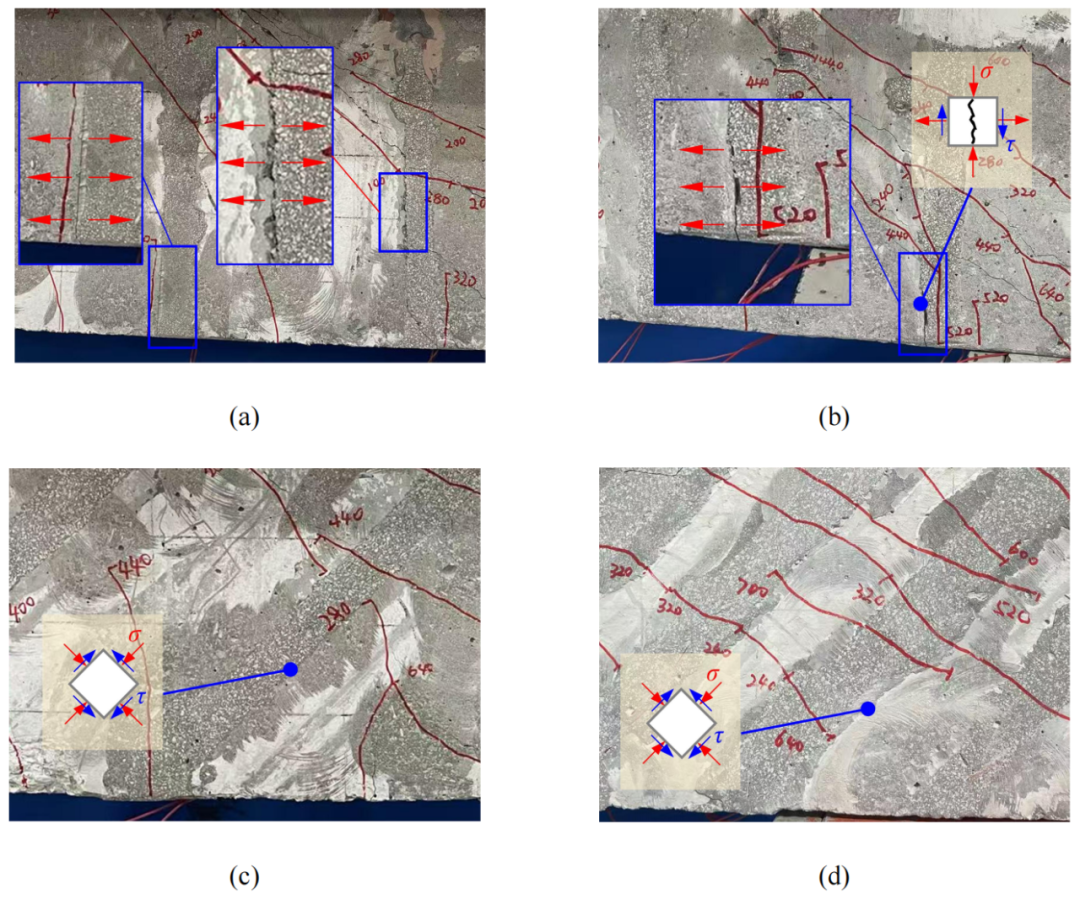
Figure 6 Comparison of concrete cracks in the tensile zone: (a) V-T200-S200; (b) V-T200-S100; (c) D-T200-S200; (d) D-T200-S100
It is important to note that after strengthening, vertical cracks typically appeared first in the shear span of the specimens. The tangential bond strength between the mortar and the existing concrete interface is generally much higher than the normal bond strength. Due to the combined effect of the bending moment generating normal stress and the shear force generating shear stress, specimens strengthened with vertical Fe-SMA bars were more prone to debonding at the normal interface between the mortar and the existing concrete, compared to those with diagonal reinforcement, as shown in Figure 6. Since U-shaped strengthening was used in this study, with the upper side of the Fe-SMA bars having hooks extending into the web and the lower side being continuous, this phenomenon did not affect the anchorage performance of the Fe-SMA bars, nor did it affect the performance of the vertically strengthened components.
5.2 Load-Displacement Curves
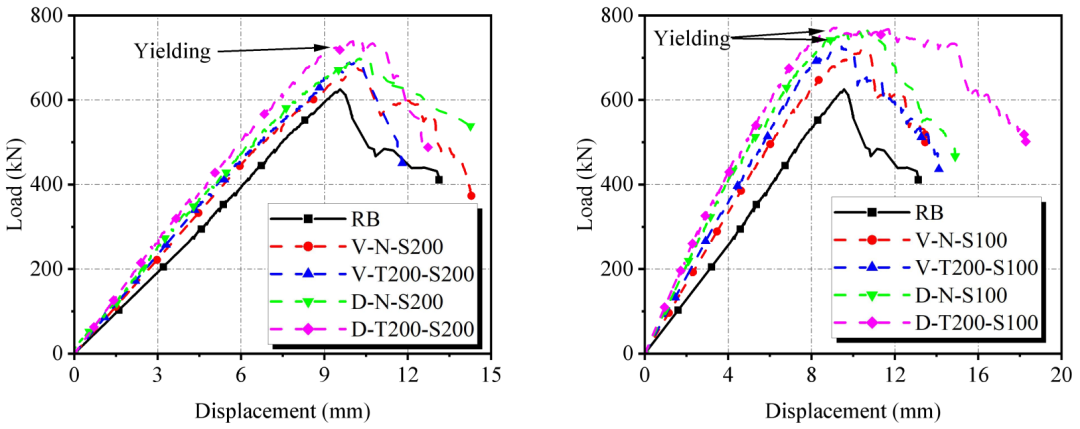
Figure 7 Load-midspan deflection (LD) curves. (a) 200 mm strengthening spacing; (b) 100 mm strengthening spacing
Figure 7 shows the load-midspan deflection (LD) curves. The deflection curves can be divided into three distinct stages: a) Linear Ascending Stage: In this stage, existing cracks develop with increasing load, but no new cracks are formed, and the load-deflection relationship remains linear; b) Nonlinear Growth Stage: As the load continues to increase, new cracks appear at the maximum bending moment and in the shear span, weakening the stiffness of the T-beam. The slope of the load-displacement curve begins to decrease. Multiple diagonal cracks develop in the shear span, and the concrete is divided into one or more diagonal columns; c) Failure Stage: One of the multiple diagonal cracks rapidly evolves into the critical shear diagonal crack, severing the load transfer path, leading to a sharp decrease in bearing capacity.
6
Theoretical Analysis
6.1 Shear Carrying Capacity Calculation
The shear carrying capacity Vu of the strengthened beams consists of three components: concrete (Vc), stirrups (Vs), and Fe-SMA bars (VSMA), as shown in Eq. (1).
The formula for concrete shear strength, as shown in Eq. (2), is based on the proposal of Zsutty [8] and takes into account the size effect factor (λs). λs is based on Bažant et al. [9] and further reviewed by Yu et al.[10].
The shear contributions from stirrups and Fe-SMA are calculated using the truss-arch model, as described in Eq. (4) and Eq. (5). The truss-arch model was adopted in this study to better interpret the shear behavior of the strengthened T-beams, particularly in relation to the observed failure mode transition. The use of diagonally embedded NSM Fe-SMA bars aligns closely with the truss mechanism, acting similarly to inclined stirrups by bridging diagonal cracks and providing active prestress. This orientation enhances compatibility with the force path assumed in the truss-arch model, and therefore provides a rational basis for analyzing the strengthened system.

Figure 8 presents the experimental and theoretical shear capacities of the specimens. The results when using Eurocode 2 [11] and GB 50010-2010 [12] are also summarized. The proposed model in this study shows good agreement with the experimental results, with deviations controlled within 15%. However, using the measured Fe-SMA strains obtained in this study (i.e., VSMA is identical across the three models), the results calculated based on Eurocode 2 and GB 50010-2010 are found to be conservative. Moreover, it is worth noting that all three calculation methods yielded values exceeding the tested shear capacity for specimen D-T200-S100. This is attributed to the fact that D-T200-S100 failed prematurely in flexure, and the recorded failure load of 462.8 kN does not represent the actual shear capacity.
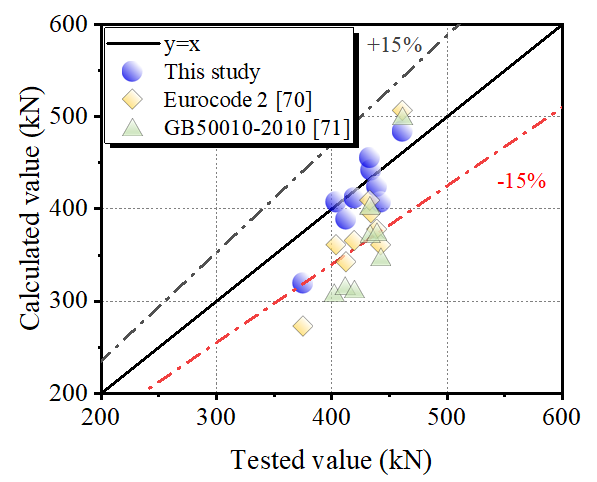
Figure 8 Comparison of theoretical values and experimental values using different calculation models
6.2 Prediction of Shear Carrying Capacity
To further investigate the influence of various parameters on the enhancement of shear performance in diagonally Fe-SMA-strengthened T-beams, the shear capacity improvements of concrete beams without web reinforcement were predicted based on the previously described calculation methods (Eq. (1) to Eq. (5)) under different activation temperatures (100 °C, 200 °C, and 300 °C) and shear span-to-depth ratios (1.0, 1.5, 2.0, 2.5, and 3.0).
From Figure 9, it is evident that the shear span-to-depth ratio is still the most significant factor affecting the shear capacity. When the shear span ratio remains constant, the shear capacity increases with the rise in activation temperature, which corresponds to an increase in the prestress of the Fe-SMA reinforcement. Notably, the increase in shear capacity is more pronounced when the activation temperature is raised from 100°C to 200°C, as the recovery stress of the Fe-SMA at 200°C and 300°C only increases by approximately 60 MPa while the recovery stress at 200 ℃ is 155 MPa higher than that at 100 ℃.
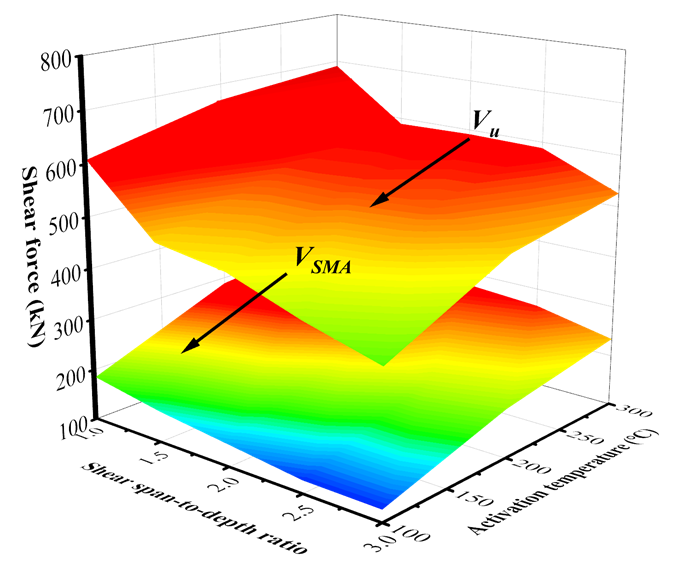
Figure 9 Prediction of shear carrying capacity under different shear span-to-depth ratios and activation temperatures
7
Conclusion
The prestress generation mechanism of Fe-SMA is fundamentally different from traditional tensioning methods, allowing it to apply prestress to concrete in any direction. This provides a practical and feasible new technical approach to address the challenges and difficulties in shear strengthening of concrete structures. This study investigates the enhancement of shear performance in concrete T-beams strengthened with diagonal Fe-SMA, comparing it with vertical Fe-SMA bars, and systematically explores key parameters such as activation conditions and strengthening spacing. The results indicate that, compared to vertical arrangement, the diagonal Fe-SMA bars is nearly perpendicular to the direction of crack propagation and aligns more closely with the load-transfer mechanism of the truss-arch model. This configuration leads to significant improvements in stiffness, strength, and crack control capacity. The findings provide a theoretical basis and technical support for related engineering applications and future research.
8
References
[1] M.K. Askar, A.F. Hassan, Y.S. Al-Kamaki, Flexural and shear strengthening of reinforced concrete beams using FRP composites: A state of the art, Case Stud. Constr. Mater. 17 (2022) e01189.
[2] S. Santosh, M. Pavithran, Iron-based smart alloys for critical applications: a review on processing, properties, phase transformations, and current trends, Journal of Materials Science: Materials in Engineering 19(1) (2024) 8.
[3] Y. Sun, Z. Dong, H. Zhu, G. Wu, Z. Sun, X. Sun, E. Ghafoori, Investigation on effective prestress in Fe-SMA bars and flexural behaviour of damaged T-shaped RC beams strengthened by NSM method, Structures, Elsevier, 2025, p. 108289.
[4] A. Cladera, L.A. Montoya-Coronado, J.G. Ruiz-Pinilla, C. Ribas, Shear strengthening of slender reinforced concrete T-shaped beams using iron-based shape memory alloy strips, Eng. Struct. 221 (2020) 111018.
[5] C. Czaderski, M. Shahverdi, J. Michels, Iron based shape memory alloys as shear reinforcement for bridge girders, Constr. Build. Mater. 274 (2021) 121793.
[6] A. Khalil, M. Elkafrawy, R. Hawileh, M. AlHamaydeh, W. Abuzaid, Numerical Investigation of Flexural Behavior of Reinforced Concrete (RC) T-Beams Strengthened with Pre-Stressed Iron-Based (FeMnSiCrNi) Shape Memory Alloy Bars, Journal of Composites Science 7(6) (2023) 258.
[7] A. Khalil, M. Elkafrawy, W. Abuzaid, R. Hawileh, M. AlHamaydeh, Flexural performance of RC beams strengthened with pre-stressed iron-based shape memory alloy (Fe-SMA) bars: numerical study, Buildings 12(12) (2022) 2228.
[8] T. Zsutty, Shear strength prediction for separate categories of simple beam tests, Journal Proceedings, 1971, pp. 138-143.
[9] Z.P. Bažant, Q. Yu, W. Gerstle, J. Hanson, J.W. Ju, Justification of ACI 446 proposal for updating ACI code provisions for shear design of reinforced concrete beams, Structural Journal 104(5) (2007) 601-610.
[10] Q. Yu, J.L. Le, M.H. Hubler, R. Wendner, G. Cusatis, Z.P. Bažant, Comparison of main models for size effect on shear strength of reinforced and prestressed concrete beams, Struct. Concr. 17(5) (2016) 778-789.
[11] P. Code, Eurocode 2: design of concrete structures-part 1–1: general rules and rules for buildings, British Standard Institution, London 668 (2005) 659-668.
[12] C.B.I. Press, Code for design of concrete structures. GB50010, Beijing: China Building Industry Press, 2015.
✦
Long press the QR code to follow us
✦

Previous Recommendations:
New Demonstration Application: Research and Demonstration Application of Frost Heave Crack Prevention Technology for Photovoltaic Support Columns in Zhangbei County, Zhangjiakou City—Fe-SMA Strip Ring Self-Prestressing Technology
Newly Published Paper: Research on the Damage Hinge of Hollow Plate Bridges Strengthened with Fe-SMA Transverse Prestressing
Newly Published Paper: Flexural Performance of Thin-Walled UHPC Plates Enhanced with Self-Prestressing Fe-SMA Bars
Newly Published Paper: Axial Compressive Performance of UHPC-Concrete Composite Columns Enhanced with Self-Prestressing Fe-SMA Spiral Stirrups
Newly Published Paper: Bonding Performance Study of Iron-Based Shape Memory Alloy Bars with Ultra-High Performance Concrete after Resistance Heating
Newly Published Paper: Experimental Study on the Impact Resistance of RC Columns Strengthened with Fe-SMA/FRP-HDPE Tubes and Rubber Concrete Coatings
Newly Published Paper: A New Method for Improving Fire Resistance of Concrete Structures Based on Fe-SMA Thermal-Induced Prestressing
Training Program | Our Institute Deepens Industry-Academia-Research Integration with Fusteel Co., Ltd.
Newly Published Paper: Monitoring and Strengthening Technology for Prestressed Concrete Cylinder Pipes (PCCP) Based on Distributed Acoustic Sensing (DAS) and Iron-Based Shape Memory Alloys (Fe-SMA)
Newly Published Paper: Axial Compressive Performance Study of UHPC Columns Enhanced with Self-Prestressing Fe-SMA Spiral Stirrups
Newly Published Paper: Performance of New Ultra-Durable Hollow UHPC Plates Enhanced with Prestressed Fe-SMA Bars
Good News | The team won the Special Jury Award Gold Medal at the 50th Geneva International Exhibition of Inventions
The National Local Joint Engineering Research Center Team for Smart Construction and Operation achieved historic results at the 50th Geneva International Exhibition of Inventions
Newly Published Paper: Compressive Performance Study of Concrete Columns Confined with FRP External Fe-SMA Strips
Newly Published Paper: Effective Prestressing of Fe-SMA Bars and Flexural Behavior Study of Damaged T-shaped Concrete Beams Strengthened by NSM Method
New Demonstration Application: Shear Strengthening of Concrete I-beams in the Chaotong Bridge of Beijing-Jingtong Expressway
Newly Published Paper: The Effect of Corrugated Pipe Diameter on the Bonding Performance of Fe-SMA Bars and Mortar after Electric Heating
Newly Published Paper: Performance Study of Local Transverse Embedded Fe-SMA Bars Strengthening Hollow Plate Beam Bridge Hinges
Professor Elyas Ghafoori was invited to visit Southeast University and Fusteel Group and gave an academic report
The research group participated in the first ICES International Academic Conference and gave a special report
Newly Published Paper: Performance Study of Hollow Plate Beam Bridges Enhanced with U-shaped Iron-Based Shape Memory Alloy Bars
Newly Published Paper: Numerical Simulation Study of Broken Wire PCCP Strengthened with Fe-SMA
Newly Published Paper: Shear Performance Experimental Study of Concrete I-beams with Fe-SMA Reinforcement
The research group participated in the third International Conference on New Materials and New Structures in Civil Engineering and gave a report
Good News | The team received funding for the 2024 National Natural Science Foundation General Project
Newly Published Paper: Guidelines for Electric Activation of Fe-SMA in Concrete
Newly Published Paper: Bonding and Anchorage Performance Study of Fe-SMA Strips with Concrete
Domestic and International Research Progress: Research on Improving Seismic Performance of Engineering Structures Based on Fe-SMA
Exploration of Self-Prestressing Technology of Fe-SMA in Strengthening Prestressed Concrete Cylinder Pipes (PCCP)
International Research Progress: Research on Self-Prestressing Fe-SMA Strip Strengthening Technology
Domestic and International Research Progress: Research on the Application of Shape Memory Alloy Materials in Masonry Structure Strengthening
International Research Progress: Fe-SMA Strips Strengthening Glass Beams
Newly Published Paper: Research on Recovery Stress Performance of Large Diameter Fe-SMA Strands for Prestress Loss Compensation in New Structures
Domestic and International Research Progress: Research on Self-Prestressing Fe-SMA Embedded Strengthening of Concrete Structures
International Research Progress: Fe-SMA Strips/ Bars for Shear Strengthening of Concrete Beams
International Research Progress: Active Strengthening of Concrete Columns with Fe-SMA Strips
Newly Published Paper: The Effect of Resistance Heating on the Bonding Performance of Fe-SMA Bars and Cement Mortar
Newly Published Paper: Research on the Properties of Self-Prestressing Iron-Based Shape Memory Alloy Bars for New Structures
—End—
Source: Southeast University Fe-SMA Self-Prestressing Technology Research and Development Team
Click the card below to follow our research dynamics
Click the lower left corner“Read the original text” to jump to read the literature
↓↓↓