You cannot just take any processor and plug it into a motherboard; this involves key factors such as the brand of the product and the type of socket.
Traditional CPUs require various independent components to function, while SoCs integrate the CPU, GPU, RAM, peripheral interfaces, and more into a single silicon chip.
The benefits of this integration are evident. First, the space utilization is higher; although SoC units are slightly larger than standalone CPUs, they are much richer in functionality. More importantly, when all components are fused together, the data transfer latency is almost negligible. It’s like moving departments that were originally scattered throughout a city into the same building, naturally improving efficiency.
Most SoCs use the ARM architecture, which stands in stark contrast to traditional x86 CPUs. The ARM architecture excels in power consumption control and processing speed, making it thrive in the mobile device sector. After all, for battery-powered devices, every milliwatt of power consumption is precious.
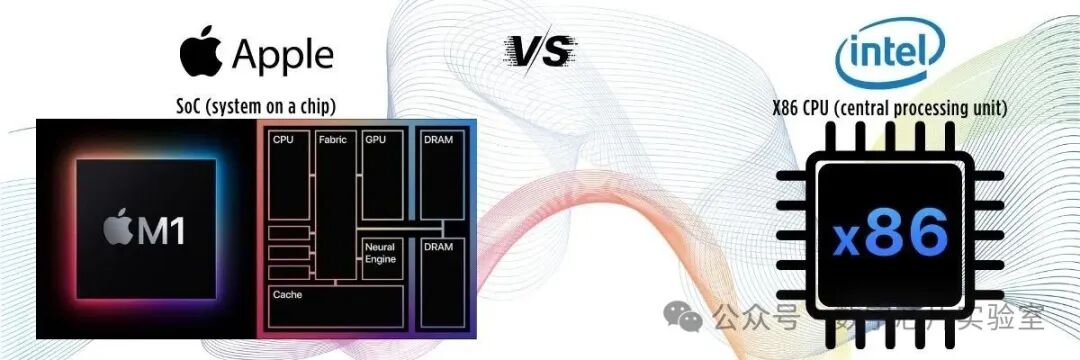
The emergence of the Apple M1 chip can be seen as an important milestone in the history of SoC development. It successfully replaced the traditional x86 CPU in MacBook laptops. This breakthrough is not just a technical one; it represents a deeper understanding of computing architecture across the industry.
The transition from socket CPUs to SoCs actually reflects a fundamental trend in the development of computer technology: moving from separation to integration.
Traditional socket designs provided users with great flexibility; you could upgrade the CPU as needed, choose different cooling solutions, and find a balance between performance and cost. This modular approach aligns with basic engineering principles, where each component has a clear responsibility and interface.
However, the advent of SoCs breaks these boundaries. When all functions are integrated into a single chip, the overall performance of the system is optimized, but at the same time, the possibility of upgrading is lost.
In the future, SoC sockets may emerge, allowing SoC chips to be replaced and upgraded like traditional CPUs. This would maintain the advantages of integration while restoring a degree of flexibility. Of course, this is just a possibility; whether it can be realized will depend on both technological and market tests.
Ultimately, the choice of processor and socket should return to actual needs. For workstations requiring high-performance computing, traditional socket CPUs may still be the best choice. For mobile devices or applications sensitive to power consumption, SoCs show clear advantages.