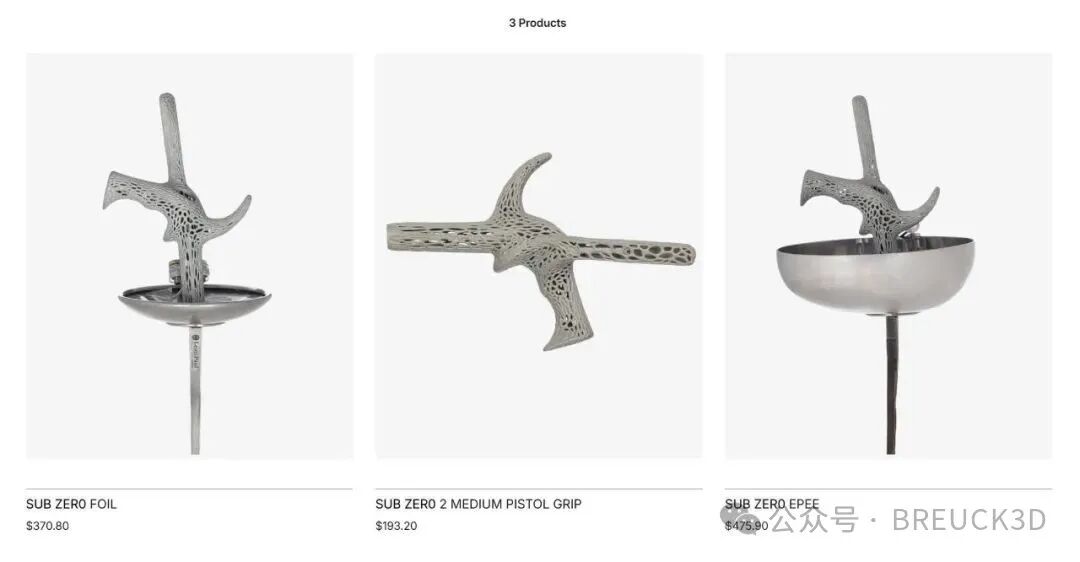
In July 2025, fencing equipment expert Leon Paul released the Sub Zer0 2 medium pistol grip, which is the first fencing handle completely manufactured using metal 3D printing technology, marking a significant breakthrough in additive manufacturing within the sports equipment sector. This product integrates biomechanical innovations with the practical experience of elite fencers, weighing only 38 grams—less than half the weight of traditional aluminum grips—while maintaining high strength and enhancing performance.
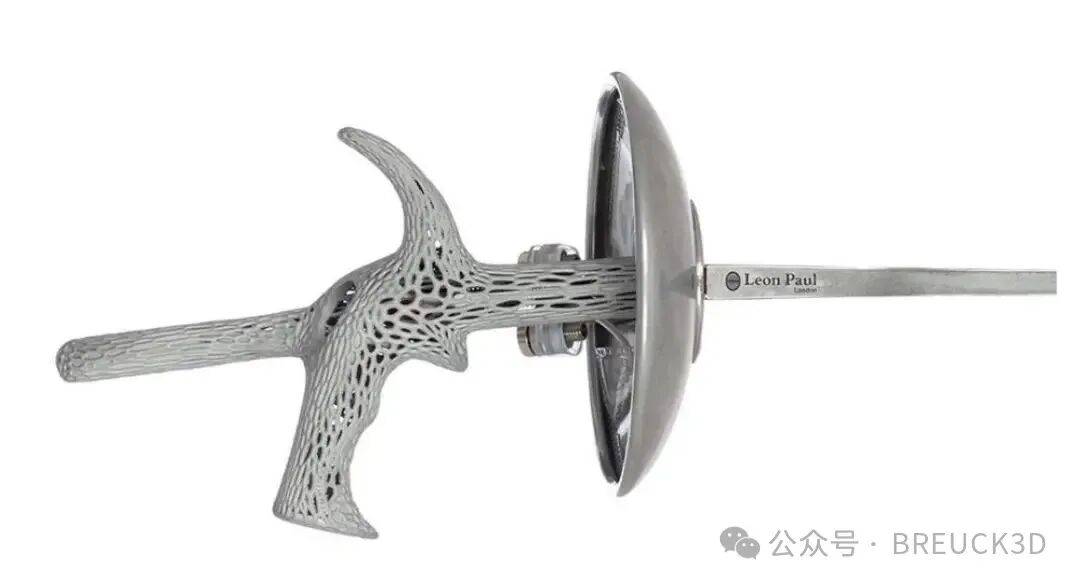
This grip utilizes SLM technology, featuring a highly hollowed structure, maximizing hollow sections to reduce weight while reinforcing only the load-bearing areas, and completely eliminating the need for bolts or joints, thus avoiding the structural weaknesses associated with traditional connections. While reducing weight, it increases grip strength, significantly enhancing the athlete’s handling, making it an excellent lightweight solution.
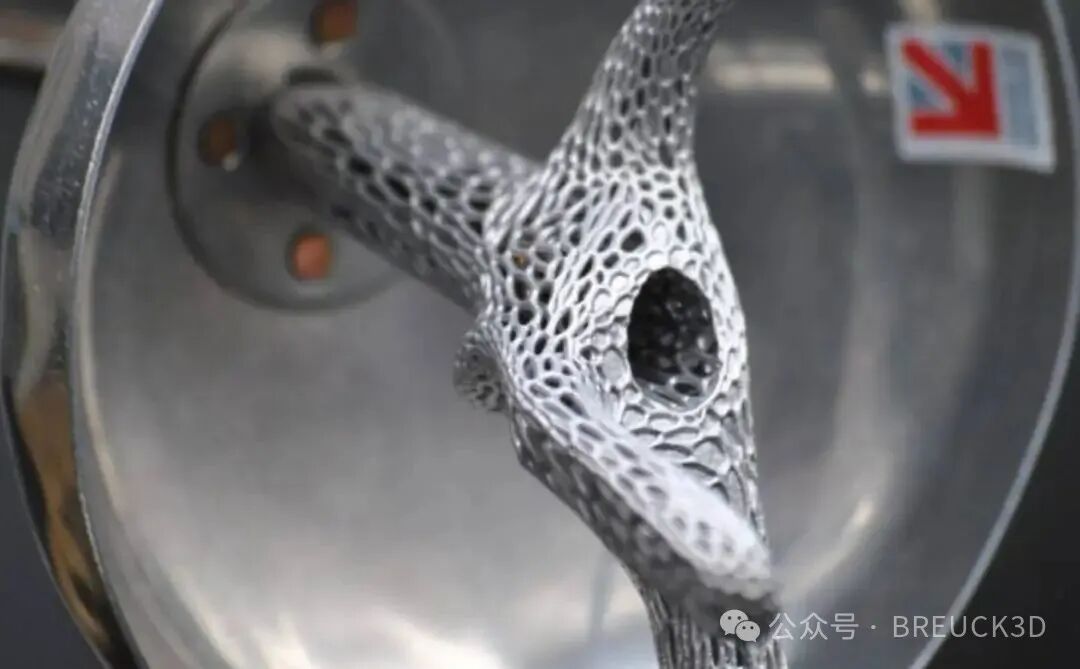
Despite initial criticisms claiming that metal 3D printing is “too expensive” or “too fragile,” actual user feedback has proven the product’s value: coaches report that students’ fencing postures have improved, and competitive fencers state that they feel faster and more fluid. A national-level fencer mentioned that before experiencing it firsthand, he thought a 50-gram difference was insignificant, but now they can no longer use the previous version. Another coach remarked that it looks like a sci-fi prop, but its performance is magically impressive.
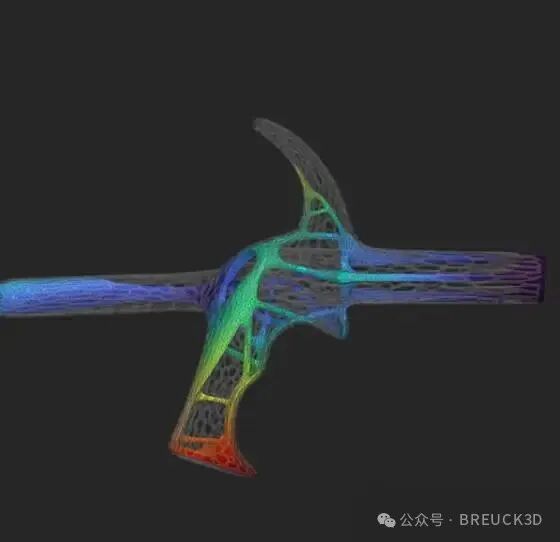
Additionally, the structural strength has been rigorously calculated, and the mechanical properties of this hollow framework can be optimized based on design. Depending on the grip and load positions, different fill densities will perfectly accommodate the characteristics of each structure, while overall printing reduces the risk of damage between these different structural areas. It can be said that 3D printing has revolutionized the production model, elevating lightweight manufacturing solutions to an unprecedented level.
In addition to its niche application in competitive sports, 3D printing lightweight solutions are also widely used in automotive design and architectural design. Boruike’s all-dimensional laboratory has collaborated with various structural design laboratories both domestically and internationally, and we hope to provide sufficient support for your advanced manufacturing direction.
About Us Qingdao Boruike All-Dimensional originates from the German company Breuckmann, with core members having backgrounds in Germany. With 10 years of industry experience and over 1,100 project experiences across various sectors including medical, automotive manufacturing, trains, machinery, composite materials, aerospace, shipbuilding, and education and research; our rich industry experience and strong technical integration and R&D capabilities are Boruike’s core competitiveness. From the preparation of ceramic and metal 3D printing raw materials to the development of 3D printing technologies and processes, Boruike is committed to providing comprehensive 3D technology solutions.