 2025Highlight Article of CJA
In recent years, the number of satellites in orbit has increased exponentially, marking the advent of a “new era of aerial and space information” characterized by large-scale constellation collaborative operations. Orbital edge computing is a novel space computing paradigm that shifts data analysis and decision-making capabilities to satellite platforms. Recently, the Innovation Academy for Microsatellites of the Chinese Academy of Sciences, in collaboration with Tsinghua University and Beijing University of Posts and Telecommunications, published a review article in the Chinese Journal of Aeronautics, systematically reviewing typical application scenarios, system composition and collaboration modes, key algorithms, and research challenges of orbital edge computing. The article analyzes current research progress and existing issues, and proposes several research trends and technological prospects for future development, aiming to provide theoretical references and technical support for the continuous evolution and interdisciplinary integration in this field.
Paper Title: A comprehensive survey of orbital edge computing: Systems, applications, and algorithms
Authors:Zengshan YIN (尹增山), Changhao WU (吴常昊), Chongbin GUO* (郭崇滨*), Yuanchun LI (李元春), Mengwei XU (徐梦炜), Weiwei GAO (高卫卫), Chuanxiu CHI (郗传秀)
Affiliations: Innovation Academy for Microsatellites, Chinese Academy of Sciences, Tsinghua University, Beijing University of Posts and Telecommunications
Publication Information:Chinese Journal of Aeronautics, 2025, https://doi.org/10.1016/j.cja.2024.11.026
Scan the QR code below to download the full paper
In recent years, the rapid increase in the number of satellites, especially those operating in Low Earth Orbit (LEO), has created new industrial opportunities in the aerospace field, driven by the rapid development of artificial intelligence hardware and software. Satellite-based computing is emerging as a new computing paradigm: Orbital Edge Computing (OEC). Compared to terrestrial edge computing, the high dynamics of LEO satellites and their limited communication, computing, and storage resources pose significant challenges for task scheduling algorithm design. Previous review papers have primarily focused on terrestrial edge computing or air-ground integration technologies, lacking a systematic summary of the architecture, key algorithms, and typical application cases of OEC.This paper provides a comprehensive review and analysis of the system architecture, application scenarios, key algorithms, and simulation tools of OEC, offering a solid theoretical foundation for researchers in this field. By discussing typical applications of OEC and the challenges it faces, this paper further proposes potential directions for future OEC research.

01 Concept of Orbital Edge Computing
Orbital Edge Computing (OEC) refers to deploying data processing and intelligent computing capabilities on spacecraft in orbit, constructing a spatial computing network that covers air, space, and ground, providing comprehensive and all-weather computing services. Compared to the traditional method of transmitting all data back to the ground, OEC shifts computing tasks to on-orbit nodes, completing key tasks such as preprocessing, intelligent recognition, and event detection directly at the data source, significantly reducing downlink bandwidth pressure, enhancing task real-time performance and system autonomy, while also improving system stability and independence in extreme environments.
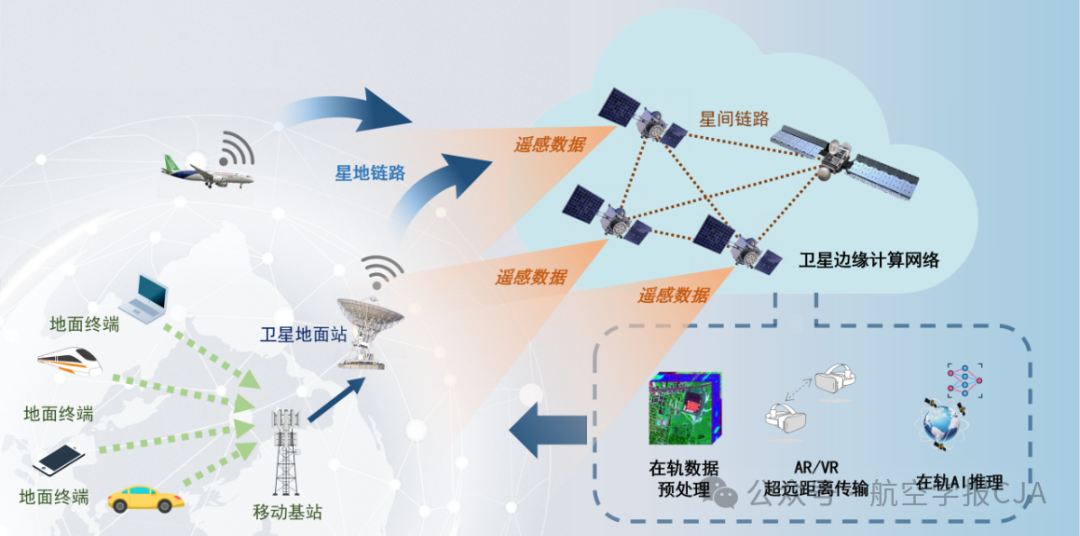
Figure 1 Concept of Orbital Edge Computing
With the enhancement of computational resources on spacecraft, multiple satellite nodes can collaborate through high-speed inter-satellite links to form a globally covering orbital edge computing network. This network not only serves space missions but also provides computing offloading services for aerial vehicles, ground terminals, and users in remote areas. Ground or aerial IoT devices (such as smartphones, drones, industrial sensors, etc.) can offload computation-intensive or latency-sensitive tasks to this network, obtaining a high-speed, low-latency, and low-energy computing experience. This “aerial and space computing downlink” model is gradually developing orbital edge computing into a distributed computing infrastructure that serves a wide range of users, becoming a core support for the future integrated intelligent network of air and space.

02 System Composition of Orbital Edge Computing
As a new generation of space information processing paradigm, based on the existing integrated architecture of air, space, and ground, orbital edge computing defines a new type of “cloud-edge-end” architecture and promotes the update of satellite hardware and software. However, there are performance and operational differences between satellites already in orbit and the next generation of satellites being developed on the ground. Therefore, satellite edge computing must consider not only future launched satellites but also the utilization of existing on-orbit satellites’ computing and communication resources. This paper conducts a detailed survey of common modeling scenarios under the background of orbital edge computing and summarizes the architecture and development status of satellite edge computing hardware and software.
2.1 Architecture of Orbital Edge Computing
Under the “cloud-edge-end” architecture, ground centers and some medium to high orbit satellites serve as the “cloud” end, primarily collecting global node information and performing functions such as resource orchestration, mobility management, access control, and task scheduling. The ground cloud can have a global perspective, coordinating and controlling all on-orbit satellites, and possesses sufficient computing power to predict the global satellite constellation network topology. The space cloud can orchestrate low Earth orbit satellites within specific coverage areas, thereby taking on some responsibilities of the ground cloud center, such as managing and planning the satellites within its coverage.
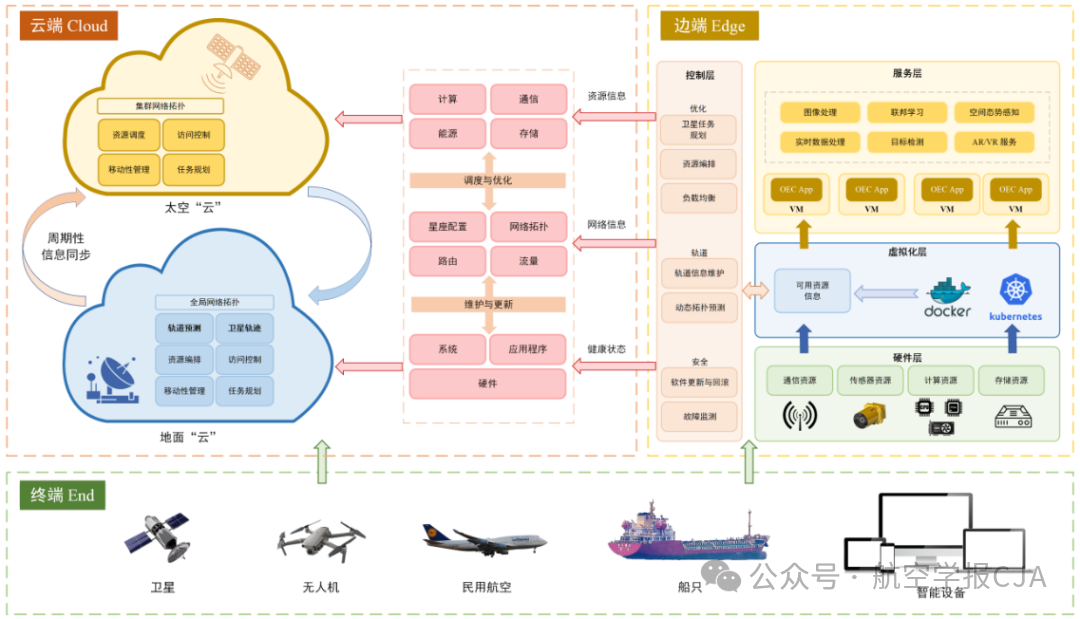
Figure 2 Architecture of Orbital Edge Computing
Low Earth orbit satellites serve as “edge” nodes, undertaking specific computing tasks. The team led by Wang Shangguang from Beijing University of Posts and Telecommunications introduced the concept of edge computing from the ground to satellite edge computing, dividing edge nodes into “hardware layer”, “virtualization layer”, “control layer”, and “service layer”. By introducing virtualization technology, edge resources are pooled, enabling unified management and flexible scheduling of computing, storage, and network resources. This layered architecture allows on-orbit resources to be allocated on demand and dynamically expanded, significantly improving resource utilization and task processing flexibility.
The “end” nodes are the entities being served, covering everything from ground user handheld devices to aerial drones, commercial aircraft, and terminal devices at sea, as well as remote sensing satellites in space. All terminals requiring access to computing services can access convenient computing services through satellite edge computing.
2.2 Hardware of Edge Computing
Due to the exposure of satellites to high-intensity cosmic radiation and the challenges posed by extreme temperature variations, traditional satellite computing hardware often requires special processes and certain radiation-resistant measures. Additionally, limitations in power, size, weight, and cost make it challenging to provide reliable computing services. To address this, various methods have been proposed to enhance satellite computing performance under these constraints, among which a hybrid architecture of CPU, GPU, FPGA, and DSP has been proven to offer significant performance advantages in terms of cost and radiation resistance.
Today, an increasing number of commercial off-the-shelf (COTS) hardware is being applied to satellites, providing hardware computing support for orbital edge computing. Some researchers are also dedicated to studying new hardware architectures that are stable, low-power, and high-performance. The team led by Xu Mengwei from Beijing University of Posts and Telecommunications proposed a new server architecture composed of numerous low-power SoCs. Under limited weight, volume, and power consumption, its performance outperforms traditional servers composed of Intel CPUs and NVIDIA GPUs, showing great potential for application in orbital edge computing.
2.3 Software of Edge Computing
Traditionally, satellite onboard operating systems and software are written in assembly languages such as Ada, C, or C++, which are close to hardware and specifically serve certain tasks on the satellite. However, terrestrial operating systems, due to their generality, often require larger memory and hard disk space, making them unsuitable for hardware-constrained satellites. However, with the development of satellite hardware, deploying general-purpose operating systems and software on satellites has become possible. For instance, SpaceX has developed a custom, deeply customized Linux system for its satellites, and the software-defined satellite series “TianZhi” developed by the Software Institute of the Chinese Academy of Sciences has achieved good on-orbit verification results.
Today, the development of satellite intelligence requires satellites to cater to various users and service demands. Therefore, satellite operating systems and software are evolving towards generalization, portability, upgradability, and secondary development, with good compatibility with existing AI-accelerated hardware, supporting machine learning or deep learning, which is an important direction for the advancement of orbital edge computing.

03 Application Scenarios of Orbital Edge Computing
Ground edge computing has achieved significant results in scenarios such as smart manufacturing and industrial IoT, smart cities, autonomous driving and vehicle networking, and remote healthcare, successfully supporting the urgent demands for low latency, high bandwidth, local data processing, and privacy protection. As an extension of ground networks, satellite networks further extend the computing network from the ground to the air and space, realizing the evolution trend of edge computing systems towards integrated intelligent collaboration in air, space, and ground, especially demonstrating unique advantages in addressing global perception, disaster response, offshore operations, and intelligent services in remote areas.
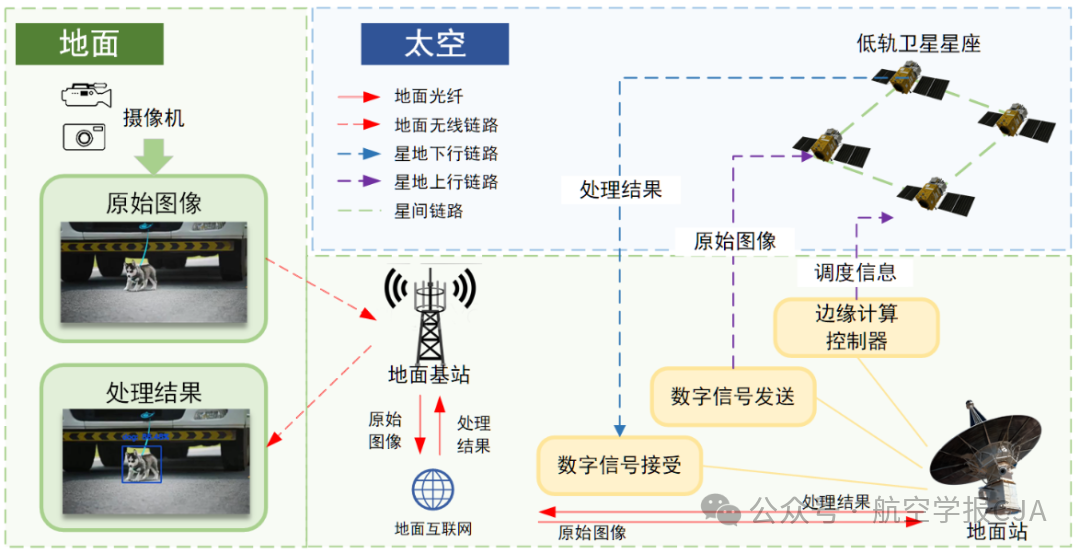
Figure 3 Orbital Edge Computing Serving Ground Users
(The satellite illustration does not refer to any specific satellite; image material source: https://content-static.cctvnews.cctv.com/snow-book/index.html?item_id=7713847836070094993, example image source: https://ieeexplore.ieee.org/stamp/stamp.jsp?tp=&arnumber=9372909)
Traditional high-definition video transmission, remote VR, and other high bandwidth, low latency scenarios often require hundreds or even thousands of hops in ground networks, greatly increasing communication latency. However, in the context of satellite internet, satellites can complete communication from one end of the Earth to the other in just a few dozen hops. The satellite network empowered by edge computing can perform data compression, caching, and encoding/decoding tasks close to the source, significantly reducing end-to-end latency.
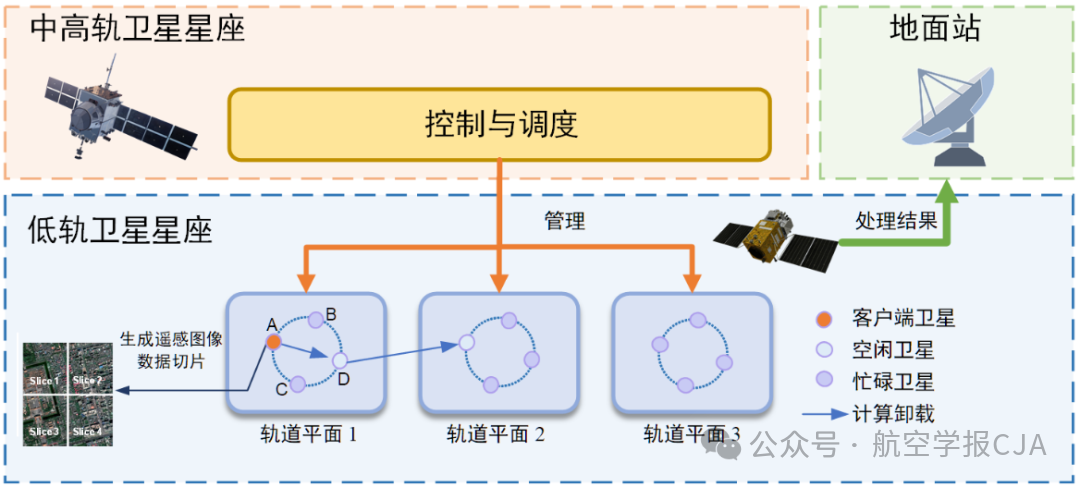
Figure 4 Orbital Edge Computing Serving Remote Sensing Satellites
(The satellite illustration does not refer to any specific satellite; image material source: https://content-static.cctvnews.cctv.com/snow-book/index.html?item_id=7713847836070094993)
Satellite edge computing can not only provide computing access services for various ground users but also serves the on-orbit satellites themselves. Traditional remote sensing satellites transmit all raw remote sensing data to the ground for analysis and processing. However, with the development of high-speed inter-satellite links, satellite edge computing can quickly respond to on-orbit computing demands, analyzing remote sensing data in orbit, discarding invalid collected data, and reducing the communication pressure on the downlink to the ground.
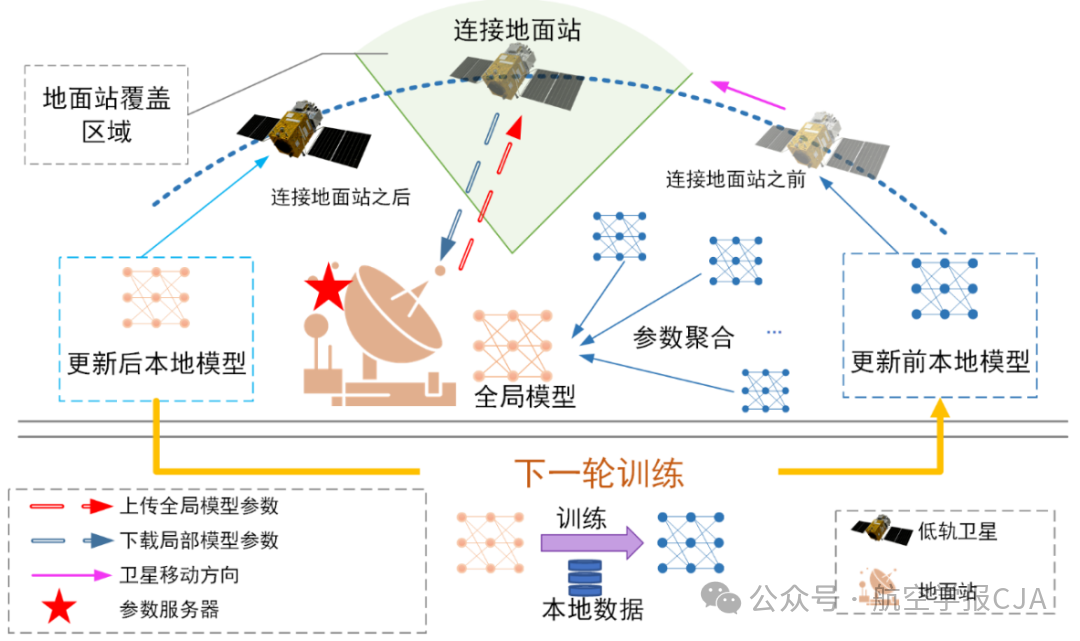
Figure 5 Orbital Edge Computing Serving Satellite Federated Learning
(The satellite illustration does not refer to any specific satellite; image material source: https://content-static.cctvnews.cctv.com/snow-book/index.html?item_id=7713847836070094993)
Federated learning, as an important distributed training method, can achieve multi-node model parameter aggregation without transmitting raw data, effectively alleviating the “data island” effect caused by differences in data collected by different satellites. Satellite federated learning can enable AI models to be trained and updated in orbit without the need for frequent downlinking of data to the ground and then distributing the trained models back to each satellite.

04 Simulation Methods for Orbital Edge Computing
Ground edge computing has seen the emergence of many mature simulation platforms after more than a decade of development, while satellite edge computing has only just begun in the past five years, lacking a complete mechanism, realistic simulation, and comprehensive evaluation software. Most research on satellite edge computing combines existing communication simulation software, satellite simulation software, and virtualization platforms to conduct algorithm validation. The field of satellite edge computing still lacks high-fidelity integrated simulation tools covering communication, computing, scheduling, and orbital dynamics, which restricts the validation and development of related algorithms and system designs.

05 Optimization Algorithms for Orbital Edge Computing
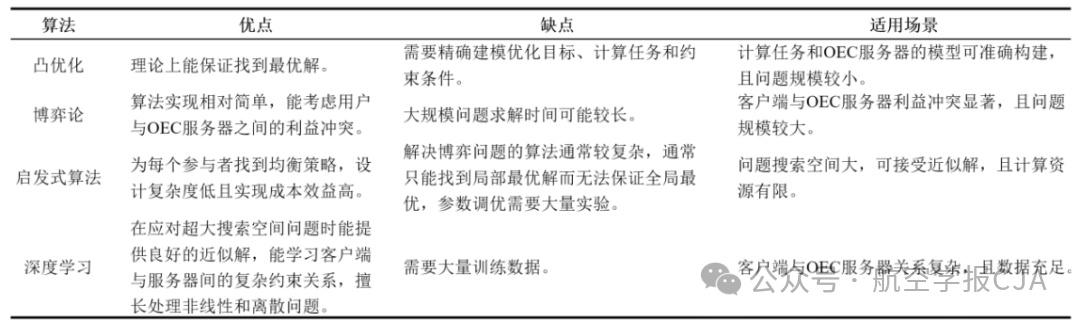
Orbital edge computing faces multiple challenges, including a large number of nodes, complex resource constraints, and dynamic network topologies. Traditional centralized computing and static scheduling strategies are difficult to apply directly to the optimization of task planning and allocation, resource orchestration, and computing offloading strategies in orbital edge computing. In recent years, researchers have modeled problems in various satellite edge computing scenarios and attempted to introduce optimization solutions based on convex optimization, game theory, and reinforcement learning to address these challenges.
Table 1 Comparison of Optimization Algorithms for Orbital Computing

06 Challenges of Orbital Edge Computing
1) Limited On-Orbit Resources: The energy storage, computing power consumption, etc., of satellites are strictly limited, and the primary means of obtaining energy is solar power, which is intermittent;
2) Hardware Cost Constraints: High-performance computing hardware incurs more heat dissipation and radiation resistance costs;
3) Large Number of On-Orbit Satellites: The rapidly expanding scale of satellite constellations poses severe challenges for resource management;
4) Unsatisfactory Simulation Platforms: Currently, there is a lack of a software platform that can comprehensively simulate on-orbit computing scenarios, hindering further research in satellite edge computing;
5) Unclear Mechanisms and Structures: Satellite edge computing is still in the conceptual stage, with only a few studies on actual satellites, and systematic descriptions and research on constellation configurations, collaboration methods, and architectures are relatively lacking.

07 Future Research Directions for Orbital Edge Computing
1) Resource Orchestration and Optimization: Future satellite edge computing will deploy larger-scale and more heterogeneous space nodes, and efficient resource orchestration and dynamic optimization technologies will become core support;
2) Fault Tolerance and Disaster Recovery Mechanisms: The complex space environment is susceptible to high-energy particle radiation, severe temperature fluctuations, communication link interruptions, etc. Fault tolerance and disaster recovery mechanisms are key to ensuring the stable operation of edge computing systems;
3) Space Data Centers: With the enhancement of computing power and increased task density, high-performance satellite nodes resembling “edge data centers” will emerge, possessing cluster-level computing and distributed collaboration capabilities.
4) Virtualization Technologies: Lightweight virtualization platforms, task sandbox isolation, dynamic deployment, and elastic scheduling technologies will develop in space, promoting the on-orbit realization of “computing as a service”;
5) Hardware and Software Design: High-performance, low-power, radiation-resistant processors, aerospace-grade dedicated AI acceleration chips, as well as lightweight and generalized operating systems and software platforms;
6) Simulation Platforms: Constructing an integrated simulation platform that combines orbital dynamics, network topology, computing resources, task flows, and scheduling mechanisms to support multi-domain collaborative simulation in air, space, and ground.

08 Main Author Introductions
Zengshan YIN (First Author), Vice President of the Innovation Academy for Microsatellites, Chinese Academy of Sciences, researcher, and doctoral supervisor. Mainly engaged in microsatellite system design, satellite remote sensing image processing, and space information communication. Chief commander or chief engineer of China’s first global carbon monitoring satellite, KuaFu-1, Innovation-6, and other satellites. He has received the second prize of the National Science and Technology Progress Award, the Outstanding Contribution Award of the Chinese Academy of Sciences, the first prize of the Shanghai Science and Technology Progress Award, and the first prize of the Military Science and Technology Progress Award, and has been selected as a national-level leading talent.
Chongbin GUO (Corresponding Author), Director of the Strategic and Demonstration Center at the Innovation Academy for Microsatellites, Chinese Academy of Sciences, researcher, and doctoral supervisor. Mainly engaged in space-based cluster intelligence and space robotics research. Deputy chief or chief designer of satellites such as Remote Sensing No. 43, Spectral Micro-Nano, and Low Earth Orbit Navigation Enhancement. Selected as a Shanghai Qiming Star Talent, Shanghai Youth Top Talent, Excellent Member of the Chinese Academy of Sciences Youth Promotion Association, and expert in the Ministry of Science and Technology’s 2030 field expert group.
Changhao WU, PhD student at the Innovation Academy for Microsatellites, Chinese Academy of Sciences, mainly engaged in research on satellite edge computing and on-orbit distributed systems.
Yuanchun LI, Assistant researcher at the Intelligent Industry Research Institute of Tsinghua University. Mainly engaged in research on edge intelligence and mobile computing. Has received nominations for Best Paper at UbiComp, first prize of the Automation Society Science and Technology Progress Award, and ACM SIGBED China Rising Star Award.
Mengwei XU, Associate Professor/Doctoral Supervisor at the School of Computer Science, Beijing University of Posts and Telecommunications. Mainly engaged in research on edge intelligence and operating systems, and has won the Best Paper Award at USENIX ATC 2024.
Weiwei GAO, PhD student at the National Key Laboratory of Network and Switching Technology, School of Computer Science, Beijing University of Posts and Telecommunications, mainly engaged in research on satellite computing and resource allocation.
Chuanxiu CHI, PhD student at the National Key Laboratory of Network and Switching Technology, School of Computer Science, Beijing University of Posts and Telecommunications, mainly engaged in research on satellite computing and satellite platform reliability.
Contributed by: Chongbin GUO
Edited by: Li Dan, Xu YatingReviewed by: Cai Fei, Teng Xiong
Training Activities Journal Introduction