August 7, 2025
Baiaoshaitu WO2025161939
FOLR1/MUC1 ADC
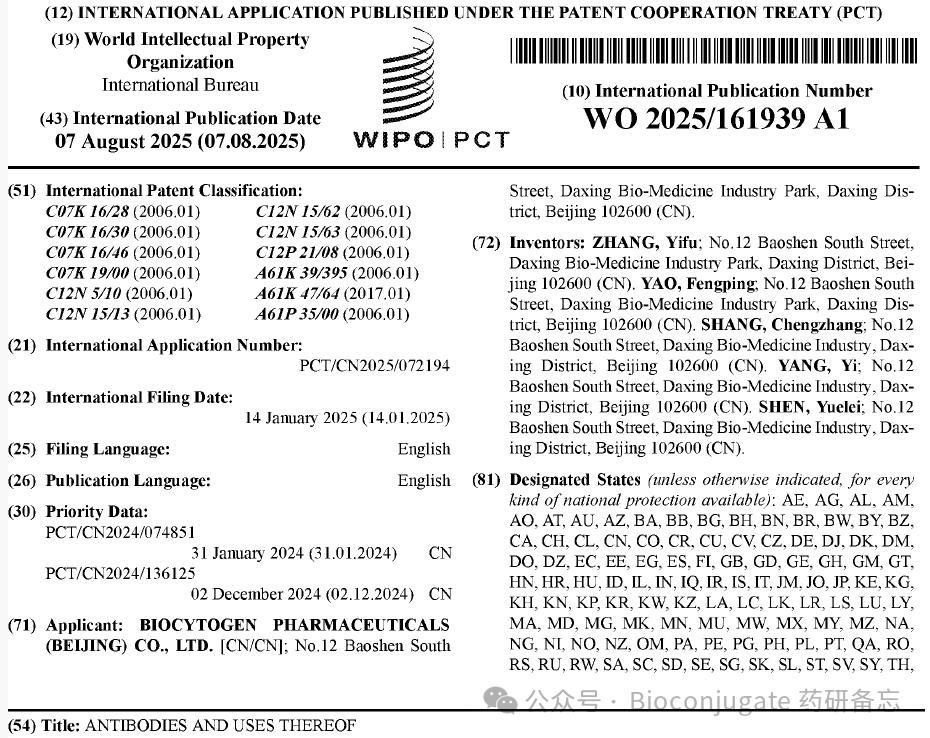
On August 7, Baiaoshaitu disclosed an ADC patent targeting FOLR1 and FOLR1/MUC1. According to the data disclosed in the patent examples, the preferred structure for the FOLR1-targeted ADC is 1A3-CPT2, while the preferred structure for the FOLR1/MUC1 dual-targeted ADC is 10G1-1A3-CPT2; where 1A3 targets FOLR1 and 10G1 targets MUC1. The coupling method employs cysteine coupling, a novel cleavable linker, and a TOPO1 inhibitor, with a DAR of 8.
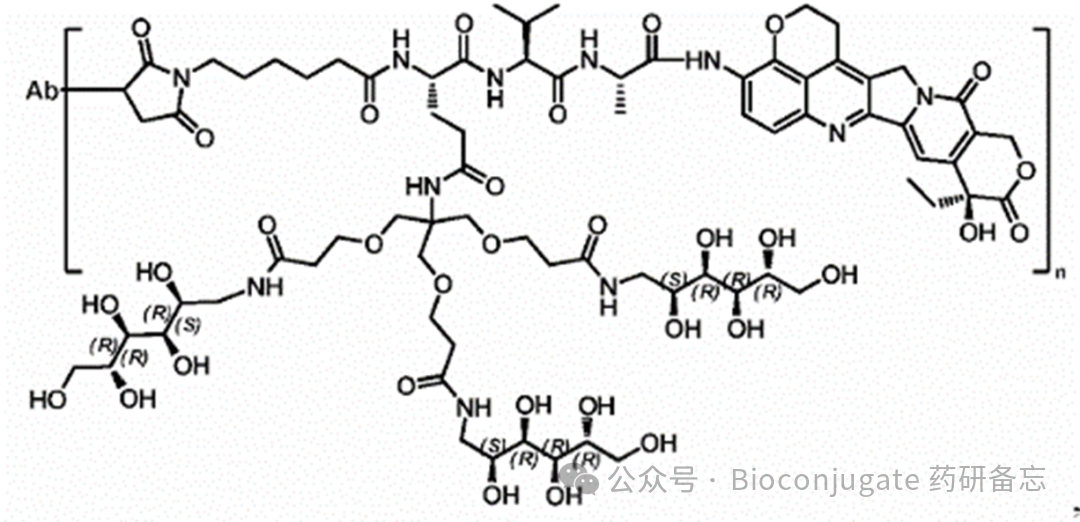
Baiaoshaitu’s official website disclosed an “open collaboration dual-antibody ADC asset” that includes a FOLR1/MUC1 dual-antibody ADC. The company revealed that this dual-antibody ADC asset utilizes a proprietary linker/toxin system BLD1102, which consists of a highly hydrophilic and cleavable linker and a novel efficient topoisomerase I inhibitor drug BCPT02, exhibiting strong and significant bystander killing effects. Additionally, this system has shown good safety in crab-eating macaques.
Shiyao Group WO2025162258
DLL3 ADC SYS6040
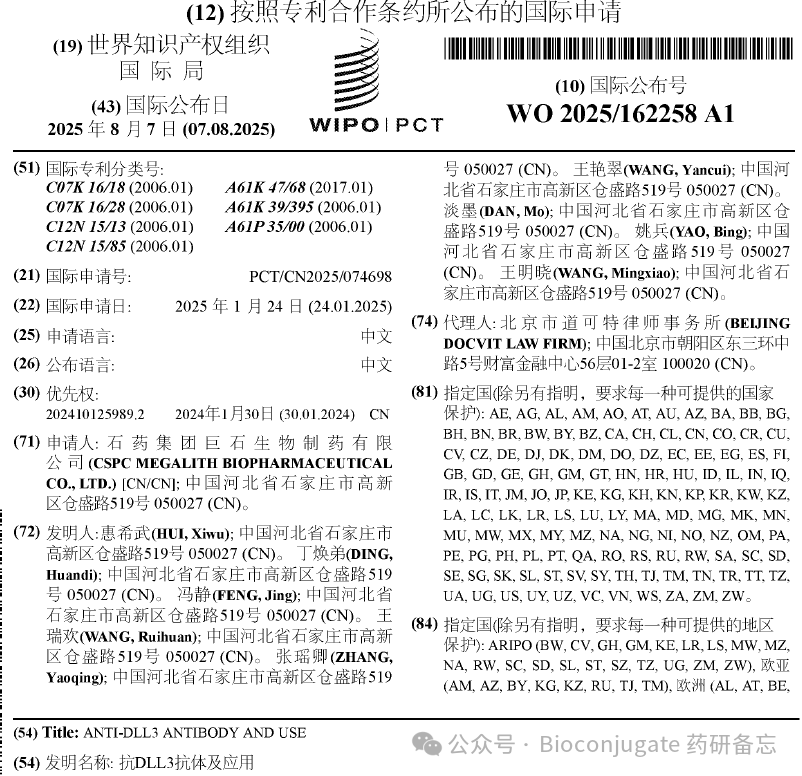
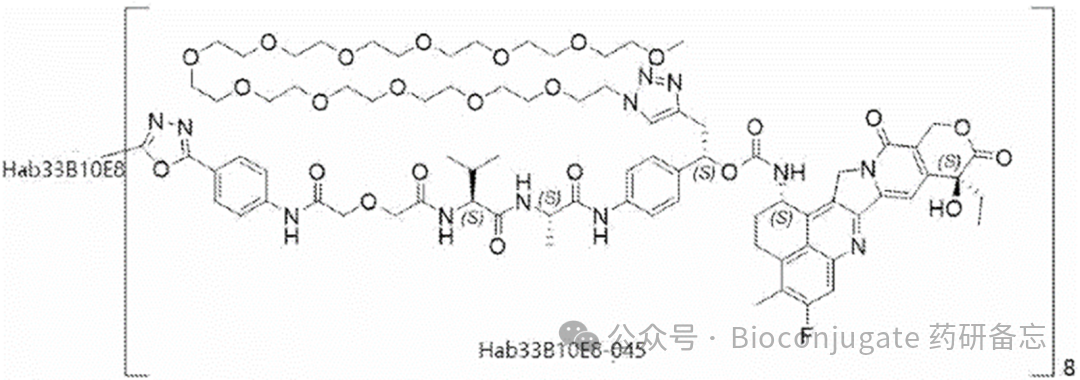
On August 7, Shiyao Group disclosed an ADC patent involving the target DLL3. The DLL3 antibody developed in this patent has a higher affinity, with the preferred antibody and its corresponding ADC structure being Hab33B10E8-045, with a DAR of 8. The antibody Hab33B10E8 shows better affinity for DLL3 on the cell surface compared to the control molecule Rovalpituzumab; the endocytic activity of Hab33B10E8 is superior to that of Rovalpituzumab in SHP77 and NCI-H82 cells. Hab33B10E8-045 exhibits excellent anti-tumor effects in human small cell lung cancer SHP77, NCI-H526, and NCI-H69 xenograft mouse models; pharmacokinetic and tolerance studies in crab-eating macaques show stable pharmacokinetic characteristics and good tolerance, with an MTD of 30 mg/kg, potentially indicating a higher MTD.
It is reported that Shiyao Group’s DLL3 ADC drug SYS6040 is currently in Phase 1 clinical development (CTR20251256, NCT06970795), with clinical indications for DLL3-positive malignant solid tumors and small cell lung cancer; inclusion criteria for this clinical study include patients with DLL3 expression-positive other malignant solid tumors, while exclusion criteria include patients who have previously received ADC treatment with topoisomerase I inhibitors as effective payloads. The IND application for this drug in China was approved by CDE in March 2025; the IND application in the United States was disclosed to have been approved in June 2025.
Hengrui Medicine WO2025162270
CLDN6 ADC, C6P
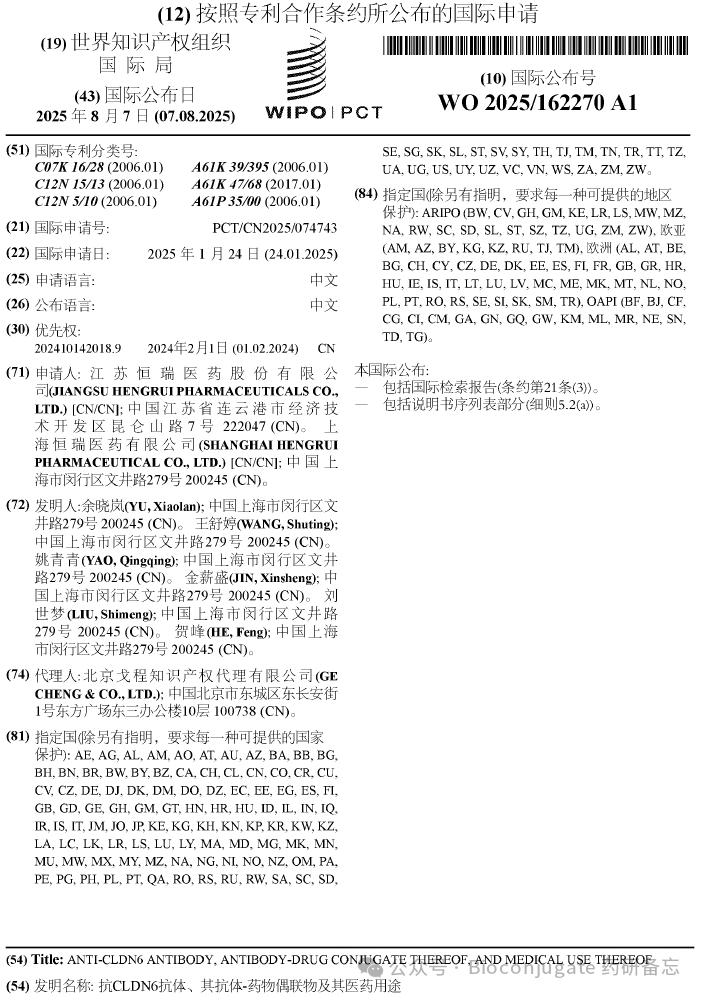
On August 7, Hengrui Medicine disclosed an ADC patent involving the target CLDN6. According to the data disclosed in the patent, the preferred structure is ADC-2, utilizing glycosylation site-specific coupling technology, with a payload of pyrrolobenzodiazepine (PBD) class, and a linker that is protease-cleavable Val-Ala, with a DAR value of approximately 2. The newly developed antibodies Ab-3 and Ab-4 do not bind to CLDN3/4/9, thus avoiding the off-target toxicity caused by ADC targeting CLDN9, with the preferred ADC-2 utilizing antibody Ab-4. Furthermore, the effective payload used in this patent has been optimized for reduced toxicity based on high-toxicity PBD dimers (PBDs), resulting in a monomeric form of PBDs.
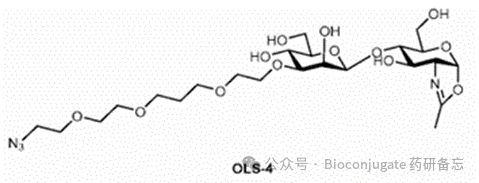
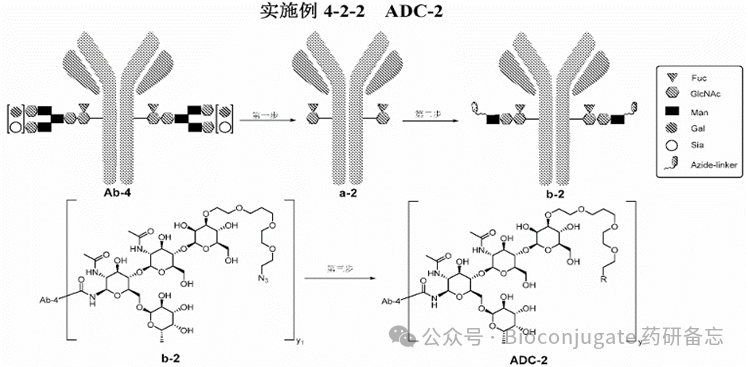
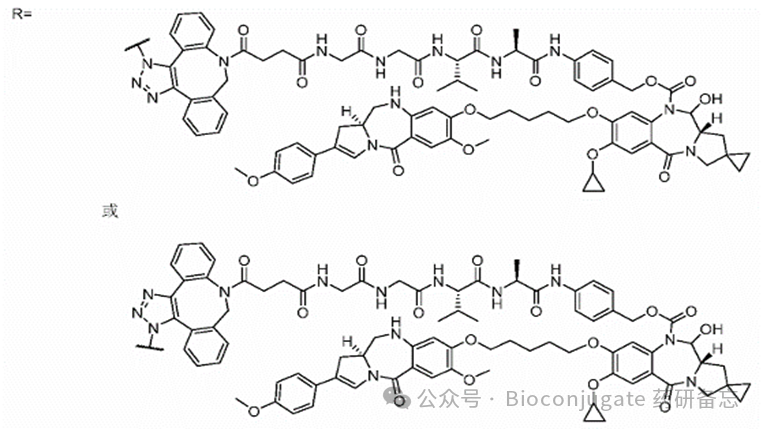
Hengrui Medicine disclosed preclinical research on a CLDN6 ADC drug C6P at the AACR 2025 conference. C6P consists of an Fc-silent anti-CLDN6 monoclonal antibody, a cleavable linker, and a modified PBD (compound A). C6P selectively binds to CLDN6 and shows no cross-reactivity with CLDN 3/4/5/8/9. Additionally, it can bind to the I143V mutant of CLDN6, which is a major single nucleotide polymorphism (SNP) in the human population. The antibody of C6P shows strong binding affinity against several ovarian cancer cell lines with different CLDN6 expression levels and demonstrates good endocytic activity. Compound A is an optimized monomeric PBD with lower cytotoxicity than traditional dimeric PBDs. Furthermore, the high systemic clearance rate of this payload is designed to minimize toxicity. The glycosylation-mediated site-specific coupling method generates a DAR-homogeneous ADC product C6P. In PA-1 and OVCAR3 xenograft mouse models, C6P shows dose-dependent anti-tumor effects, leading to significant and sustained tumor regression. C6P is well tolerated in crab-eating macaques at a single dose of 0.5 mg/kg, with no hematological-related toxicity observed.
Zhejiang Yangshengtang Natural Medicine Institute WO2025162305
Quaternary Ammonium Salt Linker HER2 ISAC
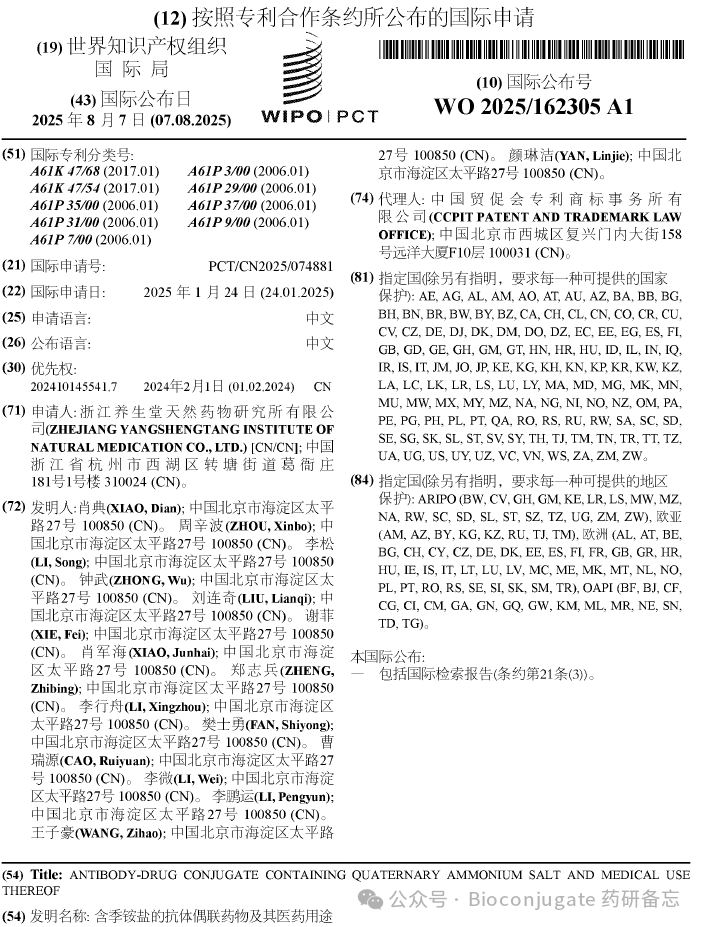
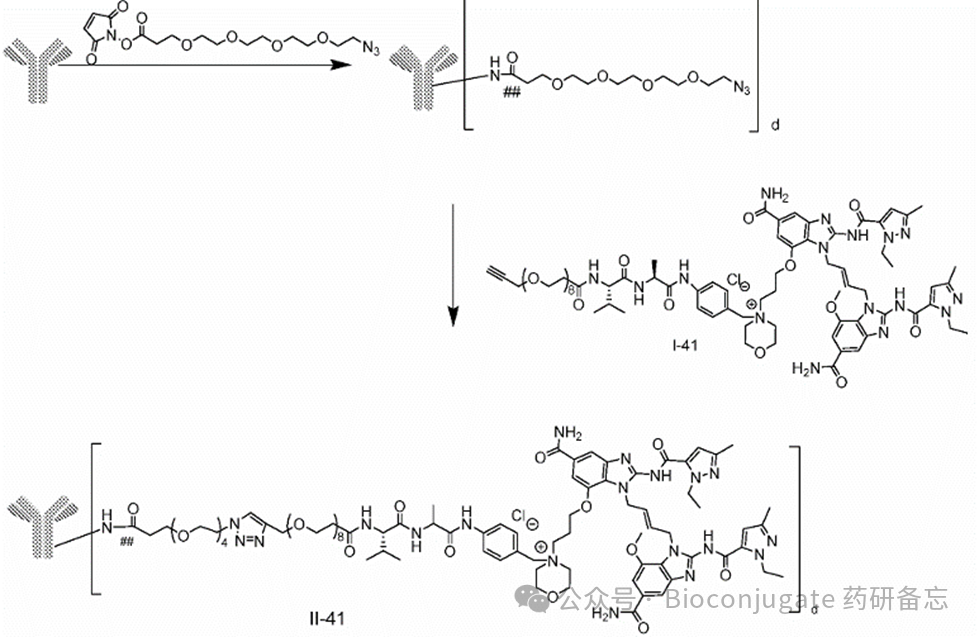
On August 7, Zhejiang Yangshengtang Natural Medicine Research Institute disclosed an ISAC patent targeting HER2. Learning from the experience of Mersana’s failed product, ISAC XMT-2056, which was terminated in clinical phase I due to stability issues of the ester bond linker leading to fatal events, this patent discloses a novel linker to advance the development of ISAC.
According to the data disclosed in the patent, the preferred ISAC structure is II-41, utilizing trastuzumab, with lysine coupling to azide-modify the antibody, followed by click coupling of alkyne-VA-PAB-STING agonist with azide for antibody drug loading, with a DAR value of approximately 2; a quaternary ammonium salt structure is used between the linker and the payload.
Ganli Pharmaceutical WO2025162492
Nectin-4 ADC GLR1059
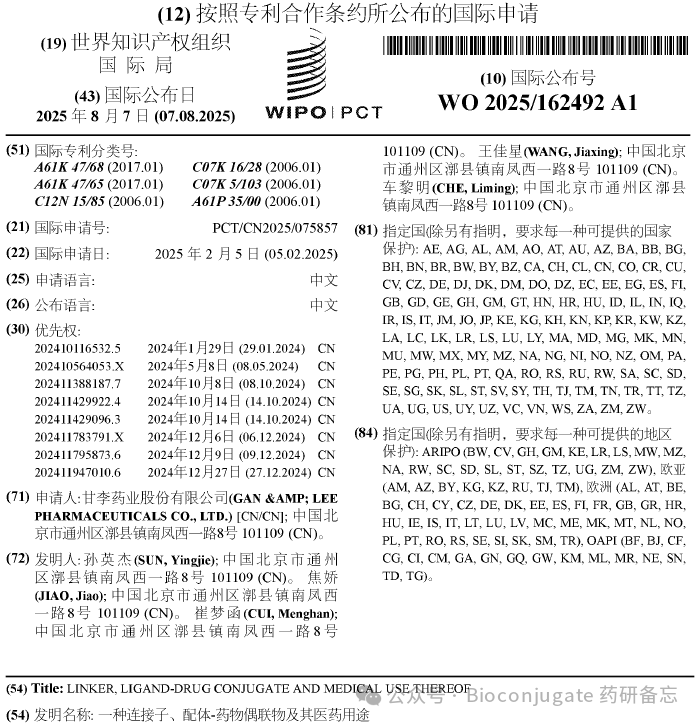
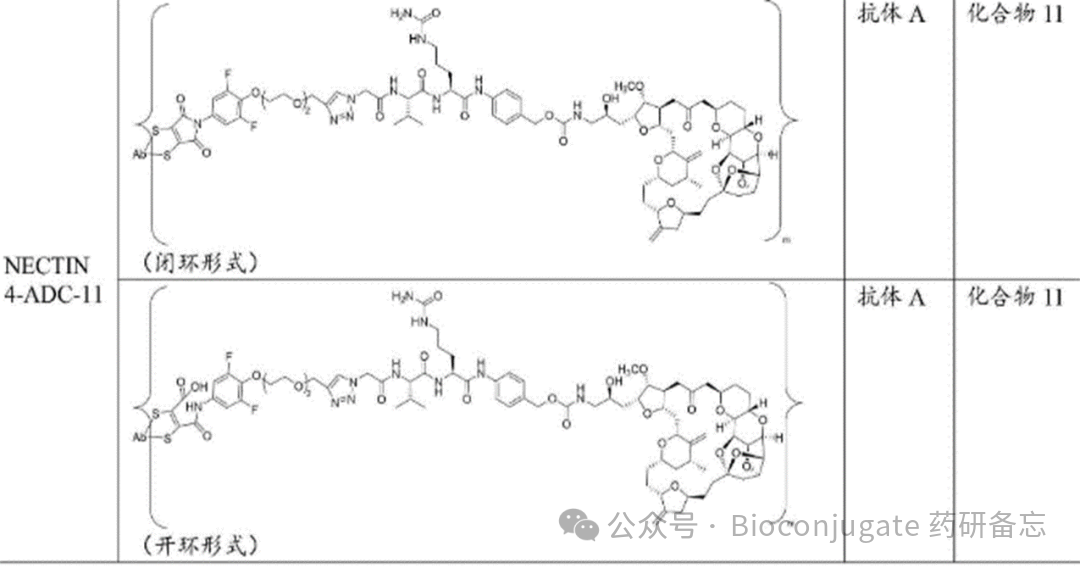
On August 7, Ganli Pharmaceutical disclosed an ADC patent targeting Nectin-4. According to the data disclosed in the patent, the preferred ADC structure is NECTIN 4-ADC-11, utilizing thioether coupling, paired with a protease-cleavable classic linker VC-PABC, with a payload of Eribulin, and a DAR value of approximately 4.
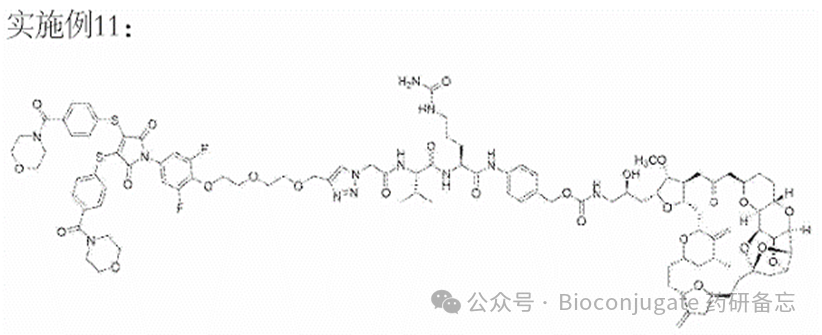
The AACR 2025 conference abstract disclosed preclinical research on the Nectin-4 ADC drug GLR1059. GLR1059 consists of a novel humanized IgG1 monoclonal antibody, a cleavable linker, and a microtubule-targeting agent (not an auristatin derivative), with the effective payload covalently coupled to the antibody via a disulfide bond, generating a more homogeneous DAR4 ADC. In surface plasmon resonance (SPR) assays, GLR1059 shows strong specific binding to human Nectin-4 and does not bind to Nectin-1, Nectin-2, or Nectin-3. Furthermore, GLR1059 demonstrates effective internalization, activity, and bystander activity in cell lines expressing Nectin-4. GLR1059 shows compelling anti-tumor activity in bladder cancer and breast cancer (including TNBC) CDX models, with tumor growth inhibition rates (TGI) significantly higher than EV (approximately 2-4 times). In single-dose and repeated-dose toxicity studies in humanized Nectin-4 mice, GLR1059 demonstrated longer survival and less weight loss; compared to EV, GLR1059 significantly reduced the incidence and severity of skin toxicity (1/6 vs 6/6).
Note: The content of this public account is based on the organization and analysis of publicly available information. If there are any copyright issues, please contact us for resolution; the author’s level is limited, and there may be omissions in the interpretation of patents or literature, please refer to the original text; personal sharing is welcome, and if reprinting to public accounts or other platforms, please indicate the source and comply with copyright regulations.
References:
-
Company official websites
-
C6P, a claudin 6 (CLDN6) directed ADC containing pyrolobenzodiazepine (PBD) for the treatment of advanced solid tumors. https://www.abstractsonline.com/pp8/#!/20273/presentation/3220
-
Abstract 1567: GLR1059, next-generation nectin-4-targeted ADC with a novel mechanism-of-action payload, demonstrated significantly potent anti-tumor efficacy and reduced toxicity in preclinical evaluation. Cancer Research. 2025;85(8_Supplement_1):1567-1567. doi:10.1158/1538-7445.am2025-1567
END

Welcome to follow and share the latest breakthroughs in the field of conjugated drugs.