
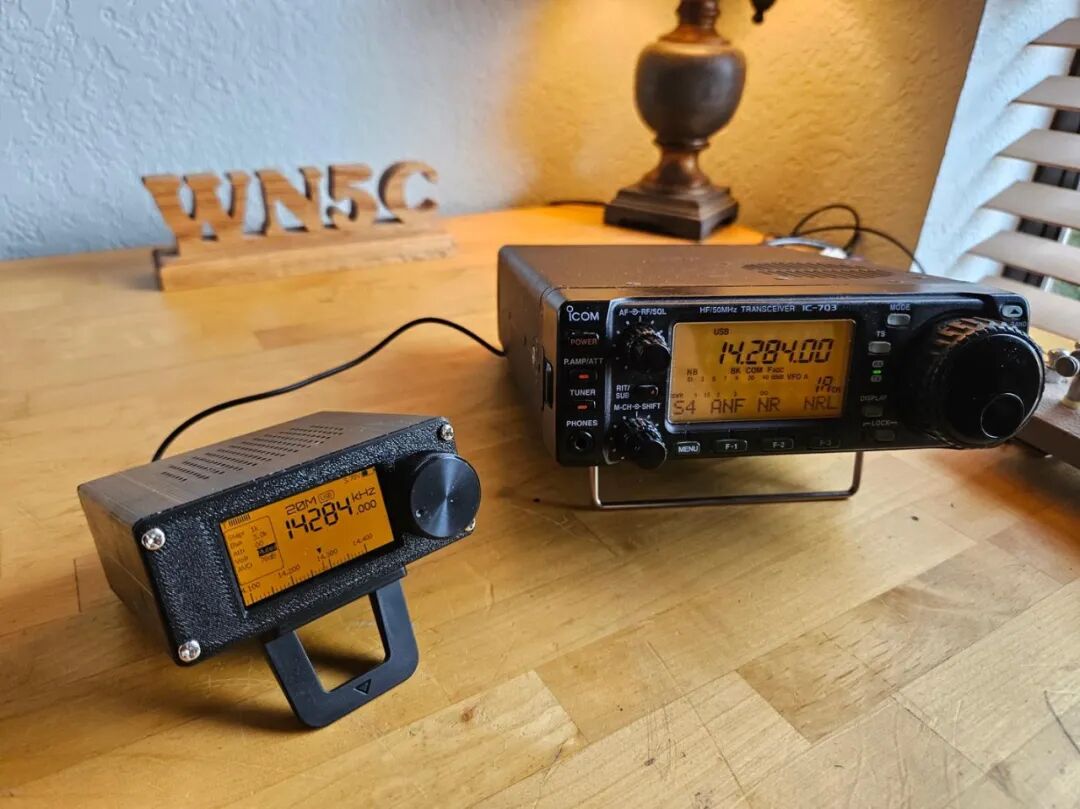
Optimizing the RF front end of the SI4732 chip receiver, ESP32 microcontroller and display, large speaker, audio system, and battery
Building the SWL Chimera
Author: Sam (WN5C)
Imagine this: a cool July night on the north shore of Lake Huron, the water gently lapping at the beach. Your feet warmed by the campfire, the sky clear, and the Milky Way shining brightly overhead. A radio rests on your lap, hastily set up with a 20-meter vertical antenna on the beach, free from any RF interference. The signal from the New Zealand broadcasting station is strong, and the single sideband (SSB) communication between Scotland and Australia sounds like local communication. I have never felt such a profound connection to the electromagnetic spectrum. This radio? Surprisingly, it is a cheap ATS-20+ purchased from AliExpress.
I have always been interested in radios based on the SI4732 chip, so I bought an ATS-20+ [affiliate link] to try out. It performs well (and is cheap!), especially after flashing Goshante’s firmware. It works well with a long antenna in the HF band (I carry a 30-foot antenna with a BNC connector), and performs even better under a dipole or full-size vertical antenna at home. The interface is a bit clunky, but it gets better with practice. During family trips in Michigan and along Lake Huron, it was much easier to pull out this receiver to listen than to set up a station, and I was glad I made this choice. The simple beauty of passively receiving radio waves is delightful.
I firmly believe in the concept of these cheap general coverage receivers. Of course, they cannot compare to radios equipped with a real RF front end (sigh), but they are by no means toys. They are the perfect middle ground for hands-on experimentation.
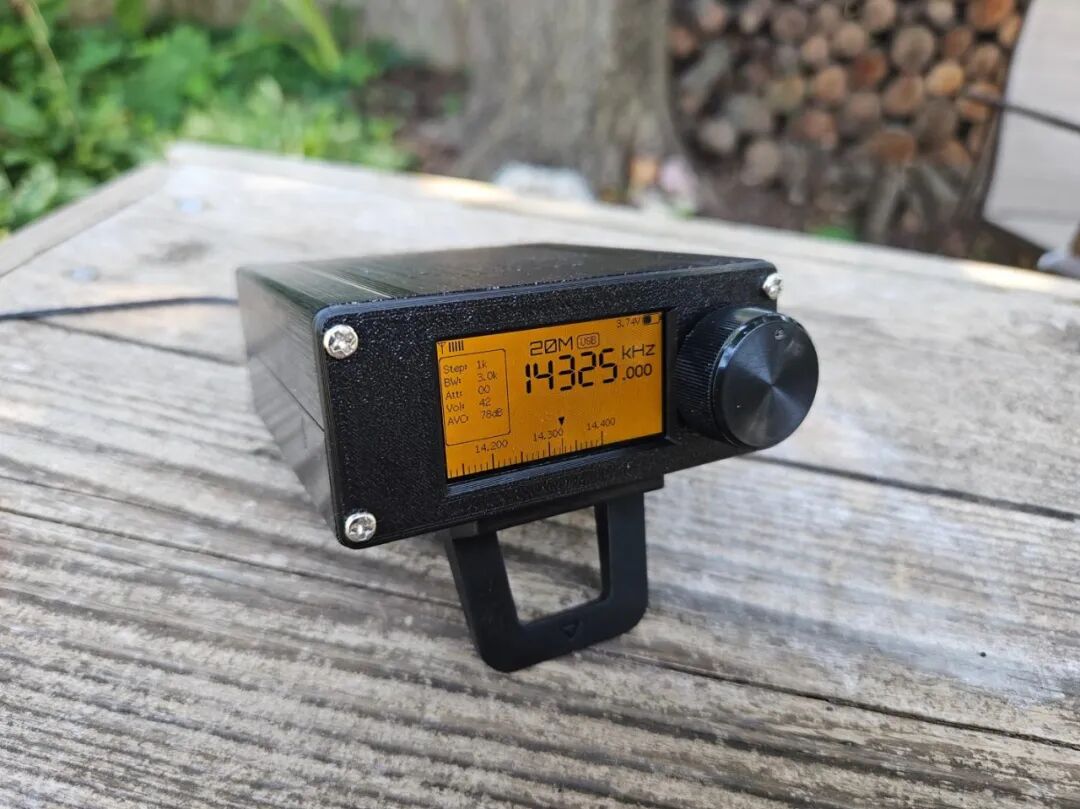
And there are many variants! In the past few months, a model called “Mini” (it has many aliases) has caught my attention. I purchased the AMNVOLT V3S version from AliExpress before my trip to Michigan, and it arrived in my mailbox when I got home. New versions are released every few months, but the version is not important for the project described below; here is a similar [affiliate link]. It is small, but not the Belka model, and performs best with a small antenna for FM and AM broadcast stations. Compared to the ATS-20+, this compact device has the advantage of a more powerful microcontroller (ESP32 instead of Arduino Nano) and a beautiful 1.9-inch color display. The default firmware is sufficient, but the active development community makes it even more powerful. I have been using Max Arnold’s v2.30 firmware. This firmware is feature-rich, with highlights including downloadable shortwave broadcast schedules to display current listening content and a plethora of display customization options.
However, the hardware design did not impress me for my usage needs. My version is equipped with a high-impedance RF amplifier for the antenna, which overloads when paired with the dipole antenna I use at home. Audio fluctuates when touching the antenna base. The speaker is too small and the sound quality is thin. Despite the innovative size design, I prefer using a large antenna, so the overall proportions feel a bit off. Some design flaws have been improved by Peter Neufeld (especially regarding the audio fluctuation issue), but I decided to take a different approach.
I stumbled upon a video by ElectroBananas on social media, where he detailed how to mix the ATS-20+ with the SI4732 mini radio. The wiring is not complicated, and he even provided a new front panel design for 3D printing.
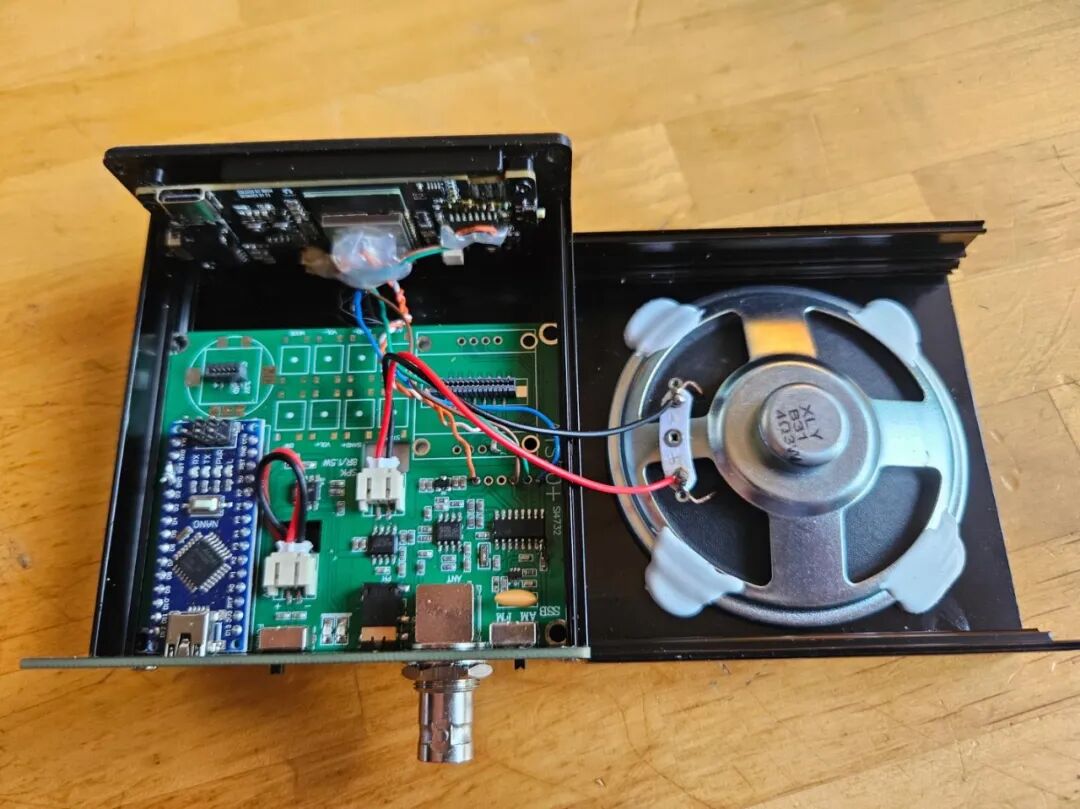
The advantage of combining these two radios is that I can obtain the optimized RF front end of the ATS-20+, the powerful ESP32 microcontroller and beautiful display of the mini radio, along with the large speaker, audio system, and battery of the ATS-20+. During the modification process, I also added a protection diode (two back-to-back 2N4148s) to the antenna input. Interestingly, I made a “stand” using a mini notebook stand [affiliate link] and changed the display to an orange theme. It looks like a mini version of my Icom IC-703 (in A-B testing, the performance of both is quite similar). This is a design that offers the best of both worlds. And it is still very compact, making it a perfect bedside radio or an ideal choice to take to the beach.
The combination of cheap hardware and open-source software development is ushering in a very exciting era for the radio field, and I look forward to seeing what new developments emerge in the coming months.
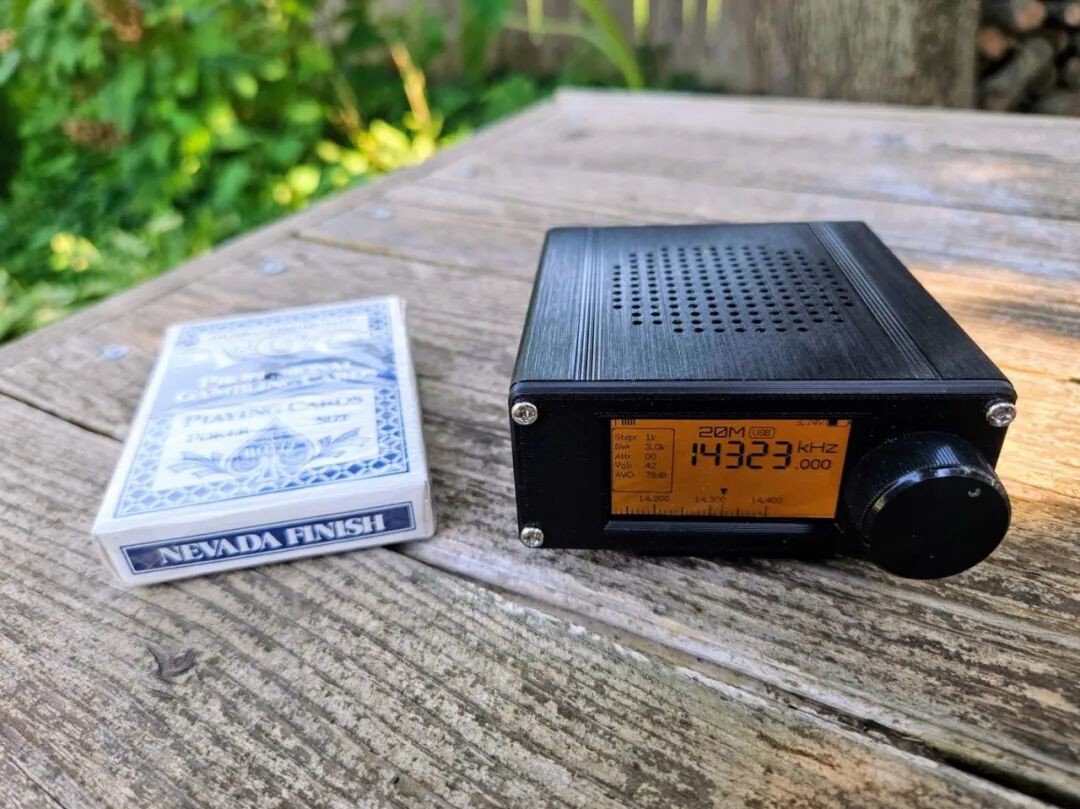
Before that, I am curious if I can fit a low-power CW transmitter into the case…
Ham Discussion:
SamA:
I am on a bus from Vilnius, Lithuania to Riga, Latvia, reading articles about these little gadgets, and I am drooling, thinking I must buy one when I get home. I saw some references about replacing the microprocessor, but there was no indication of what to replace it with or what features this modification would bring that the original did not have. Any thoughts?
By the way, the WiFi signal on this Lux Express bus is very stable.
Dale Palfret:
Sam, this is a very interesting and well-written paper. I need to study it closely. While I have a precious Lowe HF-150, the concept of a smaller, lighter receiver that is almost free is very appealing.
Sam:
I posted a comment, but it may have been caught by the spam filter because it contained a link? Anyway, check out the article on QRPer titled “Bob Pairs His ATS-20 with Zachtek ‘Flea’ CW Transmitter.” I am very interested in the CW Flea. Also, when I first made a homemade transmitter, I paired it with a TR-35 and a manual T/R switch, and it worked quite well! I have an old article on QRPer about this with photos titled “Lake Thunderbird (K-2792) with a Homemade Transmitter!”
The receiver performs excellently, covering the medium wave to 30 MHz band, so it works well regardless of the band chosen. There is no need to modify the ATS-20+ initially, and at around $25, it is a great deal. If you have any other questions, feel free to let me know, and have fun! 72, Sam WN5C
Jim Burns:
Hello, Sam,
I love this article. These small, simple, and inexpensive receivers are very interesting. I am interested in using one of them with a homemade QRP transmitter. I haven’t seen any related information in any print. Do you think these receivers could be part of a basic QRP station, and which band or band combinations would they be best suited for?
I am looking at your link and may order one.
Thanks for the great article, and happy listening!
Sam
Hello, Jim,
Check this out: https://qrper.com/2023/03/bob-pairs-his-ats-20-with-the-zachtek-flea-cw-transmitter/
I really want to try the Flea transmitter. It has 3 bands, a few hundred milliwatts of power, and supports automatic send/receive switching. I have also done similar attempts with my first homemade transmitter using manual switching, and it worked quite well!
https://qrper.com/2023/05/guest-post-lake-thunderbird-k-2792-with-a-homebrew-transmitter/
As for the receiver, it works well in the medium wave to 30 MHz frequency range.
However, rather than modifying it, I might just buy those ATS-20+ units since they are inexpensive. Although it is not very convenient to use after upgrading the firmware, it does work properly with the right antenna.
If you want to discuss further, feel free to contact me, good luck! 72, Sam WN5C
source: SWL post