● NVIDIA’s “Revival” of H20: Jensen Huang Runs All Over, but the Market Remains Cold
Brothers and sisters, did you know that NVIDIA recently put in a lot of effort
to try to “revive” their “shrunken version” chip H20?
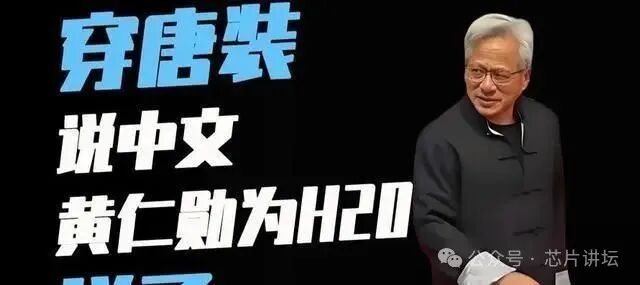
Jensen Huang, the big boss, personally rushed to China, running around like a headless chicken, meeting numerous clients and government officials, trying to convince everyone that this chip is perfectly fine.
However, the market had no reaction at all, it was eerily quiet.
It was as silent as an old house in spring.
To put it bluntly, this is a “hardcore” information security battle.
● Market Indifference: NVIDIA’s “Rescue Chip Operation” Proves Useless
Look, NVIDIA just announced that they want to “revive” H20 and also mentioned launching a new GPU with stronger compatibility, and they even notified TSMC.
To be honest, it sounds quite inspiring.
Many thought that “lifting the ban” would mean the market would heat up immediately.
But orders did not come back at all, and it wasn’t as bustling as expected.
Originally, it was thought that “license restoration would lead to a market revival”.
But the impact of those months of “cold storage” was underestimated.
It’s like eating a cold meal, thinking “let’s heat it up quickly”, only to find out that the food has gone cold.
Forget about orders; there isn’t even a bit of courage to buy.
Chinese companies did not wait for the “market to reignite”.
Instead, they turned around and invested real money into domestic supply chains.
Cambricon and Huawei’s Ascend series are heating up and starting to deploy.
This isn’t about “patriotism”; it’s about “seeing through the cards”.
They understood the “backdoor” risks hidden in NVIDIA’s “shrunken chip”.
After all, although H20 is a “downgraded version”, its performance is only touted to be 15% to 30% better.
But at the hardware level, it still retains the ability for “remote shutdown”.
This “function”, according to chip design principles, can be easily achieved by embedding a logic circuit in the power management module.
Remote “power off” can be easily done.
● Backdoor Controversy: Chips Become “Potential Weapons”
Don’t underestimate this “remote shutdown”; it actually holds control.
You could say this is a “bomb”.
Once a chip is implanted with a “backdoor”, it turns the entire server into a “time bomb”.
Chinese companies felt a chill down their spine.
Huawei, Cambricon, and Biren have already started to “reassess” their orders.
Some say that backdoors are not a myth; they are policies themselves. NVIDIA is not the first company suspected of having a “backdoor”, but this H20 incident
has truly made China treat “technical backdoors” as a national security issue.
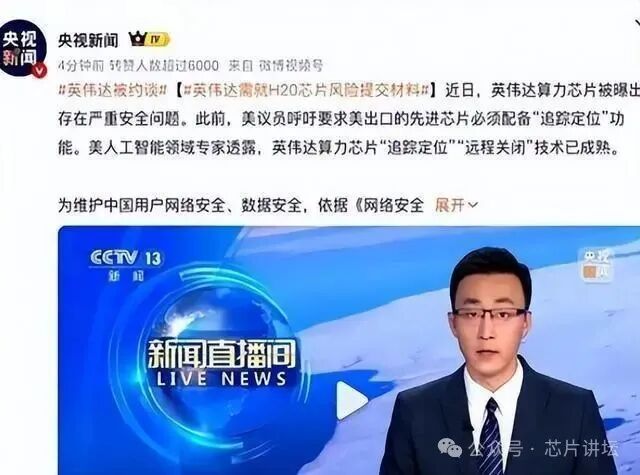
At that time, the National Cyberspace Administration directly intervened and summoned NVIDIA.
They prioritized chip security.
Before this, the chip industry had been accustomed to “American companies setting backdoors without anyone saying anything”.
But now it’s different. In May 2025, the U.S. Congress suddenly introduced “backdoor legislation”.
It requires all chips to be “traceable and capable of being shut down”.
This is like turning “backdoor” technology into an “open weapon”.
On one hand, it shows that the U.S. does not intend to hide their hegemonic intentions; on the other hand, it has turned “technical control” into a “system core”, no longer relying on external “blockades”.
Instead, they directly take control into their own hands.
● The “Cooling” of the Chinese Market: Domestic Manufacturers Catch Up
Look at this series of actions.
Jensen Huang has a big smile on his face, claiming he will “work hard to restore sales in China”, and even said he would “launch a fully compatible GPU”.
He even notified TSMC to restart the H20 production line.
It sounds impressive, but to be honest, the market’s reaction is as cold as winter river water—dead and lifeless.

Originally, it was thought that “lifting the ban” would “revive” the market, but it turns out
Chinese companies did not wait for NVIDIA to “reopen”.
They had already started looking for “substitutes”, investing heavily in domestic chips, such as Cambricon and Huawei’s Ascend series.
This isn’t called “foresight”; it’s called “calculating”.
This shift is definitely not about “patriotism”.
It’s more about seeing through the “chip backdoor”.
Don’t forget, the “remote shutdown” capability in hardware can be easily implemented by embedding a logic circuit in the power management, allowing for shutdown at any time.
Moreover, the more concerning issue is, who holds the control?
The answer is clear—it’s with the U.S. Department of Commerce.
For Chinese companies, such chips
are like “bombs buried in servers”.
Imagine, once control falls into American hands,
it would be like installing a “time bomb”.
During Jensen Huang’s visit to China, the media noticed that several major clients did not warmly welcome him.
Some even started to “reassess” their orders.
The implication is: we won’t wait for you.
Huawei, Cambricon, and Biren are all scrambling to “seize the gap”.
They are trying to use their own chips to “fill” this void.
This time, the “backdoor” trouble is not a myth,
but has become a key issue for national regulation.
Because of this incident, “technical backdoors” have officially been pushed to the national stage.
America’s “hegemony” has turned into “internal sabotage”. Speaking of which, it should be mentioned that for many years, the chip industry has been accustomed to the idea of “having backdoors”.
American companies set backdoors, and everyone knows it, but no one dares to speak out.
However, in May 2025, Bill Foster took the lead in “drawing the sword”, introducing “backdoor legislation”.
He wrote “traceable and capable of being shut down” into the regulations.
This action completely tore off the “mask”.
In fact, this is turning chips into “control tools”.
The U.S. no longer hides their hegemonic intentions; from “controlling the door” to “cutting off the power”, the control of technology
has become a matter of being controlled within their own system.
Think about it, this is not just a simple chip trade issue,
but an “active invasion” of the entire digital infrastructure.
NVIDIA is merely the “executor”; behind it is actually the “will” of the state.
Trump has publicly stated, “As long as China… we will allow the export of… chips to China”.
China used to be the largest market for American chips, contributing a quarter of NVIDIA’s global revenue before 2023.
This market has unexpectedly turned into a “forbidden zone” excluded from the core computing power ecosystem.
This is not merely driven by a single policy, but a series of “backdoor”, “protection fees”, and “shutdown mechanisms” that have forced companies to make “defensive choices”.
No one wants to install a chip that could “explode at any time” in their own servers, let alone hand over the country’s critical infrastructure to a circuit board that “obeys the U.S.”.
NVIDIA’s “lifting of the ban” is merely a superficial recovery; the market is no longer waiting for its “return”.
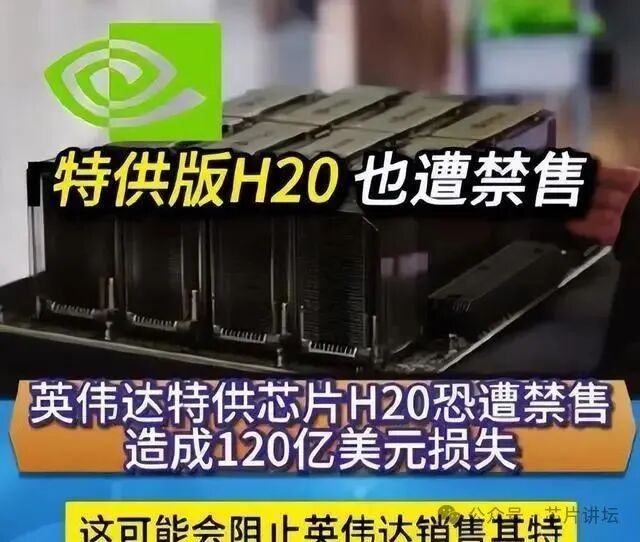
Less than a month after the lifting of the ban, news of H20’s “suspension” came out.
What can you say? No matter how Trump tries to argue, it doesn’t matter—this matter
has gone from “sales restrictions” to “lifting the ban”. Jensen Huang’s trip to China, NVIDIA’s desperate attempts to regain the market, but this wave of “cooling”
actually reveals
the complete collapse of trust in the entire American chip industry in the Chinese market.
Once the market loses trust, it is hard to rebuild.
Less than a month later, news of H20’s “suspension” came out, and no matter how Trump tries to argue,
it cannot cover up this “fact”.
From “restriction” to “lifting the ban”, it is actually a “visible play”.
And the market has long stopped “waiting for your return”.
Why does NVIDIA desperately want to “protect” the Chinese market?
The reason is simple—this is not just a “sales problem”.
It relates to “trust” and “the future”.
Their “lifting of the ban” is merely a superficial “recovery”.
Once implanted with a “backdoor”, it becomes a “weapon”.
And Chinese companies are already prepared for a “full transformation”.
Look, recently Huawei, Cambricon, and other manufacturers are scrambling for every “gap”.
It’s not just about “patriotism”; it’s more about seeing through the “true nature” of this “chip backdoor”.
Even if H20 is a “downgraded version”, it still retains the “remote shutdown” backdoor function in the hardware.
As long as a logic circuit is embedded in the power management circuit, it can be shut down at any time.
This thing, while controllable, the control power
is clearly in the hands of the U.S.
For Chinese companies, such chips
are completely like “bombs buried in servers”.
If control falls into American hands, the consequences would be unimaginable.
Jensen Huang’s trip to China, the media noticed that many major clients did not warmly welcome him.
Some even started to “reassess” their orders.
The underlying message is: we won’t wait for you.
Huawei, Cambricon, and Biren are all competing for the “vacuum” in the market.
This “backdoor” incident has become a new focus of “national regulation”.
For the first time, China has placed “technical backdoors” so prominently on the table, making it a key part of national policy.
America’s hegemony has turned into “self-sabotage”. Speaking of which, it should be mentioned that for many years, the chip industry has been accustomed to the idea of “having backdoors”.
American companies set backdoors, and everyone knows it, but no one dares to speak out.
However, in May 2025, Bill Foster took the lead in “drawing the sword”, introducing “backdoor legislation”.
He wrote “traceable and capable of being shut down” into the regulations.
At that moment, everyone understood: chips
have long been turned into “control tools”.
This is not just a technical issue; it feels like the “lifeline of the nation” is being controlled by others.
Think about it, this is not just a “chip export” problem,
but an “active invasion” of the digital infrastructure.
NVIDIA is merely the “executor”; behind it is actually the “will” of the state.
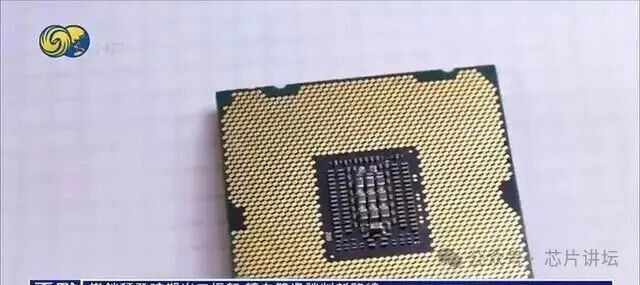
Trump has said, “As long as China… we will allow the export of… chips to China”.
This statement implies that
China used to be the largest “gold mine” for American chips, contributing a quarter of NVIDIA’s global revenue before 2023.
Now it has become a “forbidden zone” excluded from the core computing power ecosystem.
This is not merely driven by a single policy, but a series of “backdoor”, “protection fees”, and “shutdown mechanisms” that have forced companies to make “defensive choices”.
No one wants to install a chip that could “explode at any time” in their own servers, let alone hand over the country’s critical infrastructure to a circuit board that “obeys the U.S.”.
The “lifting of the ban” on H20 is merely a paper recovery; to be honest,
less than a month later, news of H20’s “suspension” came out.
Who would have thought that this is a fact that Trump cannot deny no matter how he argues?
From “sales restrictions” to “lifting the ban”, this is a play.
Look, this crisis is far more than just a “struggle” between chip companies.
It feels more like a “national-level” “trust crisis”.
The lack of trust in the market means that future cooperation and innovation will be discounted.
NVIDIA claims it wants to revive the Chinese market, but to be honest,
it has long fallen into a marginalized predicament.
This “lifting of the ban” is merely a superficial effort.
The real “market decision power” has long shifted to domestic enterprises.
In the future, who can gain the upper hand in this “chip drama”
will likely depend on how thick their “bottom cards” are.
Do you think Trump and his people never expected that this wave of “turning themselves into bombs” would eventually backfire on them?
It’s like a self-directed play that, as it progresses,
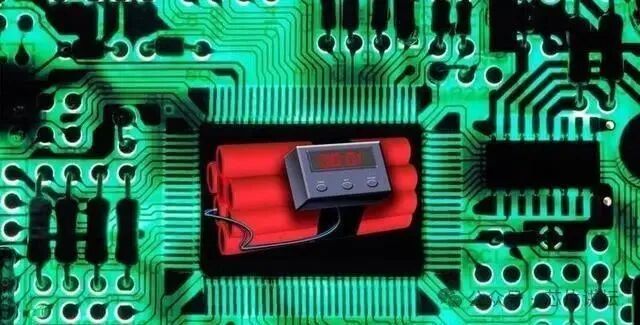
they can hardly find an “exit”.
Chinese companies have already seized this “trend”.
They have turned around and invested in the “blue ocean” of domestic chips.
The road ahead may not be smooth, but at least, this “chip storm” is coming to an end.
● Summary: The Big Story Behind This “Chip Crisis”
Ultimately, NVIDIA’s effort to “revive” H20
resembles a risky gamble of “trying to revive a dead horse”.
Jensen Huang rushed to China, trying his best to bring it back, but the market’s indifference indicates one thing: once trust collapses,
this incident is not just NVIDIA’s “individual case”.
It feels more like a “global chip industry’s trust crisis”.
From “backdoors” to “protection fees”, to “shutdown mechanisms”, these “hardcore” operations
have trampled the “bottom line” of the entire industry.
In the future, to return to “cooperation like in the past”,
Chinese companies have seen clearly: relying on “foreign weeds”
is not the true “root”.
This “chip storm” tells us that the iron fist of hegemony will ultimately turn into “self-made bombs”, and we
can only rely on “our own people” to defend this “chip territory”.
Brothers and sisters, what do you think the global chip landscape will look like after this storm?
Will everyone have to learn to “make their own” in the future?
And no longer rely on those “backdoored” foreign goods?