In the vast realm of embedded systems, both STM32 and GD32 are prominent 32-bit general-purpose microcontrollers, with applications spanning industrial control, smart homes, consumer electronics, and more. For engineers and developers, understanding the differences between them is crucial for making the right choice in projects. Next, we will analyze the differences between these two chips from multiple dimensions.
1. Core and Clock Frequency
STM32 primarily uses the first-generation M3/M4 core, which has accumulated rich practical experience and mature solutions over long-term applications. However, according to the ARM company’s M3 core errata, there are several bugs that need attention and resolution.
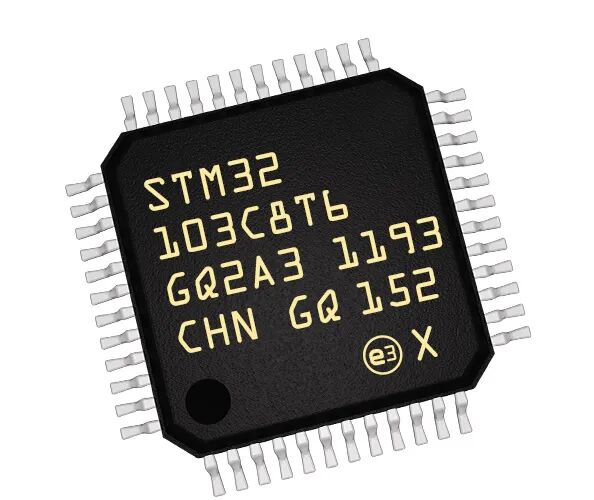
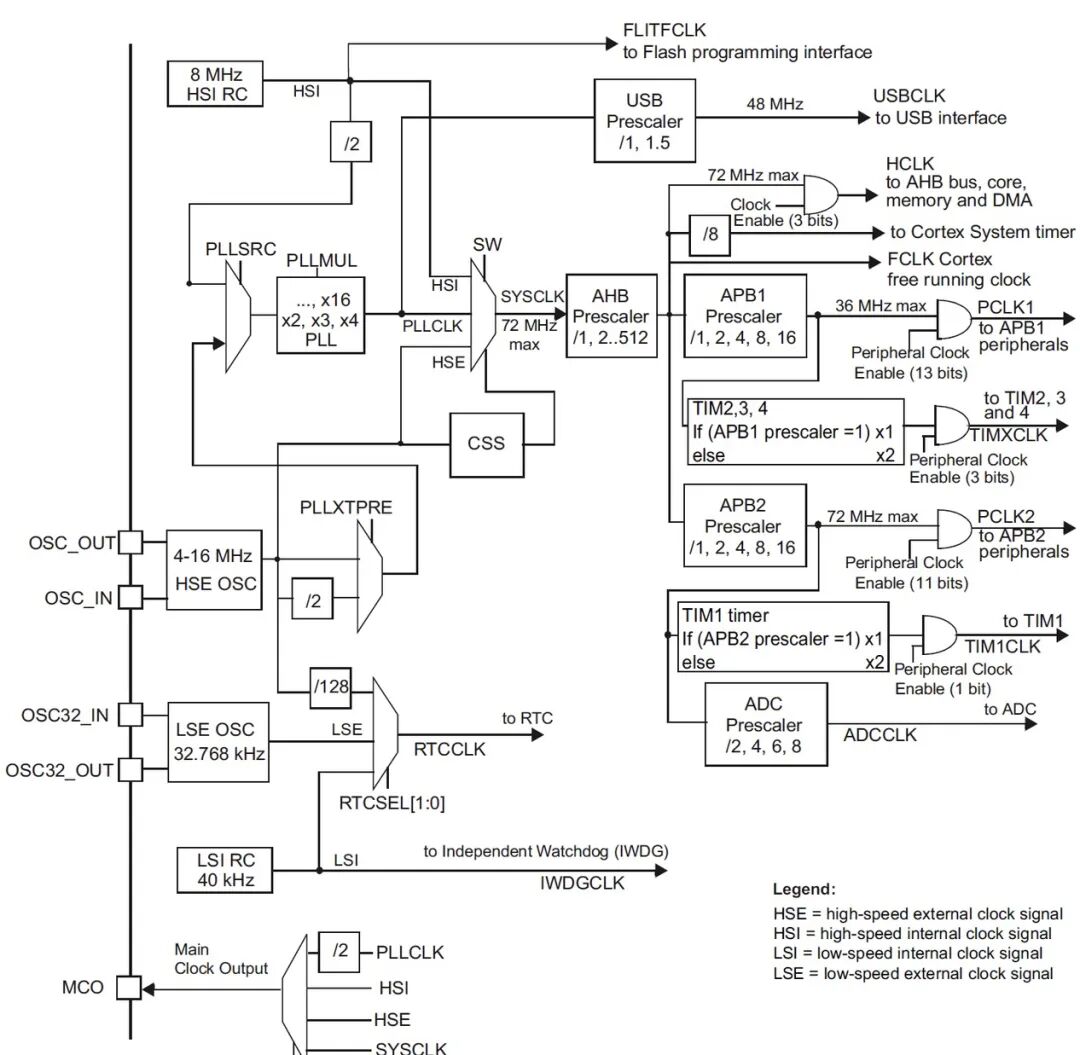
GD32 adopts the second-generation M3/M4 core, optimizing certain issues from a design perspective. The official statement indicates that the core has only one bug, theoretically demonstrating higher stability and reliability, which provides strong assurance for projects with high system stability requirements. When using a high-speed external clock (HSE), GD32 can reach a maximum clock frequency of 108MHz, while STM32’s maximum clock frequency is 72MHz; when using a high-speed internal clock (HSI), GD32 still achieves 108MHz, whereas STM32’s maximum is 64MHz.
A higher clock frequency means that GD32 executes code faster. For applications requiring rapid data processing, complex algorithm calculations, and high-speed communication, such as real-time image data processing and high-speed serial communication, GD32 can complete tasks more efficiently, significantly enhancing system response speed and operational efficiency.
2. Power Supply and Power Consumption
STM32 has a relatively wide external power supply range, with some models capable of operating as low as 1.65V and as high as 3.6V. This gives it an advantage in scenarios where power supply requirements are flexible, such as being able to directly use common lithium batteries without complex voltage conversion circuits.
GD32’s external power supply range is 2.6 – 3.6V, which is relatively narrow, and in some low-voltage power supply applications, additional boost circuits may be needed to meet power supply requirements.
However, a narrower power supply range also means that power management circuit design can be more targeted, simplifying circuit design to some extent. GD32’s core voltage is 1.2V, which is lower than STM32’s 1.8V. The lower core voltage results in lower power consumption during operation, which can effectively extend battery life and reduce energy costs for battery-powered devices, such as handheld mobile devices and wireless sensor nodes.
However, in shutdown, standby, and sleep modes, GD32’s power consumption is higher than that of STM32. This indicates that there is room for improvement in GD32’s low-power mode optimization. If a project has strict requirements for low-power standby time, this should be a key consideration when making a selection.
3. Storage Performance
GD32’s Flash memory is self-developed, differing from STM32. In terms of Flash execution speed, GD32’s first 256KB of Flash allows for program execution with 0 wait cycles, making it faster; whereas STM32 requires different wait cycles depending on the system frequency. In terms of Flash erase/write cycles, GD32 can reach 10,000 cycles, while STM32 is limited to 1,000 cycles, giving GD32 a longer Flash lifespan, making it more suitable for applications that require frequent program updates, such as devices needing over-the-air firmware upgrades (OTA).
Additionally, GD32’s Flash write protection can be implemented both through software and hardware, while STM32 can only do so through hardware, making GD32’s write protection features more flexible and convenient, better meeting the security needs of different projects.
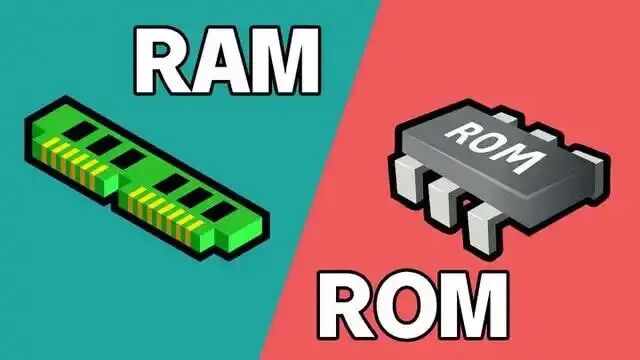
In the 103 series, GD103C8T6 offers 64KB Flash and 20KB RAM, while ST103C8T6 provides 64KB Flash and 10KB RAM; in the 105/107 series, GD105/107 offers up to 3MB Flash and 256KB RAM, while ST105/107 only provides 1MB Flash and 96KB RAM.
GD32’s larger RAM capacity gives it an advantage in handling large data volumes and running complex programs. For instance, when running algorithms that require substantial data caching and real-time processing, it can operate more smoothly, avoiding crashes or errors due to insufficient memory.