 By / Dao Ge
After being embroiled in a “backdoor” controversy and facing inquiries from the Cyberspace Administration of China, NVIDIA’s “special edition” H20 chip has new developments.
Recently, the American tech media outlet “The Information” cited sources indicating that NVIDIA has quietly instructed its key suppliers—including ASE Technology, responsible for packaging, Samsung Electronics, which supplies high-bandwidth memory, and Foxconn, which handles backend processing—to suspend all production activities related to the H20 AI chip.
Subsequently, NVIDIA CEO Jensen Huang responded during a visit to TSMC, stating that the company has prepared a large number of H20 chips and is waiting for orders from Chinese customers, indicating that procurement can continue in the future. He also mentioned that the H20 does not involve national security issues and expressed gratitude for its ability to be sold in China, noting that communication between both parties remains ongoing.
This is not a routine supply chain adjustment; the H20—a chip tailored for the Chinese market, which carries NVIDIA’s hopes of maintaining its multi-billion dollar business in China—has faced an almost complete halt in its brief and tumultuous lifecycle.

The H20: A Brief and Tumultuous Life
The life cycle of the H20 chip has lasted only a few months, yet it is filled with dramatic policy reversals and market turmoil.
The H20’s inception stemmed from a crisis; in October 2023, the U.S. Department of Commerce escalated export controls, banning the sale of NVIDIA’s most powerful AI chips, the A100 and H100, to China. To preserve the critical market that once accounted for over a quarter of its total revenue, NVIDIA quickly took action, designing three downgraded chips specifically for China: H20, L20, and L2.
Among them, the H20 is the most powerful model, based on the same Hopper architecture as the H100, but with key performance metrics carefully “surgically” adjusted to ensure it remains just below the performance density threshold set by U.S. export controls.
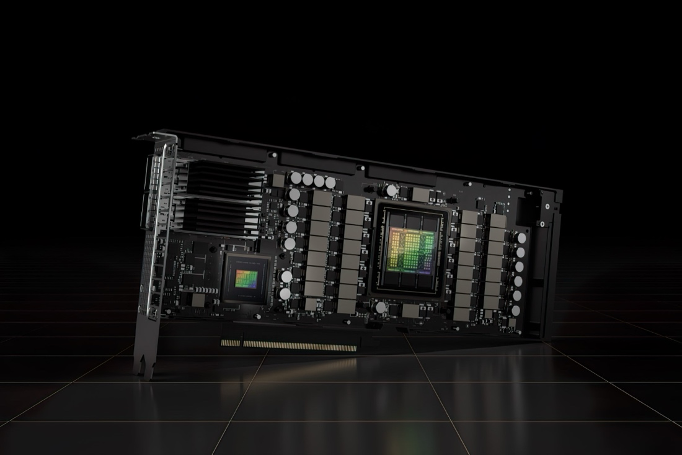
According to publicly available specifications, the H20’s standout feature is its memory system. It is equipped with 96GB of HBM3 high-bandwidth memory, with a bandwidth of up to 4.0 TB per second, which is crucial for processing ultra-large AI models. Additionally, the H20 inherits NVIDIA’s powerful NVLink interconnect technology, giving it an advantage over competitors when building large-scale, high-efficiency chip clusters.
However, the H20 has a significant shortcoming in core computing power; to comply with U.S. export controls, its overall computing power has been drastically reduced to only about 20% of the flagship H100 chip.
Yet, this chip, which carried high hopes, faced difficulties from the start. The planned release at the end of 2023 was repeatedly delayed due to technical challenges encountered by server manufacturers during integration, setting the stage for the H20’s rocky fate.
In April 2025, just as the market believed the H20 would establish a foothold in China, the U.S. government unexpectedly announced a ban on NVIDIA’s sales of the H20 chip to China. This decision caught NVIDIA and its Chinese customers off guard, and its financial impact was immediately evident,NVIDIA disclosed in its financial report that the company had to bear a hefty cost of up to $4.5 billion to $5.5 billion, primarily to deal with the backlog of H20 inventory and related procurement commitments.
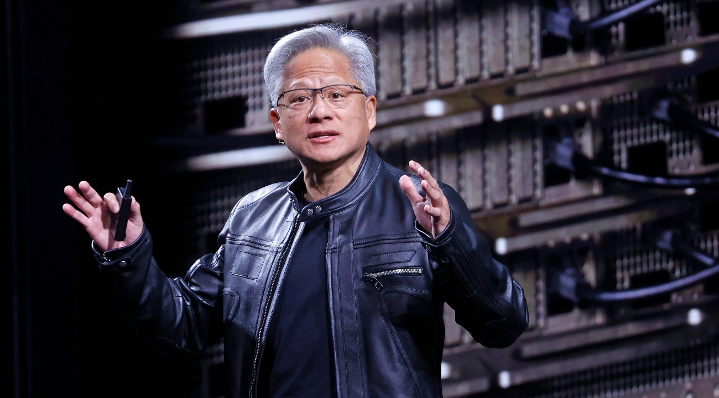
Jensen Huang stated in a media interview that the potential revenue loss from this ban could reach $15 billion, calling it “very painful.”
In July 2025, the U.S. government reversed its stance again, announcing that it would issue licenses to NVIDIA and AMD, allowing them to resume sales of H20 and other AI chips to China. However, this lifting of the ban came with an unprecedented condition: NVIDIA and AMD must pay 15% of their revenue from the sale of specific AI chips in China to the U.S. government. President Trump later confirmed that this clause was the result of negotiations he personally conducted with Jensen Huang.
After obtaining the license, NVIDIA felt optimistic about market prospects. According to Reuters, to meet the strong demand backlog, NVIDIA quickly placed an additional order for 300,000 H20 chips with TSMC, which would supplement its existing inventory of 600,000 to 700,000 chips.
In late July, shortly after the U.S. approved the resumption of H20 sales, the Cyberspace Administration of China officially summoned NVIDIA. The official statement pointed out that the H20 chip might have serious security vulnerabilities, including “backdoors,” “tracking and positioning,” and “remote shutdown” functions, and required NVIDIA to explain and submit proof materials regarding these issues.
In response to regulatory inquiries, Jensen Huang repeatedly and clearly denied in various instances: “There are no backdoors in our chips, there have never been, and there are none now.” However, such assurances could not quell the storm.
“Zhi Bai Dao” believes that the fate of the H20 chip clearly reflects the profound contradictions and oscillations within U.S. technology policy towards China. This policy “schizophrenia” has created an unpredictable business environment for NVIDIA, making any long-term strategy precarious and destined for the H20 to face a troubled fate from its inception.

Dual-Track Strategy: NVIDIA’s Next Move
In the face of the H20’s retreat in the Chinese market, NVIDIA has not chosen to give up.
The chip giant has quickly adjusted its strategy, betting on its latest and most powerful Blackwell architecture, attempting to regain market leadership by launching a new generation of China-specific chips, the B30A.
The strategic approach of the B30A is entirely different from that of the H20. If the design philosophy of the H20 was to be “just compliant,” carefully avoiding the red lines of U.S. regulations in terms of performance, then the B30A’s philosophy is “performance crushing.”
According to information disclosed by Reuters, the B30A will adopt a single-chip design, with performance approximately half that of the Blackwell flagship dual-chip model B300. Despite the halved performance, thanks to the generational leap of the Blackwell architecture, the theoretical performance of the B30A remains astonishing. According to Tom’s Hardware analysis, a Blackwell chip with a 50% performance reduction can still achieve over six times the computing power of the H20.
“Zhi Bai Dao” believes that NVIDIA’s calculations are clear: by providing a product that significantly outperforms domestic chips, it aims to create an irresistible temptation for Chinese customers. This substantial technological gap may generate enough commercial appeal to force China’s tech giants to reassess the costs and benefits involved.
Currently, NVIDIA has begun discussions with the U.S. government regarding export licenses for the B30A and plans to provide test samples to Chinese customers as early as September 2025.
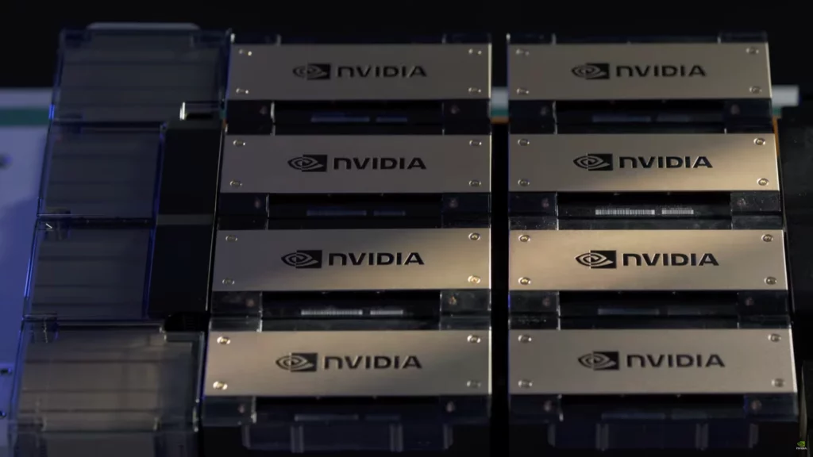
In addition to the ambitious B30A, NVIDIA has also prepared another more conservative product, the RTX6000D. This is also a China-specific chip based on the Blackwell architecture, but it is positioned lower, primarily targeting AI inference and other applications with relatively lower computing power requirements, yet still a massive market.
The RTX6000D is designed to minimize risks. It uses traditional GDDR memory instead of the expensive and sensitive HBM, and its key parameters, such as memory bandwidth, are precisely controlled to remain below U.S. regulatory thresholds to ensure compliance. This chip will be priced lower than the H20, aiming to solidify NVIDIA’s market share in non-strategic sensitive areas through lower prices and clear compliance, while continuously keeping the vast developer community in China within its software ecosystem.
“Zhi Bai Dao” believes that the combination of the B30A and RTX6000D marks a significant upgrade in NVIDIA’s strategy towards China. It has evolved from the previous single high-end strategy of the H20, which attempted to “do it all with one move,” to a more refined dual-track strategy.
The current Chinese market has differentiated into two distinctly different parts: one led by the government, pursuing self-control in the high-end training market; the other driven more by commercial logic, sensitive to price and ecosystem in the inference and mid-to-low-end market. The B30A is a gamble prepared for the former, attempting to leverage absolute technological advantages to break through pressure barriers, while the RTX6000D serves as a safety rope for the latter, aiming to maintain the basic market.
This strategic shift reflects NVIDIA’s more realistic and cautious understanding of the Chinese market after experiencing the lessons of the H20. It acknowledges that it can no longer dominate the Chinese market comprehensively as it did in the past, but must seek differentiated survival space within the cracks.
The current Chinese AI chip market is no longer a domain dominated by a single foreign giant, but a new battlefield shaped by national will, local giants, and market forces, filled with competition and negotiation.NVIDIA’s position in the Chinese market has shifted from an undisputed “rule maker” to a “rule adapter” that must comply with market choices.
For NVIDIA, the era of unimpeded advancement based solely on technological advantages has passed. Globally, it may still be the king in the AI field, but on this crucial strategic chessboard of China, its landscape faces unprecedented challenges.
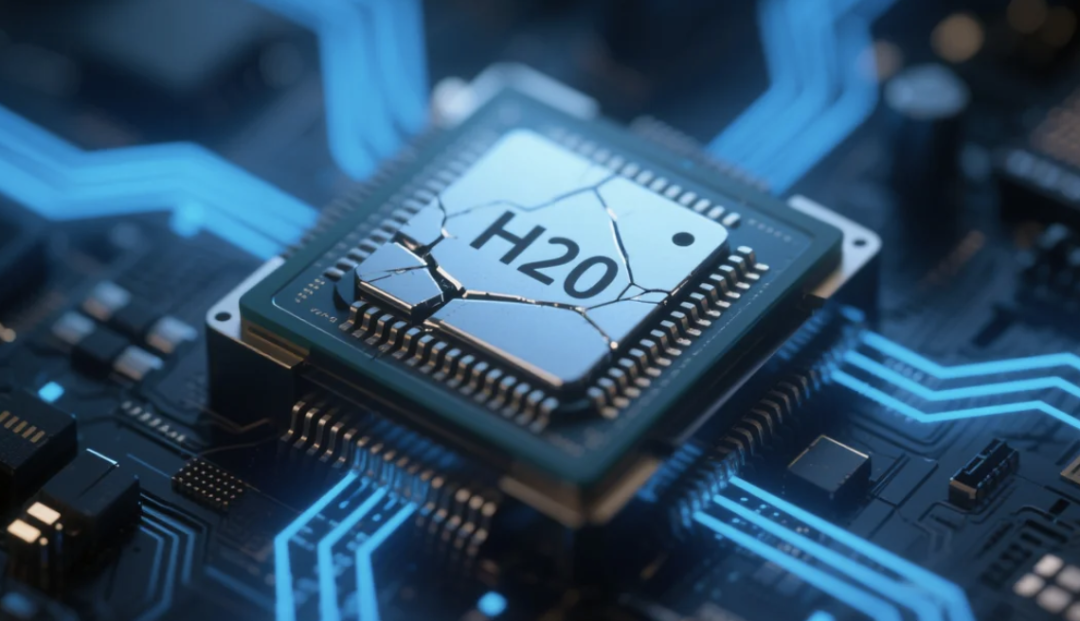
*The cover image is AI-generated

Submissions, commissions, suggestions, and collaborations
☞Please contact Director Li
WeChat:Lettheskyfall_
Email:[email protected]
☞For article content authorization and reprint
Please contact Director Qi WeChat:q28298394