 Image source: J. Am. Chem. Soc.Introduction:
After more than half a century of development, ortho-halogenated aromatic compounds—widely used in cross-coupling reactions—are primarily synthesized and produced through stoichiometric directed ortho-lithiation/halogenation techniques. Although catalytic C–H bond halogenation has emerged as a potentially environmentally friendly method, the requirement for stoichiometric bases, expensive oxidants, and directing group installation has hindered its application in large-scale synthesis. Furthermore, the compatibility issues of C–H bond halogenation reactions catalyzed by palladium(II) without ligands with heterocyclic substrates significantly limit their application in medicinal chemistry.
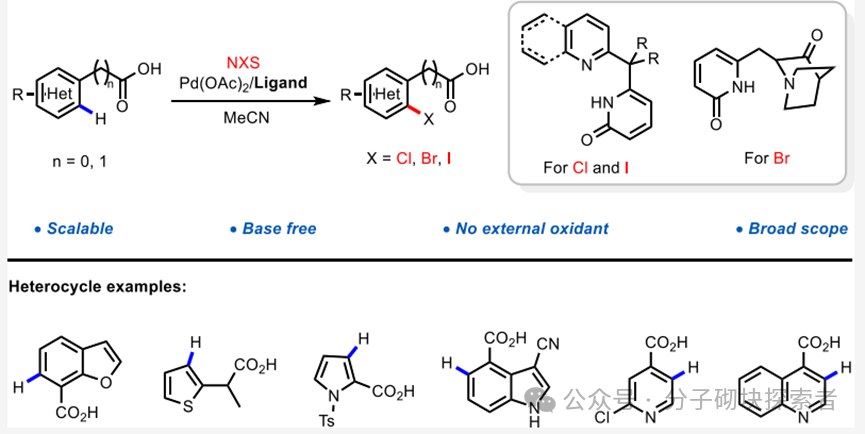
By discovering and developing three bifunctional bidentate pyridone ligands, Professor Jinquan Yu from the Scripps Research Institute systematically eliminated these four major technical shortcomings, significantly enhancing the practicality of C–H bond halogenation technology: the reaction conditions require only a ligand-supported palladium(II) catalyst, inexpensive industrial-grade halogenating agents (NXS), and the commonly used solvent acetonitrile. The practicality of this halogenation technology has been validated through “one-step synthesis of various pharmaceutical molecular intermediates,” which previously required multi-step synthesis.
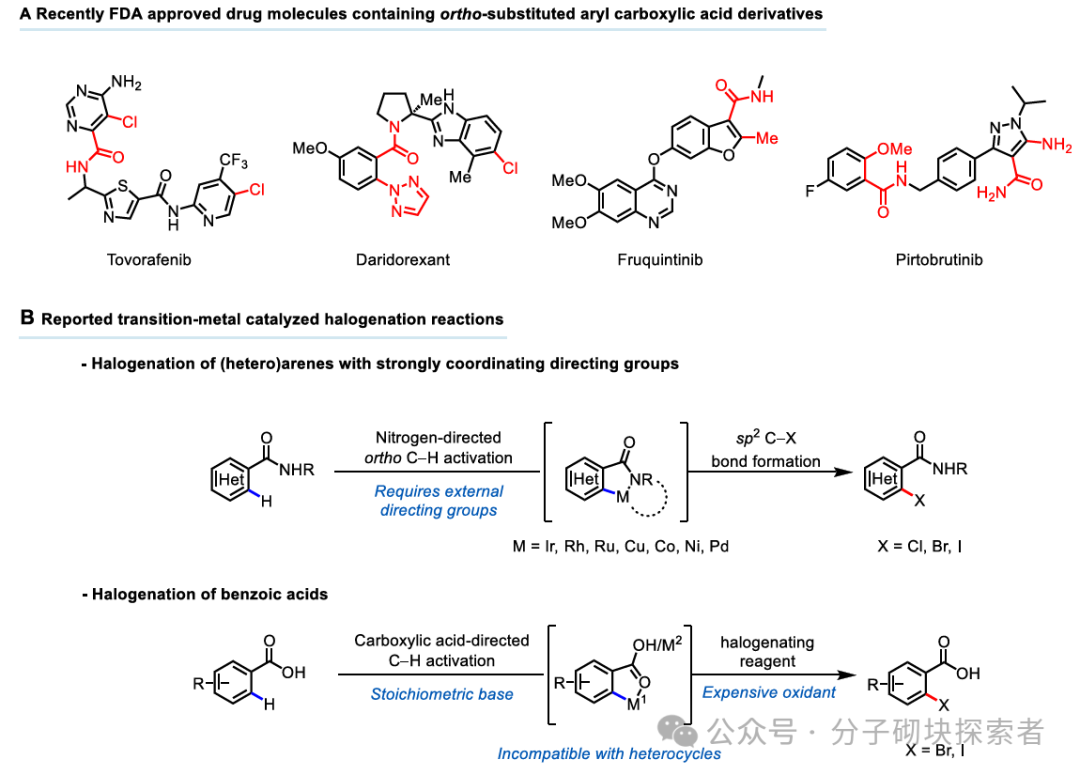
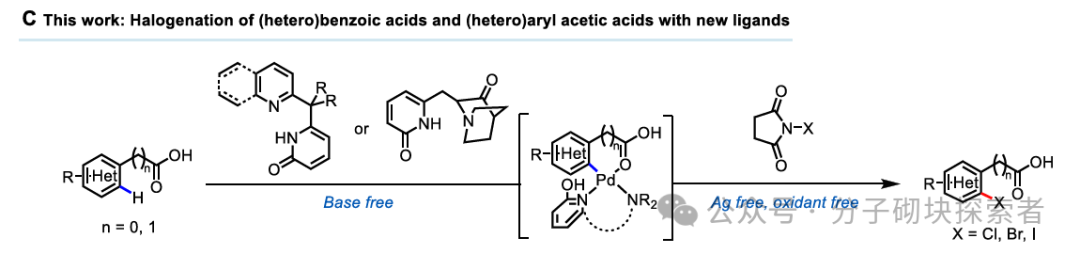 Image source: J. Am. Chem. Soc.
Given the widespread application of ortho-halogenated carboxylic acids and amides in synthesis, as well as the recent approval by the U.S. Food and Drug Administration of drug molecules containing such structures (e.g., Tovalaftor, Darlotrectinib, Furmonertinib, and Pirtobrutinib), developing a practical transition metal-catalyzed ortho C–H bond halogenation technology for aromatic acids and amides is particularly important—this is evident from the extensive exploratory studies conducted using palladium, rhodium, ruthenium, cobalt, copper, nickel, and iridium catalysts. These studies provide valuable mechanistic insights into C–H bond halogenation reactions. However, one or more of the following four key deficiencies have hindered the widespread application of catalytic C–H bond halogenation reactions:
(a) the need to introduce external directing groups instead of utilizing natural functional groups;
(b) the use of expensive and corrosive halogenating agents;
(c) poor compatibility with heterocyclic substrates;
(d) the requirement for stoichiometric bases, acids, and oxidants, as well as the use of impractical solvents.
These multiple challenges in the catalytic field indicate a pressing need to develop high-quality ligands that can achieve efficient C–H bond activation under simple conditions. This article reports a practical method for C–H bond halogenation of benzoic and heteroaromatic acids: using inexpensive NCS, NBS, and NIS reagents in industrially applicable acetonitrile solvent without the need for any base or oxidant additives. The reaction can also be extended to the iodination of (hetero)aryl acetic acids. After preliminary optimization, the catalyst loading can be reduced to 1 mol%. This approach simultaneously achieves late-stage C–H bond halogenation of natural products and drug molecules, as well as the streamlined synthesis of key intermediates.
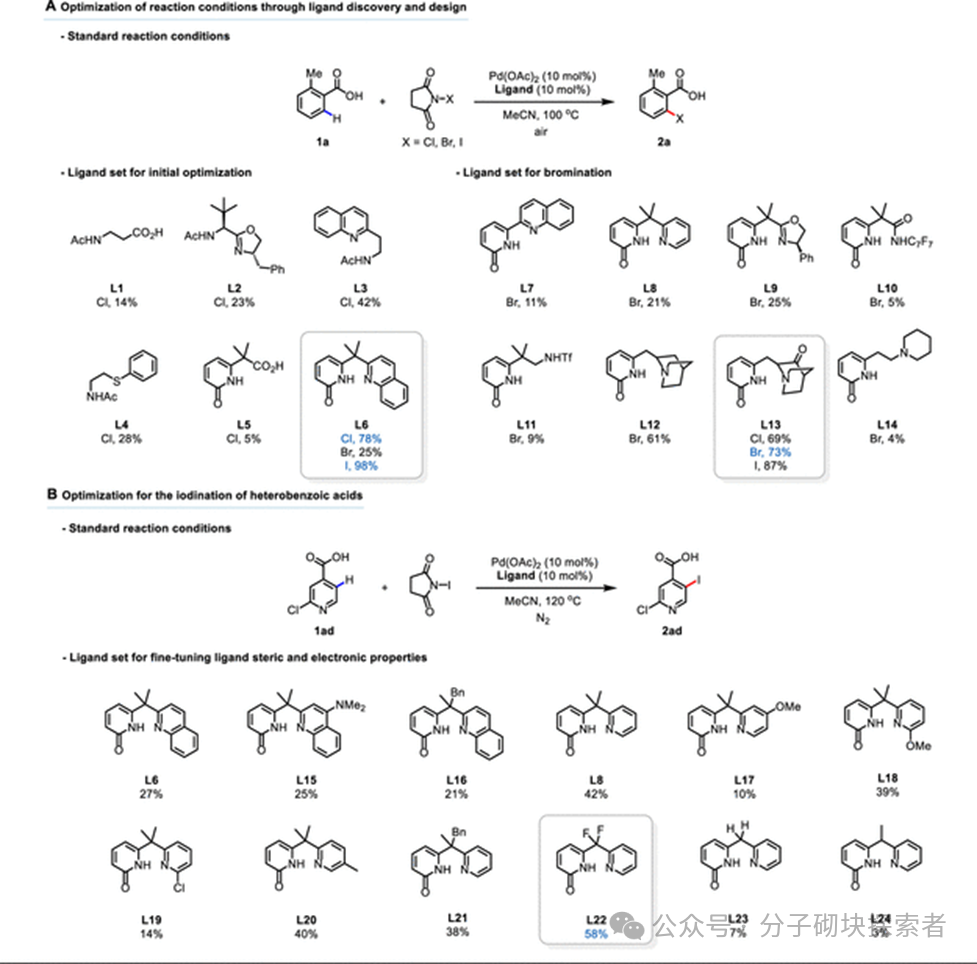
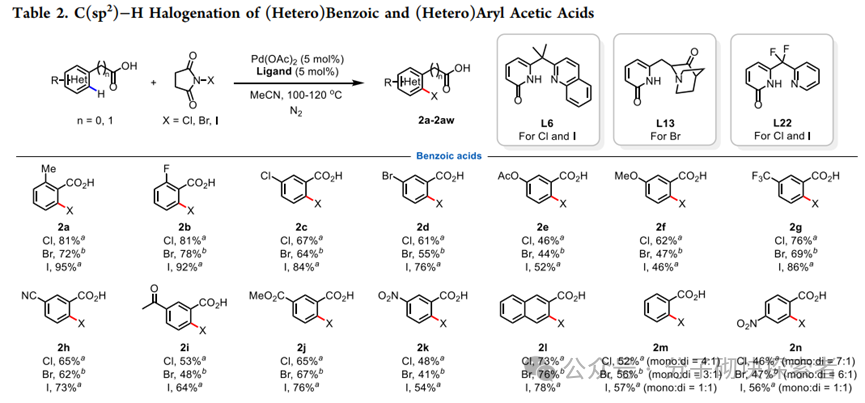 Image source: J. Am. Chem. Soc.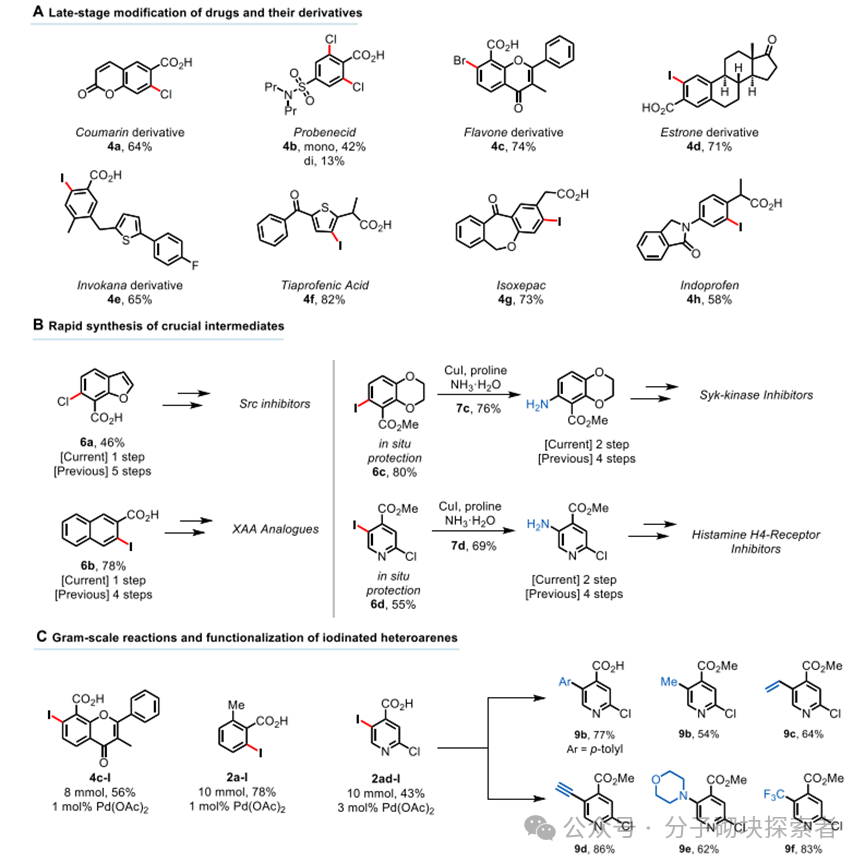
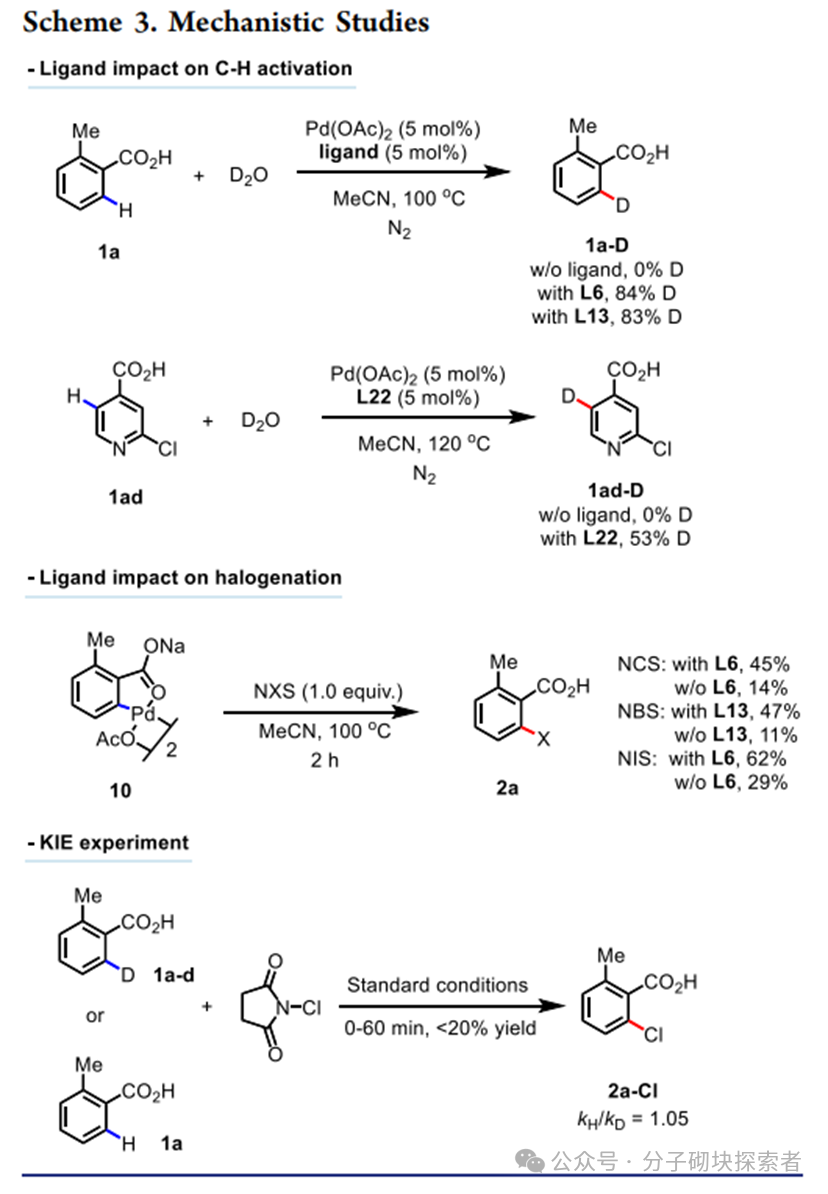 Image source: J. Am. Chem. Soc.
Conclusion:
By using three different bifunctional ligands, the C–H bond halogenation reaction using simple NXS reagents has been achieved for the first time under conditions without acid-base additives or oxidants. This reaction demonstrates its potential impact on the synthesis field by shortening the synthetic pathway of drug intermediates and enabling late-stage functional group diversification.
References:
Practical Ligand-Enabled C–H Halogenation of (Hetero)Benzoic and (Hetero)Aryl Acetic Acids
J. Am. Chem. Soc. 2025,
https://doi.org/10.1021/jacs.5c05774