In today’s rapidly developing new energy industry, the Battery Management System (BMS) serves as the core brain of energy storage, and its performance directly determines the safety and economic efficiency of battery packs. Especially for battery management systems (BMS) with 8 series or more, which are widely used in high-voltage applications such as new energy vehicles, industrial energy storage, and special equipment, the BMS is the core guarantee for the safe operation of lithium battery packs. The BMS system relies on its distributed architecture, utilizing high-precision monitoring and dynamic balancing technology, combined with precise algorithms, to achieve comprehensive protection and performance optimization of series-connected battery packs. However, traditional wired communication methods face challenges in applications that require convenient monitoring, mobile data reading, or are sensitive to deployment costs, such as complex physical wiring and limited open interfaces. In this context, low energy Bluetooth (BLE) technology, with its unique advantages, is gradually becoming the preferred communication technology for the next generation of wireless monitoring solutions for BMS.
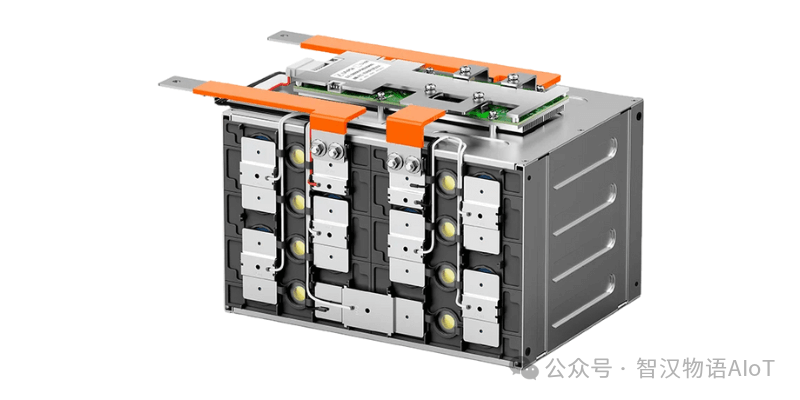
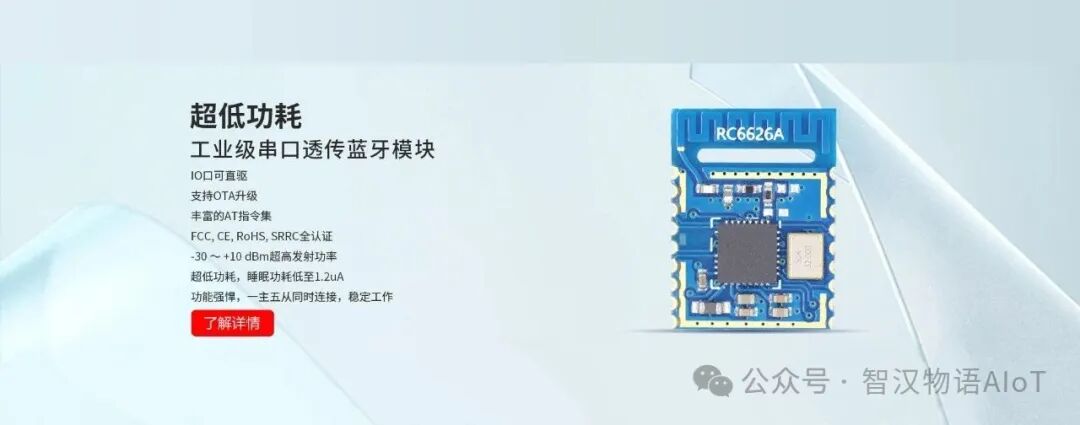
The introduction of low energy Bluetooth technology has brought significant transformative advantages to BMS for 8S and above. Its core value is first reflected in the“interactivity feature, the popularity and convenience of BLE are unparalleled: the vast majority of smartphones and tablets natively support BLE, allowing users to monitor the core status of battery packs (voltage, temperature, current, SOC/SOH) intuitively, receive fault warnings, and view historical data anytime and anywhere through mobile apps without the need for dedicated debugging equipment. Secondly, BLE consumes extremely low power while maintaining a stable communication connection (the standby current of the Zhihan RC6626A is less than 2.3uA), minimizing additional consumption of the battery pack’s own energy, which is particularly important for control units (BMU) that rely on internal power supply. In addition, BLE has good anti-interference capability, stable connection performance, and high data bandwidth in short-range wireless communication, sufficient to meet the basic needs of real-time transmission of BMS status and issuing control commands. At the same time, its protocol stack supports advanced encryption mechanisms, ensuring the security of critical battery data and system commands during wireless communication. Overall, BLE effectively addresses many pain points of traditional wired monitoring in terms of deployment flexibility, user access convenience, and system power consumption.
Solution Architecture
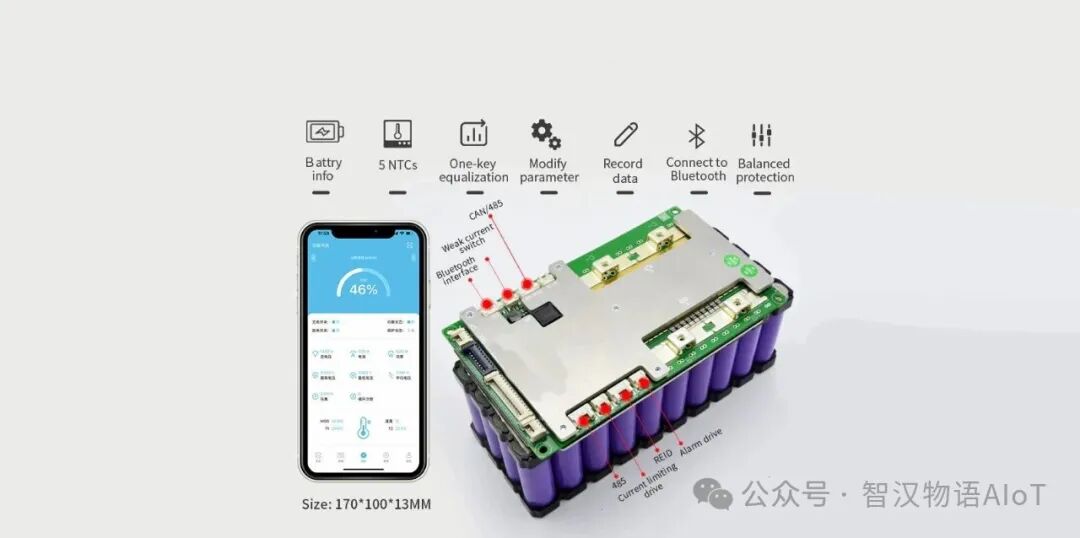
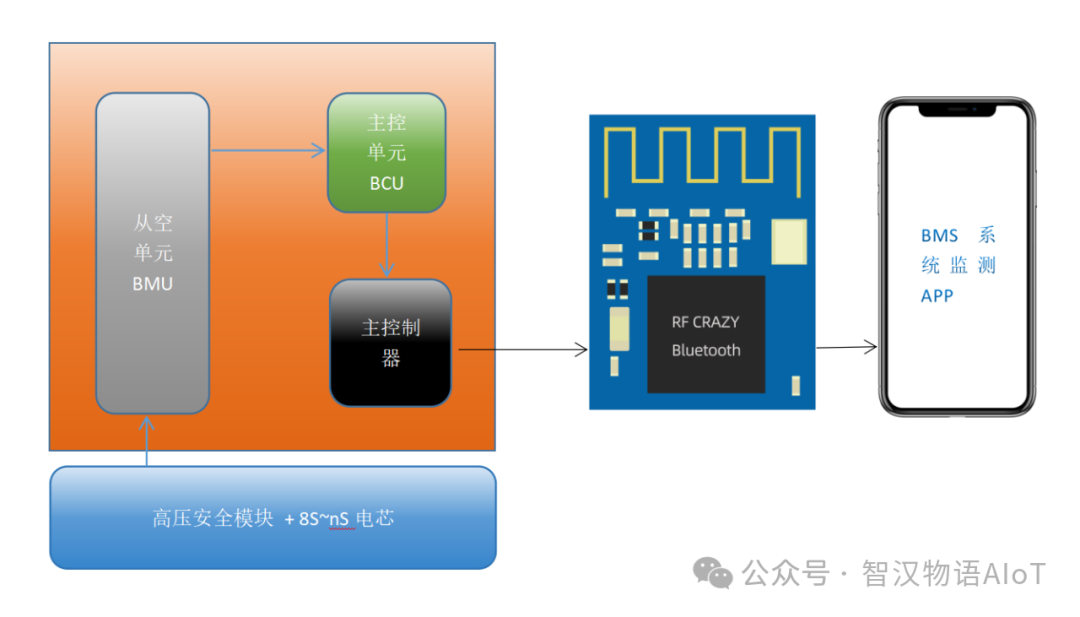
Integrating the Zhihan RC6626A BLE module into the monitoring solution for BMS with 8S and above is crucial for seamlessly integrating the BLE wireless communication module into the existing distributed hardware architecture based on the master control unit (BCU) and slave control unit (BMU). Typically, to maximize the low power advantages of BLE and maintain a simple architecture, the BLE module is directly integrated as a peripheral on the master control unit (BCU), which is responsible for core data processing (SOC/SOH calculation, balancing strategy execution, safety strategy decision-making) and high-voltage system management (relay control, pre-charge, insulation monitoring). The BMU remains close to the battery cells to accurately collect key parameters (voltage of each cell, temperature of the group). The collected raw or pre-processed data is aggregated to the BCU through an internal communication network (usually a high-speed reliable daisy chain communication or isolated CAN). The BCU packages the core status information, alarm information, and necessary raw or statistical data, and sends it wirelessly through the RC6626A module. The mobile app or backend monitoring system subscribes to this information via BLE and can also send query commands or configuration parameters to the BCU.
Application Scenarios
In the field of lightweight electric vehicles (such as high-speed electric motorcycles, electric forklifts, golf carts, and warehouse AGV/AMR), users can view battery power, range, and charging status through a mobile app, and even specialized apps offer battery pack debugging and maintenance diagnostics, enhancing on-site operational efficiency; users can also understand the vehicle’s range status in real-time, optimizing the user experience.
For distributed energy storage units (such as outdoor mobile energy storage power supplies, energy storage nodes in microgrids, and backup power for base stations), BLE provides a local wireless monitoring method that requires no complex wiring and is easy to expand, facilitating maintenance personnel to inspect the status and health assessment of dispersed battery systems.
For portable professional equipment (such as medical instruments, film lighting, electric tools, etc.), users can easily obtain key information such as remaining working time and health status of the battery through their mobile phones, and achieve quick pairing and data transmission between devices.
Integrating low energy Bluetooth technology into the BMS architecture has successfully built a smart battery monitoring solution that combines high performance, safety, reliability, and extreme convenience, improving the overall performance of the battery, the low power characteristics of BLE perfectly match the power-sensitive needs of BMS, and its wide compatibility with smart mobile devices fully unleashes the potential for end users and maintenance personnel to access core battery information, making status monitoring easily accessible. From power batteries to energy storage cores, from industrial applications to convenient consumer products, wireless monitoring of BMS based on BLE is becoming a key driving factor for enhancing product intelligence, optimizing user experience, and improving maintenance efficiency, representing an important direction for the future intelligent development of battery management, and will continue to promote the deep application and innovative breakthroughs of lithium battery technology in broader fields.