Table of Contents | 2023 Issue 6 Special Topic: AI-Based Wireless Communication Technology
AI-Empowered Intelligent Surface-Assisted Communication Beam Prediction
Interference-Resistant Technology for Intelligent Wireless Communication Aimed at Digital Twins
Exploration of Knowledge-Enabled Inherent Intelligent Architecture in Wireless Networks
Overview of Semantic Communication Systems for Extended Reality
AI-Assisted Scalable Video Semantic Communication Systems
End-to-End Service Framework Based on Semantic Communication for 6G Networks
Robust Cognitive Semantic Communication System Driven by Knowledge Graphs
[AI-Based Wireless Communication Technology] Special Topic-08Mobile Communications 2023, Issue 6
Mobile Edge Distributed Learning for Intelligent Communication and Computing: Current Status, Challenges, and Methods*
Yuliang Xie, Yuqing Tian, Zhaoyang Zhang
(Zhejiang University, Hangzhou, Zhejiang 310013)
[Abstract]Distributed machine learning is regarded as the cornerstone for developing the next generation of intelligent communication networks. However, deploying distributed learning over wireless networks faces several challenges, including uncertain wireless environments, limited communication resources, and more. Efficiently deploying distributed learning on wireless edge networks has become a research hotspot. This paper surveys the current research status and challenges of wireless artificial intelligence in distributed architectures, focusing on several emerging distributed learning paradigms, including federated learning, distributed inference, and multi-agent reinforcement learning. Finally, from a global perspective, it describes the current research status and future development of mobile distributed learning in reducing communication costs.
[Keywords]Distributed machine learning; Wireless edge computing; Federated learning; Distributed inference; Multi-agent reinforcement learning; Communication efficiency
doi:10.3969/j.issn.1006-1010.20230424-0001
Classification Number: TN929.5 Document Code: A
Article Number: 1006-1010(2023)06-0048-08
Citation Format: Xie Yuliang, Tian Yuqing, Zhang Zhaoyang. Mobile Edge Distributed Learning for Intelligent Communication and Computing: Current Status, Challenges, and Methods[J]. Mobile Communications, 2023,47(6): 48-55.
XIE Yuliang, TIAN Yuqing, ZHANG Zhaoyang. Mobile Edge Distributed Learning for Intelligent Communication and Computing: Methods, Challenges, and Opportunities[J]. Mobile Communications, 2023,47(6): 48-55.

0 Introduction
(1)Motivation for the Development of Mobile Edge Distributed Machine Learning
In the next generation of wireless communication networks, edge devices collect massive amounts of heterogeneous data, making AI (Artificial Intelligence) inference and decision-making based on big data possible. However, due to resource constraints, latency issues, and privacy concerns, edge devices cannot offload all the data they collect to cloud servers, and the traditional model relying on centralized data analysis and processing in data centers is gradually unable to meet business needs. Meanwhile, the development of mobile devices has endowed the edge nodes of networks with strong computing and storage capabilities, allowing them to handle local small-scale data analysis and computation. The proposed distributed learning technology enables edge devices to collaboratively train machine learning models without exchanging raw data, thereby reducing communication overhead and latency while improving data privacy.
Traditional machine learning generally relies on a central controller for centralized data processing, where all raw data is uploaded from edge nodes to the central controller for model training, which then sends the model parameters back to the terminal nodes. This model has many drawbacks, such as communication latency, user data privacy leakage, and slow computation speeds. In recent years, with the explosive growth of data that intelligent services need to process, decentralized distributed computing models have become an inevitable trend[1-3]. This decentralized distributed computing model disperses large amounts of data to edge nodes for processing, significantly improving model computation speed. Based on this paradigm, a distributed computing model can achieve human-like intelligent real-time response capabilities[4-9].
However, distributed machine learning also faces many problems and challenges. First, ensuring user data privacy in distributed learning is a challenge; not exchanging raw data and training accurate model parameters are contradictory, requiring a trade-off between model accuracy and privacy. Second, since mobile distributed machine learning relies on wireless communication environments for training, the transmission performance in wireless communication networks directly affects training efficiency, influenced by factors such as interference, noise, and channel fading. Literature [10] points out that communication latency and bit errors significantly affect the convergence speed and model accuracy of distributed computing. Third, distributed computing requires multiple exchanges of large model parameters, which can place a heavy burden on wireless communication networks, and finding ways to reduce communication costs while ensuring model accuracy is a problem that needs to be solved. Lastly, distributed computing requires suitable distributed optimization schemes to decompose complex overall optimization problems[11]. Common distributed optimization algorithms include Alternating Direction Method of Multipliers[12-13] and Distributed Stochastic Gradient Descent[14].
(2)Overview of Distributed Machine Learning
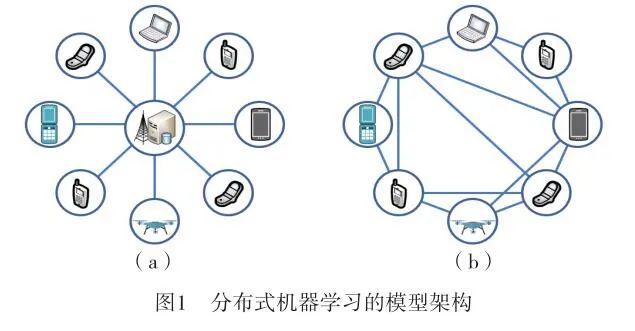
The model architecture of distributed machine learning can generally be divided into two categories based on the presence of a central controller. The first architecture is shown in Figure 1(a), consisting of a central controller and several edge nodes. Common examples include Federated Learning (FL), where the central controller can communicate with all edge nodes[15-16]. The second architecture is completely decentralized, containing no central controller and consisting entirely of edge nodes, where adjacent nodes can communicate with each other, as shown in Figure 1(b).
(3)Article Framework
This article systematically introduces the challenges, current status, and development directions of mobile edge distributed learning models, with a focus on discussing several key technologies currently under attention: federated learning, distributed inference, and multi-agent collaborative reinforcement learning. Finally, it discusses the current research status and future development from a global perspective, particularly in reducing communication costs, including reducing communication frequency, information compression and quantization, communication resource allocation, and game theory.
1 Federated Learning
This section first introduces the basic concepts and processes of federated learning, then discusses the four parameters affecting the performance of federated learning algorithms based on wireless communication network environments and their impacts. Finally, it elaborates on the challenges and research directions currently present in federated learning, introducing two optimization models: aerial computation federated learning and federated distillation.
1.1 Basic Concepts of Federated Learning
Federated learning is a distributed machine learning model proposed by Google[17]. It includes a central controller and several edge nodes, where the central controller can communicate with each edge node. The function of the central controller is to aggregate the model parameters from each edge node without exchanging raw data; edge nodes only send model parameters to the central controller.
The entire computation process of federated learning consists of two parts: local training and global model fusion. Below, the basic averaging algorithm (FedAvg, Federated Averaging) in federated learning will be used as an example to describe the entire process[18].
In the local model training phase, the central controller first initiates a task, selects k edge nodes to perform the task, while masking other nodes. The central controller initializes the model parameters w0 and transmits them to the terminal nodes to start training and update the model parameters wt←w0. Edge nodes typically use stochastic gradient descent to train model parameters using the local dataset. The parameters trained by the k-th device are denoted as , where α represents the learning rate,
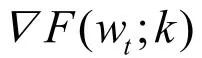 represents the gradient of the loss function for the k-th device. Finally, each device transmits the updated model parameters
 to the central controller.
In the global model fusion phase, the central controller aggregates the parameters transmitted by each device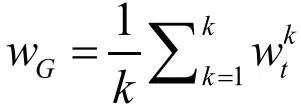 , obtains new global model parameters, and transmits them to edge nodes as the initial values for the next round. This process is repeated several times until the model converges and achieves the desired accuracy.
The ultimate goal of this basic federated learning algorithm is to obtain a unified model from different devices. When the data on each edge device is not independently and identically distributed, the training model bias of key devices can be significant. This has led to the proposal of two personalized federated learning approaches: multi-task federated learning[19] and model-based non-independent meta-learning federated learning algorithms[20].
1.2 Performance Parameters of Federated Learning
This section introduces four performance metrics for federated learning based on wireless communication networks: training loss function, convergence time, energy consumption, and reliability.
(1) Training Loss Function
In the federated learning process, the value of the training loss function is jointly determined by the model parameters trained by all edge devices. In a wireless environment, model parameters are transmitted through wireless communication networks, thus affecting the final global model parameters.
(2) Convergence Time
The convergence time of federated learning in a wireless environment can be defined as follows: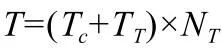 . Here, Tc indicates the time for an edge node to perform a single local model training, TT denotes the model parameter transmission time for each round of learning, and NT indicates the number of training rounds required to achieve global convergence. It is important to note that Tc and NT are not independent of each other. In stochastic gradient descent algorithms, increasing Tc can reduce the number of rounds NT needed for global convergence.
(3) Energy Consumption
In wireless federated learning, the energy consumption of each participating device can be expressed as: E=(Ec+ET)×NT. Here, Ec is the energy consumption of the terminal device for a single local training, ET is the energy consumption for transmitting model parameters between the terminal device and the central controller for each round of computation, and NT is the number of rounds required for global convergence. Since increasing the number of local training rounds can reduce the total number of global fusion rounds, a trade-off must be made between Ec and NT.
(4) Reliability
The reliability of wireless federated learning is defined as the probability of meeting the training loss function standard. In wireless federated learning models, due to limited communication resources, only a subset of edge devices can participate in each training. The edge devices participating in model fusion may differ in each round, resulting in different model parameters being provided, which can impact both convergence time and loss function. Additionally, unstable wireless communication environments can cause errors in model parameter transmission, reducing model accuracy.
1.3 Impact of Wireless Communication Network Parameters on Federated Learning Performance
The parameters of wireless communication networks have a certain impact on the four federated learning performance metrics mentioned in the previous section, such as spectrum, transmission power, and computing capability. The specific explanations are as follows.
The allocation of spectrum resources determines each device’s signal-to-noise ratio, transmission rate, and probability of transmission errors. Therefore, spectrum allocation affects training loss, transmission time TT, transmission energy consumption ET, and reliability.
Computing capability determines the number of times required for stochastic gradient descent during each local training. Thus, it affects the time and energy consumption of local training.
Transmission power determines the signal-to-noise ratio, transmission rate, and probability of transmission errors. When the transmission energy of each terminal device increases, training loss, transmission time TT, and the number of training rounds NT decrease, while transmission energy consumption ET increases.
As the number of devices participating in each training round increases, the number of training rounds NT and training loss decrease, while reliability and transmission time TT increase.
When the number of model parameters trained by edge devices increases, the training loss, reliability, and total number of training rounds in federated learning decrease, while energy consumption and training time increase.
1.4 Challenges and Research Directions in Federated Learning
This section first summarizes the challenges and research status of federated learning in wireless network environments, then introduces two improvement solutions: aerial computation federated learning and federated distillation.
(1) Challenges and Research Status of Federated Learning
1) Communication Resources
In wireless network environments, due to limited allocable transmission resources and the large amount of model parameter data that needs to be transmitted in each round of federated learning, transmission bottlenecks occur, especially for complex large-scale neural network architectures such as deep learning. Methods to alleviate this issue include compression and quantization. Literature [21] proposes a method for compressing and sparsifying model parameters during the local training process and tests the convergence performance of this method. In literature [22], the authors use lossy compression methods to compress global model parameters before transmission. To further reduce data volume, literature [23] proposes a ternary quantization method applied during training and inference phases. In literature [24], the authors design a novel federated learning optimization method based on random linear coding to improve transmission energy efficiency. Literature [25-28] propose more federated learning optimization methods based on probabilistic scalar quantization. All of the above research is based on uplink transmission, where edge devices upload local model parameters to the central controller; however, in bandwidth-limited networks, the process of the central controller broadcasting the global model to the edge devices can also experience transmission bottlenecks. To address this issue, literature [29] studies the extent to which the convergence speed is affected by noise during the downlink transmission process.
2) Wireless Resource Allocation
The performance of federated learning is directly affected by wireless resources such as spectrum and transmission rate. Therefore, how to effectively allocate wireless transmission resources to efficiently complete federated learning is an important research direction. In literature [30-31], the authors study how to balance the number of local training rounds and global fusion to minimize energy consumption, training loss, and transmission time. Literature [32] proposes that the central controller only fuses models transmitted from edge nodes with a signal-to-noise ratio below a certain threshold, evaluating the impact of this method on convergence speed and reliability. Literature [33] proposes a method for jointly optimizing edge device scheduling and resource allocation to improve model accuracy within limited training time.
3) Optimization of Federated Learning Training Methods
In addition to the two methods mentioned above that adjust from the perspective of wireless networks, the algorithms can also be adjusted from the perspective of optimizing federated learning training methods to make them more suitable for wireless network environments. Literature [34] proposes a stochastic gradient descent method based on error feedback and proves that it can optimize convergence speed and generalization ability. Literature [35] proposes a clustered federated learning model that divides the original architecture into several subsets, each managed by a base station responsible for aggregating the model parameters of that subset, which are then transmitted to the central controller for global fusion. This architecture is further developed in literature [36], proposing a multi-level federated learning training method. Literature [37] and [38] propose a selective aggregation scheme that only performs global fusion for necessary edge nodes, which can alleviate the communication burden of federated learning. Literature [39] proposes federated learning based on a parameter Bayesian inference architecture, thereby reducing the number of training rounds required to achieve convergence. Literature [40] proposes an unsupervised federated learning algorithm based on clustering algorithms to further optimize the algorithm.
(2) Aerial Computation-Based Federated Learning
As previously mentioned, federated learning based on wireless communication networks (FEEL, Federated Edge Learning) faces a major challenge in breaking through communication resource bottlenecks. Researchers have attempted various methods to reduce communication latency, such as eliminating slow edge devices during training[41-42] or selecting only those model parameters that significantly impact global model fusion for participation[43]. Recently, a scheme combining aerial computation (OAC, Over the Air Computation) with FEEL has been proposed, which can enhance the scalability of federated learning architectures. Literature [44-45] discusses the limitations of aerial computation from an information theory perspective. Literature [46-48] proposes integration schemes for aerial computation and wireless communication networks. In literature [49-50], a combined architecture of OAC and FEEL is proposed, where global fusion can achieve synchronous multi-channel transmission of model parameters based on aerial computation, thus resolving communication bottlenecks and enabling FEEL to operate in larger-scale environments.
Current research directions for this architecture mainly focus on solving data privacy issues and achieving training in broadband environments. Although federated learning no longer requires users to exchange raw data, transmitting gradient vectors may still leak privacy information, known as gradient leakage[51-52]. Literature [53] proposes that during the federated learning process based on digital signal transmission, edge devices should appropriately add noise to the locally trained model parameters before transmitting them to the central controller. For broadband transmission issues, if local model parameters are transmitted without pre-encoding, it will require channel resources comparable to the model’s dimensions, occupying significant bandwidth, often exceeding the bandwidth resources available to edge nodes. This issue can be alleviated by compressing model parameters.
(3) Federated Distillation
Federated Distillation (FD) applies the concept of knowledge distillation, which has emerged as a model compression and acceleration technique, to federated learning[54]. Knowledge distillation (KD) aims to transfer decision information (knowledge) learned from a pre-trained complex model (as the teacher) to another lightweight model (as the student), assisting and guiding the training of the student model. Knowledge distillation aims to compress and enhance models by transferring knowledge from deep networks to smaller networks. In literature [55-56], federated distillation models are applied in wireless fading channels, with tests showing that federated distillation exhibits greater robustness and interference resistance than traditional federated learning algorithms. For a more detailed discussion of federated distillation, refer to literature [57].
2 Distributed Inference
Currently, most research in the field of distributed learning focuses on the model training phase, but due to the limited computing power of terminal devices and the timeliness requirements of tasks, the inference process also presents many challenges. This section will introduce the challenges of distributed inference and the current research status.
2.1 Challenges of Distributed Inference
Distributed inference refers to the use of trained model parameters to infer new data (such as classification and regression problems). The first challenge is the limited computing power of terminal devices, especially for large models like deep neural networks, which can result in excessively slow computation speeds. Many inference tasks have high real-time requirements[58], making it more difficult to meet latency requirements in distributed inference. Secondly, even without considering computing power and real-time requirements, the datasets used for inference are often distributed across different terminal devices, which complicates distributed inference. For example, in literature [59], intelligent monitoring devices need to access data from all terminal devices.
From an information theory perspective, distributed inference in wireless network environments can be equated to the rate-distortion problem of the same source coding[60-61]. Current research directions are focused on simplifying model parameters through compression and quantization, while another approach is to partition large models across different devices for joint inference. The following will introduce two types of optimized distributed inference methods.
2.2 Neural Network Compression and Quantization
To address the limited computing power of edge devices, consideration can be given to simplifying the scale and complexity of neural network models as much as possible. One of the most common methods is to use pruning and quantization to remove redundant model parameters that have little overall impact on the model. Properly simplifying models can also help avoid overfitting issues[62-64]. Literature [65] provides a detailed introduction to commonly used model pruning methods. Another effective solution is to add sparse regularization conditions during the training phase to directly obtain sparse models[66-67].
Model compression aims to minimize weight parameters as much as possible, while quantization reduces the number of bits representing each parameter. Literature [68-69] proposes fixed-point representation methods and demonstrates that this approach can ensure a certain accuracy of the model. Some studies attempt to represent model weight values with single-bit binary, with experiments showing that such deep neural networks still perform well[70-71].
The compression of deep neural networks can also be seen as a typical source compression problem. Literature [72] proposes hashing coding methods, literature [73] employs vector quantization, and literature [74] uses Huffman coding to further simplify redundant model parameters after quantization.
2.3 Collaborative Edge Inference
In addition to the aforementioned compression and quantization, models can also be partitioned across different devices, allowing multiple edge devices to collaborate on inference, which can alleviate the computational burden on individual devices. A common method is to split deep neural networks into two parts, assigning the first part to terminal devices while the remaining multi-layer computation is handled by the central controller[75]. Literature [76] further proposes viewing the inference computation process of deep neural networks as a computational graph model, aiming to obtain optimized results for joint model partitioning and model search. Based on this, literature [77-79] proposes combining model pruning with collaborative inference in deep neural network models, which can further reduce the computational pressure on each device. Literature [80-81] specifically discusses collaborative edge inference in wireless environments, considering issues such as latency, reliability, and signal-to-noise ratio in wireless transmission. Literature [82] proposes a split learning system based on MIMO aerial computation, combining pre-encoder and combiner designs with implicit MIMO channel matrices to form a trainable layer in a neural network, significantly improving system communication efficiency.
3 Multi-Agent Reinforcement Learning
The previous content has focused on supervised learning based on wireless networks. This section will introduce the application of reinforcement learning in controlling and optimizing wireless networks.
3.1 Basic Concepts of Multi-Agent Reinforcement Learning
Reinforcement learning (RL) learns feedback in real-time from the current wireless environment, enabling functions such as network control and resource allocation[83]. Basic reinforcement learning can be divided into three categories. The first is single-agent reinforcement learning, which can be described as a simple Markov process. The second is independent multi-agent reinforcement learning, which is the simplest multi-agent algorithm (MARL, Multi-Agent Reinforcement Learning), where each agent operates independently according to single-agent algorithms. The third is multi-agent collaborative reinforcement learning, which requires agents to exchange feedback, states, and other information with each other. The information exchanged between primary agents varies across different scenarios. For example, literature [84] discusses multi-agent collaborative algorithms that require agents to exchange state and action information, while literature [85] proposes a median decomposition network that exchanges feedback information between agents. The differences in exchanged information affect the complexity of the multi-agent collaborative architecture. Literature [86] compares the model complexity and performance of different multi-agent collaborative algorithms.
3.2 Research Status and Challenges
Literature [87-88] summarizes the specific applications of multi-agent reinforcement learning in controlling and optimizing wireless communication networks. In literature [89], the authors design an independent multi-agent architecture for optimizing base station spectral efficiency and demonstrate that collaborative multi-agent algorithms yield better results. Literature [90] proposes a novel architecture where the central controller collects experience information from multiple agents to train machine learning models. In literature [91], multi-agent collaborative algorithms are applied to modulation and demodulation. Literature [92] designs a multi-level multi-agent federated learning strategy for collaborative optimization and scheduling of wireless network resources.
Multi-agent algorithms face several challenges, such as strict proofs of convergence and parameters affecting convergence. Another aspect is the impact of wireless network performance parameters on algorithm effectiveness. These urgent problems determine whether multi-agent reinforcement learning algorithms can be more widely adopted in the optimization and control of wireless networks and represent future research directions.
4 Research Directions for Mobile Edge Distributed Learning
This section discusses the future development directions of distributed learning algorithms in achieving optimal performance in wireless networks. Current research has addressed some challenges through methods such as reducing communication frequency, compression, and quantization; however, these methods still have unresolved challenges and potential for further exploration, which will be detailed below.
4.1 Reducing Communication Frequency in Distributed Learning
One method is to perform multiple local computations before conducting a global fusion, such as the improved distributed algorithms proposed in literature [93] and the federated learning improvement algorithms in literature [94].
Another approach is to reduce communication frequency through event-triggered mechanisms, where devices only transmit parameters to the controller in specific scenarios. The event-triggered mechanism improved distributed gradient descent algorithm proposed in literature [95] is a typical example.
This method still has room for improvement. Firstly, most of the problems studied by this method focus on single-task distributed learning, with only a few papers addressing multi-task and personalized machine learning problems, such as literature [96-97]. Further integration with meta-learning can dynamically adjust the number of local updates between communications based on task and algorithm requirements.
4.2 Compression and Quantization
The concepts of compression and quantization have already been mentioned along with some current research status. The compression process inevitably introduces slight errors in each distributed learning process, and these errors can accumulate over multiple training rounds, affecting the overall performance of the model. It may be considered to feed back error values to edge devices after each communication, allowing them to make corresponding error compensations to avoid cumulative errors[98].
Additionally, dynamic compression and quantization methods can be designed to adjust the degree of compression in real-time based on task characteristics and current wireless communication resource conditions, balancing model accuracy and communication speed.
4.3 Communication Resource Allocation
Distributed computing processes consume a large amount of communication resources, such as bandwidth and energy, which are often limited. Although many works have proposed various optimization schemes for resource allocation, there is still much room for further exploration.
One important issue is the trade-off between data privacy and transmission efficiency. Although distributed computing does not transmit raw data, model parameters may still leak important information. Introducing noise during the transmission process can mitigate eavesdropping issues. According to the definition of signal-to-noise ratio, when more power is allocated, the signal-to-noise ratio increases, making it easier to leak privacy; conversely, a lower signal-to-noise ratio makes it harder to decipher user information. This is contrary to transmission efficiency; hence, exploring how to ensure both communication efficiency and privacy protection is a necessary direction.
4.4 Game Theory and Distributed Computing
Recently, some studies have proposed applying game theory mechanisms in resource allocation for distributed learning algorithms, encouraging cooperation among edge devices.
In literature [99], the authors propose a multi-dimensional encouragement mechanism based on federated learning, aiming to balance model training loss, communication latency, and user data privacy factors to achieve optimal balance. In literature [100], the concept of reputation is introduced to measure the reliability and credibility of each edge node. Furthermore, literature [101] proposes a competitive mechanism based on federated learning, stimulating individual users to save communication resources as much as possible while ensuring data privacy.
Current research mainly focuses on architectures composed of edge devices and central controllers, with no typical applications or research on completely decentralized distributed architectures. Similarly, most works currently target single-task distributed learning, leaving much to explore in personalized distributed learning. In personalized learning, individual devices often prioritize their model accuracy and maximize the use of communication resources, disregarding the training model accuracy of neighboring nodes. To achieve global optimality, attempts can be made to combine game theory with personalized distributed learning.
5 Conclusion
This article provides a comprehensive review of distributed machine learning based on wireless communication networks. It first introduces the basic concepts and architecture of distributed machine learning, then focuses on the research status and challenges of three important technologies based on wireless communication networks: federated learning, distributed inference, and multi-agent reinforcement learning. Finally, it discusses future research directions for wireless distributed learning based on the trade-off of communication resource utilization efficiency from four aspects.
References:(Scroll up and down to browse)
[1] Letaief K B, Chen W, Shi Y, et al. The Roadmap to 6G: AI Empowered Wireless Networks[J]. IEEE Communications Magazine: Articles, News, and Events of Interest to Communications Engineers, 2019,57(8): 84-90.
[2] Akyildiz I F, Kak A, Nie S. 6G and Beyond: The Future of Wireless Communications Systems[J]. IEEE Access, 2020,8: 133995 – 134030.
[3] Dang S, Amin O, Shihada B, et al. What should 6G be?[J]. Nature Electron., 2020,3(1): 20-29.
[4] Posner J, Tseng L, Aloqaily M, et al. Federated Learning in Vehicular Networks: Opportunities and Solutions[J]. IEEE Network, 2021,35(2): 152-159.
[5] Wang X, Han Y, Wang C, et al. In-edge AI: Intelligentizing mobile edge computing, caching and communication by federated learning[J]. IEEE Netw., 2019,33(5): 156-165.
[6] Niknam S, Dhillon H S, Reed J H. Federated learning for wireless communications: Motivation, opportunities, and challenges[J]. IEEE Commun. Mag., 2020,58(6): 46-51.
[7] Liu Y, Yuan X, Xiong Z, et al. Federated learning for 6G communications: Challenges, methods, and future directions[J]. China Commun., 2020,17(9): 105-118.
[8] Zhao Z, Feng C, Yang H H, et al. Federated-learningenabled intelligent fog radio access networks: Fundamental theory, key techniques, and future trends[J]. IEEE Wireless Commun., 2020,27(2): 22-28.
[9] Kang J, Xiong Z, Niyato D, et al. Reliable federated learning for mobile networks[J]. IEEE Wireless Commun., 2020,27(2): 72-80.
[10] Chen M, Yang Z, Saad W, et al. A joint learning and communications framework for federated learning over wireless networks[J]. IEEE Trans. Wireless Commun., 2021,20(1): 269-283.
[11] Bertsekas D, Tsitsiklis J. Parallel and Distributed Computation: Numerical Methods[M]. Prentice Hall, 1989.
[12] Huang Z, Hu R, Guo Y, et al. DP-ADMM: ADMM-based distributed learning with differential privacy[J]. IEEE Trans. Inf. Forensics Secur., 2019,15: 1002-1012.
[13] Kumar C, Rajawat K. Network dissensus via distributed ADMM[J]. IEEE Trans. Signal Process., 2020,68: 2287-2301.
[14] Nedic A. Distributed gradient methods for convex machine learning problems in networks: Distributed optimization[J]. IEEE Signal Process. Mag., 2020,37(3): 92-101.
[15] Letaief K B, Shi Y, Lu J, et al. Edge artificial intelligence for 6G: Vision, enabling technologies, and applications[J]. IEEE Journal on Selected Areas in Communications, 2022,40(1): 5-36.
[16] Gafni T, Shlezinger N, Cohen K, et al. Federated learning: A signal processing perspective[J]. IEEE Signal Processing Magazine, 2022,39(3): 14-41.
[17] Mcmahan H B, Moore E, Ramage D, et al. Communication-Efficient Learning of Deep Networks from Decentralized Data[C]//Proc. 20th Int. Conf. Artif. Intell. Statist., Fort Lauderdale, Florida, USA, 2016: 1273-1282.
[18] Hong C S, Khan L U, Chen M, et al. Federated Learning for Wireless Networks[M]. Berlin, Germany: Springer, 2021.
[19] Smith V, Chiang C K, Sanjabi M, et al. Federated Multi-Task Learning:, 10.48550/arXiv.1705.10467[P]. 2017.
[20] Fallah A, Mokhtari A, Ozdaglar A. Personalized federated learning with theoretical guarantees: A model-agnostic meta-learning approach[C]//Proc. Adv. Neural Inf. Process. Syst., 2020,33: 3557-3568.
[21] Haddadpour F, Kamani M M, Mokhtari A, et al. Federated learning with compression: Unified analysis and sharp guarantees[C]//Proc. Int. Conf. Artif. Intell. Statist., 2021,130: 2350-2358.
[22] Caldas S, J Konečný, Mcmahan H B, et al. Expanding the Reach of Federated Learning by Reducing Client Resource Requirements: 10.48550/arXiv.1812.07210[P]. 2018.
[23] Xu J, Du W, Cheng R, et al. Ternary Compression for Communication-Efficient Federated Learning[J]. IEEE Trans.Neural Netw. Learn. Syst., early access, 2021-09.
[24] Abdi A, Saidutta Y M, Fekri F. Analog compression and communication for federated learning over wireless MAC[C]//Proc. IEEE 21st Int. Workshop Signal Process. Adv. Wireless Commun.(SPAWC). Atlanta, GA, USA: IEEE, 2020.
[25] Wen W, Xu C, Yan F, et al. TernGrad: Ternary Gradients to Reduce Communication in Distributed Deep Learning[C]//Proc. Adv. Neural Inf. Process. Syst., Long Beach, CA, USA, 2017: 1-13.
[26] Alistarh D, Grubic D, Li J, et al. QSGD: Communication-efficient SGD via gradient quantization and encoding[C]//Proc. Adv. Neural Inf. Process. Syst., Long Beach, CA, USA, 2017: 1709-1720.
[27] Horvath S, Ho C Y, Horvath L, et al. Natural compression for distributed deep learning[J]. 2019, arXiv:1905.10988. [Online]. Available: http://arxiv.org/abs/1905.10988.
[28] Reisizadeh A, Mokhtari A, Hassani H, et al. FedPAQ: A communication-efficient federated learning method with periodic averaging and quantization[C]//Proc. Int. Conf. Artif. Intell. Statist., Palermo, Italy, 2020.
[29] Amiri M M, Gündüz D, Kulkarni S R, et al. Convergence of federated learning over a noisy downlink[J]. IEEE Trans. Wireless Commun., early access, 2021-08-17.
[30] Tran N H, Bao W, Zomaya A, et al. Federated learning over wireless networks: Optimization model design and analysis[C]//Proc. IEEE Conf. Comput. Commun. (IEEE INFOCOM). IEEE, Paris, France, 2019.
[31] Tian Y Q, Zhang Z Y, Yang Z H, et al. Hierarchical Federated Learning with Adaptive Clustering on Non-IID Data[C]//IEEE Global Communications Conference(IEEE GLOBECOM). IEEE, 2022.
[32] Yang H H, Liu Z, Quek T Q S, et al. Scheduling policies for federated learning in wireless networks[J]. IEEE Trans. Commun., 2020,68(1): 317-333.
[33] Shi W, Zhou S, Niu Z, et al. Joint device scheduling and resource allocation for latency constrained wireless federated learning[J]. IEEE Trans. Wireless Commun., 2021,20(1): 453-467.
[34] Karimireddy S P, Rebjock Q, Stich S, et al. Error feedback fixes SignSGD and other gradient compression schemes[C]//Proc. Int. Conf. Mach. Learn., Long Beach, CA, USA, 2019.
[35] Abad M S H, Ozfatura E, Gündüz D, et al. Hierarchical federated learning across heterogeneous cellular networks[C]//Proc. IEEE Int. Conf. Acoust., Speech Signal Process. (ICASSP). IEEE, Barcelona, Spain, 2020: 8866-8870.
[36] Hosseinalipour S, Azam S S, Brinton C, et al. Multi-Stage Hybrid Federated Learning over Large-Scale D2D-Enabled Fog Networks[J]. 2020, arXiv:2007.09511. [Online]. Available: http://arxiv.org/abs/2007.09511.
[37] Chen T, Giannakis G, Sun T, et al. LAG: Lazily aggregated gradient for communication-efficient distributed learning[C]//Proc. Adv. Neural Inf. Process. Syst., Montreal, QC, Canada, 2018.
[38] Sun J, Chen T, Giannakis G, et al. Communication-efficient distributed learning via lazily aggregated quantized gradients[C]//Proc. Adv. Neural Inf. Process. Syst., Vancouver, BC, Canada, 2019: 1-20.
[39] Kassab R, Simeone O. Federated generalized Bayesian learning via distributed stein variational gradient descent[J]. 2020, arXiv:2009.06419. [Online]. Available: http://arxiv.org/abs/2009.06419.
[40] Dennis D K, Li T, Smith V. Heterogeneity for the win: One-shot federated clustering,[C]//Proc. Int. Conf. Mach. Learn., 2021.
[41] Chen J, Pan X, Monga R, et al. Revisiting distributed synchronous SGD[J]. 2016, arXiv:1604.00981. [Online]. Available: http://arxiv.org/abs/1604.00981.
[42] Xu J, Huang S L, Song L, et al. Gradient coding: Avoiding stragglers in distributed learning[C]/Proc. Int. Conf. Mach. Learn., Sydney, NSW, Australia, 2021.
[43] Kamp M. Efficient decentralized deep learning by dynamic model averaging[J]. 2018, arXiv:1807.03210. [Online]. Available: http://arxiv.org/abs/1807.03210.
[44] Nazer B, Gastpar M. Computation over multiple-access channels[J]. IEEE Trans. Inf. Theory, 2007,53(10): 3498-3516.
[45] Soundararajan R, Vishwanath S. Communicating linear functions of correlated Gaussian sources over a MAC[J]. IEEE Trans. Inf. Theory, 2012,58(3): 1853-1860.
[46] Goldenbaum M, Stanczak S. Robust analog function computation via wireless multiple-access channels[J]. IEEE Trans. Commun., 2012,61(9): 3863-3877.
[47] Chen L, Zhao N, Chen Y, et al. Over-the-air computation for IoT networks: Computing multiple functions with antenna arrays[J]. IEEE Internet Things J., 2018,5(6): 5296-5306.
[48] Zhu G, Xu J, Huang K, et al. Over-the-air computing for wireless data aggregation in massive IoT[J]. 2020, arXiv:2009.02181. [Online]. Available: http://arxiv.org/abs/2009.02181.
[49] Zhu G, Wang Y, Huang K. Broadband analog aggregation for low-latency federated edge learning[J]. IEEE Trans. Wireless Commun., 2020,19(1): 491-506.
[50] Amiri M M, Gündüz D. Federated learning over wireless fading channels[J]. IEEE Trans. Wireless Commun., 2020,19(5): 3546-3557.
[51] Zhu L, Liu Z, Han S. Deep leakage from gradients[C]//Proc.Adv. Neural Inf. Process. Syst., Vancouver, BC, Canada, 2019.
[52] Melis L, Song C, Cristofaro E D, et al. Exploiting unintended feature leakage in collaborative learning[C]//Proc. IEEE Symp. Secur. Privacy (SP). IEEE, San Francisco, CA, USA, 2019.
[53] M. Abadi et al., “Deep learning with differential privacy[C]//Proc.Conf. Comput. Commun. Secur. (ACM SIGSAC), Vienna, Austria,Oct. 2016.
[54] Jeong E, Oh S, Kim H, et al. Communication-efficient on-device machine learning: Federated distillation and augmentation under non-IID private data[C]//Proc. Adv. Neural Inf. Process. Syst. Workshop Mach. Learn. Phone Consum. Devices, Montreal, QC, Canada, 2018.
[55] Ahn J H, Simeone O, Kang J. Cooperative learning via federated distillation over fading channels[C]//Proc. IEEE Int. Conf. Acoust., Speech Signal Process. (ICASSP). IEEE, Barcelona, Spain, 2020.
[56] Ahn J H, Simeone O, Kang J. Wireless federated distillation for distributed edge learning with heterogeneous data[C]//Proc. IEEE 30th Annu. Int. Symp. Pers., Indoor Mobile Radio Commun.(PIMRC). IEEE, Istanbul, Turkey, 2019.
[57] Seo H, Park J, Oh S, et al. Federated knowledge distillation[J]. 2020, arXiv:2011.02367. [Online]. Available: http://arxiv.org/abs/2011.02367.
[58] Ramjee S, Ju S, Yang D, et al. Fast deep learning for automatic modulation classification[J]. 2019, arXiv:1901.05850. [Online]. Available: http://arxiv.org/abs/1901.05850.
[59] Jankowski M, Gündüz D, Mikolajczyk K. Wireless image retrieval at the edge[J]. IEEE J. Sel. Areas Commun., 2021,39(1): 89-100.
[60] Dobrushin R, Tsybakov B. Information transmission with additional noise[J]. IRE Trans. Inf. Theory, 1962,8(5): 293-304.
[61] Wolf J K, Ziv J. Transmission of noisy information to a noisy receiver with minimum distortion[J]. IEEE Trans. Inf. Theory, 1970.IT-16(4): 406-411.
[62] Hanson S, Pratt L. Comparing biases for minimal network construction with back-propagation[C]//Proc. Adv. Neural Inf. Process. Syst., Denver, CO, USA, 1989.
[63] LeCun Y, Denker J, Solla S. Optimal brain damage[C]//Proc. Adv. Neural Inf. Process. Syst., Denver, CO, USA, 1990.
[64] Hassibi B, Stork D G, Wolff G, et al. Optimal Brain Surgeon: Extensions and performance comparison[C]//Proc. Adv. Neural Inf. Process. Syst., San Francisco, CA, USA, 1993.
[65] Liu J, Tripathi S, Kurup U, et al. Pruning algorithms to accelerate convolutional neural networks for edge applications: A survey[J]. 2020, arXiv:2005.04275. [Online]. Available: http://arxiv.org/abs/2005.04275
[66] Lebedev V, Lempitsky V. Fast ConvNets using group-wise brain damage[C]//Proc. IEEE Conf. Comput. Vis. Pattern Recognit. (CVPR). IEEE, Las Vegas, NV, USA, 2016.
[67] Wen W, Wu C, Wang Y, et al. Learning structured sparsity in deep neural networks[C]//Proc. Adv. Neural Inf. Process. Syst., Barcelona, Spain, 2016.
[68] Gupta S, Agrawal A, Gopalakrishnan K, et al. Deep learning with limited numerical precision[C]//Proc. Int. Conf. Mach. Learn., Lille, France, 2015.
[69] Courbariaux M, Bengio Y, David J P. Training deep neural networks with low precision multiplications[C]//Proc. Int. Conf. Learn. Represent. Workshop, San Diego, CA, USA, 2015.
[70] Courbariaux M, Bengio Y, David J. P. BinaryConnect: Training deep neural networks with binary weights during propagations[C]//Proc. Adv. Neural Inf. Process. Syst., Montreal, QC, Canada, 2015.
[71] Courbariaux M, Hubara I, Soudry D, et al. Binarized neural networks: Training deep neural networks with weights and activations constrained to +1 or -1[J]. 2016, arXiv:1602.02830. [Online]. Available: http://arxiv.org/abs/1602.02830.
[72] Chen W, Wilson J T, Tyree S, et al. Compressing neural networks with the hashing trick[C]//Proc. Int. Conf. Mach. Learn., Lille, France, 2015.
[73] Gong Y, Liu L, Yang M, et al. Compressing deep convolutional networks using vector quantization[J]. 2014, arXiv:1412.6115.[Online]. Available: http://arxiv.org/abs/1412.6115.
[74] Han S, Mao H, Dally W J. Deep compression: Compressing deep neural networks with pruning, trained quantization and Huffman coding[C]//Proc. Int. Conf. Learn. Represent., San Juan, Puerto Rico, 2016.
[75] Teerapittayanon S, McDanel B, Kung H T. Distributed deep neural networks over the cloud, the edge and end devices[C]//Proc. IEEE 37th Int. Conf. Distrib. Comput. Syst. IEEE, (ICDCS).Atlanta, GA, USA, 2017.
[76] Tian Y, Zhang Z, Yang Z, et al. JMSNAS: Joint Model Split and Neural Architecture Search for Learning over Mobile Edge Networks[J]. IEEE International Conference on Communications Workshops (ICC Workshops). IEEE, 2022.
[77] Jankowski M, Gündüz D, Mikolajczyk K. Joint device-edge inference over wireless links with pruning[C]//Proc. IEEE 21st Int. Workshop Signal Process. Adv. Wireless Commun. (SPAWC). IEEE, 2020.
[78] Shi W, Hou Y, Zhou S, et al. Improving device-edge cooperative inference of deep learning via 2-step pruning[C]//Proc. IEEE Conf. Comput. Commun. IEEE, Workshops, Paris, France, 2019.
[79] Shao J, Zhang J. Communication-computation trade-off in resource-constrained edge inference[J]. IEEE Commun. Mag., 2020,58(12): 20-26.
[80] Gamal A El, Kim Y H. Network Information Theory[M]. Cambridge, U.K.: Cambridge Univ. Press, 2011.
[81] Van Dyck R E, Miller D J. Transport of wireless video using separate, concatenated, and joint source-channel coding[C]//IEEE Proc. IEEE, 1999,87(10): 1734-1750.
[82] Yang Y. Over-the-air split machine learning in wireless mimo networks[J]. IEEE Journal on Selected Areas in Communications, 2023: 1007-1022.
[83] Busoniu L, Babuska R, Schutter B D. A comprehensive survey of multiagent reinforcement learning[J]. IEEE Trans. Syst., Man, Cybern. C, Appl. Rev., 2008,38(2): 156-172.
[84] Chen M, Saad W, Yin C. Virtual reality over wireless networks: Quality-of-service model and learning-based resource management[J]. IEEE Trans. Commun., 2018,66(11): 5621-5635.
[85] Hu Y, Chen M, Saad W, et al. Distributed multi-agent meta learning for trajectory design in wireless drone networks[J]. IEEE J. Sel. Areas Commun., 2021,39(10): 3177-3192.
[86] Pytorch Implementations of the Multi-Agent Reinforcement Learning Algorithms[J]. Accessed: Apr. 2021. [Online]. Available: https://github.com/starry-sky6688/StarCraft.
[87] Luong N C, Hoang D.T, Gong S, et al. Applications of deep reinforcement learning in communications and networking: A survey[J]. IEEE Commun. Surveys Tuts., 2019,21(4): 3133-3174.
[88] Feriani A, Hossain E. Single and multi-agent deep reinforcement learning for AI-enabled wireless networks: A tutorial[J]. IEEE Commun. Surveys Tuts., 2021,23(2): 1226-1252.
[89] Bennis M, Perlaza S M, Blasco P, et al. Self-organization in small cell networks: A reinforcement learning approach[J]. IEEE Trans. Wireless Commun., 2013,12(7): 3202-3212.
[90] Nasir Y S, Guo D. Multi-agent deep reinforcement learning for dynamic power allocation in wireless networks[J]. IEEE J. Sel. Areas Commun., 2019,37(10): 2239-2250.
[91] Vrieze C de, Barratt S, Tsai D, et al. Cooperative multi-agent reinforcement learning for low-level wireless communication[J]. 2018, arXiv:1801.04541. [Online]. Available: http://arxiv.org/abs/1801.04541.
[92] Hu F, Deng Y, Aghvami A H. Correlation-aware cooperative multigroup broadcast 360◦ video delivery network: A hierarchical deep reinforcement learning approach[J]. 2020, arXiv:2010.11347. [Online].Available: http://arxiv.org/abs/2010.11347.
[93] Wang S, Tuor T, Salonidis T, et al. Adaptive federated learning in resource constrained edge computing systems[J]. IEEE Journal on Selected Areas in Communications, 2019,37(6): 1205-1221.
[94] McMahan B, Moore E, Ramage D, et al. Communication-efficient learning of deep networks from decentralized data[C]//Proceedings of the International Conference on Artificial Intelligence and Statistics. 2017: 1273-1282.
[95] Liu C, Li H, Shi Y, et al. Distributed event-triggered gradient method for constrained convex minimization[J]. IEEE Transactions on Automatic Control, 2019,65(2): 778-785.
[96] Fallah A, Mokhtari A, Ozdaglar A, Personalized federated learning with theoretical guarantees: A model-agnostic meta-learning approach[J]. Proceedings of the Advances in Neural Information Processing Systems, 2020,33: 3557-3568.
[97] Ozkara K, Singh N, Data D, et al. QuPeD: Quantized personalization via distillation with applications to federated learning[J]. Advances in Neural Information Processing Systems, 2021,34.
[98] Koloskova A, Stich S, Jaggi M. Decentralized stochastic optimization and gossip algorithms with compressed communication[C]// Proceedings of the International Conference on Machine Learning. 2019: 3478-3487.
[99] Ding N, Fang Z, Huang J. Optimal contract design for efficient federated learning with multi-dimensional private information[J]. IEEE Journal on Selected Areas in Communications, 2020,39(1): 186-200.
[100] Kang J, Xiong Z, Niyato D, et al. Incentive mechanism for reliable federated learning: A joint optimization approach to combining reputation and contract theory[J]. IEEE Internet of Things Journal, 2019,6(6): 10700-10714.
[101] Jiao Y, Wang P, Niyato D, et al. Toward an automated auction framework for wireless federated learning services market[J]. IEEE Transactions on Mobile Computing, 2021,20(10): 3034-3048. ★
★Scan the QR code to read and download this paper on CNKI

★The original text was published in Mobile Communications Issue 6, 2023★
doi:10.3969/j.issn.1006-1010.20230424-0001
Classification Number: TN929.5 Document Code: A
Article Number: 1006-1010(2023)06-0048-08
Citation Format: Xie Yuliang, Tian Yuqing, Zhang Zhaoyang. Mobile Edge Distributed Learning for Intelligent Communication and Computing: Current Status, Challenges, and Methods[J]. Mobile Communications, 2023,47(6): 48-55.
XIE Yuliang, TIAN Yuqing, ZHANG Zhaoyang. Mobile Edge Distributed Learning for Intelligent Communication and Computing: Methods, Challenges, and Opportunities[J]. Mobile Communications, 2023,47(6): 48-55.
 Author IntroductionXie Yuliang:PhD student at the School of Information and Electronic Engineering, Zhejiang University, researching the integration of artificial intelligence and wireless communication, distributed algorithms, etc.Tian Yuqing:PhD student in Information and Communication Engineering at Zhejiang University, researching machine learning, distributed algorithms, and neural architecture search.Zhang Zhaoyang:PhD from Zhejiang University, currently a distinguished professor at Zhejiang University, mainly researching next-generation wireless communication, intelligent collaborative perception-communication-computation, wireless artificial intelligence, etc. He has undertaken and completed over twenty national-level projects, including the National Outstanding Youth Science Fund. He has received eight best paper awards at international academic conferences such as ICC 2019 and GlobeCom 2020, along with several provincial and ministerial scientific and technological awards, and first prizes from the China Institute of Communications and the China Association of Inventions. He is currently the leader of the Wireless AI Task Group of the National IMT-2030 (6G) Promotion Group.
Mobile Communications submission method is online submission
Please log in to the web submission system
Link address:http://ydtx.cbpt.cnki.net
 Exciting ReviewTable of Contents | 2023 Issue 7 Special Topic: Integrated Networks of Air, Land, SeaTable of Contents | 2023 Issue 6 Special Topic: AI-Based Wireless Communication TechnologyTable of Contents | 2023 Issue 5 Special Topic: 6G Terahertz Communication TechnologyCall for Papers | 2023 Issue 10 Special Topic: Mobile Self-Organizing NetworksCall for Papers | 2023 Issue 11 Special Topic: 6G Intelligent Surface TechnologyCall for Papers | 2023 Issue 12 “Internet of Vehicles Special Topic”
 #Scan to follow us#《Mobile Communications》 interprets communication with papers
The journal “Mobile Communications” is supervised by the China Electronics Technology Group Corporation and hosted by the Seventh Research Institute of the China Electronics Technology Group Corporation. It is a dual-effect journal of the Chinese journal matrix, a boutique electronic journal of the Ministry of Industry and Information Technology, a source journal for the statistics of Chinese science and technology papers, and selected as a high-quality scientific and technological journal directory by the China Association for Science and Technology. Domestic continuous publication number: CN44-1301/TN, International Continuous Publication Number: ISSN1006-1010, Postal Publication Code: 46-181.