The National Intellectual Property Administration’s information display shows that Kunshan Longteng Optoelectronics Co., Ltd. has applied for a patent titled “Line Display Driving Method and Liquid Crystal Display Device,” with publication number CN120431877A, and the application date isJune 2025.
Existing liquid crystal display devices (LCD) typically update images by having a control module (such asTcon) receive image data sent from the front-end system and generate source driving signals and gate driving signals to drive the liquid crystal display panel based on the image data.LCD activates each gate scanning line sequentially from top to bottom or bottom to top through line-by-line scanning according to the gate driving signal, controlling the pixel units in the display area to be activated line by line, and accurately writing the image data into the activated pixel units based on the source driving signal, thus achieving line-by-line updates of the display image.
Since liquid crystal molecules can maintain their stable physical state without an external electric field, liquid crystal displays only consume energy during state transitions and require almost no additional power to maintain the display state. However, during the image update process, the area to be updated often contains regions that have not changed from the previous frame. If the traditional line-by-line update method is still used, it not only wastes refresh time but also results in unnecessary energy loss.
In existing technology, liquid crystal display devices use a line-by-line scanning method to update images, even when there are unchanged areas in the image, resulting in full-screen scanning that wastes refresh time and causes unnecessary energy loss. This patent application provides a new refresh scheme that can significantly enhance the efficiency of the display.
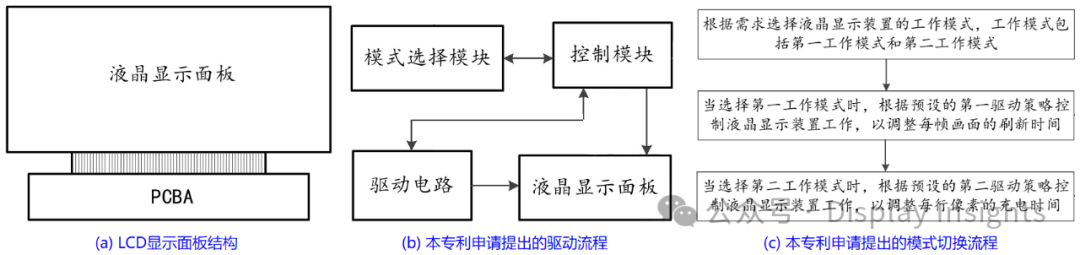
Figure 1. The schematic diagram and driving block diagram of the LCD proposed in this patent application
Invention Content
The purpose of this invention is to provide a display driving method and liquid crystal display device to optimize the image refresh time and improve energy usage efficiency.
1.Display Driving Method
a.Working Mode Selection: Select the working mode of the liquid crystal display device based on requirements, including the first working mode and the second working mode.
b.First Working Mode: Control the device operation according to a preset first driving strategy to adjust the refresh time of each frame. The first driving strategy includes receiving the current frame image data, comparing it with the previous frame image data, determining different data as the first scanning area, and performing line-by-line scanning of the pixels in that area based on a preset unit scanning time; if the current frame is the first frame, the same data rows are determined as the second scanning area, and different data rows are determined as the third scanning area, with the second scanning area scanned simultaneously and the third scanning area scanned line by line.
c.Second Working Mode: Control the device operation according to a preset second driving strategy to adjust the charging time of each row of pixels. The second driving strategy includes receiving the current frame image data, comparing it with the previous frame to determine the first scanning area, adjusting the unit scanning time based on the number of data rows in that area to obtain the first unit scanning time, and performing line-by-line scanning; if the current frame is the first frame, determine the second and third scanning areas, adjusting to obtain the second unit scanning time based on the number of data rows in the third scanning area, scanning the second area simultaneously and the third area line by line.
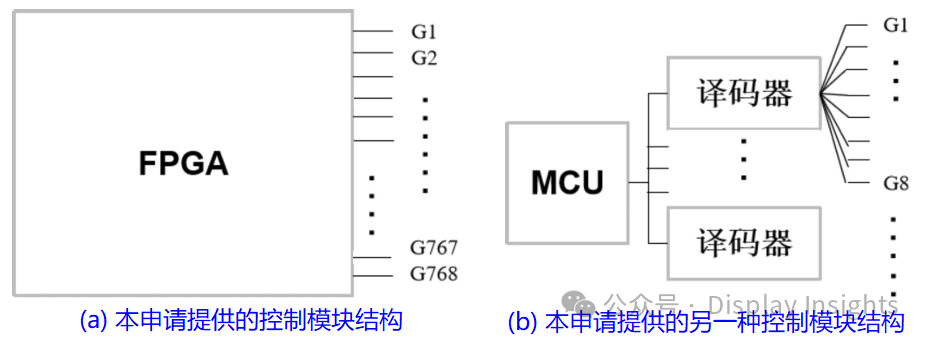
Figure 3. The two types of control module structures provided by this application
Conclusion
The display driving method and liquid crystal display device provided by this patent optimize the image refresh time and display performance by selecting working modes based on different display needs and dynamically adjusting driving strategies, improving energy usage efficiency, adapting to different usage scenarios, enhancing user experience, and having good application value in the field of display technology.
Source:CN120431877A, “Display Driving Method and Liquid Crystal Display Device”
To follow this public account, please click below↓↓↓