Banner | Promotion
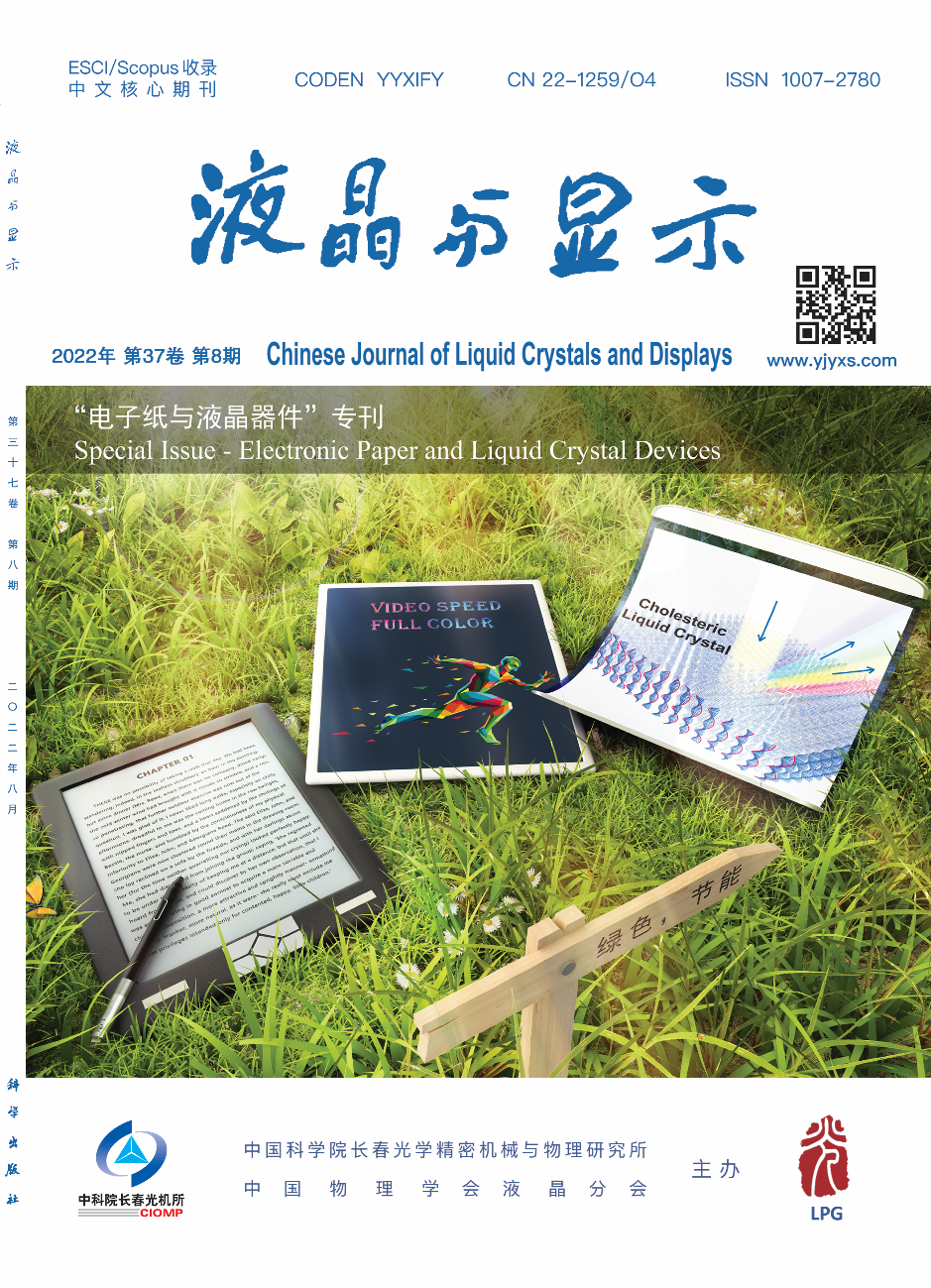
Journal Cover | “Liquid Crystal and Display” 2022, Vol. 37, Issue 8
Preface to This Special Issue
Electronic paper is an ultra-thin, ultra-light portable display device that has developed rapidly in recent years and has begun to appear widely in various application scenarios such as electronic reading, product labels, and urban media. As a strategic emerging industry that aligns with China’s green display and green building initiatives, electronic paper display technology also boasts outstanding advantages such as eye comfort, ultra-wide viewing angles, and high contrast under strong light interference. In the 1970s, Panasonic in Japan developed the first generation of electronic paper displays relying on ordinary electrophoretic technology, but it faced issues such as unstable display effects, short device lifespan, and difficulty in achieving colorization. After half a century of research and development, electronic paper display technology has undergone leapfrog upgrades, including cholesteric liquid crystal displays, electrowetting displays, and microelectromechanical modulation displays, among others. It is easy to foresee that research related to electronic paper display technologies, including key materials, advanced fabrication processes, and new configurations, will increasingly emerge. Currently, electronic paper displays are developing towards a wide color gamut, high brightness, low power consumption, and fast response, with color video electronic paper display technology accelerating its market entry. Furthermore, benefiting from breakthroughs in 5G technology, the application of big data, and the rise of smart IoT globally, the global electronic paper market scale will further expand. Meanwhile, liquid crystal materials, which rose in the mid-20th century, have always held a significant position in the display field. However, liquid crystals are not complacent; with deepening research and innovations in fabrication technologies, and thanks to the efficient regulation of multiple parameters such as polarization and phase by liquid crystals themselves, new intelligent liquid crystal materials like blue phase liquid crystals, dual-frequency liquid crystals, and ferroelectric liquid crystals have been applied in micro-nano optical devices, optical communication devices, virtual reality and augmented reality display devices, laser emitting devices, and smart glass windows, promoting the construction of smart cities, the transformation towards a green and environmentally friendly society, and the development of efficient integrated devices. Research and application of liquid crystal materials are flourishing both inside and outside the display field.
In this context, Professor Zhou Guofu from South China Normal University organized the “Electronic Paper and Liquid Crystal Devices” special issue, showcasing original results and reviews on research progress related to electronic paper display technology, liquid crystal/OLED display technology, display health and safety, intelligent liquid materials, and devices.
In terms of electronic paper display technology, Guo Yuanyuan et al. provided a detailed introduction to key materials, device fabrication, filling, and packaging processes for electrowetting displays, offering readers a systematic understanding of electrowetting-based electronic paper display technology; Liu Chaowei et al. proposed a liquid Fresnel lens with a ring chamber based on the principle of electrowetting, controlling the tilt angle of the liquid surface in the ring chamber through voltage, achieving axial focal length adjustment; Ning Honglong et al. reviewed flexible thin-film transistors in electronic paper displays according to different active layer types, forecasting the best candidates for driving the next generation of flexible electronic paper displays; Chen Wangqiao et al. reviewed the preparation of electrophoretic particles, surface morphology modification, and microcapsule preparation, predicting the development direction of electrophoretic electronic paper display technology.
In terms of liquid crystal/OLED display technology, He Wanli et al. achieved rapid identification of liquid crystal phases and rapid reading calculations of blue phase temperature ranges, promoting the application of blue phase liquid crystals and display devices; Liu Feilong et al. systematically elaborated on the physical theory of OLED devices, enabling readers to combine theory with experiments, further promoting OLED research and development; Sun Yubao et al. studied the effects of polymer monomer concentration and liquid crystal cell thickness on the degree of reflection band broadening of polymer-stabilized cholesteric liquid crystals (PSCLC), providing guidance for achieving low-power reflective PSCLC devices.
In terms of display health and safety, Tu Yan et al. used LCD mobile phones as a research carrier to explore the effects of different levels of white field brightness and saturation on visual comfort and visual fatigue in dark environments; Yang Lanlan et al. studied the impact of air electrostatic discharge on the performance of smart display terminals, providing theoretical guidance for reducing electrostatic interference.
In terms of intelligent liquid crystal materials and devices, Zhang Xinzheng et al. reviewed several commonly used static theoretical models of liquid crystals and their applicable conditions, listing research progress of liquid crystal theoretical models in practical applications; Hu Xiaowen et al. systematically summarized the research progress of liquid crystal-polymer composite electro-responsive light control devices; Chen Dong et al. reviewed the molecular arrangement structure, physicochemical properties, and frontier applications of cholesteric liquid crystal microdroplets; Chen Xiaoxi et al. designed a liquid variable aperture based on four-way voltage drive, demonstrating through simulation and experimental tests that this device meets the requirements of different aperture light transmission and mobile aperture center; Xu Miao et al. proposed a liquid crystal column lens array that integrates converging and diverging functions, with advantages such as simple preparation methods, compact device structures, low driving voltages, and large focusing ranges; Yuan Dong et al. studied the trend relationship between the dielectric anisotropy and birefringence of negative liquid crystal materials in polymer-stabilized liquid crystal devices and the photoelectric effects of liquid crystal devices, obtaining the liquid crystal parameters for achieving optimal haze in smart windows; Dai Haitao et al. proposed a single-substrate liquid crystal bioelectronic sensor, achieving high-throughput protein concentration detection, providing new technical solutions for the application of liquid crystal devices.
The above research results present representative advances and applications in electronic paper and liquid crystal devices, hoping to provide references and inspiration for readers and peers in related fields. In summary, electronic paper displays, liquid crystal displays, and OLED display technologies are flourishing, with various intelligent liquid crystal materials and devices blooming, and we eagerly anticipate that these efforts will promote theoretical innovation and exploration of advanced fabrication processes in this field, further expanding its applications and market.
Zhou Guofu
Academician of the Chinese Academy of Sciences
Academician of the Academy of Sciences for Developing Countries
Honorary Editor of “Liquid Crystal and Display”
July 15, 2022
Table of Contents for This Special Issue
● Electronic Paper Display Technology
Research Progress on Electrowetting Display Materials and Devices
Authors:Guo Yuanyuan, Jiang Hongwei, Yuan Dong, Tang Biao, Zhou Guofu
Abstract:New display technologies are one of the important cornerstones of the electronic information industry and are among the few trillion-yuan industries. Among them, reflective displays, also known as electronic paper displays, do not require a backlight and use ambient light for reading, providing a viewing experience similar to “traditional paper,” and are expected to become one of the mainstream display technologies. Electrowetting display technology, as a new type of reflective display technology, not only possesses the advantages of low energy consumption, visual health, and flexibility of electrophoretic electronic paper display products, but also breaks through the current technological bottlenecks of “color” and “video” that restrict the application of electronic paper displays, and has developed rapidly in recent decades. This paper systematically introduces the latest research progress of electrowetting display technology, including key materials, device fabrication, filling and packaging processes, and colorization.
Keywords:Electrowetting Display; Reflective Display; Electronic Paper; Interface Functional Materials; Device Fabrication Processes
Read the Original Text (Copy or click the link below):
https://cjlcd.lightpublishing.cn/thesisDetails#10.37188/CJLCD.2022-0165
Liquid Fresnel Lens Driven by Electrowetting Effect
Authors:Wang Xin, Zhao Youran, Xu Jinbo, Yuan Rongying, Wang Qionghua, Liu Chao
Abstract:Traditional Fresnel lenses cannot actively adjust the axial focus without mechanical movement. To better apply Fresnel lenses in imaging, display, target tracking, photovoltaic systems, etc., this paper proposes a liquid Fresnel lens with a ring chamber based on the typical structure of Fresnel lenses and the electrowetting effect. The tilt angle of the liquid surface in the ring chamber can be controlled by voltage to adjust the deflection direction of the light beam, achieving the function of axial focal length adjustment. Experimental results show that the proposed liquid Fresnel lens has the function of axial focusing adjustment, with a driving voltage of about 20 V, a saturation voltage of about 220 V, and a focal length variation range of -52 to -73 mm.
Keywords:Fresnel Lens; Electrowetting Effect; Zoom
Read the Original Text (Copy or click the link below):
https://cjlcd.lightpublishing.cn/thesisDetails#10.37188/CJLCD.2022-0154
Research Progress on Flexible Thin-Film Transistors for Electronic Paper
Authors:Gao Zhiwen, Xu Wei, Yao Rihui, Wei Xiaoqin, Zhong Jinyao, Yang Yuexin, Fu Xiao, Liu Taijiang, Ning Honglong, Peng Junbiao
Abstract:Thin-film transistors (TFTs) serve as switching components in pixels, forming the driving circuit of electronic paper displays together with storage capacitors. This paper categorizes flexible TFTs according to the different active layers: organic thin-film transistors (OTFTs), amorphous silicon thin-film transistors (a-Si TFTs), and metal oxide thin-film transistors (MOTFTs), introducing their research progress in flexible electronic paper displays, focusing on device flexibility, electrical characteristics, and stability. Finally, a comparative analysis is conducted, proposing that MOTFTs are likely to become the best candidates for driving the next generation of flexible electronic paper displays due to their excellent electrical characteristics, high optical transparency, and relatively low processing temperatures.
Keywords:Electronic Paper; Flexible Thin-Film Transistor; Metal Oxide Thin-Film Transistor; Drive
Read the Original Text (Copy or click the link below):
https://cjlcd.lightpublishing.cn/thesisDetails#10.37188/CJLCD.2022-0102
Progress in Key Materials for Electrophoretic Electronic Paper Displays
Authors:Chen Wangqiao, Zhou Guofu
Abstract:Reflective displays, also known as electronic paper displays, do not require a backlight and use ambient light for reading, providing a viewing experience similar to “traditional paper,” and are expected to become one of the mainstream display technologies. Electrophoretic display technology (EPD) is a new type of reflective display technology that has attracted attention due to its low cost, low weight, low power consumption, and high reliability. EPD operates based on the migration of charged particles in a medium fluid towards oppositely charged electrodes. Some parameters of the electrophoretic particles, such as particle size, size distribution, and surface charge, significantly impact image quality, picture control, and image response speed. Therefore, extensive research has been conducted on the preparation of electrophoretic particles, surface morphology modification, and microcapsule preparation, and this paper reviews the progress in these areas.
Keywords:Electrophoretic Display; Electronic Paper; Electrophoretic Particles; Surface Modification; Microcapsule
Read the Original Text (Copy or click the link below):
https://cjlcd.lightpublishing.cn/thesisDetails#10.37188/CJLCD.2022-0175
● Liquid Crystal/OLED Display Technology
High-Throughput Blue Phase Liquid Crystal Recognition Based on Convolutional Neural Networks
Authors:Zhang Yaqian, Cui Yongfeng, Wang Hao, He Wanli, Zhang Lei, Yang Zhou, Cao Hui, Wang Dong, Li Yuzhan
Abstract:With the development of liquid crystal display technology, blue phase liquid crystals have attracted continuous attention from researchers due to their many advantages. However, there are many difficulties in their research and practical application, such as blue phases existing only in a very narrow temperature range. Therefore, rapid identification of blue phase liquid crystals and quick calculation of the temperature range of blue phases are particularly important. This paper trains a model using machine learning algorithms, combined with Labview software, to achieve rapid recognition of liquid crystal phases and rapid reading calculations of blue phase temperature ranges. The overall recognition accuracy for 159,840 sample point phase images during the experimental process was over 93%. The research results can efficiently recognize blue phases and calculate blue phase temperature ranges, allowing for faster screening of suitable blue phase liquid crystal formulations, thus improving experimental research efficiency and promoting the early application of blue phase liquid crystals in display devices.
Keywords:Blue Phase Liquid Crystal; Machine Learning; Convolutional Neural Networks; Image Recognition
Read the Original Text (Copy or click the link below):
https://cjlcd.lightpublishing.cn/thesisDetails#10.37188/CJLCD.2021-0315
Overview of Electrical Physical Theories of OLED Devices
Authors:Yu Lishuai, Su Yuhao, Yang Feiling, Yang Yiguan, Liu Feilong, Zhou Guofu
Abstract:New display technologies represented by organic light-emitting diodes (OLEDs) have become a leading pillar industry for the new generation of information technology. Although OLED has made significant breakthroughs in core technologies such as materials and device stacking design processes, research and development in the industry still primarily relies on trial-and-error methods, and the understanding of the physical mechanisms within devices remains at a qualitative and empirical stage. This paper systematically elaborates on the physical theories of OLED devices, particularly how to physically describe the disordered molecular systems that make up OLED devices, how to describe charge transport and exciton processes, how to calculate device photoelectric performance, and how to apply physical theories to experimental OLED research and development.
Keywords:OLED; Gaussian Disorder Model; Three-Dimensional Dynamic Monte Carlo Simulation; Three-Dimensional Master Equation; Drift-Diffusion Model
Read the Original Text (Copy or click the link below):
https://cjlcd.lightpublishing.cn/thesisDetails#10.37188/CJLCD.2022-0105
Low-Voltage Tuning of Reflection Band Gap in Polymer-Stabilized Cholesteric Liquid Crystals
Authors:Gao Wenhui, Guo Ruicai, Li Xiaoshuai, Zhang Meishan, Sun Yubao
Abstract:The reflection band gap of cholesteric liquid crystals (CLCs) typically ranges from 50 to 100 nm. To enhance the practicality of cholesteric liquid crystals, the reflection band gap can be widened by applying external stimuli. Polymer-stabilized cholesteric liquid crystals (PSCLCs) with negative dielectric anisotropy undergo movement of the polymer network under DC voltage, leading to reflection band gap broadening, although this process usually requires a large driving voltage. This paper investigates the effects of polymer monomer concentration, liquid crystal cell thickness, and UV-absorbing dye content on the degree of reflection band gap broadening, achieving a maximum threefold widening effect for PSCLC reflection band gaps at a driving voltage as low as 7.5 V, and the PSCLC system rapidly restores its original optical properties after the driving voltage is removed, exhibiting good reversible changes.
Keywords:Polymer-Stabilized Cholesteric Liquid Crystals; Electro-Tuning; Reflection Band Gap; Low Voltage
Read the Original Text (Copy or click the link below):
https://cjlcd.lightpublishing.cn/thesisDetails#10.37188/CJLCD.2022-0164
● Display Health and Safety
Effects of White Field Brightness and Saturation on Visual Comfort and Visual Fatigue in LCD Mobile Phones
Authors:Zhu Nianfang, Tu Yan, Wang Lili, Lin Yidong, Shi Yunyao
Abstract:Using LCD mobile phones as a research carrier, a combination of subjective scoring and objective measurement evaluation methods was adopted. By employing principal component analysis for parameter dimensionality reduction, the effects of different levels of white field brightness and saturation on visual comfort and visual fatigue in dark environments were explored. The results showed that the optimal white field brightness for LCD mobile phones in dark environments is around 50 cd/m², providing the best overall visual comfort; when the saturation adjustment coefficient is below 0.7, it causes discomfort both visually and physiologically. It was also found that the white field brightness experiment caused a certain degree of visual fatigue and physical fatigue in subjects, while the saturation experiment only resulted in visual fatigue.
Keywords:White Field Brightness; Saturation; LCD Mobile Phone; Visual Comfort; Visual Fatigue
Read the Original Text (Copy or click the link below):
https://cjlcd.lightpublishing.cn/thesisDetails#10.37188/CJLCD.2022-0073
Simulation of Air Electrostatic Discharge Based on Field-Path Coordination for Intelligent Display Terminals
Authors:Yang Lanlan, Wang Xiangji, Wang Qian, Wang Lili, Tu Yan
Abstract:Electrostatic discharge poses significant risks to electronic products due to its high voltage, strong electric field, instantaneous large current, and wide-frequency electromagnetic radiation, especially air electrostatic discharge, which is more common and harmful. This paper describes the combination of the Rompe-Weizel nonlinear arc SPICE model for air discharge with the full-wave model of electrostatic discharge, along with the IBIS model that describes chip operation, to establish a field-path coordination simulation model for air discharge. The study investigates the effects of air electrostatic discharge on discharge current, electromagnetic field distribution, and signal transmission in smart display terminals. Simulation results indicate that the longer the discharge arc, the smaller the current peak and the longer the rise time. Under the influence of air electrostatic discharge, different terminals of the signal transmission line experience varying degrees of interference, primarily concentrated within the first 2 ns, and it is not necessarily the case that stronger radiated electromagnetic fields lead to greater interference. Field-path coordination simulation provides a more realistic simulation method for studying air discharge in complex electronic devices, offering theoretical guidance for reducing electrostatic interference during electronic device design and fabrication.
Keywords:Electrostatic Discharge; Air Discharge; Field-Path Coordination Simulation; Three-Dimensional Full-Wave Model
Read the Original Text (Copy or click the link below):
https://cjlcd.lightpublishing.cn/thesisDetails#10.37188/CJLCD.2022-0072
● Intelligent Liquid Crystal Materials and Devices
Progress in Static Models and Applications of Liquid Crystals
Authors:Zhang Xinyuan, Cui Huilin, Wang Yu, Chen Hongyi, Zhang Xinzheng
Abstract:Liquid crystals have long been a research focus in the fields of physics, chemistry, and materials science. The tendency of molecules in nematic liquid crystals to preferentially orient along a certain direction gives them electromagnetic and optical properties similar to those of crystals, playing an important role in displays and optical field modulation. The unique optical textures of liquid crystals reflect the defects contained within them, and constructing theoretical models for liquid crystals is significant for studying these materials and their defects. This paper reviews several commonly used static theoretical models of liquid crystals and their applicable conditions, analyzing the free energy changes caused by anchoring energy under interface effects. Focusing on the widely used Landau-de Gennes Q tensor model, this paper highlights recent research dynamics regarding the elastic constant limit as L→0 and low-temperature limit issues, and finally lists research progress in the practical application of liquid crystal theoretical models.
Keywords:Order Parameter; Oseen-Frank Model; Landau-de Gennes Model; Topological Defects
Read the Original Text (Copy or click the link below):
https://cjlcd.lightpublishing.cn/thesisDetails#10.37188/CJLCD.2022-0189
Research Progress on Electro-Controlled Light Control Devices Based on Liquid Crystal-Polymer Composites
Authors:He Yamei, Jin Xiaoyu, Li Ziming, Hu Xiaowen, Li Ming, Zhou Guofu
Abstract:Liquid crystals are materials with excellent optical performance and external field response characteristics, showing tremendous development potential in the field of light control. In recent years, with the increase in building energy consumption and the enhancement of environmental awareness, liquid crystal light control devices capable of dynamically regulating solar light across different wavelengths have attracted widespread attention. Compared to traditional single liquid crystal materials, liquid crystal-polymer composites can achieve dynamic regulation of incident light by adjusting the interactions between the liquid crystal and polymer networks, and by precisely controlling the wavelength of incoming light through the adjustment of liquid crystal pitch, making them ideal materials for light control devices. Additionally, electro-responsive liquid crystal light control devices feature easy control, stable effects, and fast response, meeting immediate demands, garnering widespread attention from researchers. This paper systematically summarizes recent research progress on electro-responsive light control devices based on polymer-dispersed liquid crystals, polymer-stabilized liquid crystals, and polymer-stabilized cholesteric liquid crystals, and forecasts their future development trends.
Keywords:Electro-Controlled Light Control Devices; Polymer-Dispersed Liquid Crystals; Polymer-Stabilized Liquid Crystals; Polymer-Stabilized Cholesteric Liquid Crystals
Read the Original Text (Copy or click the link below):
https://cjlcd.lightpublishing.cn/thesisDetails#10.37188/CJLCD.2022-0010
Cholesteric Liquid Crystal Microdroplets and Their Applications
Authors:Yang Chenjing, Chen Dong
Abstract:Liquid crystals, as a typical soft matter material, possess both the fluidity of liquids and the orderliness of crystals, exhibiting extremely rich self-assembled structures and unique physicochemical properties. Beyond liquid crystal displays, new applications of liquid crystals in optics and functional materials have also developed rapidly. Liquid crystal microdroplets, as new functional units, have rich functionalities and are easy to process and integrate, attracting increasing attention and research. Among them, the functions and properties of cholesteric liquid crystal microdroplets can be modulated through their structure and composition, showing significant application prospects. Based on this, this paper provides a detailed review of the molecular arrangement structures, physicochemical properties, and frontier applications of spherical, oblate spheroid, and complex structure cholesteric liquid crystal microdroplets, and anticipates the application prospects of liquid crystal microdroplets as functional units in smart responsive materials, optical devices, and soft robots.
Keywords:Liquid Crystal; Cholesteric Phase; Microdroplets; Self-Assembly; Functional Units
Read the Original Text (Copy or click the link below):
https://cjlcd.lightpublishing.cn/thesisDetails#10.37188/CJLCD.2022-0002
Device Performance of a Four-Way Voltage Driven Liquid Variable Aperture
Authors:Zhou Xincheng, Tan Qipu, Li Guangyong, Yin Yi, Chen Xiaoxi
Abstract:To achieve a variable aperture with better applicability in size, eccentricity, and center variability, this paper designs a variable aperture based on a four-way voltage-driven liquid crystal device. The characteristics of the effective aperture area of the liquid crystal device are studied through numerical calculations and experimental tests. The numerical calculations simulate the distribution characteristics of the device and obtain simulation results of voltage conditions for different working states of the device and methods for moving the aperture center; the light path is built to test the aperture characteristics of the device, achieving the effects of circular and elliptical aperture distributions; the changes in the center of the device after moving the electric field are compared with simulation results. The test results indicate that by changing the amplitude and phase of the voltage, the working state of the liquid crystal aperture can be controlled. Under different frequencies of the upper and lower substrate electrodes and different initial phase differences, the effects of different eccentricities of the aperture have been basically realized. The average error between the actual measured values of the center translation within the effective area and the simulation results is 3.33%. The device basically meets the requirements for light transmission of different apertures and the movement of the aperture center within the scene.
Keywords:Electric Field Simulation; Liquid Variable Aperture; Electric Field Movement
Read the Original Text (Copy or click the link below):
https://cjlcd.lightpublishing.cn/thesisDetails#10.37188/CJLCD.2022-0162
Integrated Liquid Crystal Column Lens Array with Converging and Diverging Functions
Authors:Xue Yingying, Li Jing, Lu Hongbo, Xu Miao
Abstract:This paper proposes a method for preparing a liquid crystal column lens array that integrates converging and diverging functions. The liquid crystal column lens array presents a “sandwich” structure, consisting of an upper electrode substrate, liquid crystal layer, polymer column lens array, and lower electrode substrate. To integrate converging and diverging functions within a single liquid crystal cell, the refractive index (n
p
) of the UV-sensitive glue used to create the polymer column lens array must lie between the ordinary light refractive index (n
o
) and the extraordinary light refractive index (n
e
) of the liquid crystal. By modifying the surface of the lower substrate with a patterned hydrophobic layer, the hydrophobic effect allows the UV-sensitive glue to self-assemble into a smooth, uniformly sized column lens array. The prepared liquid crystal column lens array has two ways to adjust focusing and defocusing functions: one is to change the polarization direction of the incident light; the other is to apply an electric field to control the effective refractive index of the liquid crystal layer. Experimental results indicate that when the applied voltage is adjusted from 0 to 0.7 Vrms, the focal length of the liquid crystal column lens is adjusted from -4 mm to infinity; when the applied voltage varies between 1 to 7 Vrms, the focal length of the liquid crystal column lens array is adjusted from 6.0 mm to 4.5 mm. The method of preparing the liquid crystal column lens array has advantages such as simple preparation methods, compact device structures, low driving voltages, and large focusing ranges, indicating potential application value in imaging, display, optical communication, etc.
Keywords:Liquid Crystal Column Lens Array; Refractive Index Matching; Hydrophobic Effect; Converging Lens; Diverging Lens
Read the Original Text (Copy or click the link below):
https://cjlcd.lightpublishing.cn/thesisDetails#10.37188/CJLCD.2021-0352
Influence of Dielectric Anisotropy and Birefringence of Negative Liquid Crystal Materials on the Response Characteristics of Polymer-Stabilized Liquid Crystal Devices
Authors:Wang Kaiyu, Bai Longfei, Xie Lijuan, Gao Dongning, Yan Xudong, Yu Hui, Yuan Dong
Abstract:The photoelectric response characteristics of current polymer-stabilized liquid crystal devices do not fully meet the practical needs of smart windows. The intrinsic properties of the materials are crucial in determining the performance of liquid crystal devices. Therefore, this paper focuses on the influence of the two core parameters of negative liquid crystal materials, dielectric anisotropy and birefringence, on the trend of photoelectric response characteristics of polymer-stabilized liquid crystal devices, providing corresponding optimal parameters. This study employs a combination of experimental and simulation methods, first preparing polymer-stabilized liquid crystal devices using negative liquid crystal materials with different parameters to analyze the influence of dielectric anisotropy on device photoelectric performance. Then, through simulation, the influence of birefringence of negative liquid crystal materials on the photoelectric effects of devices is investigated. Finally, through a comprehensive analysis of experimental and simulation results, the optimal parameters for negative liquid crystals are derived. The research results indicate that the greater the dielectric anisotropy, the more easily liquid crystal molecules can be driven by an electric field, resulting in better photoelectric performance of liquid crystal devices. Under the condition of fixed birefringence of the polymer-stabilized network, when the birefringence parameters of negative liquid crystal are n
e
=1.49 and n
o
=1.593, optimal haze can be achieved. This research result provides theoretical guidance for optimizing the performance of polymer-stabilized liquid crystal devices and their industrial development.
Keywords:Polymer-Stabilized Liquid Crystal Devices; Smart Windows; Negative Liquid Crystals; Photoelectric Characteristics
Read the Original Text (Copy or click the link below):
https://cjlcd.lightpublishing.cn/thesisDetails#10.37188/CJLCD.2022-0124
High-Throughput Protein Bioelectronic Sensor Based on Liquid Crystal
Authors:Hao Xichen, Dai Haitao, Gao Meini, Fu Yikai, Zhang Yu, Guo Ziyang, Zhang Han, Xing Chunzi, Wang Yuhan
Abstract:Protein analysis is an important method in disease diagnosis and medical research. This paper proposes a single-substrate liquid crystal bioelectronic sensor that can be used for rapid detection of protein concentrations. The sensor consists of a single substrate ITO glass with forked electrodes and a vertically oriented liquid crystal layer. Bovine serum albumin (BSA) molecules interfere with liquid crystal orientation; the brightness changes of polarized microscope images under different external electric fields can be used to quantify the concentration of BSA, achieving sensing functionality. Experimental findings show that the setup of external electric fields enhances the linearity of concentration detection and increases the detection upper limit, with a BSA detection range of 10⁻³ to 10⁻⁷ g/mL. By photolithographically preparing a liquid crystal cell array on a single ITO glass substrate, multi-channel and high-throughput protein concentration detection functionalities are realized based on the single-substrate liquid crystal sensor. The proposed method for single-substrate liquid crystal bioelectronic sensing is characterized by electric control and high efficiency, providing new technical solutions for the application of liquid crystal devices.
Keywords:Liquid Crystal Biosensor; Protein Concentration Analysis; Single-Substrate Device; Detection Array
Read the Original Text (Copy or click the link below):
https://cjlcd.lightpublishing.cn/thesisDetails#10.37188/CJLCD.2022-0185