Note: Swipe left on the brief content to view the event timeline, historical background, technical details, and quick Q&A information.
Linux Celebrates Its 34th Birthday
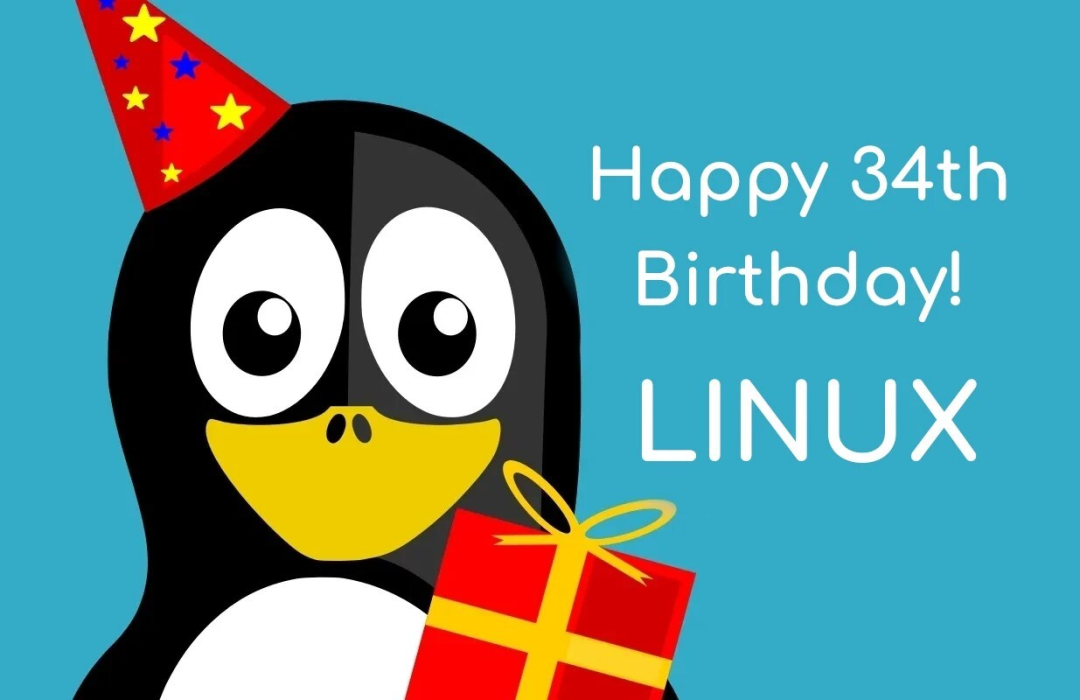
On August 25, 2025, Linux celebrated its 34th anniversary.
This day commemorates Linus Torvalds’ announcement of the project to the comp.os.minix newsgroup in 1991.
This milestone has sparked celebratory posts and retrospectives in the open-source community and media outlets.
Today, Linux supports a wide range of devices and services in the digital world.
Historical Background
On August 25, 1991, Linus Torvalds introduced his free operating system project on the comp.os.minix Usenet newsgroup, thus initiating the development of the Linux kernel. The community designated August 25 as Linux’s birthday; in 2025, it turns 34. Over the past three decades, Linux has evolved into a pillar of modern computing, running on servers, Android mobile platforms, and countless embedded devices.
Did you know?
The original Linux announcement was posted on the comp.os.minix Usenet newsgroup — a forum Linus used to share his early work.
Quick Q&A
Why is August 25 considered Linux’s birthday?It marks the day Linus Torvalds announced the project in 1991, and in 2025, it signifies 34 years.
How did the community celebrate the 34th anniversary?Publications and users shared birthday wishes and reflections, including Linux Magazine, Tux Machines, SUSE’s blog, and several Reddit posts.
Where did Torvalds first introduce Linux to the world?On August 25, 1991, in the comp.os.minix Usenet newsgroup.
Google Develops Developer Verification for Sideloading Settings
Starting next year, Google will require that Android apps can only be installed on certified Android devices after registering as verified developers, even if distributed through channels outside of Google Play.
The company views this move as a security measure, citing analysis that shows “malware from sideloading sources on the internet is over 50 times more prevalent than apps provided through Google Play,” and will begin rolling it out in a few select countries.
This change targets apps installed on “certified” devices and is unrelated to the content review of the apps themselves.
Historical Background
Android has traditionally allowed sideloading apps by enabling the option to install from “unknown sources,” differentiating it from platforms that restrict installations to official stores. Over time, Google has added Play Protect and additional warnings to mitigate malware risks while still allowing sideloading on most devices.
Did you know?
According to Google’s announcement cited by OSNews, the verification requirement will initially roll out in a few select countries and then expand gradually.
Technical Details
Certified Android Devices:Devices that meet Google’s compatibility requirements and include Google Mobile Services; policies for “certified” devices typically apply through these services.
Sideloading:Installing APKs from outside the Play Store (e.g., websites, F-Droid, GitHub), which historically increased user control but may raise security risks.
Developer Verification:Google will require verification and a $25 registration fee, even for developers distributing solely through third-party channels, aiming to associate apps with known entities.
Quick Q&A
Does this policy apply to all Android devices?Google states it applies to “certified Android devices”; the article does not specify the impact on uncertified devices.
When and where will verification begin?Starting next year, initially in a few select countries.
What do developers need to provide?Verification and a $25 registration fee, even for distribution outside of Google Play.
KDE Details Features of Plasma 6.5 and Seeks Feedback
KDE developers are working on Plasma 6.5, set to release in October, focusing on initial system setup for OEMs and desktop improvements, such as enhanced notifications and sound theme adjustments.
The work on the Plasma virtual keyboard aims to enhance on-screen keyboard support for computers, mobile devices, and TVs, with the team inviting community feedback on KDE Discuss.
Event Timeline
❶ August 23, 2025 Weekly update highlights the new KDE initial system setup tool
❷ October 2025 Target release window for Plasma 6.5 based on development coverage
Did you know?
The promotion of the virtual keyboard is part of KDE’s “We Care About Your Input – KDE Goals” initiative, with developers actively gathering ideas on KDE Discuss.
Technical Details
Initial System Setup:A first-time setup wizard designed for OEM pre-installation and simplified onboarding, integrated into Plasma’s settings process.
Plasma Virtual Keyboard:Enhancing on-screen keyboard support across desktop, mobile, and TV form factors under the “We Care About Your Input” KDE Goals initiative.
Desktop Optimization:Notification behavior, sound theme adjustments, accessibility tweaks, and bug fixes contribute to the overall optimization of 6.5.
Quick Q&A
When is KDE Plasma 6.5 expected to be released?KDE development updates indicate a release window of October 2025.
What improvements does Plasma 6.5 emphasize?It emphasizes improved notifications, sound theme adjustments, accessibility updates, and bug fixes across the desktop.
What is the focus of the Plasma virtual keyboard work?Enhancing on-screen keyboard support for computers, mobile devices, and TVs, with KDE inviting feedback through KDE Discuss.
Linux Foundation Welcomes Agentgateway; OPEA Increases Protections
The Linux Foundation welcomes the Agentgateway project, aimed at accelerating the adoption of AI agents by focusing on security, observability, and governance.
The Foundation’s OPEA initiative has also released new GenAI code examples, increasing protections and supporting the AMD EPYC platform.
Complementing these efforts, openSUSE has released a practical guide on building edge AI infrastructure using KVM, openSUSE Leap 15.6, K3s, and Ollama for local inference, emphasizing privacy and reduced latency.
Event Timeline
❶ Not specified in source Linux Foundation welcomes the Agentgateway project
❷ Not specified in source OPEA announces new GenAI code with protections and AMD EPYC support
❸ August 26, 2025 openSUSE releases a guide for building edge AI using KVM, Leap 15.6, K3s, and Ollama
Historical Background
Open-source foundations like the Linux Foundation have long served as neutral venues for industry collaboration on shared infrastructure, achieving standardization and interoperability among vendors. OPEA has been identified as a subproject of the Linux Foundation, focusing on open solutions for enterprise generative AI, reflecting this collaborative model. Lightweight Kubernetes distributions like K3s have emerged to bring container orchestration to resource-constrained and edge environments, aligning with today’s edge AI use cases.
Did you know?
The openSUSE edge AI guide explicitly identifies Leap 15.6 as the base operating system for KVM and K3s setups.
Technical Details
Agentgateway Layer:A layer for aggregating and routing AI agent traffic designed with security, observability, and governance requirements in mind to support enterprise adoption.
Protections in GenAI:Policies and security constraints that limit model behavior; OPEA’s updates increase protections and support for the AMD EPYC platform to expand secure, high-performance deployments.
Edge Stack Components:KVM provides virtualization; openSUSE Leap 15.6 serves as the host operating system; K3s is a lightweight Kubernetes for edge; Ollama runs local AI inference close to the data.
Quick Q&A
What problem does Agentgateway aim to solve?It aims to aggregate AI agent traffic securely, observably, and in a controlled manner to accelerate enterprise adoption.
What new features does the latest version of OPEA include?The new GenAI code examples increase protections and support for the AMD EPYC platform.
What components support the openSUSE edge AI setup?KVM virtualization, openSUSE Leap 15.6, K3s for orchestration, and Ollama for local AI inference.
Red Hat Releases TuneD 2.26 for Linux
Red Hat has released TuneD 2.26, an updated version of its Linux tuning tool that monitors the system and adaptively adjusts power and performance profiles.
This version fixes issues with tuned-ppd, hotplug handling, and inotify monitoring, aimed at improving stability and reducing performance degradation.
Notable changes include renaming and now defaulting to the ACPI sysfs monitor and a new startup_udev_settle_wait configuration option.
Technical Details
Tuning Profiles:A curated set of kernel, service, and system settings that balance power consumption and performance under specific workloads or hardware; TuneD applies and adjusts these settings at runtime.
Inotify Monitoring:Linux’s inotify notifies user-space file system events; fixing errors in monitoring and fixing virtual files prevents unnecessary triggers that slow down the system.
Hotplug Race Conditions:Concurrent errors that occur when devices are added/removed; resolving race conditions during removal improves device handling stability during dynamic hardware changes.
Quick Q&A
What is TuneD used for on Linux systems?TuneD delivers and manages tuning profiles that monitor and adaptively adjust the system power and performance characteristics of hardware and software components.
What are the most significant changes in TuneD 2.26?Major changes include renaming and enabling sysfs_acpi_monitor, fixing inotify performance issues related to fixed virtual files, resolving hotplug device removal race conditions, and a new startup_udev_settle_wait option in tuned-main.conf.
Who will release the new TuneD version?Red Hat’s performance team will release TuneD 2.26.
Linux Foundation Welcomes DocumentDB; AWS Joins Project
At the European Open Source Summit in Amsterdam, the Linux Foundation announced that the DocumentDB project will join the Foundation to advance open, developer-first NoSQL document database technology.
Microsoft is donating DocumentDB for vendor-neutral governance, and AWS has stated it has joined the project to help build interoperable open-source document database technology.
Event Timeline
❶ 2025 Linux Foundation announces DocumentDB’s joining during the European Open Source Summit in Amsterdam.
❷ 2025 Microsoft donates/entrusts DocumentDB for vendor-neutral governance.
❸ 2025 AWS announces it has joined the project to help build interoperable open-source document database technology.
Historical Background
Document databases store semi-structured data as independent documents (often JSON), providing flexible schemas compared to relational tables. The open-source ecosystem has a long history of thriving under the management of neutral governance foundations, attracting diverse contributors and reducing single-vendor control.
Did you know?
At the same event in Amsterdam, the Linux Foundation also announced the establishment of a new Developer Relations Foundation focused on DevRel practices.
Technical Details
Document Database:A database that stores data as documents (often JSON), providing developers with flexible schemas and rapid iteration.
Interoperability Goals:The project aims to provide interoperable open-source document database technology so that tools and applications can work consistently across different implementations.
Neutral Governance:Hosting under the Linux Foundation provides a vendor-neutral structure that helps standardize interfaces and encourages broad community contributions.
Quick Q&A
Who are the participants in the DocumentDB project so far?Microsoft has donated the project to the Linux Foundation, and AWS has announced its participation to help build interoperable open-source document database technology.
What are the main technical goals of the project?To advance interoperable open-source document database technology with a developer-first focus under neutral governance.
Where was the announcement made?The announcement was made during the European Open Source Summit in Amsterdam in 2025.
LinuxLinks Lists 22 Viewers and 12 CLI Encryptors
LinuxLinks has published an overview recommending 22 free open-source PDF viewers and 12 CLI-based file encryption tools for users, providing a curated selection for daily reading and secure file handling.
Tecmint highlights seven free Odoo applications for Linux users in 2025, describing Odoo as open-source enterprise software that values flexibility and data privacy for teams.
TuxMachines has published an article emphasizing free open-source software and related standards.
Event Timeline
❶
Did you know?
LinuxLinks runs a popular series highlighting the best free open-source Linux software across various categories.
Technical Details
CLI Encryption:Command-line tools typically support symmetric (single-key) and asymmetric (public/private key) encryption, enabling scripted, automated file protection in Linux environments.
PDF Viewers:Open-source PDF readers on Linux range from lightweight renderers to feature-rich editors, allowing users to balance speed, annotation, and accessibility needs.
Odoo Applications:The Odoo module integrates into a unified ERP, allowing the addition of applications to extend functionalities like CRM, inventory, or accounting without switching platforms.
Quick Q&A
How many Linux PDF viewers does LinuxLinks recommend?It lists 22 free open-source PDF viewers.
What type of encryption tools does LinuxLinks focus on?Command-line (CLI) file encryption tools for Linux.
Which platform’s applications does Tecmint highlight for Linux users?Seven free Odoo applications for Linux users in 2025.