Many people who have learned STM32 share a common characteristic: they can only use some representative hardware features, such as AD conversion, and can only perform single conversions, while they do not know how to perform loop or multiple conversions. Then they have to refer to the chip manual, but the problem is that the chip manual is based on registers, while we learn library functions. What should we do? This tutorial will teach you how to study STM32 while referring to the chip manual, of course, based on registers.
There is much debate in the community about whether to use registers or library functions; we will not comment on that, but we want to tell you one thing: the benefit of learning registers is not to improve performance but to better understand the internals of STM32. Once you know how to use the hardware, it actually doesn’t matter whether you use registers or library functions.
Another point is that many people say learning registers is very difficult; in fact, it is not. It can be very simple, and sometimes you will find it more straightforward and organized than library functions! Come on, let’s learn this “Nine Yin Manual” together.
Course Introduction:
Chapter One: Introduction to the Chip Manual and Establishing the First Project to Implement LED Blinking
Chapter Two: Detailed Explanation of GPIO and Implementing Button Functionality
Chapter Three: Implementation of Serial Port Transmission Function
Chapter Four: Timer Application (Polling Method)
Chapter Five: Interrupt Handling, Serial Port Reception, and Timer Interrupts
Chapter Six: Implementation of SPI
Chapter Seven: Timer Implementation of PWM Output
Chapter Eight: Implementation of AD Conversion
Chapter Nine: Implementation of DMA Functionality
Course Details:
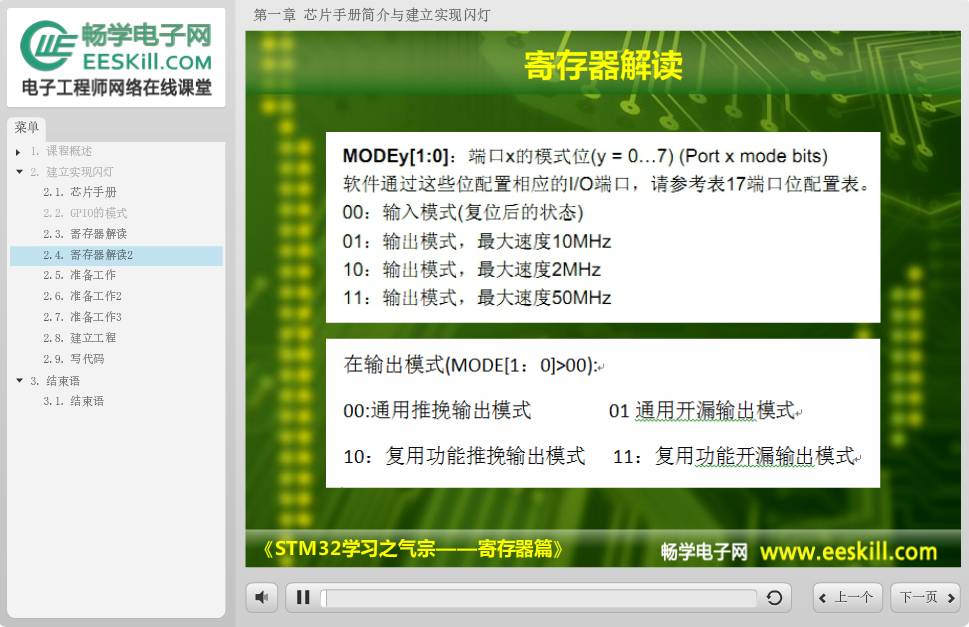
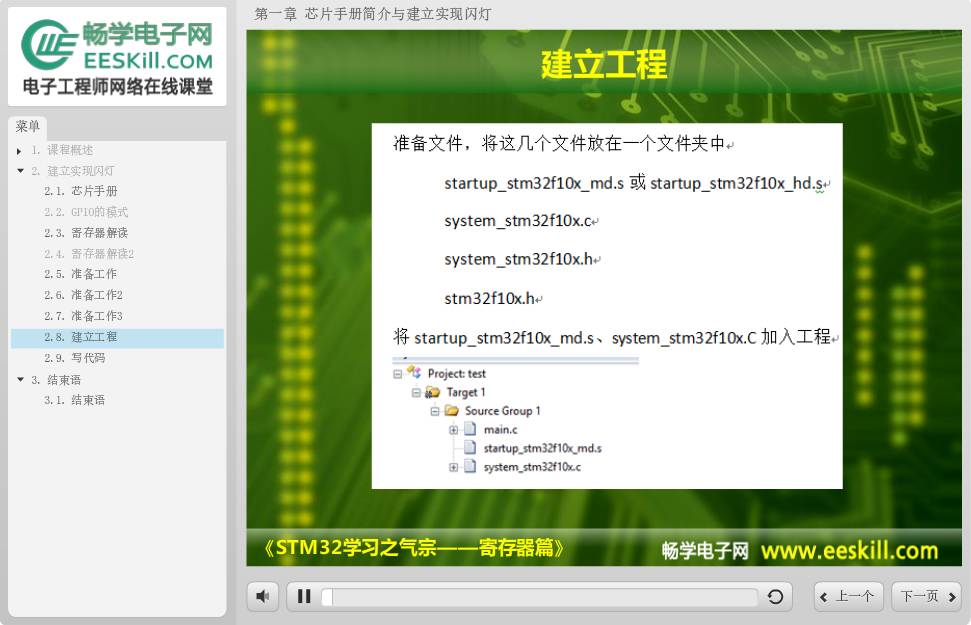
This set of course videos is in HD, with a clear directory structure and detailed graphic explanations. Below are some screenshots of the video pages.

Click “Read the Original” to log in to the Changxue Electronics website, and you can order online and study online.