I remember when I first started my job, I noticed that my colleague Wang would shut down his computer promptly at 5 PM, while I was stuck working overtime until 9 PM. It wasn’t until one late night of overtime that I caught a glimpse of a mysterious black window on Wang’s screen, where code was flowing like a waterfall—I later learned that this was called Python, and Wang was using 20 lines of code to accomplish what took me 3 hours to process in an Excel report.
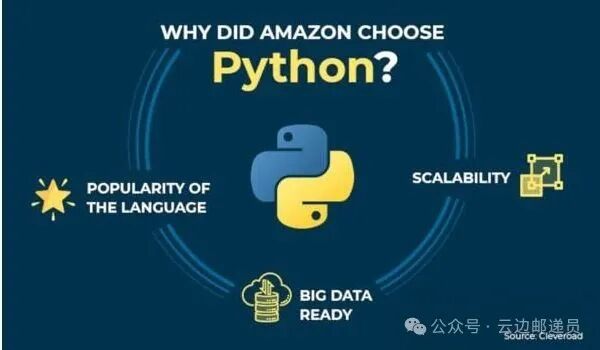
This is the first great gift Python offers to workers: delegate repetitive tasks to code and keep the leisure time for yourself. Lisa from the marketing department uses Python to scrape competitor data; what used to take a whole day to organize manually now generates reports before her coffee gets cold. Zhang from finance wrote an automatic reconciliation script; he used to work overtime until he was bald at the end of each month, but now he can pick up his daughter from school on time. Even HR has learned to use Python to filter resumes, automatically matching candidates with “985 + three years of experience,” saving time to focus on chatting about zodiac signs with the 95s on recruitment software.
Even more frightening is how simple this language is. If Java requires mastering the Shaolin staff technique and C++ demands the secluded training of Wudang swordsmanship, then Python is like a 9.99 yuan self-defense electric baton from the supermarket—no need to understand circuit principles, just press a switch to make work problems dance in place. At one training session, even an administrative assistant who only knew how to use WeChat for memes wrote a script that could automatically send birthday greeting emails, although the first run wished all 234 employees a happy birthday as “Scorpio Old Demon.”

But don’t be fooled by its friendly appearance. The world of Python hides two faces: one side has a charmingly simple syntax, like a skating rink where you can slip on a banana peel; the other side is a bottomless library ecosystem, where using any library feels like opening Doraemon’s fourth-dimensional pocket. Want to analyze data? The Pandas library can turn Excel into an abacus. Want to do artificial intelligence? Scikit-learn makes machine learning simpler than a milk tea recipe. Some even used Python to control a coffee machine, achieving a cyberpunk-style work experience of “the more the code crashes, the stronger the coffee.”
Of course, the learning journey is not without its soul-searching questions: when watching tutorials, you think, “Is that it?”; when writing code, you scream, “What is this?” One late night, I roared at my web scraping code: “Why can’t I ever crawl to the second page!” until I discovered the website used asynchronous loading—turns out I was not just defeated by Python, but also by the tricks of front-end engineers. But the joy of solving bugs is comparable to finding an unclaimed Bluetooth headset on the office carpet.
Now the whole company has divided into two factions: one faction consists of Python believers who can recite “import pandas as pd” smoother than the Heart Sutra, while the other faction insists, “I proudly handcraft Excel.” Recently, the boss has started shouting a new slogan at the annual meeting: “Employees who don’t know Python are not good stockholders”—after all, the most profitable business line in the company was actually a quantitative trading model created by a programmer using Python.
So the question arises: when your colleagues start using Python to slack off, and your boss starts using Python to make money, will you choose to be outperformed, or quietly open a tutorial to become the one who commands the computer with code, rather than being commanded by the computer, a “high-quality worker”?