Software Development Process:
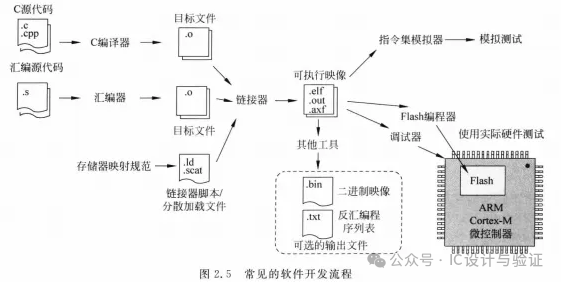
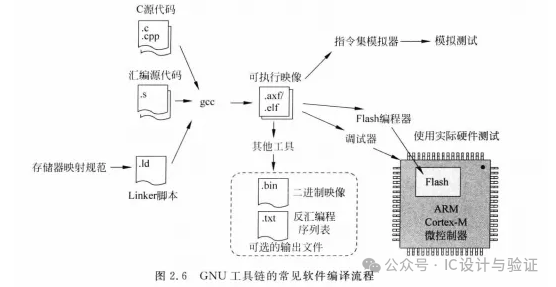
(1) Create a project, specifying the location of source files, compilation targets, memory configuration, and compilation options.
(2) Add files to the project.
(3) Set project options, such as compiler optimization options, memory mapping, and output file types.
(4) Compile and link.
(5) Flash programming, downloading the program to flash memory.
(6) Execute the program and debug (you can use the debugging environment in the IDE to halt the processor’s execution, check the system status, and confirm if it is functioning correctly. If the program does not work correctly, various debugging features such as step-by-step execution can be used).
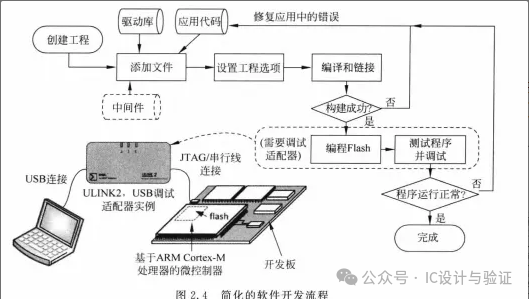
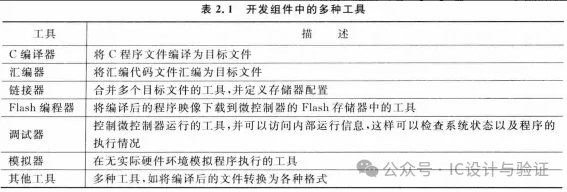
Compile the corresponding files.
Software Flow:
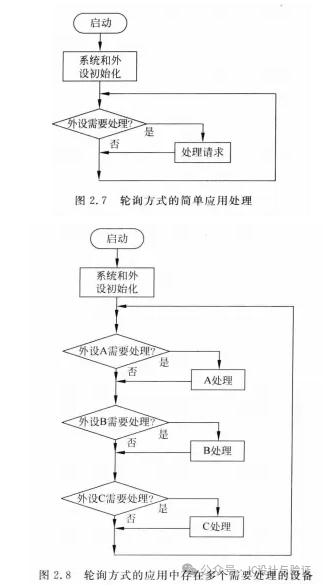
1. Polling: Suitable for simple applications, but has many drawbacks, such as complicated design and maintenance, as the system needs to continuously poll, making it difficult to define different priorities.
 2. Interrupt-driven: The microprocessor can be awakened from sleep mode using interrupts, and different interrupt priorities can be set.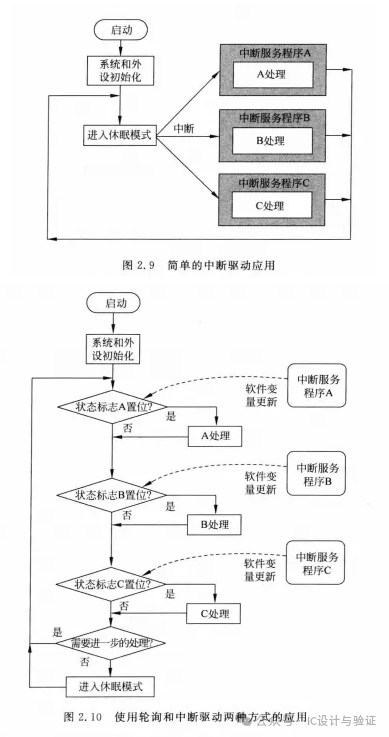
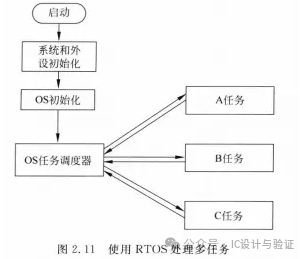
3. Multitasking System
A Real-Time Operating System (RTOS) can divide processor time into multiple time slices and allocate these slices to required processes, allowing multiple processes to execute simultaneously. A timer is needed to keep track of RTOS time, and at the end of each time slice, the timer generates a periodic interrupt that triggers the task scheduler to determine whether a context switch should occur.
 Data Types in C Programs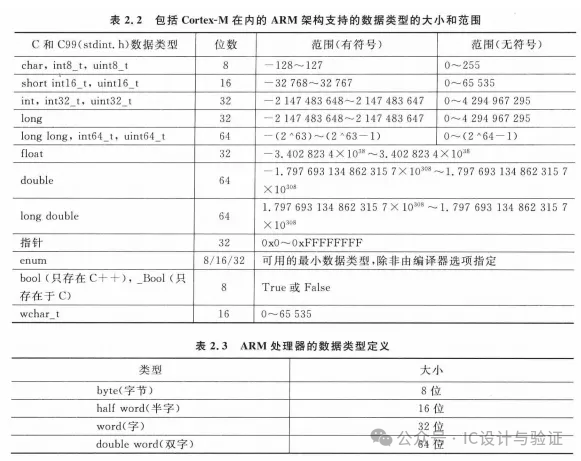
Input, Output, and Peripheral Access
Before using peripherals, initialization is generally required:
(1) Enable the peripheral clock.
(2) Configure the I/O pin operation mode, and possibly program other configuration registers.
(3) Peripheral configuration, most peripherals have multiple programmable registers that need to be configured before use.
(4) Interrupt configuration, if the peripheral requires interrupt operations, the processor’s interrupt controller NVIC needs to be programmed to enable interrupts and configure interrupt priorities.
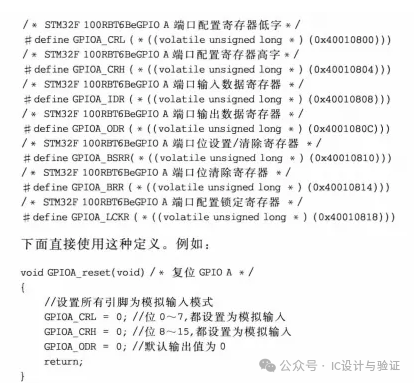
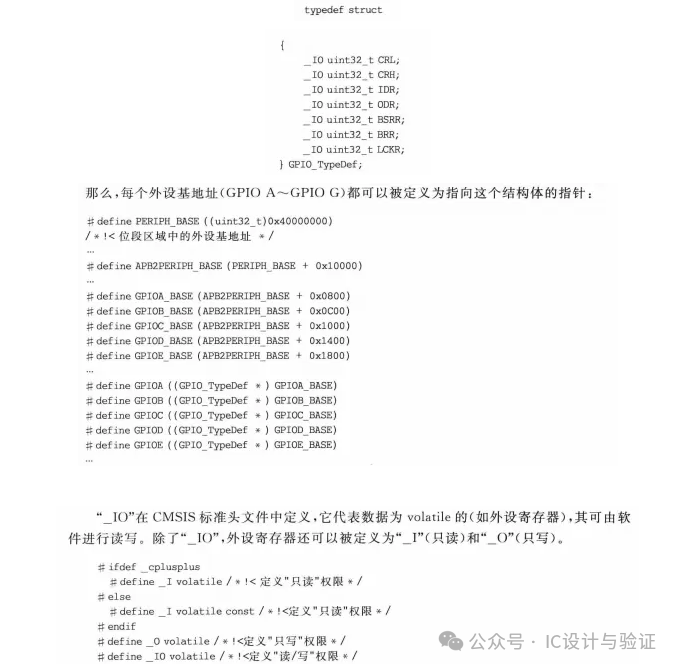
However, for a large number of peripheral registers, issues may arise because:
-
For each register address definition, the program needs to store a 32-bit address constant.
-
When the same peripheral has multiple instances, definitions are repeated.
-
Creating functions that share multiple instances of the same peripheral is difficult.
Microcontroller Interfaces
During program execution, the values captured by the ADC can be displayed using printf:
-
Using a character LCD display module connected to the I/O pins of the microcontroller.
-
Communicating with a simple UART to a terminal program running on a PC.
-
Setting the microprocessor’s USB interface as a virtual COM port to communicate with a terminal program running on a PC.
-
Communicating with the Instruction Trace Macrocell (ITM) and debugging software.
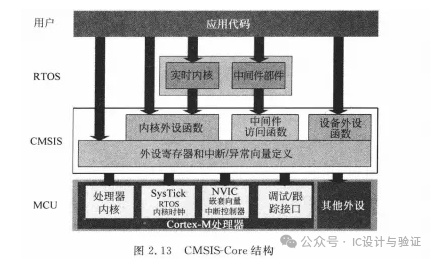
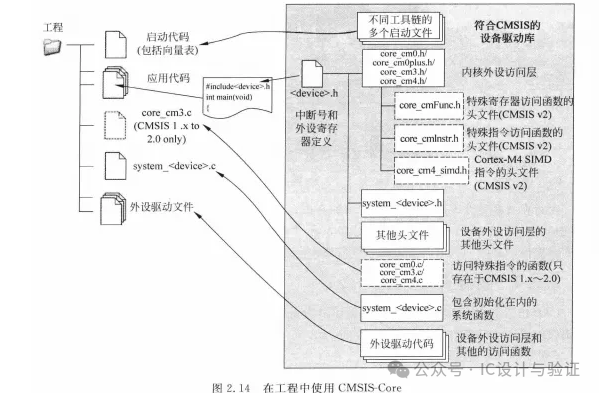
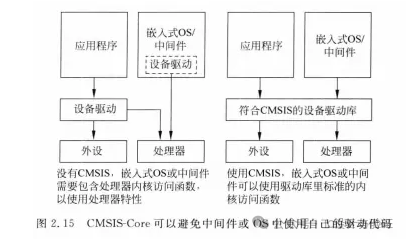
CMSIS