In the development of microservices architecture and distributed systems, message queues are an indispensable component. As a lightweight and high-performance message middleware, NATS has been widely used in many projects. For C++ developers, using a NATS client library is a key aspect of connecting systems.
Today, I would like to recommend a very powerful C++ NATS client library—CNATS. It is not only powerful but also has very high performance, making it ideal for scenarios that require handling a large number of concurrent messages.
This article will guide you through the usage of CNATS and demonstrate how it can easily help you achieve efficient message delivery through practical code examples.
📚 The C++ Knowledge Base has launched on ima! The current content covered by the knowledge base is shown in the image below👇👇👇
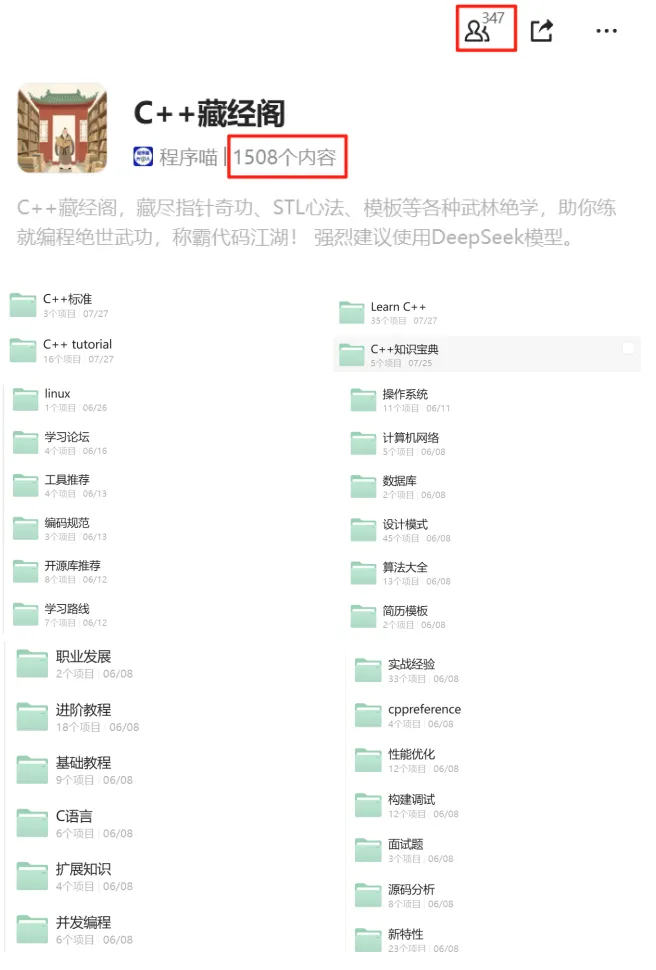
📌 Students interested in the knowledge base can add the assistant vx (cppmiao24) with the note 【Knowledge Base】 or click 👉 C++ Knowledge Base (tap to jump) to view the complete introduction of the knowledge base~
1. What is CNATS?
CNATS is a lightweight C++ library designed to provide C++ developers with the ability to interact with NATS servers. Compared to other NATS clients, CNATS better meets the needs of high-concurrency scenarios through its streamlined design and efficient implementation.
As a high-performance messaging middleware, NATS is widely used in microservices, IoT, real-time data streams, and other fields due to its simplicity, speed, and reliability. The CNATS library is specifically optimized for the C++ environment, allowing seamless connection to NATS servers and simplifying the process of sending and receiving messages.
2. Why Choose CNATS?
Among many NATS clients, why do I recommend CNATS? The following advantages are the reasons I believe it stands out:
- High Performance: CNATS is optimized for message sending and receiving, capable of stable operation in low-latency and high-concurrency scenarios.
- Simplicity and Ease of Use: CNATS provides a simple API that helps developers quickly get started, reducing the learning curve.
- Modern C++ Support: The library fully adheres to the C++11 standard, utilizing smart pointers, thread pools, and other modern C++ features, making the code cleaner and easier to maintain.
- Strong Compatibility: CNATS is compatible with the latest versions of NATS servers and supports publishing and subscribing to messages, as well as handling message callbacks.
3. How to Use CNATS?
Below is a simple example demonstrating how to use the CNATS client library for publishing and subscribing to messages.
Installing CNATS
First, you need to download and install CNATS from GitHub:
git clone https://github.com/nats-io/cnats.git
cd cnats
mkdir build
cd build
cmake ..
make
sudo make install
Publishing Messages
Here is a simple C++ example demonstrating how to publish messages to a NATS server using CNATS:
#include <iostream>
#include <cnats/cnats.h>

int main() {
    cnats::client client;

    // Connect to NATS server
    client.connect("nats://localhost:4222");

    // Publish message
    client.publish("subject1", "Hello, NATS!");

    std::cout << "Message published to subject1" << std::endl;

    client.disconnect();
    return 0;
}
Explanation: We first connect to the NATS server using the <span>client.connect()</span> method, and then use the <span>client.publish()</span> method to publish a message to the specified subject <span>subject1</span>. In this example, the message content is <span>"Hello, NATS!"</span>.
Subscribing to Messages
Here is an example of how to use CNATS to subscribe to a subject and receive messages:
#include <iostream>
#include <cnats/cnats.h>

void message_handler(const cnats::message& msg) {
    std::cout << "Received message: " << msg.data() << std::endl;
}

int main() {
    cnats::client client;

    // Connect to NATS server
    client.connect("nats://localhost:4222");

    // Subscribe to messages
    client.subscribe("subject1", message_handler);

    // Wait for messages
    std::cout << "Waiting for messages on subject1..." << std::endl;
    client.run();  // Enter event loop, waiting for messages

    client.disconnect();
    return 0;
}
Explanation: We subscribed to the <span>subject1</span> subject using the <span>client.subscribe()</span> method. When a message is received on that subject, the <span>message_handler</span> callback function is triggered, printing the received message content.
4. Performance of CNATS in High-Concurrency Scenarios
In high-concurrency messaging systems, performance is particularly important. CNATS enhances message delivery efficiency through the following aspects:
- Non-blocking I/O: CNATS uses non-blocking I/O to handle message reception and sending, avoiding thread blocking.
- Memory Management Optimization: CNATS employs efficient memory pooling and buffer management, avoiding frequent memory allocation and deallocation, thus reducing performance overhead.
- High Concurrency Support: CNATS utilizes a multithreading mechanism, ensuring rapid message delivery in high-concurrency scenarios.
For example, in a simple performance test, CNATS maintained low latency and high throughput while processing tens of thousands of messages per second, making it very suitable for high-concurrency, low-latency application scenarios.
CNATS is a high-performance, easy-to-use C++ NATS client library, particularly suitable for message communication in distributed systems and microservices architecture. Whether for publishing or subscribing to messages, CNATS provides you with an extremely simple interface and powerful performance support. If you are looking for an efficient message queue library, CNATS is undoubtedly an excellent choice worth trying.
I hope today’s sharing helps you understand how to utilize CNATS for efficient message delivery. If you have any questions, feel free to discuss in the comments section, and let’s learn together.
C++ Project Practical Training Camp
A 1v1 practical training camp designed for students preparing for campus recruitment and job changes, providing customized training plans, daily code reviews by mentors, resume optimization, and mock interviews with big companies, operating for 10 months, has already helped many students secure offers from major companies!
If you want to know more about the training camp, you can contact the assistant (vx: cppmiao24).
Recommended Reading:
Recommending a high-performance C++ OpenCL BLAS library: clblast
Recommending a powerful C++ optimization library: Ceres
Recommending a productivity-enhancing C++ library: ChaiScript