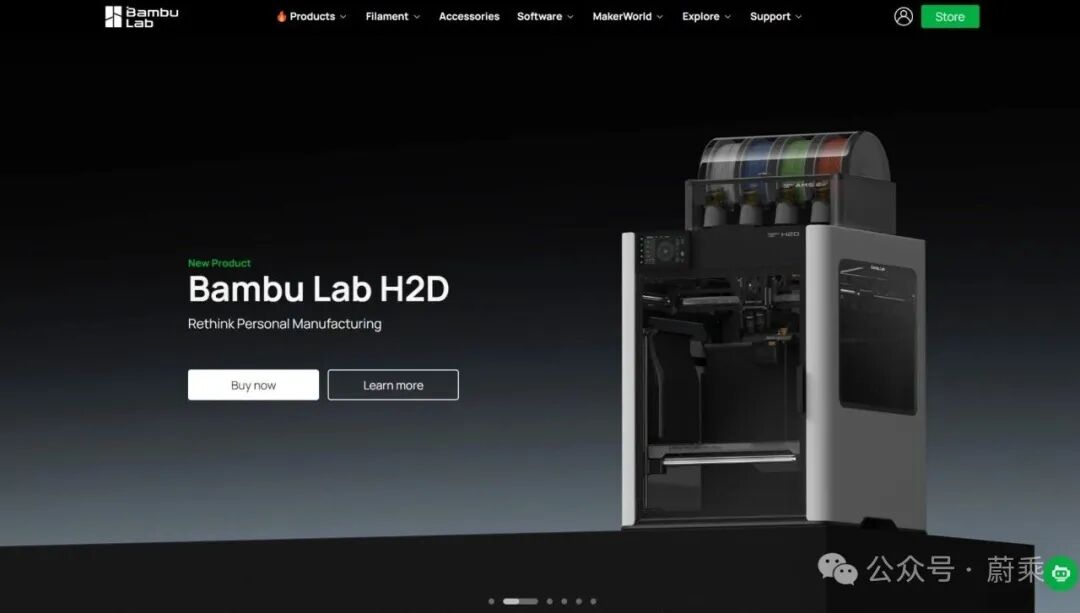
How did a Chinese company established just five years ago disrupt traditional industries with technology and become the focus of the global market? In November 2020, in several inconspicuous industrial parks in Nanshan, Shenzhen, Tao Ye quietly founded Bambu Lab with a group of engineers from DJI. At that time, few could have predicted that this startup would reach the pinnacle of the consumer 3D printing field five years later.
01
DJI Gene: The Starting Point of a Technological Dream
The founding team of Bambu Lab is a “dream team.” CEO Tao Ye is a PhD in fluid dynamics from Germany, who previously served as the head of DJI’s consumer drone division and product manager for the Mavic Pro. CTO Gao Xiufeng was the head of DJI’s innovation systems engineering department, specializing in embedded software systems and artificial intelligence; COO Liu Huaiyu was responsible for DJI glasses, digital FPV systems, and FPV drone products. The team also includes Chen Zihan, the chief engineer who was in charge of DJI’s cloud department, and Wu Wei, a computer engineering PhD from the University of Maryland. This luxurious configuration is top-tier even in Silicon Valley’s hardware startup scene.
Founder Tao Ye once said, “We have reached the peak of the global industry,” and this experience has given the team a far deeper understanding of hardware products than ordinary entrepreneurs. They chose a seemingly counterintuitive track—the desktop 3D printing field, which is generally considered to be in a state of “stagnation.”
The Bambu team found that 99% of 3D printing devices on the market were still stuck in the “monochrome slow stage,” with a usage threshold as high as that of PCs from the last century. After more than a year of nearly closed development, the X1 series was launched in 2022, achieving significant breakthroughs.
In terms of printing speed, it broke the limit of 500mm/s, five times the industry average at that time; its color capability achieved 16-color simultaneous printing, breaking the limitation of consumer-grade devices that generally only support monochrome; material compatibility was expanded to industrial-grade materials such as carbon fiber nylon, directly opening up the market space for industrial part replacements.
These parameters are not laboratory data but mass production standards. The X1 series sold out 6,000 units in the first month of its Kickstarter campaign, ultimately raising 47.28 million yuan, setting a record for consumer hardware startups. Time magazine highlighted it as the best invention of the year, emphasizing: “This is the first time an Asian company has redefined the benchmark based on performance rather than price.”
In 2025, Bambu launched the second-generation H2D printer, which once again attracted attention. The new printer’s speed exceeded 600mm/s and featured dual-head printing and laser engraving functions, ensuring safety and smoothness through AI technology. Within 10 days of its launch, online sales exceeded 2,000 units, generating at least 24 million in sales.
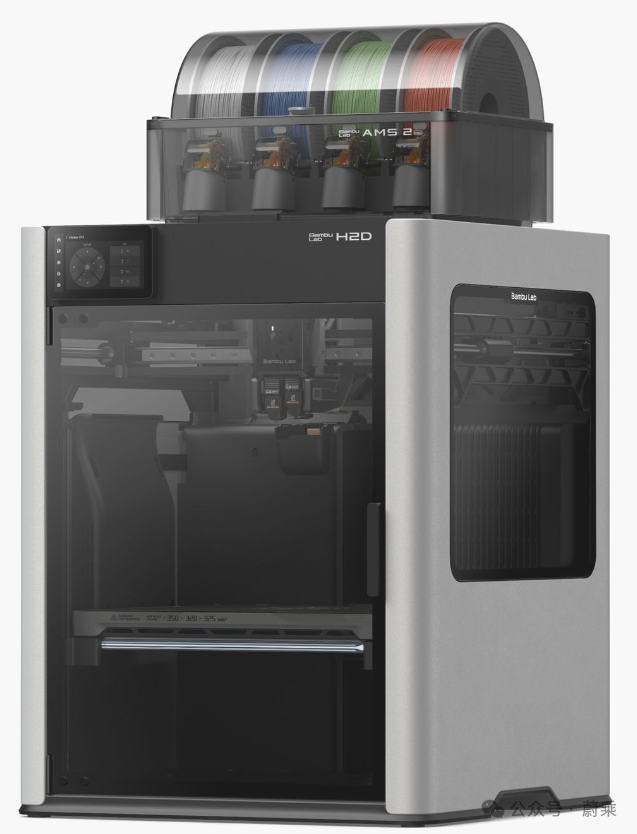
Bambu Lab H2D 3D Printer
Financial data shows that Bambu Lab’s revenue in 2023 was 2.7 billion yuan, with a net profit of 700 million yuan, a net profit margin of about 25%; revenue is expected to reach 5 billion yuan in 2024, with a net profit of nearly 1.25 billion yuan. After the launch of the new H2D product in 2025, monthly sales exceeded 50 million yuan, further driving annual performance growth.
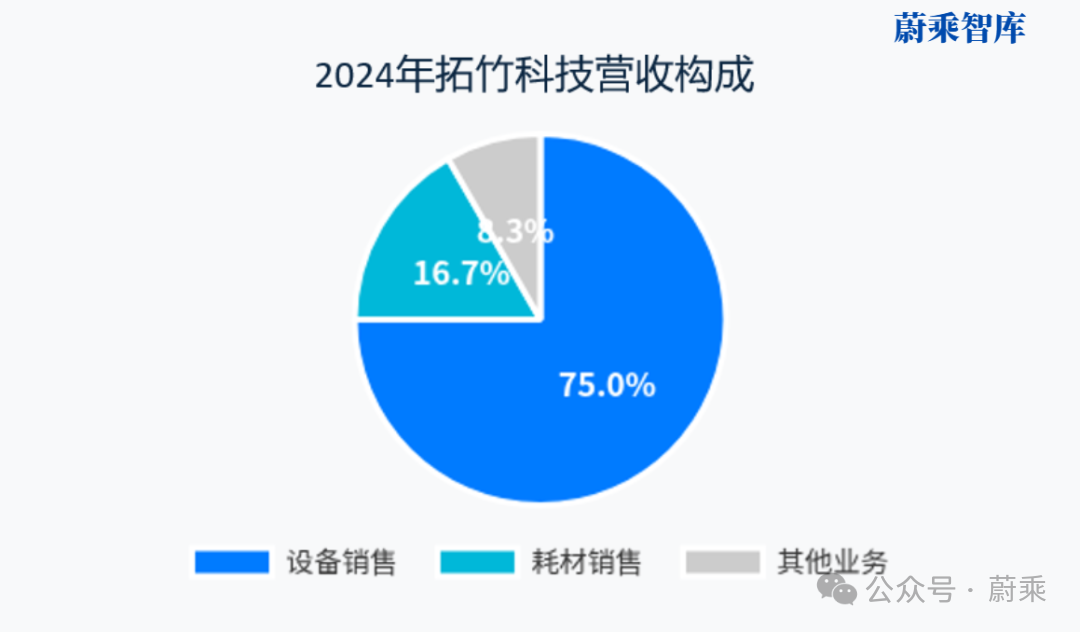
As of now, the company’s valuation far exceeds the $2 billion of its Series B funding, but the specific value has not been publicly disclosed. Bambu has completed three rounds of leapfrog financing.
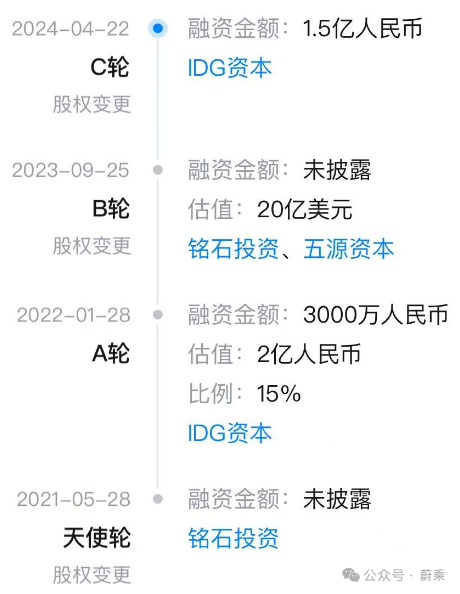
Bambu’s business model features a unique dual-drive characteristic of hardware sales + consumables and peripherals, with a high gross margin range of 30%, nearly 30% of revenue coming from consumables sales. “We are essentially a consumables company” positioning is becoming increasingly clear, contrasting sharply with the profit models of traditional hardware companies.
02
Going Global Strategy: An Unconventional Path to Globalization
Contrary to traditional perceptions, this nearly 5 billion revenue company has never focused on Amazon or increased resource investment. Under the strategic direction of “we need to fully control the user experience,” Bambu has built a unique globalization strategy.
The first move was to invest millions of dollars to create an independent Bambu Lab brand site. This decision was once questioned by investors as overly aggressive, but the results proved its value far exceeded expectations. The dynamic interactive page showcases the real-time process of multi-color printing; the MakerWorld community has accumulated millions of model downloads;ARPU (Average Revenue Per User) reached $1,200 (including accessories and consumables).
Bambu Lab significantly increased the average transaction value and long-term revenue through the binding sales of products and dedicated consumables, with consumables and peripheral products contributing nearly 25% of revenue, continuously validating the high activity and long-term value of users.
At the same time, the MakerWorld community ecosystem not only enhances user stickiness but also directly drives the demand for consumables. Relying on the independent site channel, the company effectively avoids third-party platform commission deductions, ensuring profit margins, combined with the brand premium brought by leading technology, jointly supporting its high-end product pricing strategy and high-profit model.
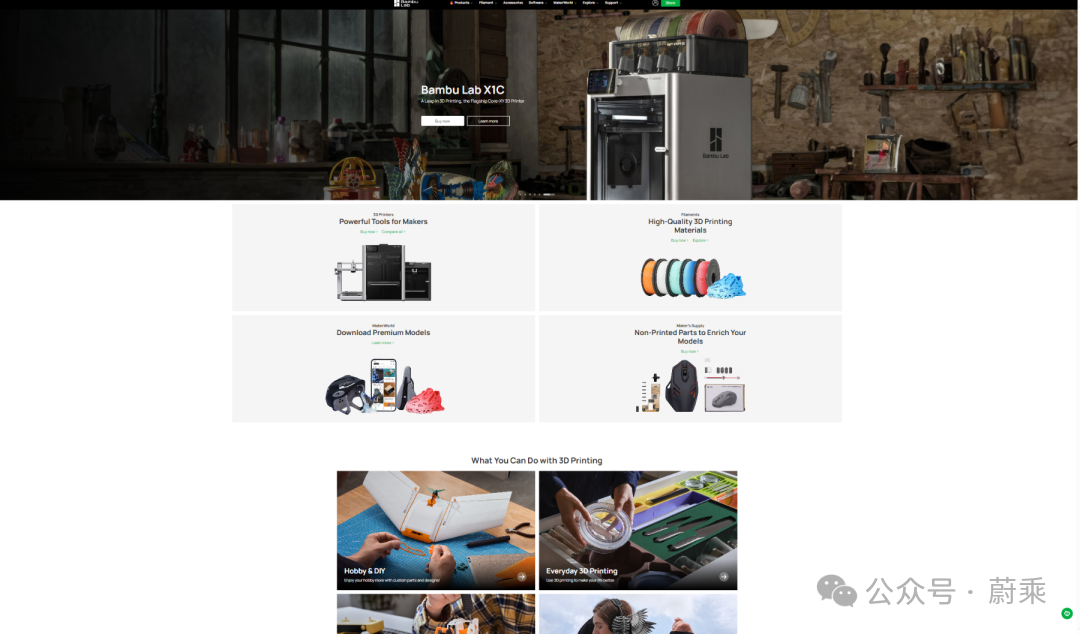
Bambu Lab brand independent site
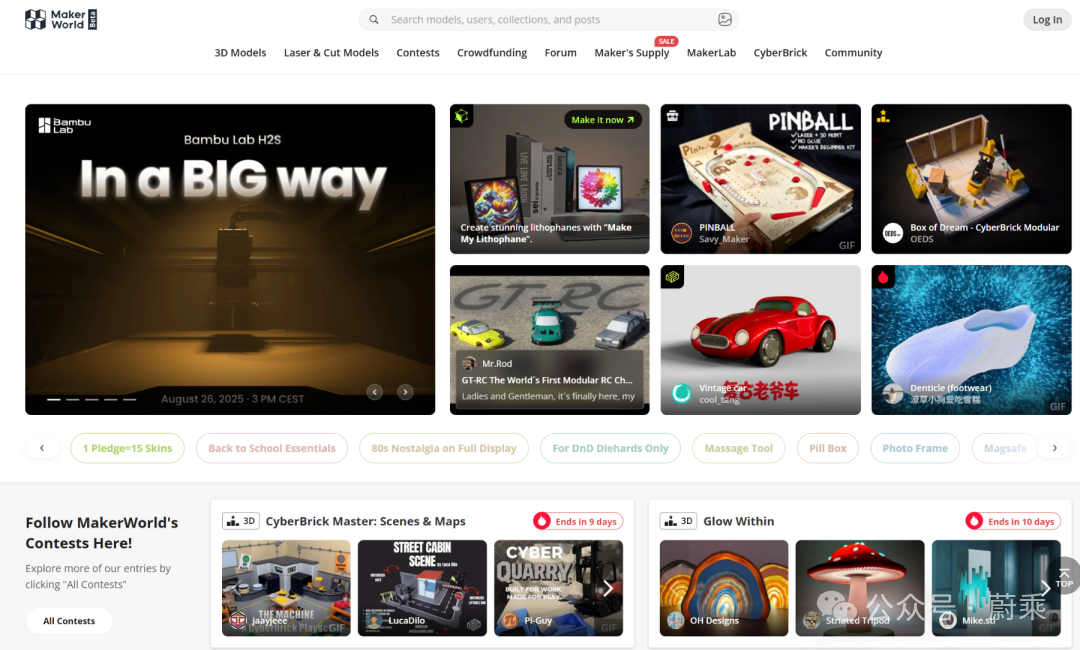
Bambu LabMakerWorld Community
In July 2025, the brand independent site traffic surged to 11 million, far exceeding the total of established competitors like Ultimaker. Direct access accounted for as high as 57.29%, indicating that the brand has a strong memory point and high loyalty.
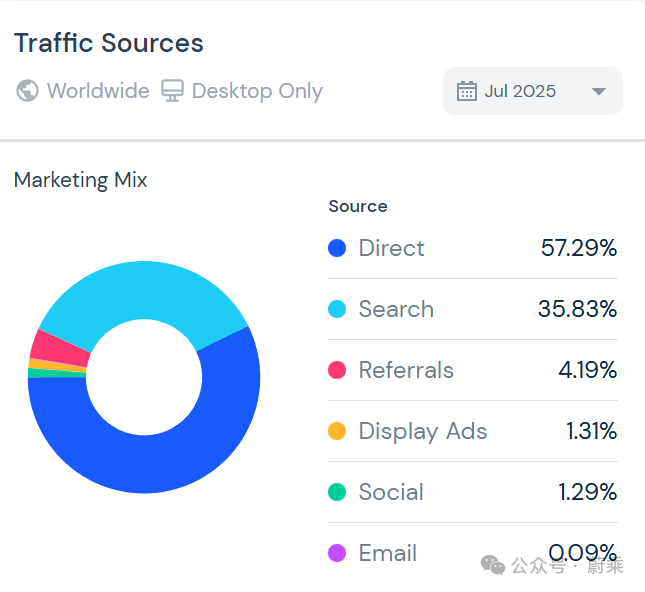
Traffic to the Bambu Lab brand independent site, source: Similarweb
The “MakerWorld” module embedded in the independent site connects three major links: content sharing, community interaction, and product conversion, transforming “purchase behavior” into “creation relationships.”
MakerWorld provides functions such as free model downloads and one-click distribution to YouTube or Facebook groups, forming a complete link of “browse → download → print → purchase,” allowing users to complete natural conversions in content consumption.
It is mainly divided into Chinese and international sites, with the international MakerWorld site gathering over 1 million registered users, with an average of over 100,000 model downloads per day, evolving from a free 3D model sharing platform into a leading global 3D printing maker community.
Because of this, Bambu Lab not only found its consumer users but also created a user communication ecosystem that is difficult for other brands to maintain. In just a few years, it has transformed from an “industry dark horse” into a “leading benchmark in 3D printing.”
03
Global Layout: Precisely Focusing on High-Premium Markets
According to industry forecasts, the global 3D printing market size will reach $29.29 billion by 2025, with North America and Europe remaining the core sources of incremental growth. Bambu Lab is expanding its global layout around the “high-premium market,” focusing on mature 3D printing countries such as the United States, Germany, Canada, and Italy.
Among them, the U.S. market accounts for 40% of brand revenue, leveraging local industry maturity and DIY culture as dual engines for brand sales and reputation. Europe accounts for 25%, making it the third-largest region for brand revenue.
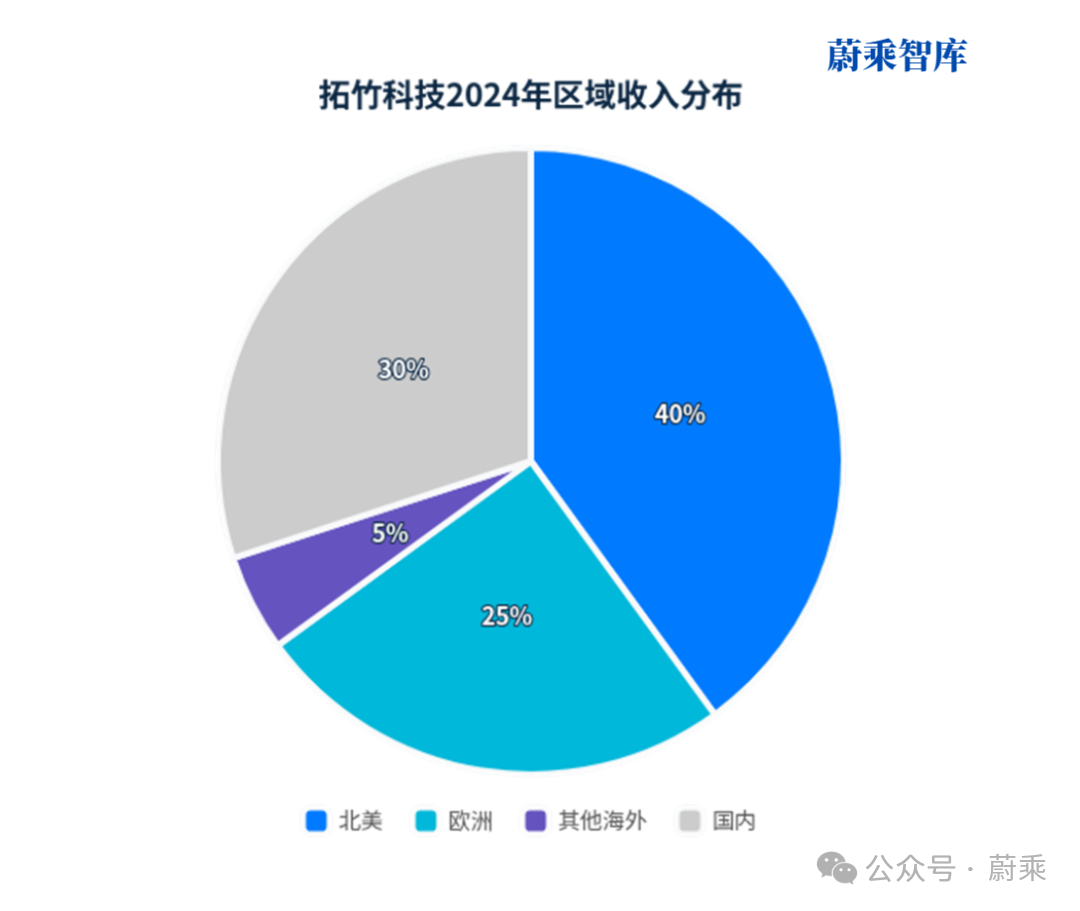
Bambu’s product pricing strategy also reflects its globalization layout thinking. The H2D product is priced at 11,999 yuan in China and $2,299 overseas.
Based on recruitment information, Bambu Lab’s strategic direction has clearly identified three points: the H2D series will integrate laser engraving functions to enter the processing market; SaaS software services aim for a 20% revenue share target; and the “Hundred Cities, Thousand Stores” plan is preparing to benchmark the Apple Store model in offline experience segments.
Looking back at this five-year leapfrog development case (2020-2025), Bambu Lab has at least broken three traditional perceptions:
First, the notion that “high-end equipment must start from OEM” has been disproven—directly building a brand and achieving a 30% premium capability has shocked the industry;
Second, the path that “hardware innovation relies on university transformation” has been overturned—the fact that all patents come from independent R&D by the company reshapes the understanding of the relationship between industry, academia, and research;
Third, the view that “the ToC market has little technical barriers” has been overturned—the practice of building a moat through algorithms opens up new ideas.
“True innovators never walk the path laid out by others.” In this sense, regardless of whether Bambu can sustain success in the end, its experience has already written a new footnote for China’s high-end manufacturing industry going global.
From a small factory in Shenzhen to global shelves, the story of Bambu Lab continues. For those entrepreneurs looking to break through in the hardware export field, this path is both valuable for reference and a reminder of the patience and meticulous effort required.
True brands excel at refining products, and true brands adhere to long-termism.