Click the “Public Account” above to subscribe!
As stylish and unique as the appearance of the Google Pixel 6 series, what is happening inside is even more exciting, as Google uses its self-developed SoC for the first time in its phones.
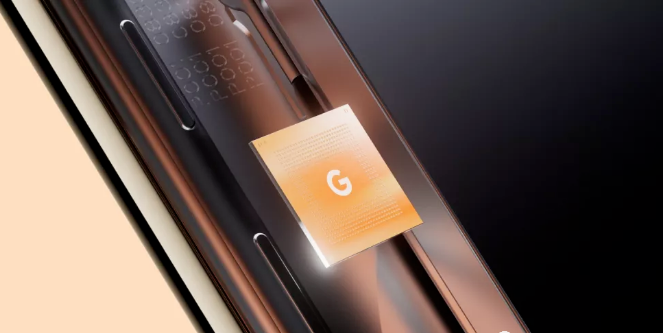
This is called Google Tensor, which made its debut not long ago, but details were sparse. Now we have a better understanding of it. Below we will detail what the Google Tensor chipset is and why it is the secret weapon for the Pixel 6.
Tensor is Google’s first processor designed specifically for Pixel phones. This second point is important because it means you probably won’t see this in any non-Pixel phones. It also means that Tensor is built from the ground up to fit the Pixel 6 series as closely as possible.
This contrasts sharply with Qualcomm’s Snapdragon chipsets that power most Android phones. With these, you will find the same chipsets in many phones, although in some cases Qualcomm may work with device manufacturers to use the chipset as much as possible, but its chipsets are usually closer to off-the-shelf options rather than truly customized options.
Google Tensor has two high-performance cores, two mid-cores, and four efficient cores, although Google has not detailed these cores. However, the company claims that the performance of the Tensor chipset is 80% faster than that of the Pixel 5. This is a significant number (the Pixel 5 is equipped with a mid-range Snapdragon 765G chipset).
Specifically, Google’s SoC is a 5nm octa-core design, divided into large, medium, and small cores. Leading the pack are two ARM Cortex-X1 cores running at 2.8GHz. This is noteworthy because Qualcomm’s flagship Snapdragon 888 chipset, which powers the Samsung Galaxy S21 and many other high-end phones, has only one X1 core. It will be interesting to see how much faster Tensor is in comparison.
Additionally, there is a custom TPU (Tensor Processing Unit) for AI, two mid-range cores (rumored to be older Cortex-A76 cores), and then four low-power cores (possibly the commonly used Cortex-55 design by Arm). The graphics will be powered by a 20-core GPU, along with a context core that can power environmental experiences, such as an always-on display, a private computing core, and a new Titan M2 chip to ensure security. There is also a dedicated image processing core to assist with Pixel’s signature photography.
It is still unclear why Google chose to use Cortex-A76 cores instead of the more modern Cortex-A78 (which are more powerful and energy-efficient). However, it is worth noting that the Snapdragon 765G in the Pixel 5 also used two Cortex-A76 cores as its main CPU cores.
Tensor focuses more on ensuring components work together rather than delivering peak performance individually. This may mean that it does not achieve the highest benchmarks, but it can work better in the real world.
Furthermore, Google has not directly compared it with competitors’ chipsets, and there is disagreement on whether it is stronger or weaker than the best alternative Android chipsets.
Google Tensor is not just about raw power. The design of Google Tensor considers machine learning and artificial intelligence on the device, allowing it to improve functions such as voice recognition and image processing, making translation, Google Assistant, camera, and other aspects of the phone faster and more accurate.
For example, this allows the Pixel 6 to use a new real-time translation feature to instantly translate messages and videos, meaning the camera can take better photos, even in low-light environments like starry nights, making you look closer to how you actually do.
Tensor also has a similar effect on video recording, providing more accurate and vibrant colors even when shooting 4K footage at 60fps.
Benefiting from Tensor, face detection when taking photos should also be faster and more accurate.
Google claims that Tensor will allow for improvements to existing features and new capabilities, such as the newly released motion mode, face de-blurring, and video voice enhancement mode.
The company also stated that it enables the Pixel 6 series to continually improve over time.
According to Google, compared to other chipsets, Tensor can do most of the work while also saving power, thus extending battery life.
Another thing Google touts is the security of this chipset.
Tensor has a secure core (which means sensitive tasks can run in a dedicated environment) and includes the Titan M2 security chip. Between the two, this makes the Pixel 6 series more resilient against attacks than previous models in the series.
In fact, Google claims that the Pixel 6 and Pixel 6 Pro have the most hardware security layers of any phone, with independent security lab tests showing it can withstand various high-tech threats, such as electromagnetic analysis, voltage spikes, and laser fault injection.
The Google Tensor chipset also allows the Pixel 6 to receive five years of security updates, while most other Android phones only receive a few years of security updates.
The last potential advantage of Google making its own chipsets is that it does not have to pay another company like Qualcomm, so by cutting out the middleman, it can ultimately save money. But in the end, there are still keywords.
While Google has not discussed the financials of Tensor, M. Brandon Lee of This is Tech Today recently argued that developing a new chipset takes a lot of time, and while it may ultimately save costs, they will not do so for several years.
Nevertheless, if they do, it could mean lower prices for phones or allow Google to invest that money into other technologies and features that could become future Pixels. But that is a benefit for another chipset and another time.
★ Click the end of the article [Read Original] to view the original link to this article!
Source: Semiconductor Industry Observation
Disclaimer: This article is a network reprint, and the copyright belongs to the original author. However, due to numerous reprints, it may not be possible to confirm the true original author, so only the reprint source is indicated. If there are any copyright issues, please contact us, and we will negotiate copyright issues or delete content in a timely manner! The content represents the author’s personal views and does not represent this public account’s endorsement of their views or responsibility for their authenticity.
Long press to recognize the QR code to follow us