Authors: Zhao Xinshi, Liu Di, Yang Kang, Simone Baldi
Affiliations: Technical University of Munich, Imperial College London, Southeast University
Article Status: Officially published in IEEE ITSC 2024
Article Link:
https://doi.org/10.1109/ITSC58415.2024.10919731
Lyapunov-Based Inverse Reinforcement Learning for Vehicle-Following Traffic Scenarios
1
Introduction
In the field of Intelligent Transportation Systems (ITS), understanding and simulating human driving behavior is one of the key challenges in achieving autonomous driving technology. Traditional vehicle-following models (such as OVM and IDM) are widely used but struggle to fully capture the complexity and randomness of human driving. From September 24 to 27, 2024, the 27th IEEE International Intelligent Transportation Systems Conference (ITSC 2024), a premier event in the field of intelligent transportation systems, will be held in Edmonton, Canada. The SOMLab team presented their paper titled “Lyapunov-based Inverse Reinforcement Learning for Vehicle-following Traffic Scenarios” at the 2024 IEEE Intelligent Transportation Systems International Conference, proposing an innovative data-driven approach that combines Inverse Reinforcement Learning (IRL) with control Lyapunov functions, providing new insights for modeling vehicle-following behavior.
2
Significance of the Research
1
Bridging the Gap Between Theory and Practice
Traditional models assume driver behavior is deterministic, while actual driving is filled with randomness and uncertainty. This paper introduces the concept of “bounded stability” through the incorporation of stochastic control theory and Lyapunov functions, avoiding the unrealistic asymptotic stability assumptions found in traditional methods.
2
Data-Driven Modeling Approach
The team utilized real traffic datasets (highD) to extract vehicle-following behavior parameters, transforming the problem into a solvable optimization problem through kernel regression and quadratic programming (QP), providing an efficient tool for data-driven driving behavior modeling.
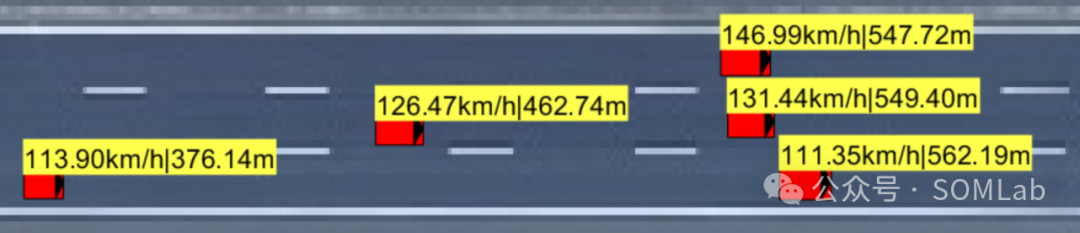
Figure 1 Visualization of the highD dataset
3
Advancing Autonomous Driving Technology
This research provides a more accurate method for mimicking human driving behavior for autonomous driving systems, helping to enhance the adaptability and safety of autonomous vehicles in complex traffic scenarios.
3
Highlights of This Work
1
Innovative Framework Design
1. An inverse reinforcement learning framework based on Lyapunov is proposed, modeling vehicle-following behavior as an optimal control problem, solved through data-driven constrained optimization.
2. The concept of “bounded stability” is introduced, aligning more closely with actual human driving performance and avoiding the limitations of traditional asymptotic stability assumptions.
2
Efficient Solving Method
1. The problem is transformed into quadratic programming (QP) using kernel methods, efficiently solved with standard optimization tools (such as MATLAB’s quadprog), significantly reducing computational complexity.
2. The feasibility of the method is validated, maintaining stability and robustness even in the presence of unmodeled dynamics and noise.
3
Experimental Validation and Comparison
1. Vehicle-following trajectories were extracted using the highD dataset, validating the effectiveness of the proposed method.
2. Compared with traditional linear quadratic control methods, results show that the proposed method aligns more closely with real driving data, especially in handling random disturbances and exogenous variables.
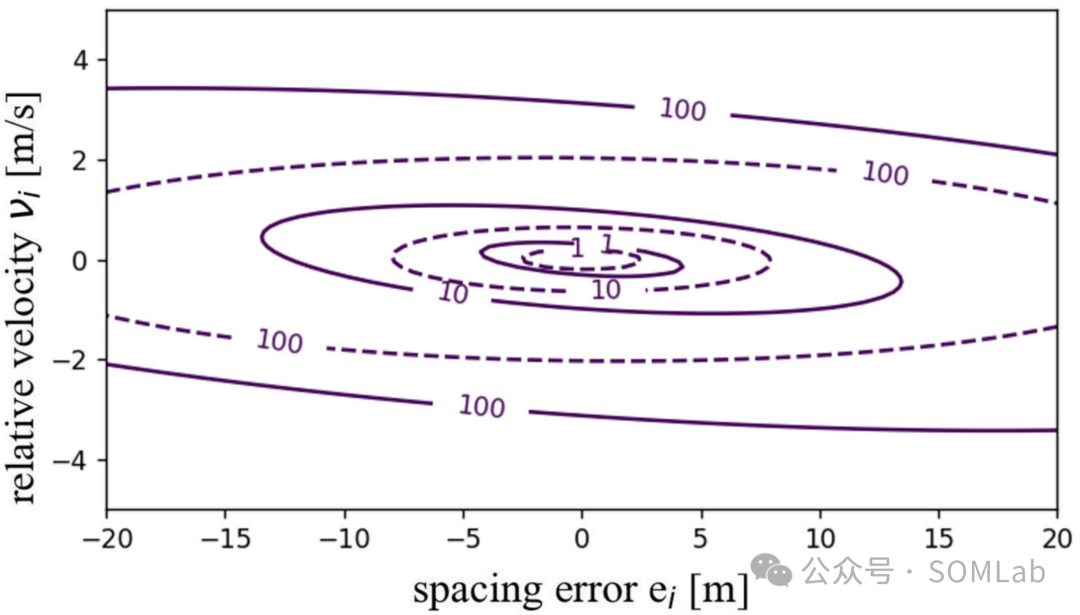
Figure 2 Quadratic value function sets obtained from linear quadratic control (solid line) versus the proposed kernel-based optimization (dashed line) value function sets
Future Outlook
This paper provides a new perspective for modeling vehicle-following behavior, which can be further extended to nonlinear dynamic scenarios and validated with more complex traffic datasets (such as intersection or urban road scenarios). Additionally, this method can be applied to multi-vehicle cooperative control and mixed traffic flow management, providing theoretical support for optimizing intelligent transportation systems.
Copywriter|Yang Kang
Typesetting|Su Dongdong
Review|Liu Di