As one of the most popular programming languages today, Python’s powerful ecosystem relies heavily on a rich set of third-party libraries. These libraries greatly extend Python’s capabilities, enabling developers to efficiently accomplish various complex tasks. This article will provide an illustrated introduction to several of the most important Python third-party libraries, helping readers better understand and utilize them.
1. NumPy – The Foundation of Numerical Computing
NumPy (Numerical Python) is the foundational library for scientific computing in Python, providing high-performance multidimensional array objects and related tools. It serves as the basis for almost all Python data science libraries.
Core Features of NumPy
The core of NumPy is the ndarray (N-dimensional array) object, which is more efficient than Python’s native list. NumPy arrays are stored contiguously in memory, allowing mathematical operations to leverage modern CPU vectorization instructions, significantly enhancing computation speed.
NumPy offers a vast array of mathematical functions, including basic arithmetic operations, trigonometric functions, logarithmic functions, and more. These functions are highly optimized and can operate directly on entire arrays, avoiding the overhead of Python loops.
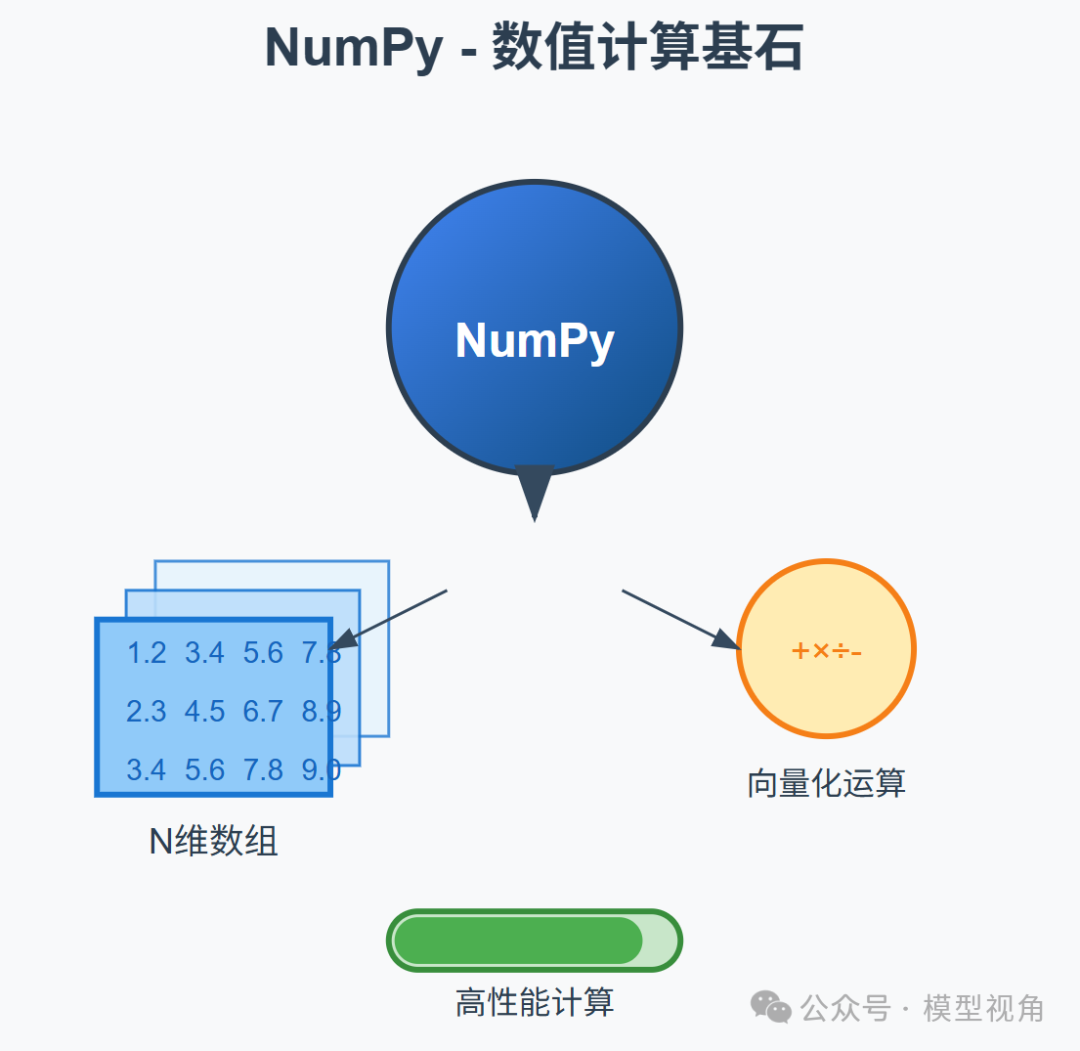
Application Scenarios
NumPy is widely used in scientific computing, machine learning, image processing, and other fields. It forms the foundation for libraries such as Pandas, Scikit-learn, and Matplotlib, and is utilized in nearly all data science projects.
import numpy as np

# Create a NumPy array
arr = np.array([1, 2, 3, 4, 5])

# Perform basic operations
arr_squared = arr ** 2
print(arr_squared)
2. Pandas – The Swiss Army Knife of Data Processing
Pandas is a data analysis and manipulation library built on top of NumPy, providing two primary data structures: Series (one-dimensional) and DataFrame (two-dimensional), making data cleaning, transformation, and analysis straightforward and intuitive.
Core Data Structures
Series is similar to a one-dimensional array with labels, while DataFrame resembles a spreadsheet or SQL table. These data structures support various data types and offer powerful indexing capabilities.
Powerful Data Manipulation Capabilities
Pandas provides a rich set of data manipulation functions, including data reading and writing, cleaning, merging, grouping, and pivot tables. It can handle missing data, perform complex data transformations, and is compatible with various data formats such as CSV, Excel, JSON, and databases.
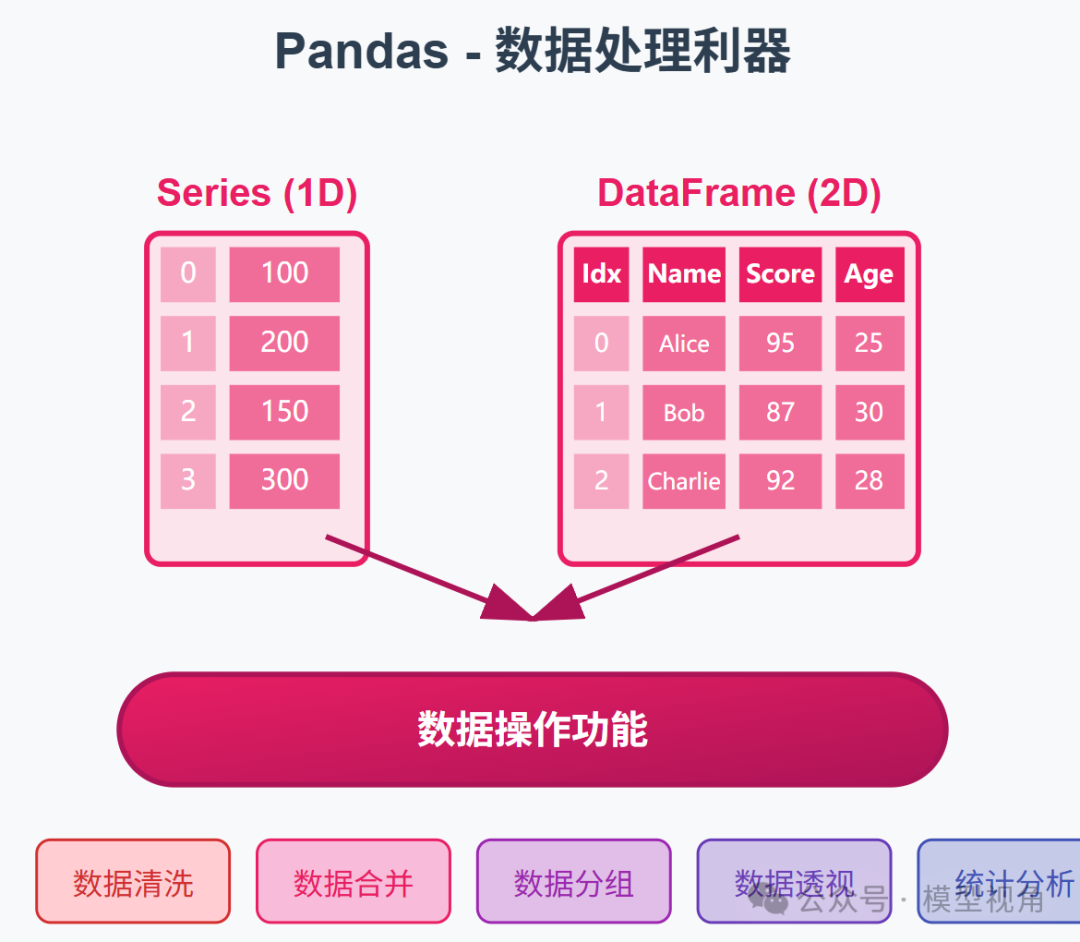
Position in Data Science
Pandas is an indispensable tool in the data science workflow. From data collection to cleaning, from exploratory data analysis to feature engineering, Pandas provides robust support throughout.
import pandas as pd

# Create a DataFrame
data = {'Name': ['Alice', 'Bob', 'Charlie'],
        'Age': [25, 30, 35],
        'City': ['New York', 'Los Angeles', 'Chicago']}
df = pd.DataFrame(data)

# Filter for people older than 30iltered_df = df[df['Age'] > 30]
print(filtered_df)
3. Matplotlib – The Artist of Visualization
Matplotlib is the most mature and comprehensive plotting library in Python, providing a MATLAB-like interface for creating a variety of static, dynamic, and interactive visualizations.
Rich Variety of Chart Types
Matplotlib supports nearly all types of charts, from basic line plots, scatter plots, and bar charts to complex 3D graphics and animations. Its pyplot module offers an easy-to-use interface, while the object-oriented API provides finer control.
Highly Customizable
Every element of a Matplotlib chart can be precisely controlled, from axes, labels, colors to font styles. This allows users to create publication-quality charts.
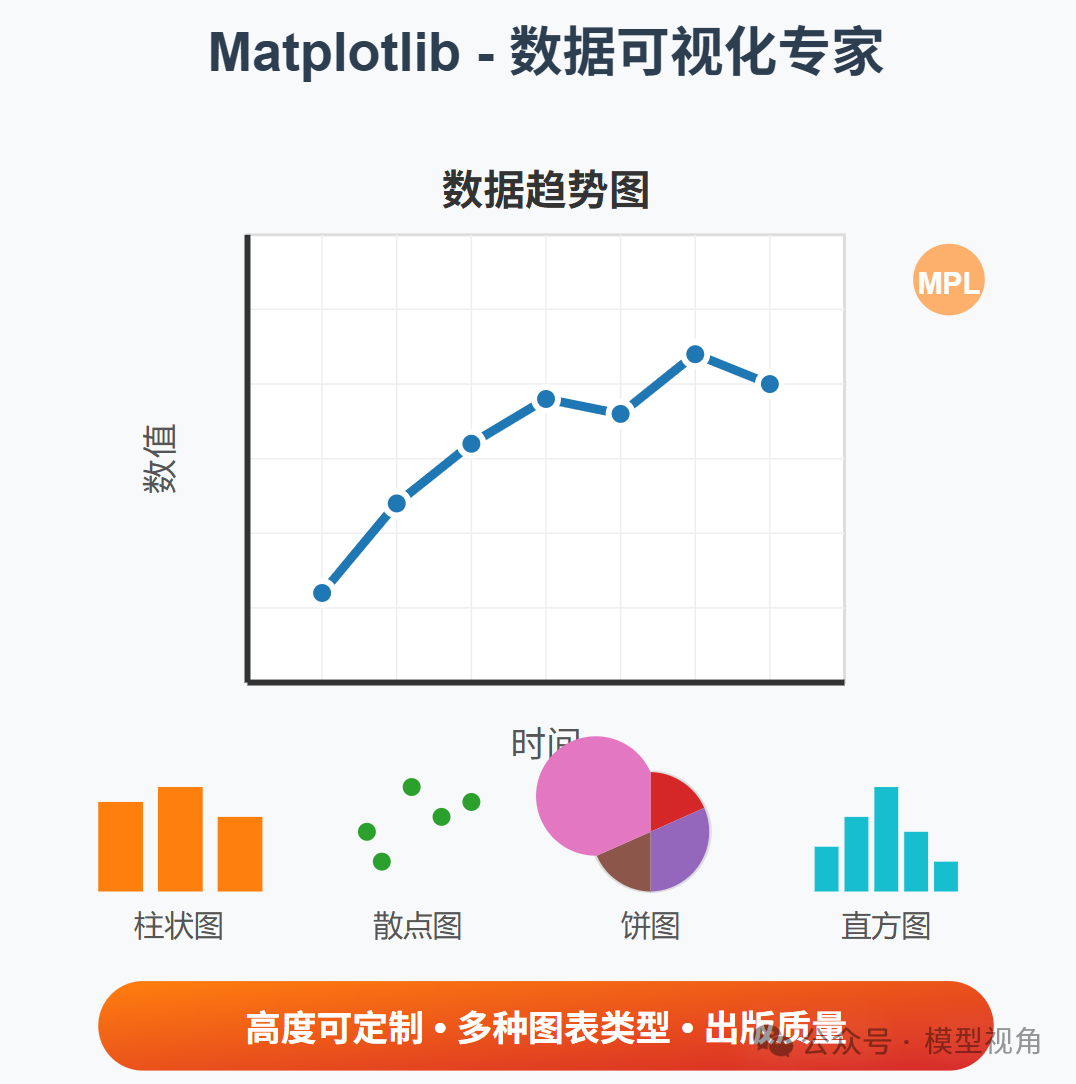
Integration with Other Libraries
Matplotlib is deeply integrated with libraries like NumPy and Pandas, allowing direct plotting of NumPy arrays and Pandas data structures. It also serves as the foundation for many other visualization libraries (such as Seaborn).
import matplotlib.pyplot as plt

# Data
x = [1, 2, 3, 4, 5]
y = [1, 4, 9, 16, 25]

# Plot line chart
plt.plot(x, y)
plt.title('Simple Line Chart')
plt.xlabel('x-axis')
plt.ylabel('y-axis')
plt.show()
4. Requests – An Elegant Solution for HTTP Requests
The Requests library is hailed as “an HTTP library designed for humans,” greatly simplifying the process of handling HTTP requests. Compared to the urllib in Python’s standard library, Requests offers a more concise and intuitive API.
Simplified API Design
The design philosophy of Requests is to make HTTP requests simple. It provides intuitive methods for sending GET, POST, PUT, DELETE, and other HTTP requests, and automatically handles many complex details such as connection pooling, SSL verification, cookies, etc.
Powerful Feature Set
Requests supports session objects, file uploads, streaming downloads, proxy settings, timeout control, and other advanced features. It can also automatically decode content and handle various authentication methods, making network programming exceptionally simple.
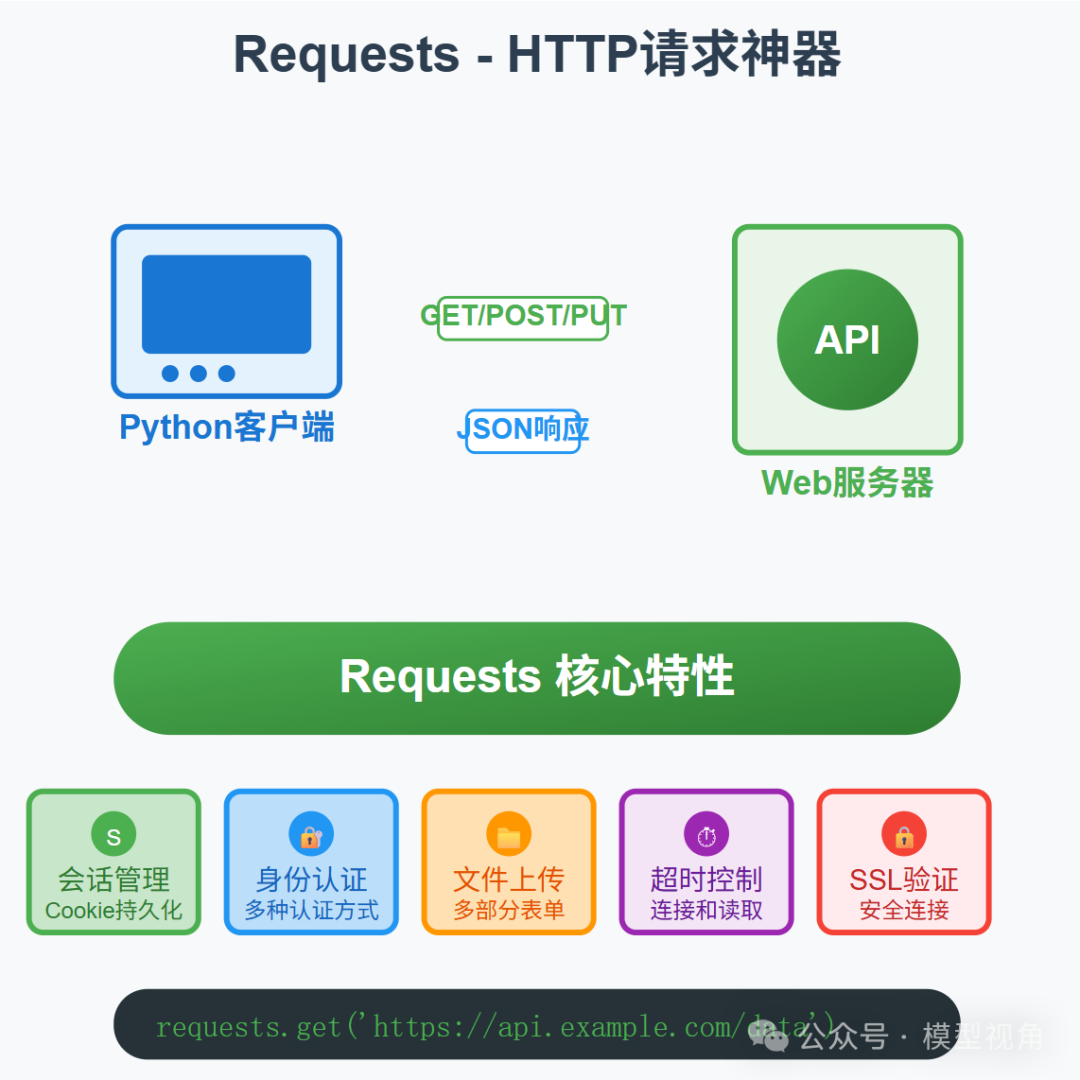
Preferred Choice for Web Development and Crawling
Whether building API clients, performing web scraping, or integrating with third-party services, Requests is the tool of choice for Python developers.
import requests

# Send GET request
response = requests.get('https://jsonplaceholder.typicode.com/posts')
print(response.text)
5. Scikit-learn – A Treasure Trove for Machine Learning
Scikit-learn is the most popular machine learning library in Python, providing simple and efficient tools for data mining and data analysis. It is built on NumPy, SciPy, and Matplotlib, offering a unified interface for various machine learning algorithms.
Rich Collection of Algorithms
Scikit-learn includes algorithms for classification, regression, clustering, dimensionality reduction, model selection, and preprocessing. From simple linear regression to complex random forests and support vector machines, it covers a wide range.
Unified API Design
All Scikit-learn estimators follow the same API pattern: fit() for training models, predict() for predictions, and transform() for data transformations. This consistency greatly reduces the learning curve.
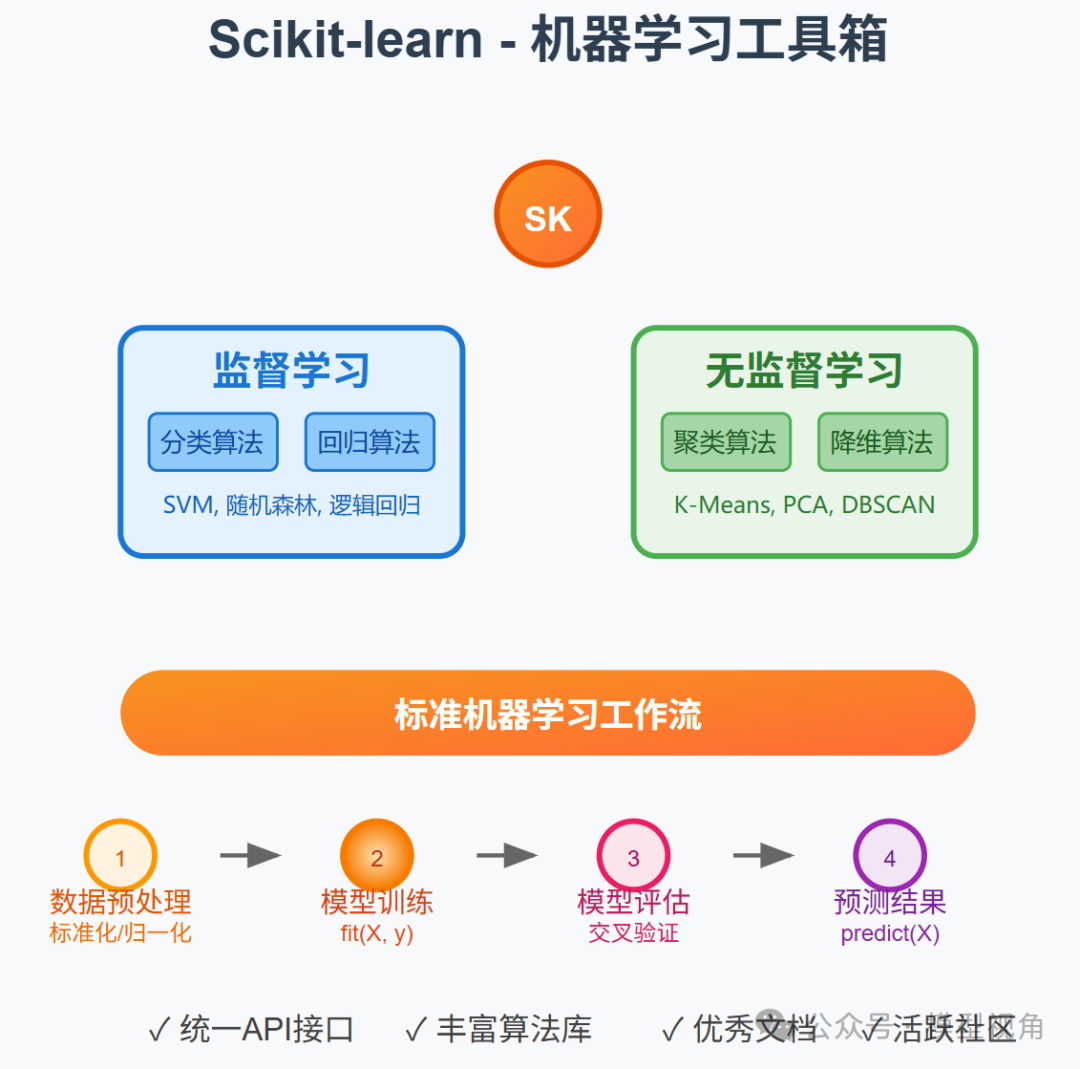
Comprehensive Ecosystem
Scikit-learn not only provides algorithm implementations but also includes datasets, evaluation metrics, cross-validation, hyperparameter tuning, and a complete machine learning toolchain.
from sklearn.linear_model import LinearRegression
import numpy as np

# Data
X = np.array([[1], [2], [3], [4], [5]])
y = np.array([1, 2, 3, 4, 5])

# Create and train linear regression model
model = LinearRegression()
model.fit(X, y)

# Predictions
predictions = model.predict([[6]])
print(predictions)
6. Flask – A Lightweight Web Framework
Flask is a micro web framework based on the Werkzeug WSGI toolkit and the Jinja2 template engine. It is designed to be simple and easy to use while offering strong extensibility.
The Philosophy of Micro Frameworks
Flask adopts a micro-framework design philosophy, keeping the core simple and providing additional functionality through extensions. This allows developers to choose the appropriate components as needed, avoiding bloat and complexity.
Flexible Routing System
Flask provides intuitive routing decorators, making URL mapping straightforward. It supports various HTTP methods and can handle dynamic URLs.
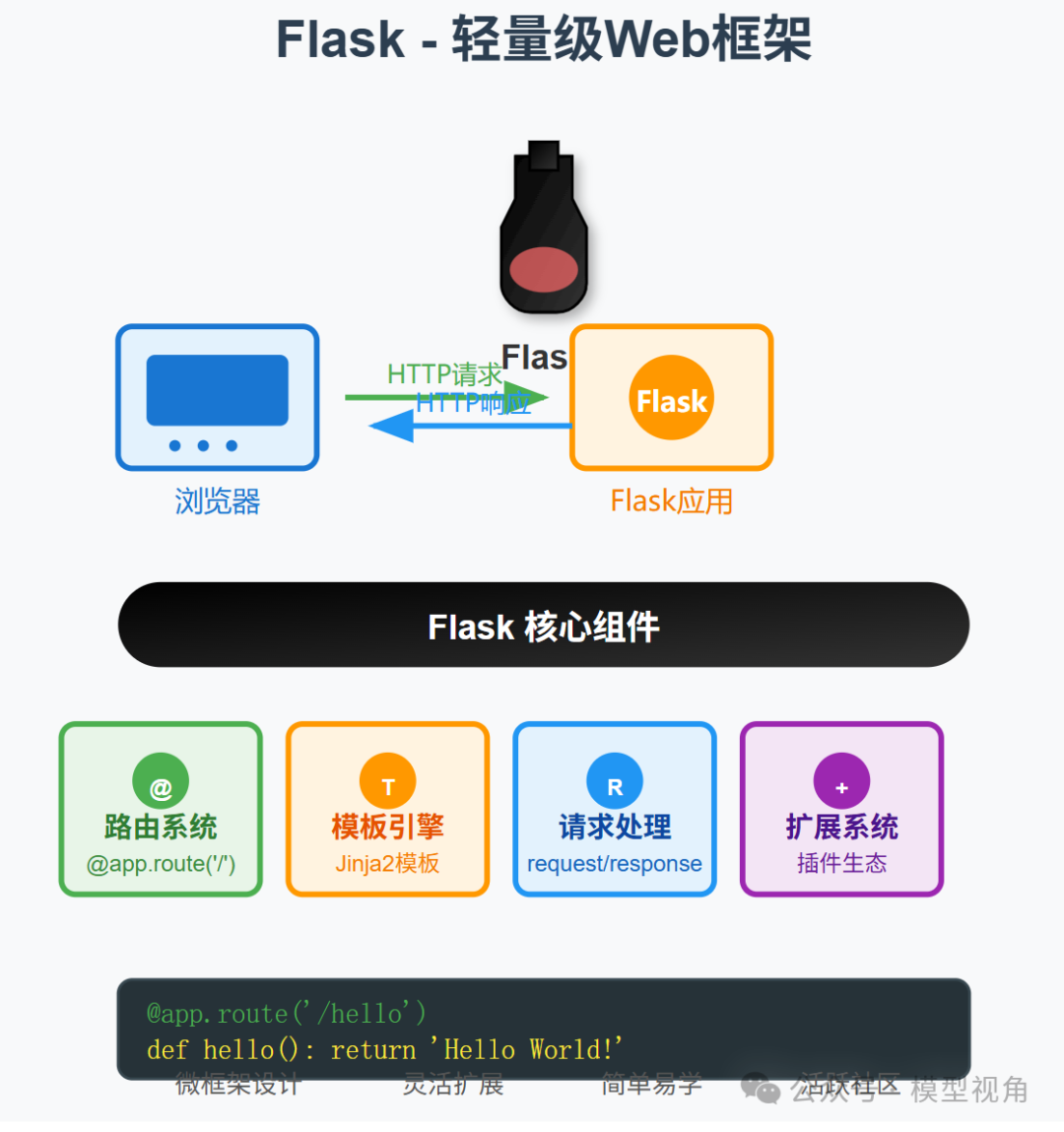
Applications in Web Development
Flask is suitable for building small to medium-sized web applications and is often used for API development, prototyping, and microservices architecture. Its simplicity enables rapid development and deployment.
from flask import Flask
app = Flask(__name__)

@app.route('/')
def hello_world():
    return 'Hello, Flask!'

if __name__ == "__main__":
    app.run(debug=True)
7. Beautiful Soup – The Expert in HTML Parsing
Beautiful Soup is a Python library for parsing HTML and XML documents, creating a parse tree that can be used to extract and manipulate data from structured documents.
Powerful Parsing Capabilities
Beautiful Soup can handle poorly formatted HTML documents, using different parsers (such as html.parser, lxml, html5lib) to build the parse tree, even working correctly with erroneous markup.
Intuitive Navigation API
Beautiful Soup provides intuitive methods for navigating, searching, and modifying the parse tree. You can use CSS selectors or simple method calls to find specific elements.
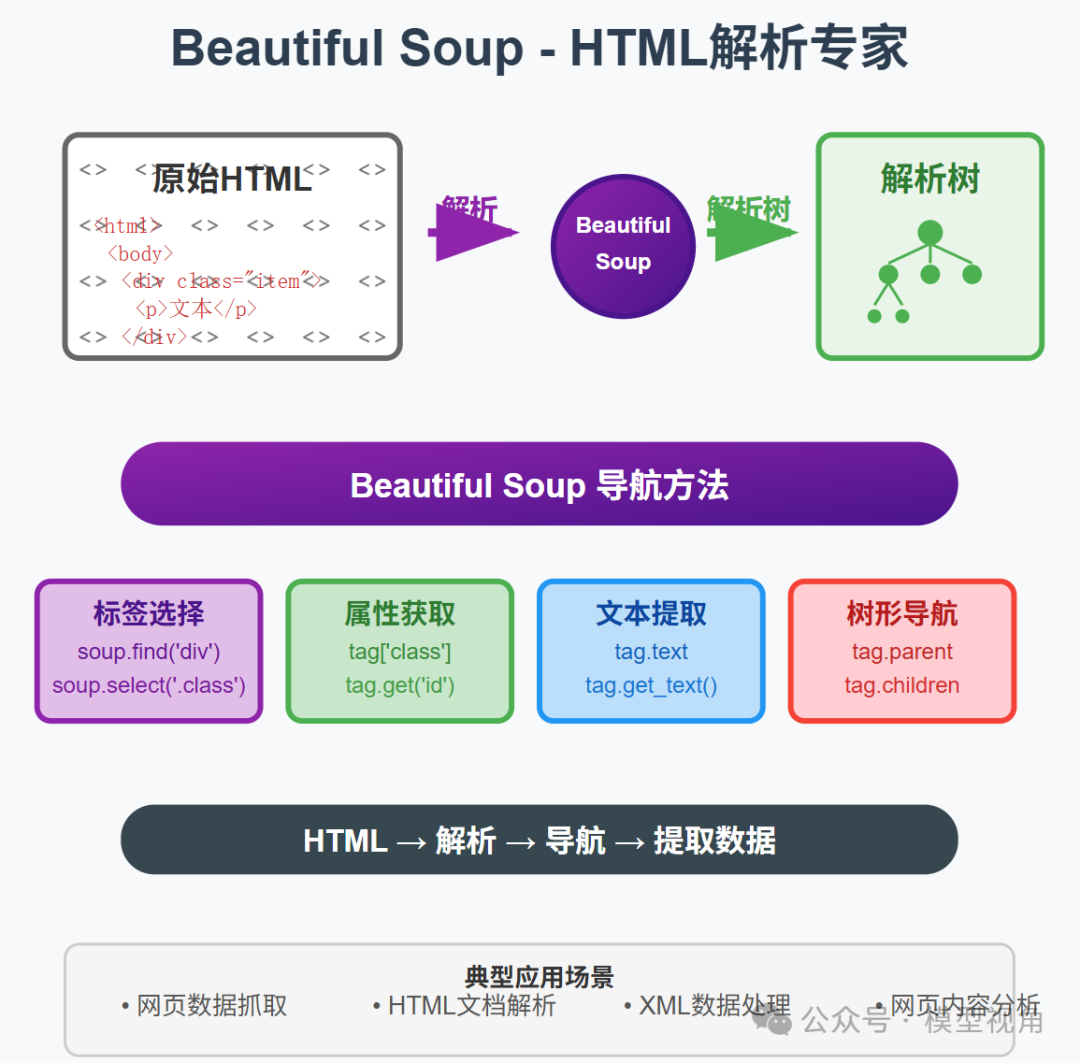
A Great Assistant for Web Scraping
In web data scraping projects, Beautiful Soup is often used in conjunction with the Requests library, forming a classic scraping combination. It can easily extract text, links, images, and other information from web pages.
from bs4 import BeautifulSoup

# HTML data
html_data = '<html><head><title>Test Page</title></head><body><p>Hello, world!</p></body></html>'
soup = BeautifulSoup(html_data, 'html.parser')

# Extract title
title = soup.title.string
print(title)
Mastering these libraries not only improves development efficiency but also allows developers to focus on business logic rather than the details of underlying implementations. As the Python ecosystem continues to evolve, these libraries are also being updated and improved, providing increasingly powerful tool support for Python developers.
For Python learners, it is recommended to start with the foundational libraries and gradually master the characteristics and use cases of each library. Only by deeply understanding the principles and best practices of these tools can one maximize their value in real projects and build high-quality Python applications.
We recommend a classic Python book, which sells over a hundred thousand copies each year, and which I have also read: Python Programming: From Beginner to Practice, now in its third edition: