
On December 8, Beijing time, the famous disassembly team iFixit released the disassembly report of the Huawei Mate 40 Pro. During the disassembly process, they found that the overall repairability of this phone is very low, including the adhesion of the curved screen and the density of internal components, ultimately giving it a repairability score of 4 out of 10, which is considered quite difficult to repair.
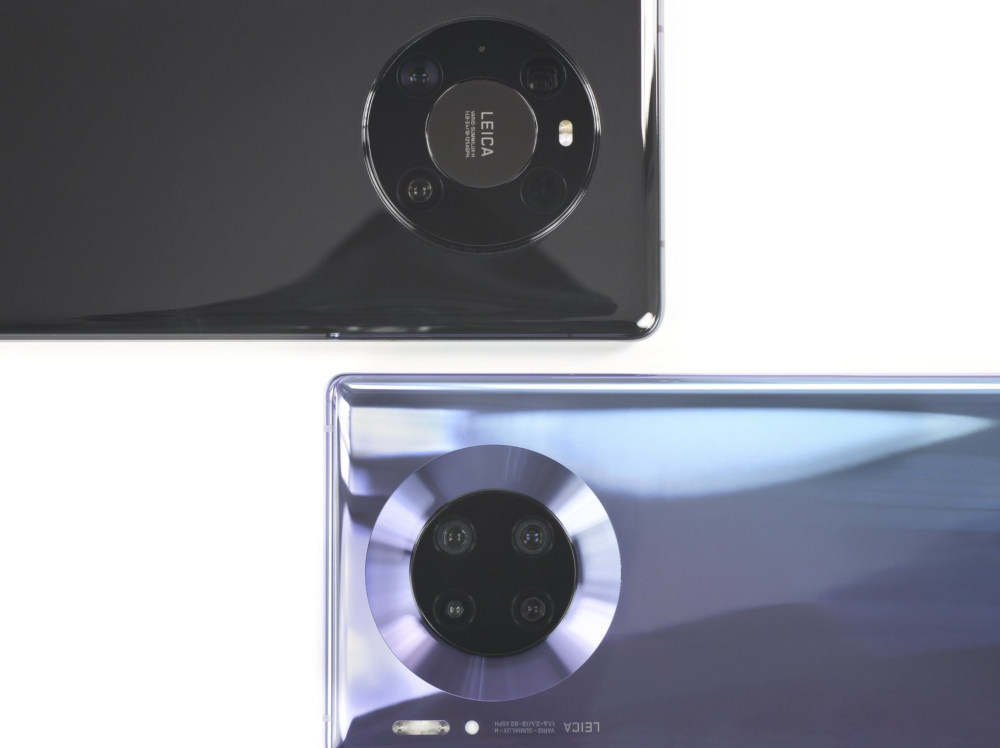
Before the disassembly, iFixit compared this Huawei Mate 40 Pro with the Mate 30 Pro. In appearance, aside from the different design of the circular camera on the back, a major difference lies in the camera design on the front panel. This generation of the Huawei Mate 40 Pro adopts a dual-hole front screen, which has one less camera compared to the Huawei Mate 30 Pro, but the overall opening area is much smaller.
Unlike Samsung’s center hole design, Huawei adopts a left-side hole, which looks better, but can easily lead to accidental touches during operation. Another issue is that this design is relatively difficult to repair. The physical volume key has returned, but due to the curved screen, this key is designed to be relatively low. Additionally, this generation of the Huawei Mate 40 Pro features a front stereo speaker, marking the return of the traditional receiver, no longer using the screen vibration speaker unit of the previous generation.
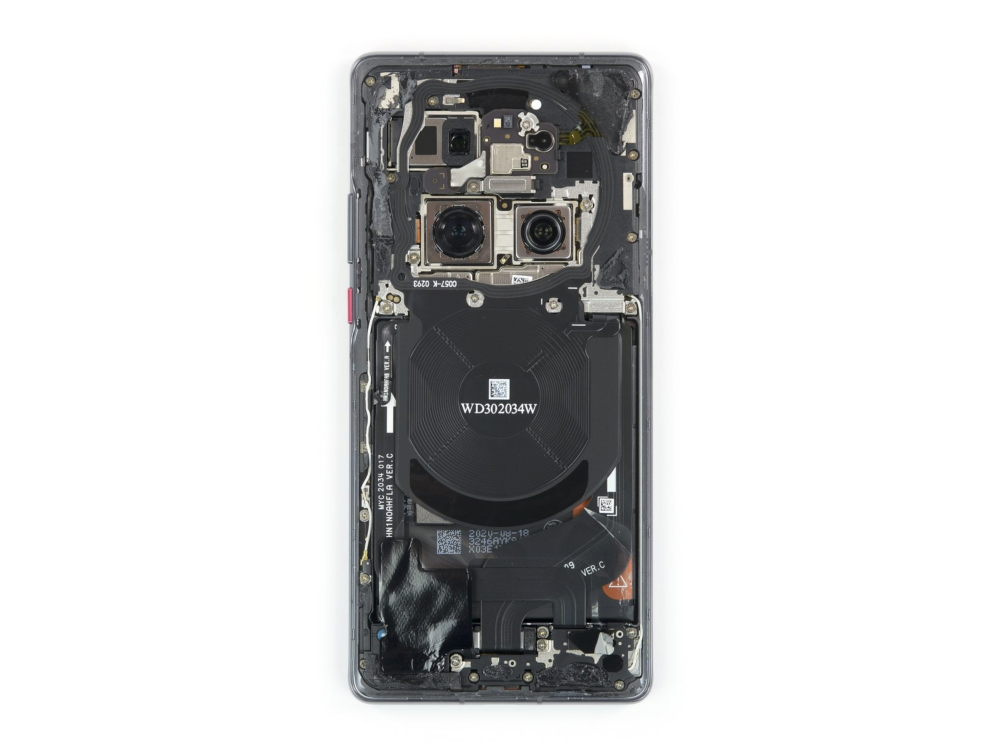
Like all smartphones, after heating with a heat gun and using dual suction cups to lift the back cover, a large amount of adhesive was found at the seams between the back cover and the middle frame. This adhesive ensures the tightness of the body. The internal structure does not appear very orderly, as Huawei has adopted a circular surrounding arrangement for the camera design, which is certainly not as well-organized as a linear arrangement, making internal design less rational.
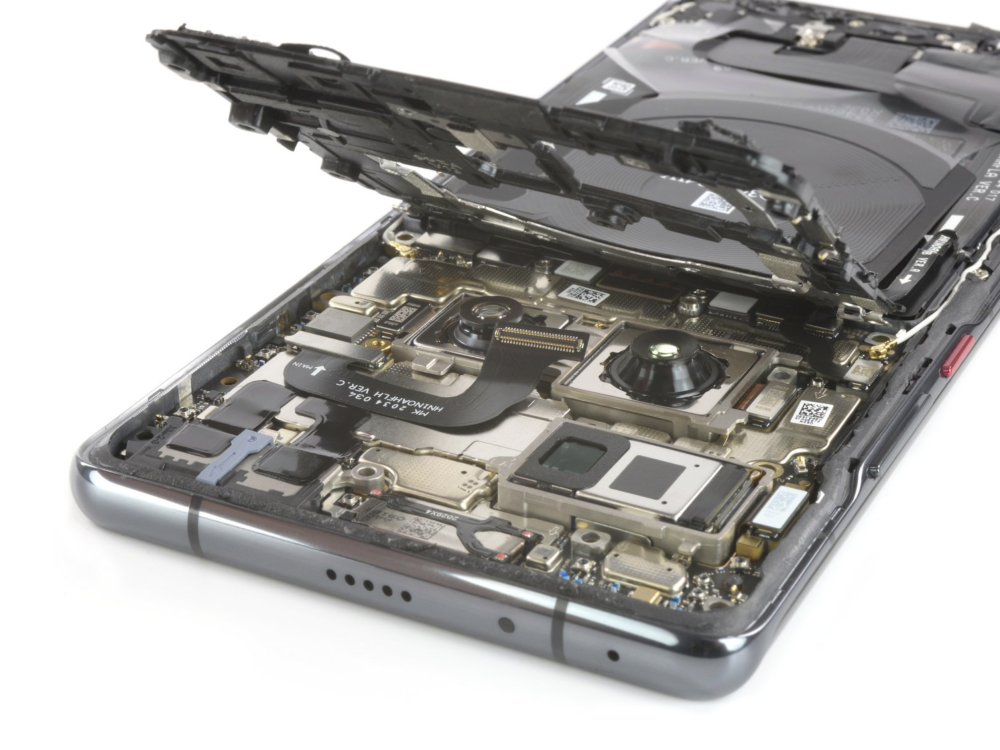
The Huawei Mate 40 Pro still adopts a three-section internal design. By removing the screws on the mainboard with a screwdriver and unplugging all connection cables, the upper mainboard shielding cover can be taken off.
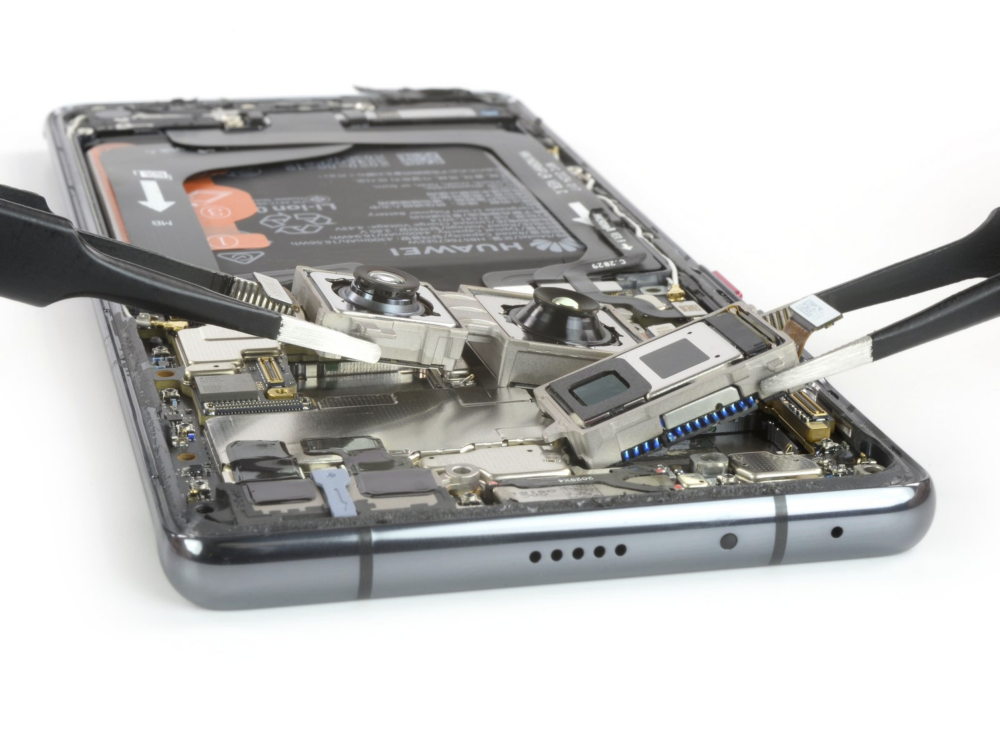
First, let’s remove the four cameras. Here are the specifications for each lens:
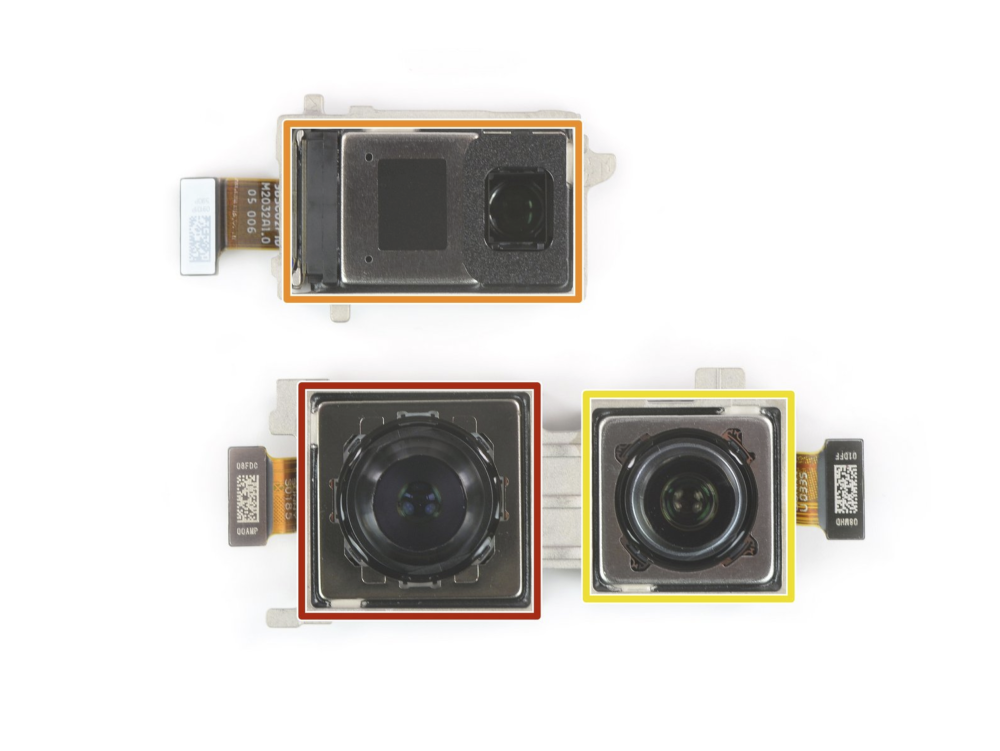
Red: 50 MP with 1 / 1.28″ RYYB mode Sony IMX700Y sensor (1.22 m pixel size), / 1.9 wide camera (23mm)
Orange: 12 MP, / 3.4, telephoto camera (125mm), with 5x optical zoom and OIS, equipped with Sony IMX351Y sensor in RYYB mode
Yellow: 20 MP, / 1.8, ultra-wide lens (18mm), with Sony IMX718 sensor in RGB mode
A commendable change is that this generation of the Huawei Mate 40 Pro has adopted a modular design for the periscope telephoto lens, making it relatively easy to repair and replace.
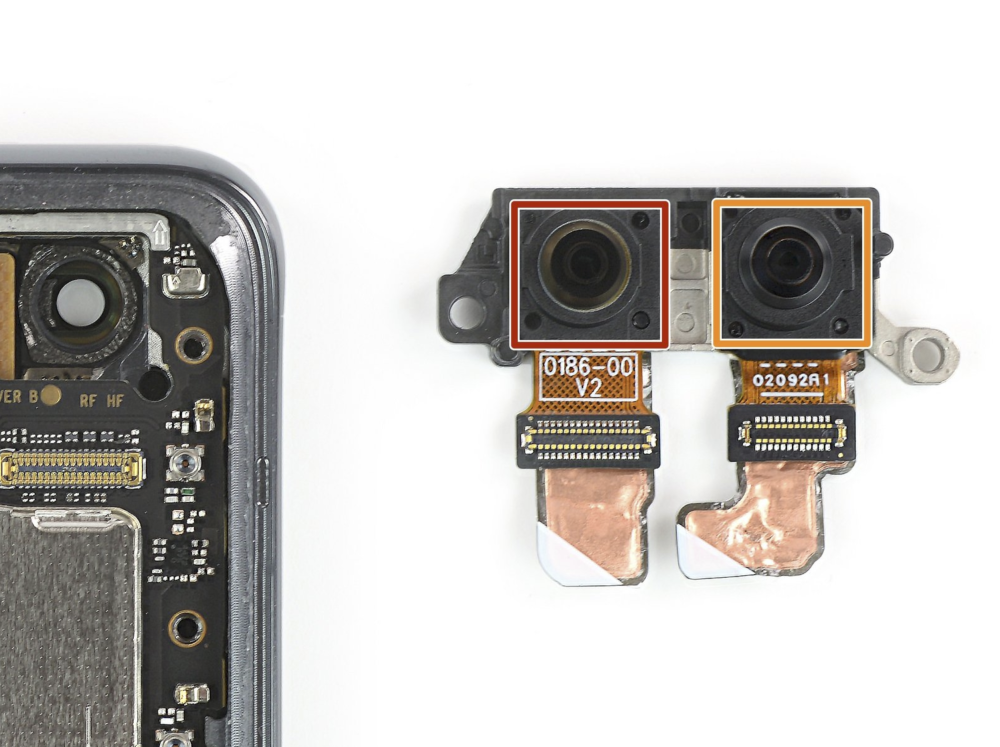
Next, remove the front cameras, which include a 13 MP, / 2.4, ultra-wide (18mm), Sony IMX688 sensor (1.22 m single pixel size) shooting lens and a 2 MP ToF camera for 3D depth and biometric recognition. Additionally, this is the first time Huawei has introduced an ultra-wide lens design for the front camera, meaning you can get a wider shooting perspective whether using the front or rear camera.
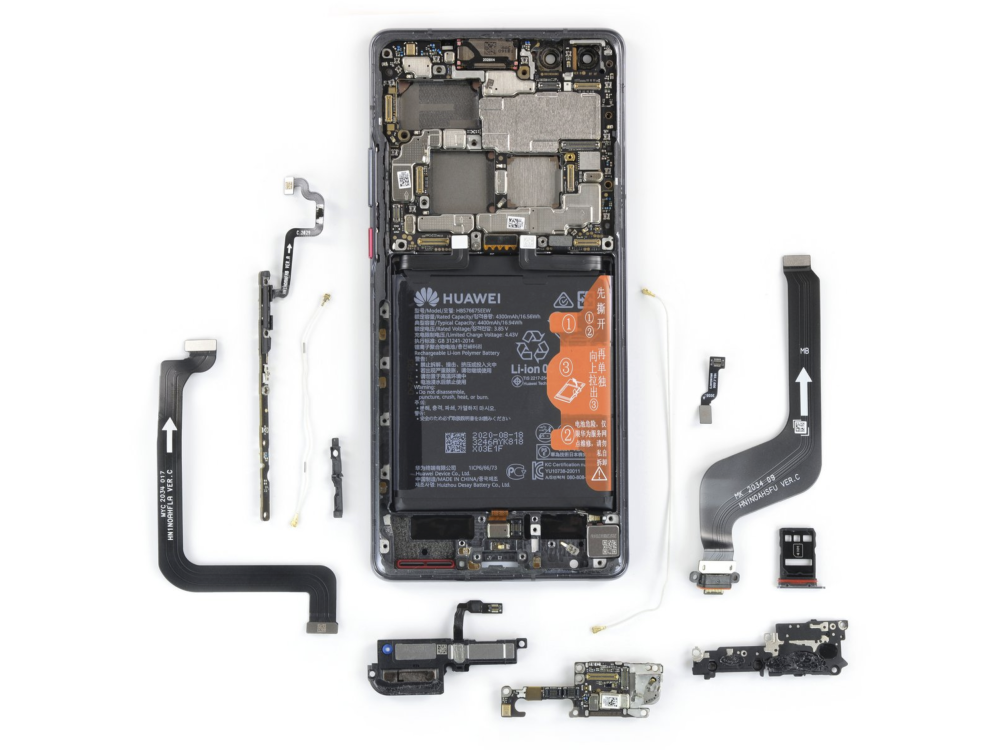
By removing all connection cables from the middle section, the battery component can be taken out. This includes the SIM card tray, speaker (32-bit / 384 kHz), and some shielding structures.
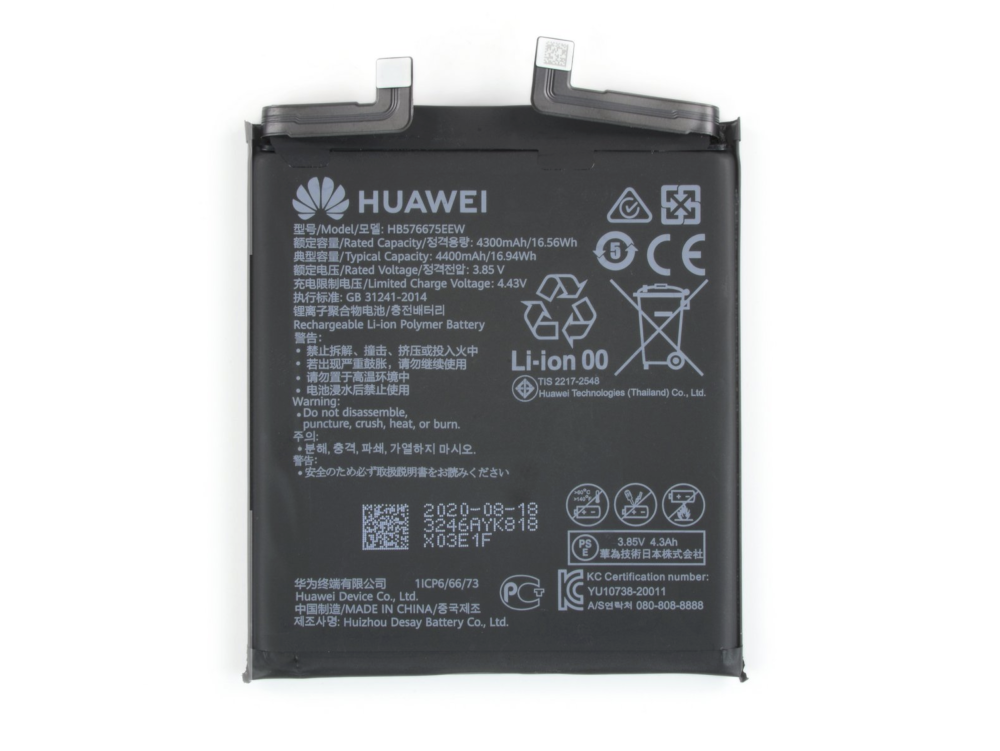
The battery is glued to the middle frame, and can be easily removed using the orange pull tab. The lithium-ion battery in the Mate 40 Pro has a capacity of 16.94 Wh (4400 mAh, 3.85 V), which is slightly lower than the 17.32 Wh (4500 mAh, 3.85 V) battery in the Mate 30 Pro.
The battery uses a dual series wire structure, which is currently a standard solution commonly found in high-power smartphones. Using the standard data cable can provide a maximum charging power of 66W for this battery, with a maximum wireless charging power of 50W. These numbers are significant! Additionally, Huawei is the only manufacturer providing 66W charging power with a single cell.
The Mate 40 Pro can also distribute 5W power to another device for wireless charging through reverse wireless charging.
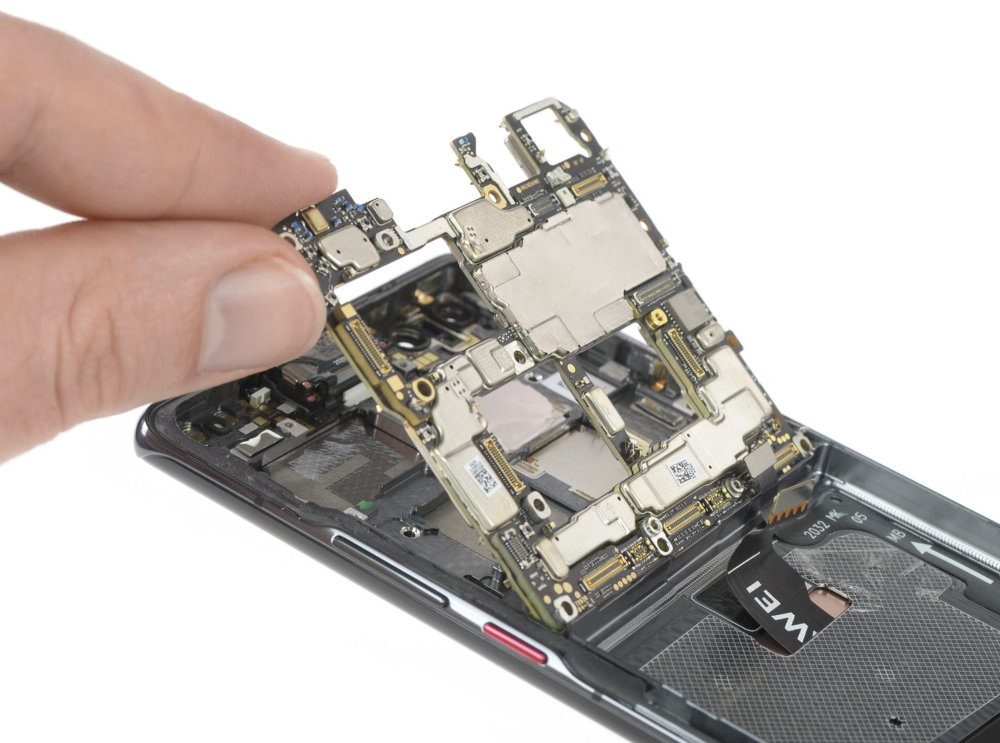
After removing all the chip shielding covers on the mainboard, let’s take a look at the mainboard. This time, the Mate 40 Pro still adopts a double-sided mainboard design.
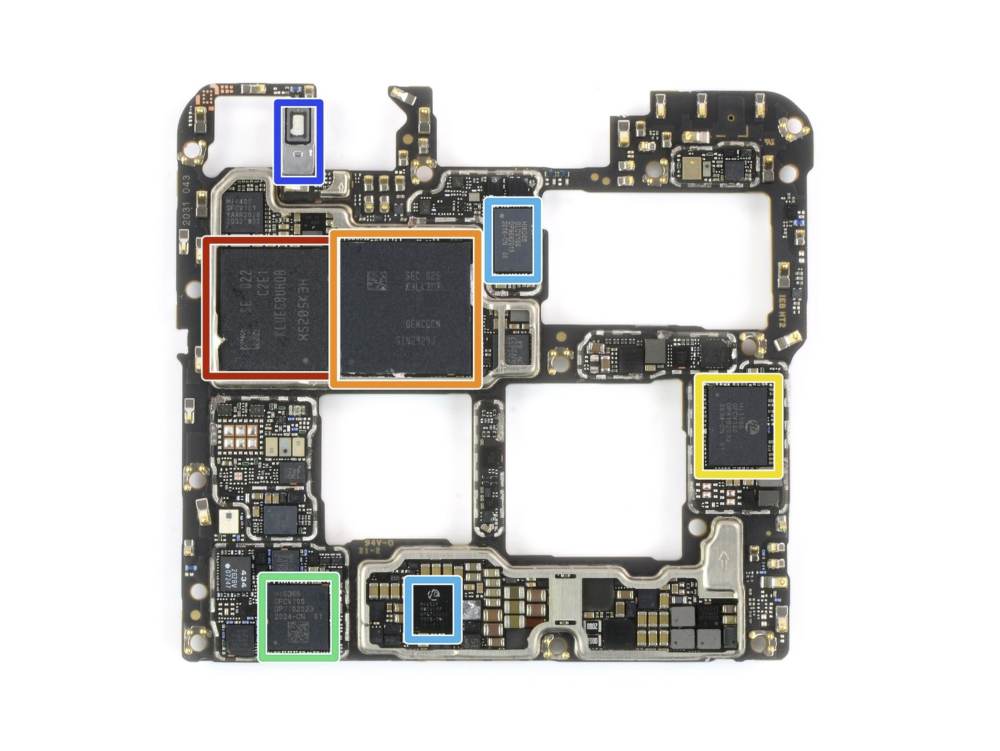
First, let’s look at the front:
Red: Samsung KLUEG8UHDB-C2E1 256GB UFS 3.1. Previously, Huawei stated that it used its self-developed SFS flash memory in the Mate 40 Pro, but iFixit found that there are still some Samsung UFS 3.1 flash memory present.
Orange: Kirin 9000 processor stacked package K3LK3K3 LPDDR5 SDRAM, which is Huawei’s newly released flagship processor this year, using a 5nm process with an octa-core design, featuring 3.13 GHz Cortex-A77 big cores and three 2.54 GHz Cortex-A77 big cores and four 2.05 GHz Cortex-A55 small cores.
Yellow: Hisilicon Hi1105 Wi-Fi 6 module
Green: Hisilicon Hi6365 RF transceiver
Blue: Hisilicon Hi6525 power management (top) and Hisilicon Hi6D05 power amplifier (bottom)
Dark blue: Dot projector structure light component
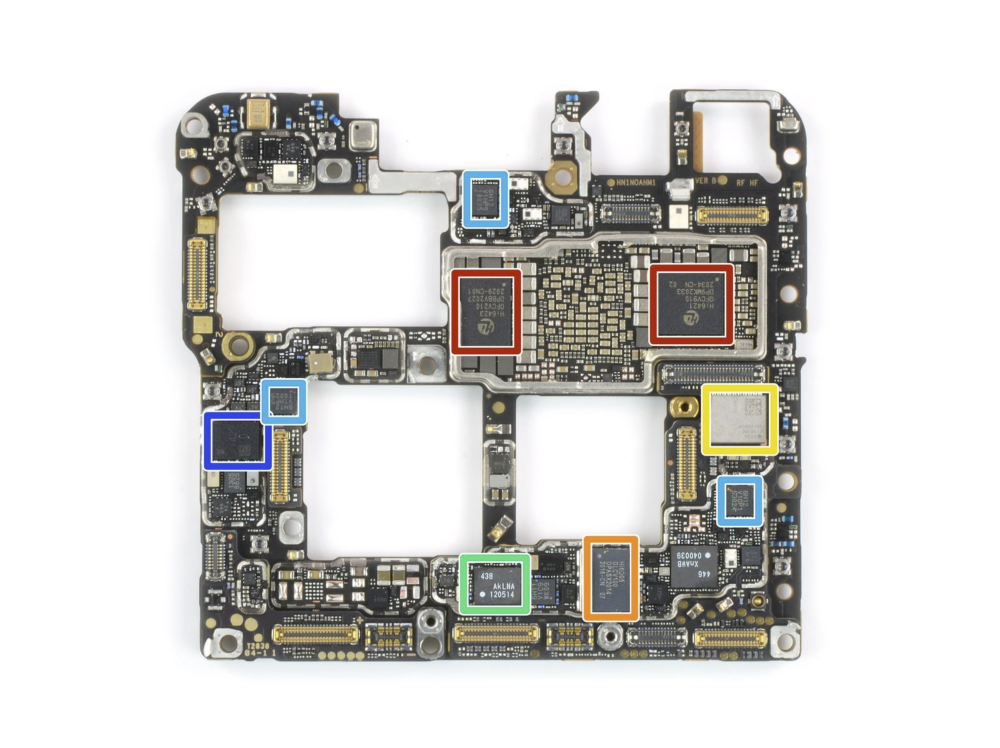
Now, let’s look at the back of the mainboard:
Red: Hisilicon Hi6421 and Hi6423 power management ICs (as shown in Mate 20x)
Orange: Hisilicon Hi6D05 power amplifier module
Yellow: 6S03V100 2029S13 0022
Green: 438 AkLNA 120514
Blue: GH12 V1GP1 63024 / V1HP510025
The last three chips did not have specific parameters and functions provided by iFixit.
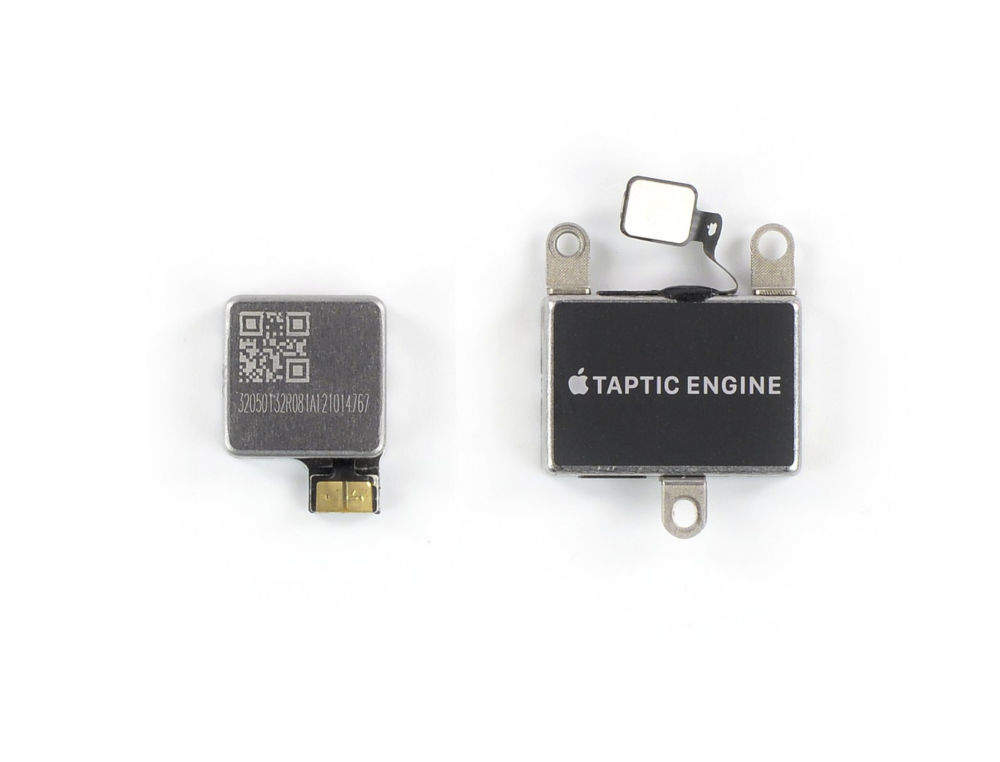
Finally, remove the receiver and X-axis linear motor. It can be seen that Huawei’s linear motor in the Mate 40 Pro is half the size of the linear motor in the iPhone 12 mini, which is the smallest phone using a linear motor in this generation of iPhone 12. This also shows that in the Android ecosystem, the size of linear motors is not as high as that of Apple.
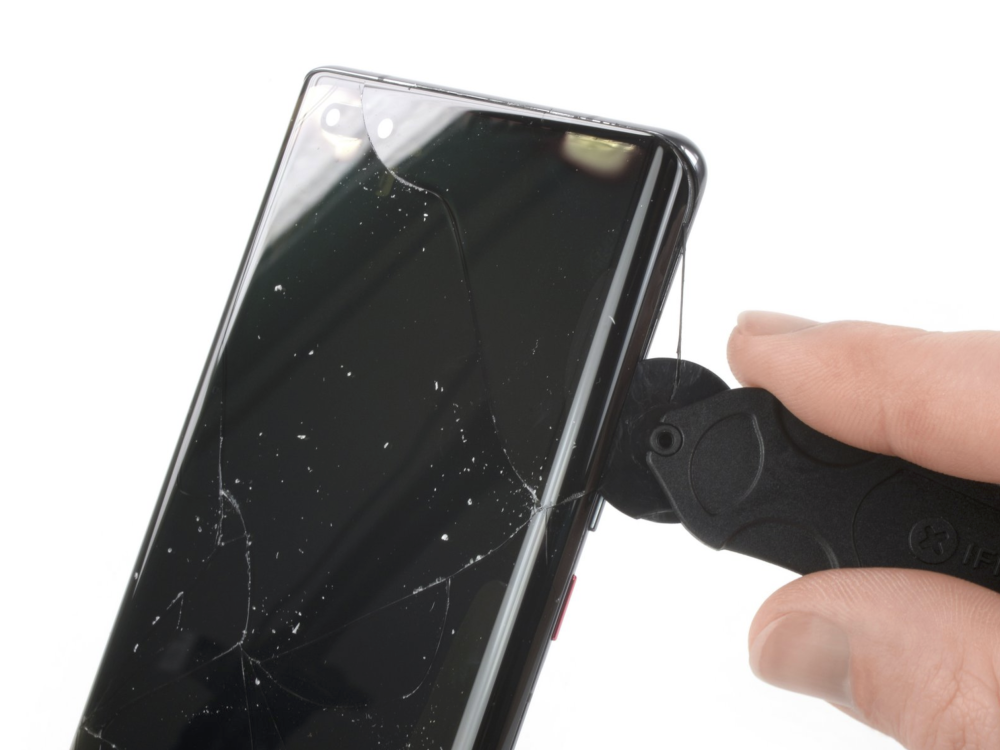
iFixit attempted to disassemble the curved screen of the Mate 40 Pro, but found that the screen was too fragile, especially when separating the outer screen and the internal display driver layer. This is a common issue with all glued screen phones; anyone attempting to separate the screen and display driver layer will incur significant damage.
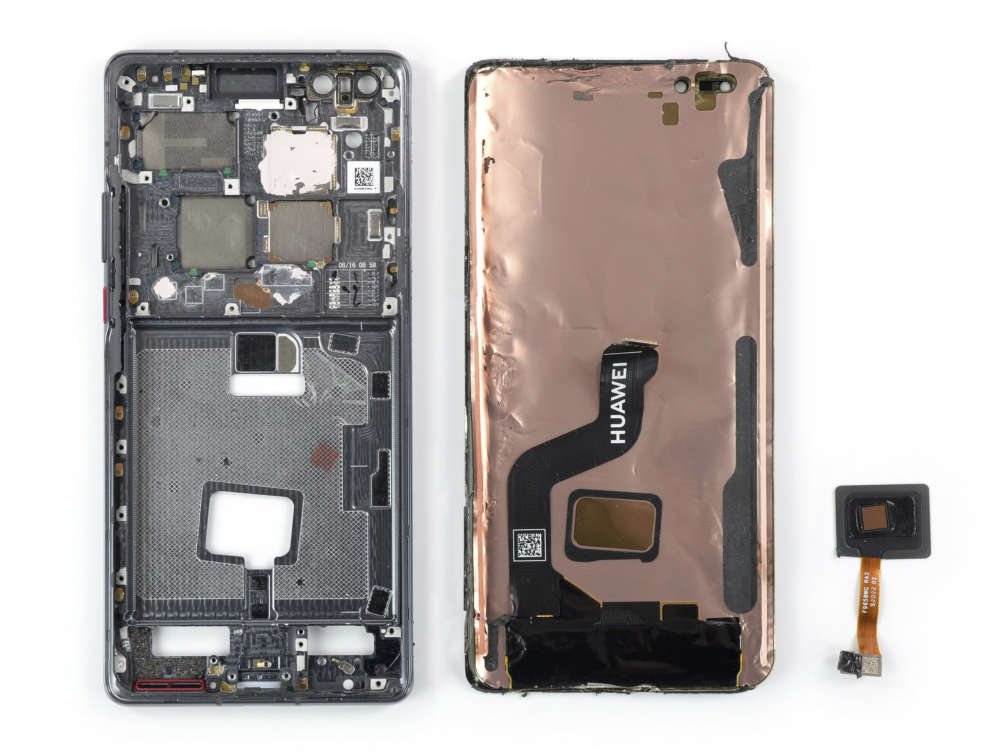
After much effort, iFixit ultimately completed the separation of the screen through brute force, revealing the internal optical fingerprint sensor. It is still important to remind everyone not to attempt to remove the screen panel, as it will definitely cause irreparable damage to the Mate 40 Pro’s panel.
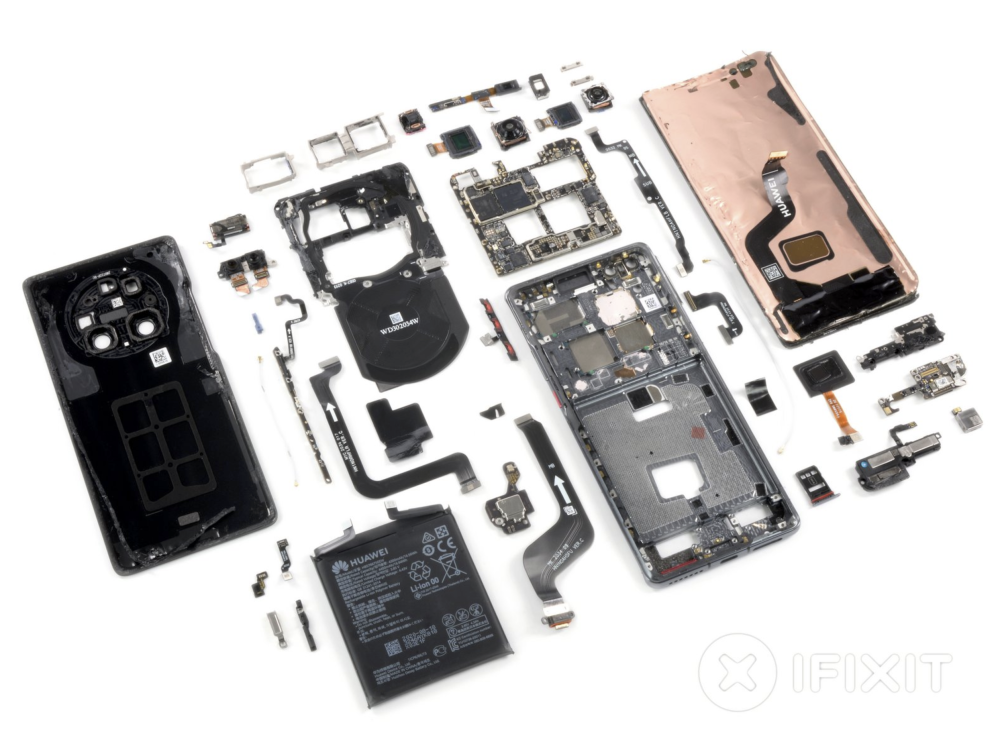
Finally, a family photo. Fortunately, this generation of the Huawei Mate 40 Pro has further improved its modular design, making it more convenient for repairs. However, the relatively chaotic internal design makes the entire disassembly process very cumbersome, ultimately resulting in a repairability score of 4.