Using a multimeter to distinguish between silicon diodes and germanium diodes
The distinction between silicon diodes and germanium diodes can be made using the resistance method, as shown in Figure 6-4.
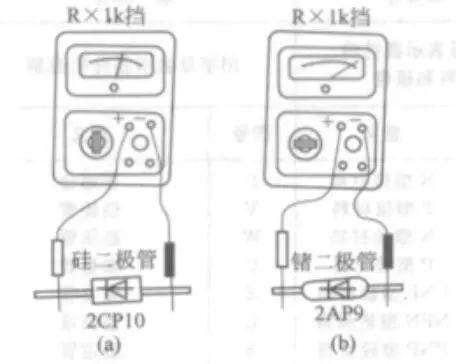
Figure 6-4 Distinguishing between silicon diodes and germanium diodes
The conduction voltage of silicon diodes is higher than that of germanium diodes when forward-biased, while the reverse saturation current of silicon diodes is smaller than that of germanium diodes when reverse-biased.This difference is reflected in the DC resistance, where both the forward and reverse resistance values of silicon diodes are greater than those of germanium diodes.Thus, by testing the forward resistance value, one can determine whether the measured diode is a silicon diode or a germanium diode.
The testing method is to set the multimeter’s range switch to R×100 or R×1k, measure the forward resistance value of the diode, and judge based on the deflection angle of the pointer. If the pointer indicates a position slightly to the right of the middle on the dial (4-8kΩ), it indicates that the measured diode is a silicon diode, as shown in Figure 6-4 (a); if the pointer is close to the 0Ω position, it indicates that the measured diode is a germanium diode, as shown in Figure 6-4 (b).
Differences between silicon diodes and germanium diodes
The main differences between germanium and silicon diodes are: When forward-connected, the conduction voltage of silicon diodes is high, while that of germanium diodes is low. When reverse-connected, the reverse saturation current of silicon diodes is smaller than that of germanium diodes. This is reflected in the resistance as: Both the forward and reverse resistance of silicon diodes are greater than those of germanium diodes. Based on this principle, one can determine whether the diode is silicon or germanium by measuring the forward and reverse resistances.
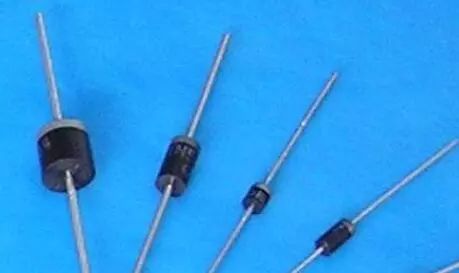
The specific testing method is: Set the multimeter to the RX100 or RX1K range, measure the forward conduction resistance of the diode, and judge based on the deflection angle of the pointer. If the pointer indicates in the middle or slightly to the right, it indicates that the diode is a silicon diode; if the pointer is close to the 0Ω position, it indicates that the diode is a germanium diode.


To facilitate better learning for everyone, Changxue Electronics Network has specially added a public account dedicated to microcontrollers and EDA, pushing relevant knowledge every day, hoping to assist your learning!