
Click on the arrow
“China Electroplating Network”
, follow us
Modern circuit board surface treatment technology is a new type of coating technology developed based on traditional plating techniques, applying principles, methods, and the latest achievements from materials science, mechanics, electronics, physics, fluid mechanics, electrochemistry, and nanomaterials. It studies the surface and interface characteristics, performance, modification processes, and methods of solid materials. The goal is to impart certain new properties, such as high electrical conductivity, high thermal resistance, resistance to high-temperature oxidation, wear resistance, reflectivity, heat absorption, magnetic conductivity, shielding, and various other special surface functions.
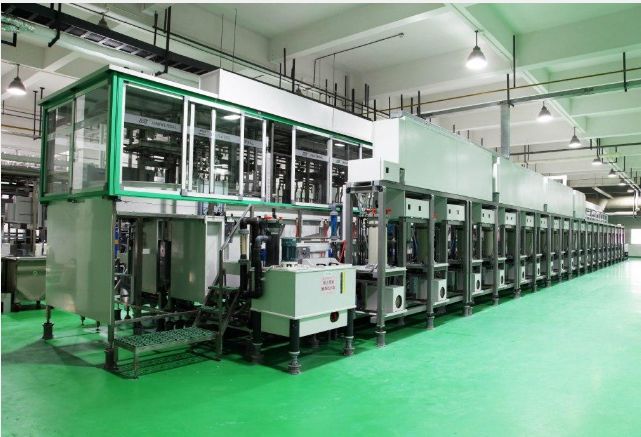
Fingerprint module PCB manufacturers must understand the engineering design and technical requirements of the product, as well as the operating environment conditions and potential failure types, in order to obtain economical, efficient, and high-quality surface coatings. Based on the performance of the coating, they can determine the design and selection of the coating type; secondly, they should choose the appropriate coating process and develop corresponding supporting processes based on an understanding of the characteristics and application ranges of various coating processes. Therefore, the design of surface coatings is an extremely important and complex process that should follow the general principles outlined below:
1: The selected coating should have excellent performance, meeting the requirements of the product’s operating conditions and environmental conditions.
This means that the design of the coating’s wear resistance, dimensional accuracy, and whether voids are allowed within the coating should be based on the coating’s state and environmental conditions, such as the stress state of the coating (impact, vibration, sliding) and the magnitude of the load, the working medium of the coating (oxidizing atmosphere, corrosive medium), and the working temperature and temperature variation of the coating.
2: The coating should have good compatibility with the substrate material and performance.
The selected coating should have good matching and adaptability with the substrate’s material, size, physical properties, chemical properties, coefficient of thermal expansion, and surface heat treatment state. The coating should have good adhesion to the substrate, without wrinkling, peeling, flaking, bubbling, and should not accelerate corrosion and wear.
3: The coating and its coating process should not reduce the mechanical properties of the substrate material.
Whether the coating and its coating process are suitable needs to consider that they do not reduce the basic performance of the substrate material, such as the mechanical strength and load capacity of the substrate. This is especially important for areas of the substrate that are under stress, as deformation can affect the physical strength of the substrate.
4: Technical feasibility of the process.
5: Controllability of the process.
6: Detectability of coating performance.
 END
END
China Electroplating Industry Portal
The most influential domestic electroplating industry portal
zgdiandu.com.cn