
The GCC certification (also known as G-Mark certification or GSO certification) is a mandatory certification system established by the Gulf Cooperation Council (GCC) to achieve regional standardization and unified market access. It is primarily led by the Gulf Standardization Organization (GSO) and covers seven member countries: the UAE, Bahrain, Saudi Arabia, Oman, Qatar, Kuwait, and Yemen.
The Gulf countries import hundreds of billions of dollars worth of goods each year, but without this “regional pass”, your goods may not even clear customs. Today, we will thoroughly explain the ins and outs of G-MARK certification, the practical process, and a guide to avoid pitfalls. Save this article to avoid wasting six months!
Why is G-MARK certification essential for the seven Middle Eastern countries?


How astonishing is the purchasing power of the Gulf states? Take Saudi Arabia as an example, where the annual import of electrical appliances exceeds $20 billion. However, in the past, each country had its own standards: the same hairdryer required A standard testing in the UAE and B testing in Saudi Arabia, causing companies to spend 15% of their profits just on certification fees.
In 2001, the seven countries joined forces to establish the Gulf Cooperation Council (GCC), akin to a Middle Eastern version of the “EU”; in 2004, the Gulf Standardization Organization (GSO) officially began operations and launched the G-MARK certification system—since then, one certificate is valid across all seven countries, eliminating the headache of varying national standards.
In simple terms:
-
GCC is the “alliance”: a market community formed by the seven countries;
-
GSO is the “referee”: the official body that sets unified standards;
-
G-MARK is the “ticket”: with this mark, products can be legally sold in all seven countries.
Just like going to Disneyland, GCC is the park entrance, GSO is the ticket checker, and G-MARK is your ticket—no ticket? Want to enter? Not possible!
Which products must obtain G-MARK certification?
GCC certification is not required for all products, but many fall under mandatory certification, primarily in areas closely related to consumer safety, health, and the environment. Here are some common categories:
1. Low Voltage Electrical Appliances (AC 50-1000V/DC 75-1500V)
-
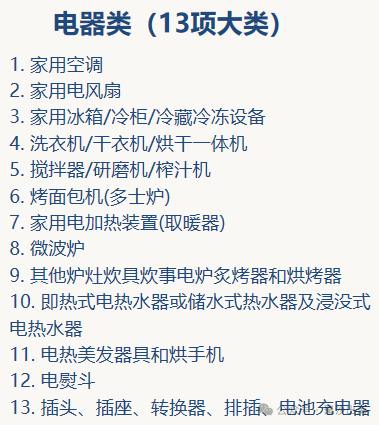
High Risk: 13 categories of “key regulated items”, including air conditioners, refrigerators, microwave ovens, electric irons, etc., must pass strict testing to obtain a “type verification certificate” and affix the GCTS mark (an upgraded version of G-MARK) with a QR code.
-
Low Risk: For electrical appliances other than high-risk items (such as chargers, night lights), companies can simply issue a “declaration of conformity” to affix the G-MARK, making the process much simpler.
2. Toys for Children
Toys for children refer to any products designed or intended for play by children under 14 years of age, including but not limited to various items operated manually, electrically, or electronically, as well as products used for play, entertainment, and educational purposes.
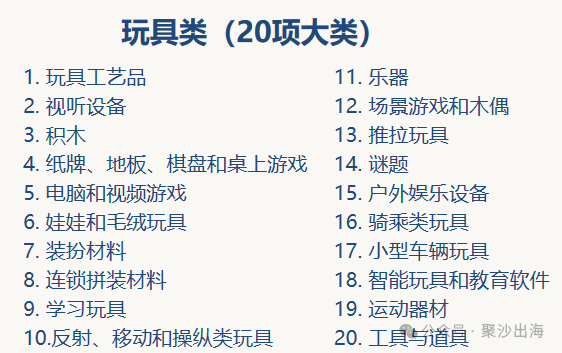 From building blocks to electric toys, they must pass three tests:
-
Physical safety (e.g., small parts that cannot be swallowed);
-
Chemical safety (heavy metals, phthalates must not exceed limits);
-
Flammability (must not burn excessively when away from fire sources).
Key point: Wireless products (such as Bluetooth headsets) must additionally pass GSO’s radio directive, equivalent to the Middle Eastern version of “SRRC certification”—missing any step is not allowed!
3. Automobiles and Parts
Various motor vehicles and key components such as tires directly relate to road traffic safety, thus they are included in mandatory certification. Specifically, this includes:
-
Motor vehicles: including passenger cars, buses, trucks, trailers, and all types of vehicles used on roads.
-
Key components: vehicle tires (passenger car tires, MPV and bus tires, truck tires, trailer tires, and temporary spare tires), brake system components, airbags, headlights, etc., which directly affect vehicle safety performance.
4. Cosmetics
Including skincare, makeup, perfume, hair care, nail care, and all types of cosmetics used on the human body, involving product ingredient safety, hygiene requirements, etc.
5. Medical Devices
Covering various medical devices used for diagnosing, treating, and preventing diseases, such as medical masks, syringes, blood pressure monitors, thermometers, electrocardiograms, etc., which must meet strict safety and performance standards.
6. Gas Appliances
Household gas stoves, gas water heaters, gas boilers, and other appliances using gas as energy, whose safety performance directly relates to the safety of users’ lives and property, thus included in mandatory certification.
7. Materials and Products in Contact with Food
-
Plastic materials: plastic containers, plastic packaging films, etc., that come into contact with food.
-
Metal products: stainless steel tableware, aluminum cookware, etc.
-
Other materials: ceramic tableware, glassware, and other materials and products that may come into direct contact with food.
These products must obtain the corresponding GCC certification to enter the markets of GCC member countries, ensuring compliance with the technical regulations and standards of the Gulf region, safeguarding consumer safety and health, and promoting fair and orderly trade development in the region.
What is the G-mark certification process like?
-
Determine applicable technical regulations: Companies first need to clarify the category of their products and identify the applicable GSO technical regulations and related standards.
-
Product testing and evaluation: Companies must commission recognized testing institutions to test their products according to the requirements of relevant technical regulations, assessing whether the products meet the indicators specified in the regulations.
-
Prepare technical documentation: Companies need to prepare complete technical documentation, including product manuals, parts lists, material lists, structural diagrams, production and storage address information, conformity standard lists, risk assessment forms, test reports, compliance declarations, etc., to prove that the products meet certification requirements.
-
Submit certification application: Submit the certification application to the relevant conformity assessment body along with the prepared technical documentation and product samples (if required).
-
Testing and auditing: The conformity assessment body reviews the technical documentation and test reports submitted by the company, and may conduct factory inspections for high-risk products to ensure that the production process meets relevant requirements. The testing cycle is generally 2-3 weeks for low-risk products, 4-6 weeks for high-risk products, and an additional 1-2 weeks for wireless products.
-
Obtain certification certificate: After review and evaluation, if the product meets all requirements, the company will log into the GSO system to generate the G-Mark certificate (with registration number and QR code, cannot be self-edited!), allowing the product to affix the G mark and enter the Gulf market.
Certificate validity period: The validity period of GCC certification certificates is mostly 3 years. The GCC conformity certification certificate for motor vehicles is valid from the date of signing until the end of the calendar year. However, the validity of the standard will affect the validity of the certificate.
Conclusion:Understanding the background, product scope, requirements, and processes of GCC certification is fundamental for companies looking to expand into the Gulf market. Only by strictly adhering to relevant regulations and ensuring product compliance can one establish a foothold in this market and seize opportunities. If your products are planning to enter the Gulf region, it is advisable to prepare for GCC certification in advance!
<img src=”https://mmbiz.qpic.cn/mmbiz_jpg/b0GQEZYRGWb7tpe9ZicAEyfo1HnIgfEvGh5JoBC8PG7sLtVlkUZYRDclDNzLAOZBzbqSFx0oRb7gD1GMUiaEJNsA/640?from=appmsg&watermark=1″