
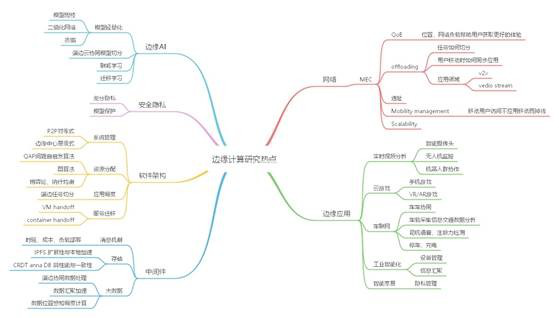
Currently, searching for “edge computing” on Google Scholar yields 3,830,000 records, indicating the rapid development of edge computing. This article primarily combines the research and exploration conducted by the Huawei Edge Cloud Innovation Lab over the past two years to survey the academic community, attempting to present a comprehensive view of the academic research landscape on edge computing from multiple dimensions.

Author | Huawei Cloud Native Team
Source: Container Magic Cube
● Edge AI ●
The vigorous development of deep learning and the increasing prevalence of AI applications, such as video-based intelligent analysis applications, have significantly changed people’s lives. With the development of mobile computing and the Internet of Things, data at the network edge has grown exponentially, necessitating the push of AI capabilities to the network edge to reduce data transmission while improving AI inference processing speed.
Edge AI is rapidly developing in academia, with current major research hotspots including:
Federated Learning: Federated learning is a machine learning framework where proprietary data from various enterprises remains local, and the federated system can establish a virtual shared model through parameter exchange under encryption mechanisms, thus creating an optimal model as if all data were aggregated together without violating data privacy regulations.
However, during the establishment of the virtual model, the data itself does not move, nor does it leak privacy or affect data compliance. Federated learning is currently mainly applied in the internet finance sector, with Professor Yang Qiang from the Hong Kong University of Science and Technology conducting pioneering work in this area, providing a detailed introduction and analysis in his review article [1].
Transfer Learning: Transfer learning is a machine learning method that transfers knowledge from other tasks to a target task to enhance its performance. Transfer learning can decouple from the machine learning model, adapting to multi-source data on (different edge devices). Professor Pan Sinno Jialin from Nanyang Technological University in Singapore has conducted a detailed survey and analysis in this field for reference [2].
Model Partitioning: Considering the resource constraints and energy consumption of edge computing, how to efficiently deploy deep learning models at the edge is a significant research question. Professor Chen Xu from Sun Yat-sen University has proposed a method to partition deep convolutional neural networks by layers, deploying part to the cloud and part to the edge, completing inference through edge-cloud collaboration, thus efficiently supporting deep learning inference tasks at the network edge [3].
Additionally, Zhuoran Zhao proposed the DeepThings [4] method, which employs scalable fusion slicing of convolutional layers (FTP) to minimize memory usage while enhancing parallelism, achieving excellent results, especially suitable for AIoT scenarios.
Model Lightweighting: To reduce resource consumption during model operation or enable models to run on lighter devices, operations such as distillation, pruning, and quantization can be performed. Professor Wu Jianxin from Nanjing University has conducted extensive research on visual learning under resource constraints [5].
● Security and Privacy ●
Model Protection: To analyze data closer to its source, models need to be pushed to the edge, where the operating environment is untrusted. It is essential to protect the copyright of models to prevent unauthorized use. On the other hand, models are core assets for users, requiring protection against illegal acquisition and theft. Professor Xu Fengyuan from Nanjing University utilizes TEE technology to run deep learning models in a trusted environment [6], enhancing the security of models and user privacy data.
Moreover, Jialong Zhang and others have designed a technology based on digital watermarking to protect the intellectual property of deep learning models and externally verify model ownership [7]. First, custom watermarks and predefined labels are generated, then the generated watermark is embedded into the target DNN through training, and finally, the watermark is used as input to verify the model’s intellectual property by checking the output.
Differential Privacy: Differential privacy is a method to protect user privacy data. For example, if a user wants to use their created dataset to train a facial recognition algorithm, mobile devices cannot train it, but directly training it in the cloud would leak privacy. Using differential privacy mechanisms to ensure training security involves using special methods to separate the neural network on the user side and the cloud side, ensuring that both data and parameter privacy are protected during training [8].
● Networking ●
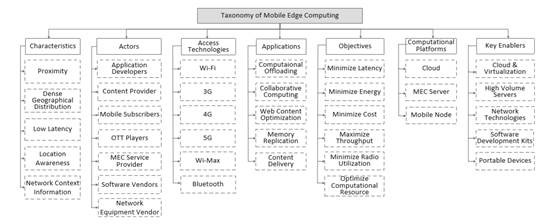
MEC: Multi-Access Edge Computing (MEC) is defined and framed by the European Telecommunications Standards Institute (ETSI). According to ETSI’s description of MEC, it provides cloud computing capabilities and IT service environments at the network edge for application developers and content providers. This environment is characterized by ultra-low latency and high bandwidth, enabling real-time access to information in applications via wireless networks. Research on MEC focuses on the following aspects:
QoE: Utilizing RAN to provide location and network load helps users achieve a better experience. Additionally, Ashkan from the University of Michigan proposed an offline method to establish a QoE-QoS mapping model for each tested app (creating a JSON for each app containing information on how it is used) and how to use this model to optimize QoE-aware traffic management, improving video responsiveness and frame rates [9].
At the same time, Lingyan ZHANG proposed QCSS [10], an adaptive flow service control plane for MEC infrastructure that ensures high QoE for online streaming services to mobile users.
MEC Site Selection: Research on the deployment of edge computing devices on real urban infrastructure (telecom base stations, commercial routers, and smart streetlights) [11]. Based on the location information of a city’s infrastructure and mobile path information obtained from two mobile applications, a deployment algorithm for city-level edge nodes is proposed, considering device heterogeneity (communication distance, resource size, price) to achieve a balance between user QoE and deployment costs.
Computational Migration: The main research task is how to partition and synchronize applications and data when users move.
Mobility Support: When devices are in motion, variations in network parameters (e.g., latency, bandwidth, jitter) can degrade the quality of service of applications. A challenging issue in mobile edge computing is to implement a mobility management technique that allows users to access edge applications without disconnection.
Scalability: Edge devices generate vast amounts of data, while edge servers provide numerous services. Therefore, dynamically scheduling this data to suitable computing service providers based on edge server and network conditions will be a core issue in edge computing.
● Systems & Architecture ●
In terms of systems and architecture, it involves multiple aspects such as system management, resource allocation, request scheduling, service migration, and edge-cloud collaboration.
System Management: With the increase in the deployment of mobile edge servers, centralized management can lead to performance issues. To address these challenges, Wenda Tang first applied peer-to-peer networks to manage geographically distributed mobile edge servers [12].
Secondly, a new cost-effective offloading method with a perceivable deadline was proposed to improve the offloading efficiency of vehicles and allow other tasks to be completed on time.
Resource Allocation and Application Scheduling: Offloading computing tasks from end devices to the edge and central cloud through edge computing requires consideration of energy consumption, network bandwidth, and transmission delay. Professor Chen Xu from Sun Yat-sen University has rich research achievements in this area, such as game theory and Nash equilibrium applied in edge computing. Professor Cao Jiannong from the Hong Kong Polytechnic University has conducted years of research in this field.
Among them, for the joint computation partitioning and resource allocation problem of latency-sensitive applications in mobile edge clouds, both computation partitioning and two-dimensional resource allocation are combined with computing resources and network bandwidth. A new effective method called Multi-Dimensional Search and Adjustment (MDSA), an offline scheduling algorithm, was developed to solve this problem [13].
Service Migration: When offloading services on edge computing platforms, it is crucial to support smooth mobility for mobile clients. Seamless migration of offloaded services to nearby edge servers is required for uninterrupted client mobility. However, rapid migration of offloaded services across edge servers in a WAN environment poses significant challenges for service switching design.
Lele Ma proposed a novel service switching system [14] that can seamlessly migrate offloaded services to the nearest edge server while the mobile client is moving. This is achieved through container migration, utilizing a container’s layered file system to reduce file synchronization overhead, thus not relying on distributed file systems. Lucas Chaufournier and others studied the migration issues related to VMs [15], proposing multipath TCP to improve virtual machine migration time and network transparency.
● Middleware ●
Edge Messaging Mechanism: The massive data generated by IoT devices needs to be sent to appropriate edge nodes for processing and return results in real-time. Shweta Khare and others proposed a process-subscription system [16] to meet these demands, balancing the data publishing and processing load of a topic-based publish-subscribe system running at the edge. A waiting time prediction model for a set of topics located in the same place is provided, which is then used for waiting time-aware placement of topics on proxies.
For the optimization problem of co-locating k topics, three load balancing heuristic methods are proposed to minimize the number of intermediaries while satisfying the QoS requirements of each topic.
Edge Storage: Anna is a Key-Value storage system researched at Berkeley [17]. Its pioneering use of lattice allows users to customize conflict resolution methods, thereby customizing consistency levels, significantly enhancing system performance in specific scenarios, making it very suitable for the reliability and consistency of edge data. Additionally, using IPFS, a peer-to-peer distributed file system, addresses the scalability and application acceleration of edge storage.
Big Data: Edge big data applications possess low-latency and high-bandwidth data processing capabilities. Research in this direction mainly focuses on end-edge collaborative data processing, data aggregation acceleration, and data location-aware scheduling computation. Professor Wu Song from Huazhong University of Science and Technology has introduced FPGA accelerators into edge clusters at the data processing architecture level, designing a new framework for stream data processing in edge computing environments.
● Edge Applications ●
Typical innovative applications of edge computing include the following aspects:
Real-time Video Analysis: Junjue Wang and others from CMU, based on the onboard processing capabilities of drones combined with edge processing capabilities, can save a significant amount of wireless bandwidth and improve scalability without compromising result accuracy or latency [18]. This effectively balances the challenges of real-time video analysis on small drones regarding wireless bandwidth, processing capability, energy consumption, result accuracy, and timeliness. It can be applied to search and rescue, surveillance, and wildlife conservation tasks.
AR/VR/Cloud Gaming: With the popularity of massively multiplayer online games (MMOG) and virtual reality (VR) technology, VR-MMOG has rapidly developed, demanding faster game interactions and image rendering. Wuyang Zhang and others proposed a hybrid gaming architecture that places local field updates on edge clouds to accelerate response times, frame rendering on edge clouds for high bandwidth, and global game state updates on central clouds for user scalability [19]. Additionally, Wei Gao and others implemented hierarchical caching based on edge computing [20] to accelerate AR/VR applications.
Vehicle Networking: Based on edge computing, improving vehicle services and enhancing vehicle functionality. Professor Wang Shangguang from Beijing University of Posts and Telecommunications has extensive research achievements, such as in task scheduling and end-edge collaboration, and has conducted detailed surveys in this field for reference [21]. Additionally, there is research on conducting onboard information collection for big data analysis at the edge [22], enhancing user experience, and collecting driver voice and attention detection to improve safety.
References
[1] Wei Yang Bryan Lim, etc. Federated Learning in Mobile Edge Networks: A Comprehensive Survey.
[2] Pan, Sinno Jialin, and Qiang Yang. A survey on transfer learning. IEEE Transactions on knowledge and data engineering.
[3] En Li, Xu Chen, etc. Edge AI: On-Demand Accelerating Deep Neural Network Inference via Edge Computing.
[4] https://cs.nju.edu.cn/wujx/
[5] Zhuoran Zhao; Kamyar Mirzazad Barijough; Andreas Gerstlauer, DeepThings: Distributed Adaptive Deep Learning Inference on Resource-Constrained IoT Edge Clusters.
[6] Taegyeong Lee, Zhiqi Lin, Saumay Pushp, Caihua Li, Yunxin Liu, Youngki Lee, Fengyuan Xu, Chenren Xu, Junehwa Song, Lintao Zhang. Occlumency: Privacy-preserving Remote Deep-learning Inference Using SGX.
[7] Jialong Zhang, Zhongshu Gu, Jiyong Jang, Protecting Intellectual Property of Deep Neural Networks with Watermarking.
[8] Yunlong Mao, Shanhe Yi, Qun Li, Jinghao Feng, Fengyuan Xu, and Sheng Zhong. Learning from Differentially Private Neural Activations with Edge Computing.
[9] Ashkan Nikravesh QoE Inference and Improvement Without End-Host Control.
[10] Julien Gedeon, From Cell Towers to Smart Street Lamps: Placing Cloudlets on Existing Urban Infrastructures.
[11] Wenda Tang, Xuan Zhao, Wajid Rafique, An offloading method using decentralized P2P-enabled mobile edge servers in edge computing.
[12] Lei Yang; Bo Liu; Jiannong Cao, Joint Computation Partitioning and Resource Allocation for Latency Sensitive Applications in Mobile Edge Clouds.
[13] Lele Ma, Efficient Service Handoff Across Edge Servers via Docker Container’s Migration.
[14] Lucas Chaufournier Fast Transparent Virtual Machine Migration in Distributed Edge Clouds.
[15] Shweta Khare; Hongyang Sun; Kaiwen Zhang, Scalable Edge Computing for Low Latency Data Dissemination in Topic-Based Publish/Subscribe.
[16] Joseph M. Hellerstein, Anna: A KVS For Any Scale.
[17] Junjue Wang, Ziqiang Feng, Bandwidth-efficient Live Video Analytics for Drones via Edge Computing.
[18] Wuyang Zhang, Towards Efficient Edge Cloud Augmentation for Virtual Reality MMOGS.
[19] Wei Gao, MUVR: Supporting Multi-User Mobile Virtual Reality with Resource Constrained Edge Cloud.
[20] Salman Raza, Shangguang Wang, Manzoor Ahmed, and Muhammad Rizwan Anwar. A Survey on Vehicular Edge Computing: Architecture, Applications, Technical Issues, and Future Directions.
[21] Bo Zhao Qi, A vehicle-based edge computing platform for transit and human mobility analytics.
Thank you for reading, and feel free to share!Thank you!
The Edge Computing Community: Promoting knowledge dissemination in the field of edge computing, neutral and objective. If you are interested in edge computing, 5G, IoT, cloud-native, etc., please follow us.